Miss Burma by Charmaine Craig

Miss Burma by Charmaine Craig

A layered and subtle historical fiction about a family in Burma and how they make it through all sorts of terrible things that happen there.

This is an incredibly dark book based on the true family history of Charmaine Craig. My book club had a tough time discussing it.

“Your problem is that you believe in right and wrong. Don’t you know evil will find you no matter what?” pg 11.

Photo by Charly Severino on Pexels.com

First of all, the introductory portion doesn’t make sense until the last half of the book. The pacing is glacially slow. A few of our club members couldn’t make it through the first couple of chapters.

Secondly, the constant warring and torture of innocents by the conquering forces is really difficult to read.

“We welcomed them because we’d been persecuted by the Burmans for centuries, we’d been their slaves – our villages perpetually attacked, our people perpetually preyed upon, stripped of everything from our clothing to our lives.” pg 37.

It is an important history, certainly, but the darkness of it made me feel sick.

A third problem club members had with Miss Burma is it feels disjointed.

Photo by Anthony Beck on Pexels.com

At first, readers thought Khin and Benny were the focus of the book. But then, the point of view drifted around to Louisa, their beautiful daughter, and her story took over.

We must find a way to rejoice in our circumstances. We must find a way to do more than endure.” pg 145

Basically, the Karen are an ethnic minority in Burma, now Myanmar. For centuries, the Karen have been enslaved by the Burmese. The underlying story is about how the Karen tried to unite against the ruling government to create a federation.

“Our modesty that runs so deep it is almost self-annihilating. But now.. our relative invisibility strikes me as very sad. … If you stand for a moment behind their eyes- behind the eyes of anyone for whom modesty is not an ultimate virtue- we appear to value our lives less than they do.” pg 168

Photo by AM wendy on Pexels.com

Against this background, the family of Khin and Benny tries to survive and do what they believe is right.

This story is full of flawed characters and whole passages where most of the action takes place in people’s minds.

There is fairly graphic torture, rape and violence. If any of those are triggers for you, beware.

Recommended for patient readers and those who can handle a very dark history. The book club certainly learned a lot about Burma from this book. And bullets still fly in Myanmar today.

Thanks for reading!

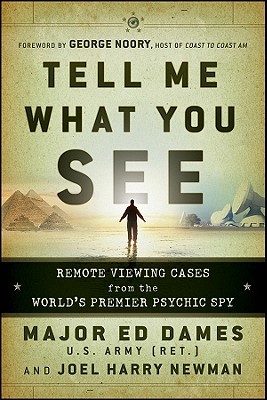
Tell Me What You See: Remote Viewing Cases from the World’s Premier Psychic Spy by Edward Dames

Tell Me What You See: Remote Viewing Cases from the World’s Premier Psychic Spy by Edward Dames

Tell Me What You See: Remote Viewing Cases from the World’s Premier Psychic Spy  is a book about remote viewing written by Edward Dames.

Remote viewing is a military protocol by which a “viewer” goes into a meditative state, sends his or her consciousness “out” to a target, and then reports on what he or she perceives while there.

In this book, Dames writes story after story about using this protocol for the government. And, later, cases that he and his group worked on, as a private company.

Confession time again: I love to read fringe-y non-fiction.  From the paranormal to the other worldly, I can’t get enough of it.

Books by former remote viewers from the military are such a trip to read.

These guys were/are on the cutting edge of consciousness exploration. It makes me wonder what humans are potentially capable of, but we don’t know it yet.

It also makes me wonder what else is out there to be perceived.

Don’t go to these books for feel good stories. I’m sure that it is because remote viewers were all trained as human weapons to root out threats to the government, but they all seem so dark and obsessed with shadows.

Even when Dames sets out to have a “fun” RV session on the Ark of the Covenant, his viewers see mainly blood shed and despair.

The methods used in Dames’ sessions were different from others that I’ve read.

David Morehouse and Lyn Buchanan, also former military RVers, described RV sessions in which separate viewers with handlers would run through coordinates. They would do this in completely secluded rooms. Later, the different sessions would be put together to try to create a complete picture.

Dames, on the other hand, described group RV sessions in which he’d act as the handler and give out the coordinates to the group. Then, his viewers would sit in a group setting and say what they were seeing, as they saw it.

I found this approach to be interesting. I wonder which technique had more accurate results.

What is RV?: “Remote viewing is about reaching beyond the five senses into the unconscious mind, to look inside and miraculously gather information stored like web pages on a cosmic computer. Even more miraculous is that we all have the innate potential to do this, a prescient sixth sense.” pg 16

The way the mainstream considers RV: “It’s part of my regular curriculum to discuss how badly the authorities treat remote viewing. … What people can’t pigeonhole they often reject. We were dealing with a system that treats what we do like watching someone have a seizure from behind a two-way mirror- uninvolved yet shamefully fascinated.” pg 27

Which is why I was surprised when he so vehemently rejects the contributions of the natural psychics, mediums, channelers to his military unit: “Gauvin and his broomstick pals were running us into the ground… Angela’s channeling was bound to be judged useless and scrapped and then maybe she’d go back to her crystal ball. … Who knew, by participating in an actual session maybe she’d catch on to how remote viewing really works. Maybe.” pg 120-121

Unlike mainstream folks, those types of spiritual “witches”, as Dames describes them, don’t need to be convinced that there are levels of perception beyond those utilized in day-to-day life.

If he had taken the time to look beyond their strange methods and encourage them to organize their natural talents within developed protocols, I think Dames could have found some powerful allies within the military RV program.

But, that’s not how he played it. Instead, you were either completely with Dames or against him. I suppose it goes back to his role as a soldier.

Dames’ comparison of RV to out-of-body experiences: “OBEs aren’t anything new. The concept has been around and practiced for thousands of years, dating back to the monks of ancient China and India. Their wizened mystics called it “astral projection,” a practice where, either awake or dreaming, certain adept individuals could cast off their earthly skin and propel their consciousness- astral body- into unknown spirit dimensions across time and space.” pg 153

And possibilities for RV in the future: “The ability to remote view is the next step in the evolution of the mind… What started out as a military tool based on the desperate need of warriors seeking to destroy their enemies in battle has now developed into an invaluable instrument in the search for enlightenment. Remote viewing is a teachable psychic-like skill anyone can learn. What is often overlooked is its potential to help us more deeply experience life.” pg 257 I would say so.

If you’re interested in more books like Tell Me What You See, you may want to look into The Seventh Sense: The Secrets of Remote Viewing as Told by a “Psychic Spy” for the U.S. Military by Lyn Buchanan or Remote Viewing: The Complete User’s Manual for Coordinate Remote Viewing by David Morehouse.

Thanks for reading!