
Shakespeare’s Guide to Parenting, like the wildly popular xkcd comic, is written with simple stick figures paired with, as you probably guessed from the title, quotations from Shakespeare’s works.
This format works for most of the panels, but did fall flat from time to time.
I think the problem is that, when you’re telling a story and using something as complex as Shakespeare, which relies on context to build the drama, for your main narrative voice, it’s hard to make it work as intended. Also, to simplify a joke down to one, perhaps two lines and maintain the comic punch is a very difficult thing. That being said, I did pull some favorite moments from this one.
If your child continues to be particular about their food, explain in no uncertain terms what the alternative will be: “I’ll make you feed on berries and on roots, and feed on curds and whey, and suck the goat. Titus Andronicus: IV, ii” pg 121

Having dealt with a picky eater for years and experiencing hair-pulling frustration at her recalcitrance, I may actually use that line at my house.
Be wary of rashly administering a sanction that you may later lack the resolve to see through. Remember, excellent outcomes can be achieved through epic-sounding yet non-specific threats: “I will have such revenges on you both that all the world shall- I will do such things- what they are I know not; but they shall be the terrors of the earth. King Lear: II, iv”pg 103 Ah, the drama of parenthood.
And finally, the drawing accompanying this one is of a little girl who has dropped her ice cream as her mother looks over at her:
Stoicism: Introducing your child to philosophy at a young age can help them come to terms with difficult concepts such as loss and bereavement: “What can be avoided whose end is purposed by the mighty gods? Julius Caesar: II, ii pg 43 Classic.

If you enjoyed Shakespeare’s Guide to Parenting, I’d recommend I Was a Child by Bruce Kaplan (a memoir told in simple but surprisingly powerful doodles) or Penguins with People Problems by Mary Laura Philpott.
A big thank you to Goodreads First Reads program for a free copy of this book for review purposes and thanks for reading!
- The Ballad of a Small Player: a Metaphysical Movie Review
- Otherwhere: A Field Guide to Nonphysical Reality for the Out-Of-Body Traveler by Kurt Leland
- Psychic Dreamwalking: Explorations at the Edge of Self by Michelle Belanger
- Archetypes on the Tree of Life: The Tarot as Pathwork by Madonna Compton
- The Goddess and the Shaman: The Art & Science of Magical Healing by J.A. Kent
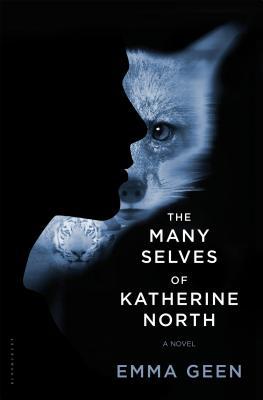
 In The Many Selves of Katherine North by Emma Geen, humanity has harnessed the power of consciousness and mechanized the ability to place that consciousness in different bodies at will.
 The Help Desk Book Blog