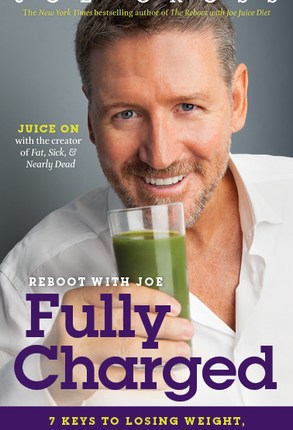
Reboot with Joe: Fully Charged: 7 Keys to Losing Weight, Staying Healthy and Thriving by Joe Cross

Reboot with Joe: Fully Charged: 7 Keys to Losing Weight, Staying Healthy and Thriving by Joe Cross

Fat, Sick, and Nearly Dead is one of the main reasons why I bought a juicer and have attempted to incorporate more plants into my diet. I’m not hardcore about it, but I try.

I didn’t know that Joe from that documentary is named Joe Cross and that he’s written multiple companion books for that film. This one, Reboot with Joe: Fully Charged, is excellent.

What I love about Joe is that he’s realistic. He doesn’t expect that he will eat perfectly for the rest of his life- he just wants to do the best that he can today then repeat the process tomorrow.

Photo by Wendy Wei on Pexels.com

He pushes the big lifestyle changers: diet, exercise, and rest but not in an extreme, unobtainable manner. In addition to common sense ideas about health and diet, Joe has spent years building an online community to support those who are working on major life changes. http://www.rebootwithjoe.com/weight-loss/

When you read this book, you also read examples of people who have turned their lives around with juicing and exercise. It’s inspiring and could be life changing for many people.

I also like that Joe included some of his go-to juicing recipes towards the back of the book. I’ve tried quite a few different juices, but I haven’t found any that I particularly liked. It’s always nice to have some new options that have appealed to other people in the past.

If you enjoyed Reboot with Joe: Fully Charged, I highly recommend his two documentaries: Fat, Sick, and Nearly Dead & Fat, Sick, and Nearly Dead 2. Also, I’d recommend the documentary Forks Over Knives which has a couple companion cookbooks out now.

A big thank you to the Goodreads First Reads program and NetGalley for free copies of this book.  And, thank you for reading!

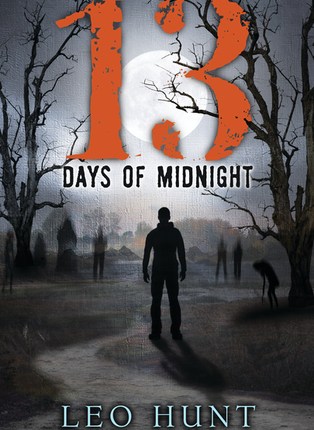
13 Days of Midnight by Leo Hunt

13 Days of Midnight by Leo Hunt

13 Days of Midnight is an enjoyable thrill ride through the world of Luke Manchett, a boy who is about to become a necromancer even though he didn’t know magic exists. His father dies suddenly and leaves him a “Host” which is a group of souls bound to serve and assist him.

The world of the new necromancer is fraught with peril and the souls that his father trapped do not respect him nor do they have his best wishes at heart.  Will Luke survive long enough to discover his own power?

Photo by luizclas on Pexels.com

13 Days of Midnight is classified as a young adult novel and it has enough teen angst and non-graphic violence for that to be true, but I enjoyed it on its own merits, which is something that not all young adult books have going for them.

My favorite part of Hunt’s book is that the reader gets to discover the world and its magical rules along with Luke. You don’t know what the spirits are capable of or what the necromancer’s spell book is going to reveal- it’s exciting! I kept coming back to the story because I just had to know what was going to happen next.

The only issue that I had with 13 Days of Midnight was the premise that Luke’s father didn’t teach his son the magical methods that he knew to protect Luke from what went down after his father’s death. The story cleared up that question for me towards the very end, but I spent most of the book not buying into it. There’s something primal in the parent/child bond that would never allow such a thing to happen. At least, there is for me.

Photo by Juan Pablo Serrano Arenas on Pexels.com

If you enjoyed this book, I’d recommend Shutter by Courtney Alameda (YA horror) or The Engelsfors Trilogy by Mats Strandberg (group of teens discover that they have magical powers and have to save the world).

Thank you to the Goodreads First Reads program for sending me a free copy of this book for review purposes.  And, thank you for reading!

Women Who Read Are Dangerous by Stefan Bollmann, Foreword by Karen Joy Fowler

Women Who Read Are Dangerous by Stefan Bollmann, Foreword by Karen Joy Fowler
womenwhoread

Part art appreciation and part homage to the female reader, Women Who Read Are Dangerous is probably the the most aptly titled book that I’ve ever read.

In addition to the beautiful images (my favorites pages 73 & 89), this book educates the reader about the politics, historical trends, and gender inequality tied to reading. Who knew that simply picking up a book could be such a subversive act?

Women Who Read are Dangerous sums up years of strange thinking about women and books with a dose of humor that I appreciated.

Take these historical opinions for example: “Women are too literal-minded for reading. Women are too sentimental, too empathetic, too distractable for reading. Women are passive, practically somnolent, consumers of popular culture, never realizing how, with the very books they choose, they participate in their own subordination.” pg 16

Photo by Los Muertos Crew on Pexels.com

Or this: “The lack of all physical movement while reading, combined with the forcible alternation of imagination and emotion,” said the teacher Karl G. Bauer in 1791, would lead to “slackness, mucous congestion, flatulence, and constipation of the inner organs, which, as is well known, particularly in the female sex, actually affects the sexual parts”- so anyone who read a great deal and whose powers of imagination were stimulated by reading would also be inclined to masturbation, as indeed we can already observe in Baudouin’s painting. But such moralizing could not hold up the triumphal march of reading, including- and specifically- female reading.” pg 23

Can’t hold us back, right readers? I’m actually feeling pretty well for all the reading that I do.

Photo by cottonbro on Pexels.com

Reading is power, I’ve always known that: “With the ability to read, however, there developed new patterns of private behavior that were to threaten the legitimacy of both the Church and secular authorities on a permanent basis. Women who learned to read at that time were considered dangerous. For the woman who reads acquires a space to which she and no one else has access, and together with this she develops an independent sense of self-esteem; furthermore, she creates her own view of the world that does not necessarily correspond with that conveyed by tradition, or with that of men.” pg 26

An introvert’s paradise, the keys to your freedom, the way to stick it to the “man”… as if I needed more reasons to read.

I also liked this description of reading: “Reading is an act of friendly isolation. When we are reading, we make ourselves unapproachable in a tactful way.” pg 34 I never really considered it that way before, but it is a method in which you remove yourself from the world for a time, even from those sitting in the same room.

Photo by Karolina Grabowska on Pexels.com

Seems obvious, when I consider it, but I had never taken the time to do so.

Finally, I learned about how “silent reading” is a recent trend. Did you know?: “An illiterate today is not only someone who cannot read (or write), but also anyone who cannot understand a text unless he or she reads it aloud. Yet there must have been a time when the opposite was the case- when reading aloud was the norm, as silent reading is today. … Until well into the Middle Ages and in some cases well into modern times, reading consisted of both thinking and speaking, and was above all an act that took place not in separation from the outside world, but at its center, within the social group and under its surveillance.” pg 25

Ugh. “Under its surveillance”?

That brings to mind the quotation, “Let others praise ancient times; I am glad I was born in these.” -Ovid.

Highly recommended for art enthusiasts and anyone who loves to read, Women Who Read are Dangerous is a lot of fun and a walk on the wild side… if one believes in such things.

If you’re looking for more non-fiction information about reading, try “Wild Things! Acts of Mischief in Children’s Literature” by Betsy Bird. It doesn’t have the beautiful artwork of this book, but it does contain a lot of information about the history and, sometimes scandalous, back story of children’s books and authors.

A big thank you to the Goodreads First Reads Program for a finished copy of this book for review purposes.  And, thank you for reading!

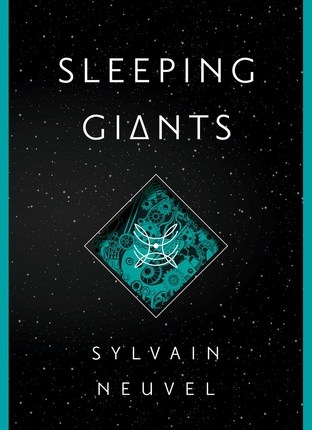
Sleeping Giants by Sylvain Neuvel

Sleeping Giants by Sylvain Neuvel

In Sleeping Giants, a large, metal object shaped like a gigantic hand is found in South Dakota. It glows with its own light and scientists have no idea what it is made of or what it can do. And so, the mystery and adventure begins.

Photo by Mayur Rawte on Pexels.com

I enjoyed the story a lot but not how it was written. Neuvel tells Sleeping Giants through a series of “case files” or question and answer sessions between the main characters and a mysterious, all-powerful figure who is manipulating the scenario from behind the scenes.

This method of storytelling seemed especially ridiculous during some of the action scenes, when Neuvel had the characters talking to each other on the phone, describing what was happening to them as it occurred.

But, otherwise, the Q & A setup gave readers a behind-the-scenes look at what was going on in the character’s minds and allowed for a lot of personality development.

I wish that Neuvel had switched back and forth between traditional storytelling and the “case file” thing, so that he could both tell the story and have the in-depth character portions. Maybe he could do something like that in the next book.

I was nervous that Sleeping Giants was going to be more science fiction than fantasy, but it wasn’t. There are only a few mind-boggling moments when the scientists are trying to figure out mathematics with a base of 8 rather than a base of 10.

Mostly, The Sleeping Giants asks the questions: what would happen to humanity if something very strange and not of our civilization was discovered on earth? What would that mean for world politics? And how, on an individual level, would everyone involved handle it?

Photo by Pixabay on Pexels.com

Kara Resnik, a pilot, was my favorite character in this story. She’s impulsive, passionate, and honest.

In this passage, she’s talking about the possibility of leaving the project before it’s completed: What would I do anyway? Go about my business as if nothing ever happened? I couldn’t even talk about it to anyone. This is gonna sound incredibly selfish, but I’d get bored to death unless someone started World War III or something.” pg 54

The moral dilemma for the scientists involved in the project is interesting.

In this passage, lead scientist Rose Franklin talks about the fact that the technology discovered could be used for good or ill, depending on who controls it and how that makes her complicit in their actions, because she’s the one figuring out how it works: “What I’ve been trying so hard to deny is that I’m loving every minute of it. … I’m a scientist, and this is what I breathe for. If I had learn to live with that, I might be able to sleep again.” pg 167

Photo by Pixabay on Pexels.com

If you enjoyed Sleeping Giants, you may want to pick up The Many Selves of Katherine North by Emma Geen (in which, advanced technology raises moral questions) or The Interminables by Paige Orwen (in a dystopian world, humanity tries to save itself from inter-dimensional creatures, but maybe some solutions aren’t worth the cost).

Big thanks to the Goodreads First Reads Program for a free copy of this book. And, thank you for reading!

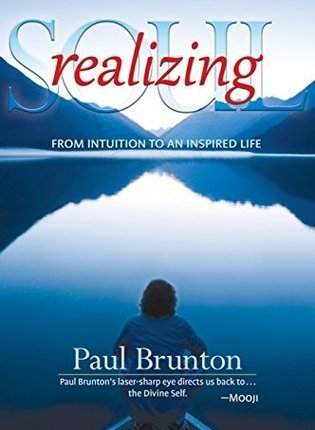
Realizing Soul — From Intuition to an Inspired Life by Paul Brunton

Realizing Soul — From Intuition to an Inspired Life by Paul Brunton

Paul Brunton was an English philosopher who dedicated his life to the spiritual journey.

Photo by Jonas Ferlin on Pexels.com

I had never read the teachings of Brunton before Realizing Soul and I found him to be very similar to Eckhart Tolle or, interestingly enough, Abraham Hicks.

He was like Eckhart Tolle in that he stressed the importance of the Now moment.

Brunton was like Abraham Hicks in that his description of the “Oversoul” could walk hand in hand with Hick’s “Vortex of Creation”. In fact, in my mind when I was reading this, I just substituted Oversoul for Vortex because I was more familiar with Hick’s thoughts on the matter than Brunton’s.

There is quite a lot of information in Realizing Soul, though it isn’t very long. In fact, I wish that some of the passages had been longer. This book was mainly a compilation of ideas from many of Brunton’s different writings.

I suppose that it gives the reader a great overview of the various works but I felt that it lacked some depth because of the shortened sections which were each generally only a couple of sentences long.

Photo by ArtHouse Studio on Pexels.com

Some parts I want to remember:
“…That which he has been seeking so ardently has been within himself all the time. For there at the core of his being, hidden away underneath all the weakness, passion, pettiness, fear, and ignorance, dwells light, love, peace, and truth. The windows of his heart open on eternity, only he has kept them closed! He is as near the sacred spirit of God as he ever shall be, but he must open his eyes to see it. Man’s divine estate is there deep within himself. But he must claim it.”pg 18

“The personal ego of man forms itself out of the impersonal life of the universe like a wave forming itself out of the ocean. It constricts, confines, restricts, and limits that infinite life to a small finite area. The wave does just the same to the water of the ocean. The ego shuts out so much of the power and intelligence contained in the universal being that it seems to belong to an entirely different and utterly inferior order of existence. The wave, too, since it forms itself only on the surface of the water gives no indication in its tiny stature of the tremendous depth and breadth and volume of water beneath it…” pg 27

“What can I do to break this barren, monotonous, dreary, and sterile spiritual desert of my existence? The answer is if you cannot meditate successfully go to nature, where she is quiet or beautiful; go to art where it is majestic, exalting; go to hear some great soul speak, whether in private talk or public address; go to literature, find a great inspired book written by someone who has had the glimpses (of the divine within life).” pg 78

Photo by Dina Nasyrova on Pexels.com

“Man as scientist has put under observation countless objects on earth, in sea and sky. He has thoroughly examined them. But man as man has put himself under a shallower observation. He has limited his scrutiny first to the body, second to what thinking can find. Yet a deeper level exists, where a deeper hidden self can be found.” pg 96

For the most part, I found Realizing Soul to be very beautiful and rich in meaning. There were some bits on karma and ego illusion that didn’t really resonate with me, but that doesn’t mean that it won’t speak to others.  If you want more of Brunton’s writings, they can be found online for free at this website: http://www.paulbruntondailynote.se/

If you enjoyed this book, you may want to listen to some of Eckhart Tolle’s lectures like Even the Sun will Die, Gateways to Now, or pick up the book, Stillness Speaks. Readers may also enjoy The Art of Living and Dying: Celebrating Life and Celebrating Death by Osho.

Thanks to the Goodreads First Reads program for a free copy of this book.  And, thank you for reading!

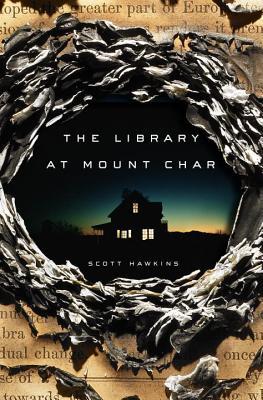
The Library at Mount Char by Scott Hawkins

The Library at Mount Char by Scott Hawkins

Review on Reread, August 2025: It has been ten years since I first read The Library at Mount Char (my original review may be read below this one). I think the book has held up incredibly well in the decade since its publication. Well done, Mr. Hawkins.

Rather than rehashing the plot, I’d like to take a moment to address a theme that I didn’t touch on my last review. If the spirit (or soul, if you will) of a person is truly immortal and said person, through magic or a technology so advanced that it appears as magic, does not die but instead lives on and on for 50 to 60 thousand years, what effect, if any, would this unnatural longevity of the body have on the spirit? What if the spirit retains all memories of this elongated life? How would that change their behavior in their every day interactions with other, non-immortal, beings?

My partner and I have discussed the potential devastating consequences of such a thing when considering the longevity of elves in Tolkien’s classic work The Lord of the Rings or the twisted upper class in the series Altered Carbon. The way I see it, the elves would probably start to lose the plot around year 150 or so and then it would be all downhill from there. Why? Imagine, if you will, the hurts, slights and every day micro-traumas that can cause such damage in a normal lifespan being extended over thousands or tens of thousands of years. How could someone possibly deal with such a thing and not lose their minds? My contention is that they can’t.

Yes, we are talking about magical beings with, I’m assuming, some sort of safety valve to the normal wear of time on the spirit. But what if there was no safety valve? What if, as time marched on and on for these beings, they became more and more removed from their elvishness (or in The Library of Mount Char and Altered Carbon, their humanity) and instead became aloof, immortal beings who would stop at nothing and have all of the resources in the universe to achieve their aims.

One might observe them abusing the beings around them because they no longer have the ability or desire to empathize with other flawed beings who are still existing in time. Or maybe they forget their reasons for wanting to change their world around them in the first place and become overly fixated on their own viewpoint to the detriment of all others.

Or maybe, just maybe, they can’t let go of what happened in the past and they make their current reality into a reoccurring nightmare of past traumas, perpetuating the cycle subconsciously into not only their future but everyone else’s too.

My point is, I believe physical death happens for a reason, perhaps a reason that we do not yet understand, but maybe it has something to do with the rehabilitation of the spirit that occupies the body more than the limitations of physical reality. As humanity develops more and more sophisticated methods for extending our lives (one thinks on a certain conversation two world leaders had recently about organ transplants), I think we should consider the potential spiritual cost of these strategies not only for those who are unable to afford such things but also for those who partake in them. What sorts of emotional baggage or past traumas are being dragged kicking and screaming into the future?

The Library at Mount Char could be read as a warning for the fantasy of the immortality of the body. At what point in a life that spans eternity does a person change from a person into something else? Does immortal life make one a god or simply a mortal who has outlived their own time?

I don’t know the answers to these questions. I invite you to give this book a read and let me know what you think. It really is worth the read and I highly recommend it.

Thanks for reading.

Original Review, May 2015: The Library at Mount Char is an urban fantasy/horror novel about Carolyn and her adopted “family” who are studying the seemingly endless knowledge of an immortal being that they call “Father”. The lessons that they learn are terrifying but powerful. After years of fear and torture at the hands of the Father and some of her siblings, Carolyn wants to break free from her living nightmare. She knows that she can’t trust anyone, but she also doesn’t know all of her Father’s secrets. How exactly does one escape from a god?

I think that this book is fantastic. The characters are more than human and divinely flawed, all of them. The plot proceeds at a breakneck pace, going from thrilling to apocalyptic so quickly that I couldn’t put this book down. Yes, I lost some sleep reading The Library at Mount Char. If you pick this up, I bet that you will too.

Sensitive readers, beware.  There is sexual violence/rape, physical abuse, mental abuse, and animal abuse in this book.  If any of those topics cause troubles for you, you may want to choose a different read.

The distinctive mix of godlike powers and very human, emotional, knee jerk reactions contained in this story reminded me of some of the darker Greek and Roman mythological story elements like the serial rapists (Zeus and about every other major god figure) and the unjust punishments of the innocents (Medusa, Actaeon, Laocoon, etc etc). Those mythologies were written to explain the unexplainable workings of nature, weather, time, and humanity itself. I think, if one makes The Library at Mount Char into a metaphor for reality, that in a modern way, it fills the same role as those more ancient stories. It gives a rhyme and reason to the mystery that is life. Pretty deep for a debut fantasy novel, yes?

Some of the twists I saw coming, but others, some of the big ones, I didn’t. It kind of reminded me of an M. Night Shyamalan film, except instead of one gasp worthy moment, there were maybe six of them. After each one, I’d sort of put the book down for a second and start to rethink the story from the new vantage point that the author had just provided. It’s really an amazing work for a first novel. Maybe Hawkins will give the world a series?? Please. I’d read it.

Thank you to the Goodreads First Reads program for an advance reader copy of this book.  And, thank you for reading!

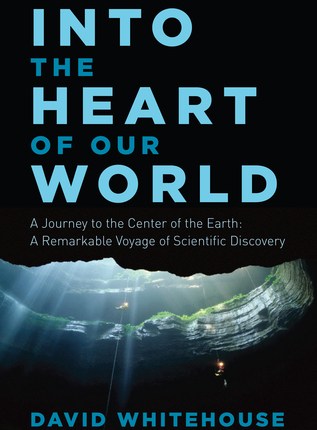
Into the Heart of Our World — A Journey to the Center of the Earth: A Remarkable Voyage of Scientific Discovery by David Whitehouse

Into the Heart of Our World — A Journey to the Center of the Earth: A Remarkable Voyage of Scientific Discovery by David Whitehouse

Into the Heart of Our World-A Journey to the Center of the Earth: A Remarkable Voyage of Scientific Discovery is a mind boggling, hypothetical journey into the world beneath our feet. Whitehouse, an astronomer, has bottled the wonder that he feels for the stars and channeled it into exploring the depths below. Though the science in this book went above my head at times, I enjoyed learning about Earth and its secrets. Into the Heart of Our World would make a great documentary.

Here are the parts that I loved the most:
Whitehouse was discussing the chemical composition and age of some of the oldest rocks on earth: “If the life of the Earth was represented by a day then mankind appeared just twenty seconds before midnight. These rocks have been waiting since about 1 a.m.” pg 52, advance reading copy

On a discussion of plumes beneath the Earth’s surface: “The big question is: can we see mass extinction events on the way up? Some scientists believe we can by looking for the plumes. Such a thing is seen in the south-west Pacific near the Fiji Tonga subduction zone. It’s 700 km deep, has a structure consistent with a massive temperature anomaly and may be rising. It could render the Earth uninhabitable for humans and it will reach the surface in an estimated 200 million years.(!!!!!?!????!!)” pg 146, advance reading copy, emphasis mine

About the core of the Earth: “”The core…is larger than the planet Mars and far more alien. It has one-sixth of the volume of the Earth yet one-third of its mass, and it is liquid, dense yet not thick. If you donned super-protective gloves you could run your hands through it like water. It is this liquid- molten iron, nickel, and a few other elements- that profoundly affects the nature of our planet and protects us from the harshness of the cosmos. In the mantle we suspect that there may be aspects of the subduction cycle that are important for life on the surface. But in the liquid core we have no such doubts. We are certain that life on our planet could not have survived without it, for out of its liquid motions emerges our great protector- the Earth’s magnetic field.” pg2 158-159, advance reading copy.  Who knew?

In a discussion of the magnetic field, some medieval beliefs about magnets:“In the thirteenth century Bartholomew the Englishman (c. 1203-72), author of the book On the Properties of Things, said that ‘This kind of stone restores husbands to wives and increases elegance and charm in speech. Moreover, along with honey, it cures dropsy, spleen, fox mange, and burns… when placed on the head of a chaste woman causes its poison to surround her but if she is an adulteress she will instantly remove herself from bed for fear of an apparition.” pg 167, advance reading copy. Behold the power of magnets.

One last bit of Into the Heart of Our World that was special to me on a personal level: “The oldest working seismograph, over a hundred years old but still fully operational, can be found at the university of Gottingen. It is the work of Emil Wiechert (1861-1928) who was the world’s second professor of geophysics.”pg 80-81, advance reading copy. My husband, a Geiger, is related to the man who created the Geiger counter. I’ve always felt that my family was a bit lacking when it came to scientific contributions. But now, I find out, there’s a geophysicist in the family! In your face, Geigers! :p

If you enjoyed Into the Heart of Our World, you may want to read What If by Randall Munroe or Rust: The Longest War by Jonathon Waldman.  A big thank you to Goodreads First Reads program for a free advance reading copy of this book.  And, thank you for reading!

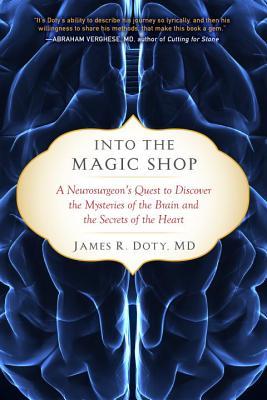
Into the Magic Shop: A Neurosurgeon’s Quest to Discover the Mysteries of the Brain and the Secrets of the Heart by James R. Doty

Into the Magic Shop: A Neurosurgeon’s Quest to Discover the Mysteries of the Brain and the Secrets of the Heart by James R. Doty

This book is James Doty’s memoir. He had a tragic childhood with parents who, for various reasons, were not present for him. Then, after an encounter with a total stranger, James was taught meditation, creative visualization, and positive thought practices that changed his life.

As he comes of age, he dismisses the compassion related portions of his childhood training and focuses instead upon the money and prestige that it brings as he pursues a career as a neurosurgeon. It’s a fascinating and educational account.

Photo by Vidal Balielo Jr. on Pexels.com

I was particularly taken with the near-death experience portion of the book. James approached that experience as an atheist so I felt that made his opinion on it rather different than other accounts I’ve read.

Some of the bits that I want to remember (advance reader’s copy cited so the final published book may contain slightly different wording):
“Some of the wisest patients and people I have ever met have been children. The heart of a child is wide-open. Children will tell you what scares them, what makes them happy, what they like about you and what they don’t. There is no hidden agenda and you never have to guess how they really feel.” pg 3

Photo by Juan Pablo Serrano Arenas on Pexels.com

“Everyone has a story, and I have learned that, at the core of it, most of our stories are more similar than not.” pg 60  But not everyone tells their story.  Thank you, Dr. Doty, for telling yours.

“When our brain changes, we change. That is a truth proven by science. But an even greater truth is that when our heart changes, everything changes. And that change is not only in how we see the world but how the world sees us. And how the world responds to us.” pg 151  I think that this is one of the great mysteries of life.

About his near death experience: “At the time I felt the warmth of a light and a sense of oneness with the universe. I was enveloped in love, and while it didn’t transform my religious beliefs, it informed my absolute belief that who we are today doesn’t have to be who we are tomorrow and that we are connected to everything and everyone.” pg 203

Photo by Pixabay on Pexels.com

“There’s a reason stock traders are using meditation techniques; these techniques help them become not only more focused but, sadly in some cases, more callous. This is what Ruth warned me about before she taught me to visualize. Yes, we can create anything we want, but it is only the intelligence of the heart that can tell us what’s worth creating.” pg 231 A powerful lesson, but one, I think, that can only be learned through personal experience.

If you enjoyed this book, try Proof of Heaven: A Neurosurgeon’s Journey into the Afterlife by Eben Alexander or The Power of the Heart: Finding Your True Purpose in Life by Baptist de Pape.

Thank you to the Goodreads First Reads program for an advance reader copy of this book.  And, thank you for reading!

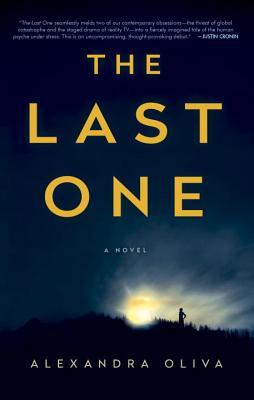
The Last One by Alexandra Oliva

The Last One by Alexandra Oliva

Twelve contestants go on a survival reality show.  It’s a brutal competition and the only way off the show is to say the safe word.  While the filming is taking place, something terrible happens in the real world… and no one tells the contestants.  Will any of them survive?  And, if they somehow survive, will they have a home to go back to?

In the book blurb, The Last One is compared to Station Eleven and The Passage neither of which I liked very much. I thought Station Eleven was boring and The Passage is the Game of Thrones of dystopian literature, it goes on and on and on… Unlike the other two titles, I think that The Last One got the mix of action to number of characters just right. If I had to pick the book that I think it’s most like, I would compare it to Oryx and Crake by Margaret Atwood but with far more like-able characters and a much more optimistic world view.

The Last One is told through a first person, present narrative and a third person flashback, alternating viewpoints between chapters. I was a bit frustrated with that set up until the timelines began to converge towards the end of the book, because Oliva kept putting in foreshadowing, but then not delivering on it until a couple chapters later- just long enough for me to completely forget about it. I’m much more of an instant gratification kind of reader, but I managed to push through it and really started to enjoy the novel despite the style of storytelling.

Mixing reality television with the end of the world was brilliant because the mind set of the people in the reality shows is already in survival of the fittest/game mode. I completely believed the mental breakdown that Zoo suffered when she tried to figure out where the game ended and reality began. She was put in a situation where she wasn’t supposed to know what was going on and then, she didn’t even know when exactly, no one knew what was going on. This type of world ending felt much more believable than the descent into chaos in World War Z or Station Eleven because of that slow transition to a different world provided by the reality tv show setting.

Also, anyone who’s ever watched reality tv will immediately grasp the archtypical roles that Oliva uses to label her characters and it makes it simple to keep a rather large group of people straight in your mind. Fans of Big Brother, Top Chef, The Jersey Shore, and any of the countless other offerings of that genre will eat this up.

What I loved most about this book is that it was so easy to put myself in Zoo’s shoes. In this passage, she’s talking about her reluctance to go on the show: “It didn’t used to be so difficult to leave, but it was different before I met my husband. Before- leaving Stowe for college, that summer hiking hostel to hostel across western Europe, six months in Australia after graduating from Columbia- my fear was always tempered by excitement enough to tip the scales. Leaving was always scary, but it was never hard. But this time I not only left familiarity behind, I left happiness. There’s a difference, the magnitude of which I didn’t anticipate.”advance reader, pg 24-25

Cooper, aka Tracker, was also so relatable. He reminded me of various people that I have known in my real life: “Cooper was kind of like that at first. Standoffish. I don’t know what drew me to him so strongly from the start. No- I do. His air of almost freakish competence. The way he scanned each of us, assessing without looking for allies, because from the moment he leapt into that tree it was clear he didn’t need anyone but himself. I bet his entire adult life has been like that: needing no one, being needed by no one- existing without apology and accomplishing wonders. I’d never been around someone so supremely independent before and was fascinated.” advance reader, pg 38

The reality show mentality begins: “Waitress’s animosity doesn’t surprise Exorcist, but Rancher’s agreement does, as do the many nodding heads around the campfire. Briefly, he looks into a camera lens, as though accusing the device of having put the others up to this. Indeed, that’s exactly what he’s doing; he thinks they’re performing- like he is. But the truth is most of the contestants have in this moment forgotten that they’re being recorded. An ancient instinct is kicking in, not so much a survival-of-the-fittest mentality as an unwillingness to carry an able but lazy individual.” advance reader, pg 174

Zoo’s confusion between reality and reality television makes for some really intense, introspective moments: “I wonder how I’m being portrayed now. I know what my role was when we started. I was the earnest animal lover, always cheerful and up for a Challenge. But now? Will they cast me as off my rocker? Probably not; that’s Randy’s role, with his stupid gold cross and his tales of possessed toddlers. But whoever I am now, I’m no longer who I was. I wonder if I can even do that anymore, be that person grinning until her cheeks ache. It was exhausting, as exhausting as this endless trekking, in its own way.” advance reader, pg 185 After awhile, I started to wonder if Zoo would ever accept what was really happening to her or choose to keep soldiering on and never come back from the world that she was building in her head. I liked her enough though, that I was cheering for her sanity, every step of the way. That’s the sign of a good book, I think.

Finally, I loved this moment, when Zoo’s happy mask begins to crack on the television show and how she’s received: “Waitress is shocked, as are Rancher and the camerman. The producers will be shocked too, and the editor, who will work so hard to explain away this moment. But there is at least one viewer who won’t be shocked: Zoo’s husband. He knows this secret competitive side of her, her impatience for wallowing and delay. He also knows how fear can turn her mean.” advance reader, pg 221. Ah marriage, the ultimate reality show.

There’s a lot more to The Last One that I’m not going to talk about here because I don’t want to spoil anything for anyone. It’s a great book. I recommend it for readers who enjoy dystopians, for television watchers who enjoy reality shows, and for anyone who has ever wondered about their capacity to survive the end of the world. Could you be as strong as Zoo? Could I? I wonder…

Thank you to the Goodreads First Reads and NetGalley for advance reading copies of this book.  And, thank you for reading! The full text of this review has also appeared on my public library’s blog : ofplblog.info