Orlean Puckett: The Life of a Mountain Midwife by Karen Cecil Smith

Orlean Puckett: The Life of a Mountain Midwife by Karen Cecil Smith
orlean-puckett

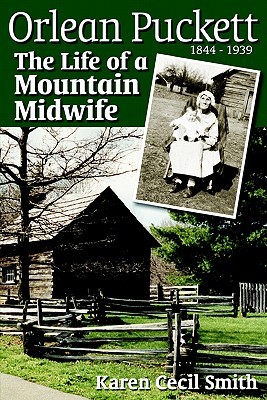
The Life of a Mountain Midwife is an interesting, but sometimes meandering, biography about a midwife named Orlean Puckett who lived and worked in rural Appalachia.

This reminded me of Laura Ingalls Wilder’s Little House on the Prairie books in that Karen Cecil Smith takes great care to detail the day-to-day chores, food, clothing, and lives of the people of Appalachian Mountains in the 1800’s to 1900’s. I loved those intimate details, many of which are completely gone from the modern lifestyle like chopping wood, lighting the stove, and cleaning laundry by hand.

Also, I am a big fan of BBC television show, Call the Midwives so the chapter detailing Puckett’s extraordinary midwifery skills was fascinating to me. Take this gem: “Aunt Orlean continued to ask, ‘Don’t you think it’s about time to feather her?’ Dr. Cundiff finally said, ‘Okay,’ at which point Aunt Orlean produced from her bag a goose feather. She stuck it into the fire and then placed the smoking feather beneath the mother’s nose. The mother started coughing and sneezing and the baby was born immediately.” pg 101 Can you believe that!

Astoundingly, Orlean Puckett delivered over 1000 babies with almost zero training and never lost a mother or child.

Photo by Pixabay on Pexels.com

Karen Cecil Smith utilizes actual interview tidbits from many of the people who knew Orlean Puckett for this book and that was also enjoyable. She maintained their improper grammar and local accent which lent real flavor to the narrative. For example, many of the children that Orlean helped deliver said that she “borned” them. Here’s a memory from a relative: “Now I was gonna stay up there one night with Granny (Orlean) and she was gonna learn me how to bake wheat bread the next mornin’ and Uncle Stewart he had to go to work and they waked me up and wanted to know if I wanted to put on bread.” pg 57

My only complaint about this book is that it wanders in places and the reader is led into extended stories about ancillary people to Orlean’s life when, this reader at least, just wanted to know more about the Orlean herself.

Photo by Lum3n on Pexels.com

If you are mainly interested in local history, this book is like a casual conversation with an elderly friend. I’d even go so far as to compare it to an unedited Story Corp interview. It can be charming but also frustrating when the story goes on and on but doesn’t seem to go anywhere.

If you enjoyed this book, I’d suggest any of the Laura Ingalls Wilder series. They have the same sort of detail oriented focus but with more of a story line.

I received a free copy of this book through Goodreads First Reads program. Thank you for reading!

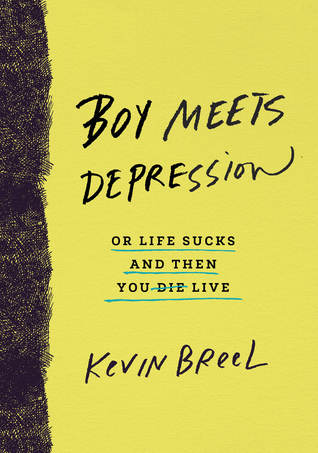
Boy Meets Depression: Or Life Sucks and Then You Live by Kevin Breel

Boy Meets Depression: Or Life Sucks and Then You Live by Kevin Breel
boymeetsdepression

Boy Meets Depression is a raw memoir written by someone who lived through the depths of mental illness but, fortunately for the world, lived to tell about it.

Between relating events from his past, the author pokes around in the dark corners of his mind and it can be difficult to read because of his brutal self consciousness. Kevin Breel’s flowing, almost stream of consciousness, writing style probably isn’t for everyone, but I generally liked it because it allowed me to literally step inside his brain while I was reading his book.

Having dealt with a bout of crippling depression when I was at the age Breel describes here, I empathized deeply but also was forced to look through the mirror of my own recollections at moments that I perhaps didn’t want to remember.

But, that was ok. Breel’s point is that these life stories and experiences do not define us, it’s what we do with our lives that does.

A few highlights for me:

“You make a better life through example, not opinion. You can’t just think things. You gotta live them out.” pg 167 He found a counselor he liked and this was in one of their conversations.

“The thing about trying to figure out who you are is that it’s big waste of time. You never end up finding yourself, only being a part of the journey which is creating you.” pg 172 A conversation with his mother in which he realizes that he can go to therapy until he croaks but that the point of life is to live it.

“I’m not much a fan of stars, but I am a fan of the idea that sometimes life has to go pitch black before you can really appreciate the light.” pg 174  In this passage, Kevin was talking about the extreme darkness in the Yukon and how it allows people to see stars in the sky that they would not normally be able to see. What a beautiful metaphor for depression and life.

“I used to think that focusing on the here and now was just a cute way of ignoring life. Now I see it’s the opposite: the here and now is life. Everything else is just self-talk.” pg 188  How extraordinary that Breel has been able to come to this conclusion so early in his life. I think that generally it takes folks longer to come to the realization that the world in your mind isn’t real, just a story.

Photo by cottonbro on Pexels.com

I wish that our society could come up with better ways to address and treat mental illness than what we have figured out so far, but with books like Boy Meets Depression and Furiously Happy by Jenny Lawson I think that we have at least found a place to start the conversation.

Personal accounts of the darkness that dwells in our minds and the slow climb back into the light of wellness serve a purpose beyond a cathartic release for the author. It lets any of the book’s readers, who may be suffering with the same issues, realize that they’re not alone and that there are ways out. These books are like flashing exit signs to people who may be lost in a frighteningly dark place and I only hope that they find their way at the right time into the hands of the ones who need them most.

I received a free advance reading copy of this book through GoodReads First Reads program. Thanks for reading.

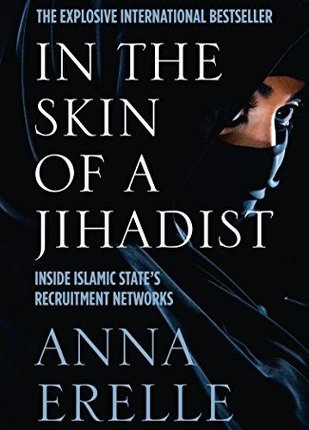
In the Skin of a Jihadist: Inside Islamic State’s Recruitment Networks by Anna Erelle

In the Skin of a Jihadist: Inside Islamic State’s Recruitment Networks by Anna Erelle
jihadist

This book was scary.

First of all, I had no idea how widespread the problem of young men and women leaving their home country to wage jihad had become. Anna Erelle was almost effortlessly sucked in to a horrific situation that has actually happened to hundreds of young people from Europe.

She demonstrates how easily a young woman, who may be lonely, marginalized, or searching for meaning, could be swept away by a religious fanatic so that she could never return home.

Once these young people hit the Syrian border, their passports are taken so that, even if they changed their minds, they couldn’t go back. And, the worst part is that it happened so quickly. The events of In the Skin of a Jihadist occur over the course of one month.

Reading this as a parent, this book was a nightmare. One minute, your child is home with you- the next they’re on a one-way flight to Turkey and they’re never coming back.

As compelling as the story was, it suffered from some small translation problems. (It was originally written in French.)

Why, for example, did Anna get into that fight at the photojournalist party? I know that she was under pressure and had had too much to drink, but, if it had been me, I wouldn’t have punched a bouncer because I was upset about how my story was going. When everything soured, I would have packed my bags and taken the first flight home.

That probably only shows how she’s a more serious journalist than I am, but still. I felt as if I was missing some details about why she was behaving how she was and how the French police used her contacts and information to prosecute terrorists.

Overall though, it was a harrowing read. I learned more about Sharia law than I had known before I read this book and also about why people would chose that type of lifestyle- it was all profoundly disturbing.

Read In the Skin of a Jihadist if you want to know more about this issue but prepare yourself for some eye-opening revelations.

If you want to learn more about this topic, I’d recommend reading The Terrorist’s Son: A Story of Choice by Zak Ebrahim or I Am Nujood, Age 10 and Divorced by Nujood Ali.

I received a free copy of this book through GoodReads First Reads program. Thanks for reading!

The Age of Cosmic Consciousness: Discover Your True Identity & Accelerate Your Evolution by Transform Publishing

The Age of Cosmic Consciousness: Discover Your True Identity & Accelerate Your Evolution by Transform Publishing
ageofcosmic

Time for the hippie librarian to get a little New Age-y!

The Age of Cosmic Consciousness is a bunch of different metaphysical concepts strung together sort of like Ram Dass’ Be Here Now but written on regular paper instead of- I don’t know what that stuff is- let’s say brown paper bags.

The first thing to know about this book is that it is written in a flow of consciousness style. I found it very difficult to get into, but then hypnotic once I got reading, and thus it became difficult to put dow

. I found it similar to Kelly Howell’s Secret of the Universal Mind Meditation in that one idea leads to the next idea in a very natural and linear fashion.

A lot of the concepts in here have been covered by The Secret and various other authors. There’s a good bit about the Law of Attraction, but there’s so much more than that.

What I loved about this book can be summed up in this quote: “Do not overly focus on the inaccessible gurus and unapproachable enlightened people. Recognize and accept that a higher consciousness can be attained by anyone who proactively pursues its realization.” pg 136 I truly believe that enlightenment is for everyone and possible for everyone. This book really puts that idea forward.

That being said, I don’t know that I was prepared for the “other beings of light consciousness” mentioned in this book or the section that purports to have information directly from them but not “channeled”. Or the other section about aliens tampering with human DNA in the dawn of time. My inner self doesn’t necessarily “resonate” with those ideas yet, but some readers out there may feel it and understand it.

Photo by Julia Volk on Pexels.com

In conclusion, The Age of Cosmic Consciousness is worth the read for anyone interested in improving themselves and the world through inner transformation. Remember to keep an open heart and mind because some of the ideas presented are fairly “evolved”. Some similar books are: Be Here Now and Gateway to the Heavens: How Simple Shapes Mould Reality and the Fabric of Your Being.

I received a free copy of this book through the Goodreads First Reads program. Thanks for reading!

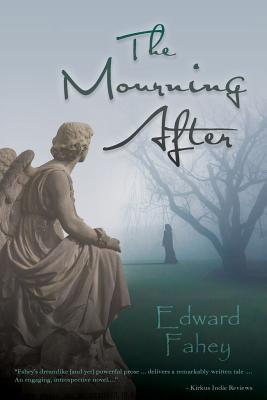
The Mourning After by Edward Fahey

The Mourning After by Edward Fahey

mourningafterA New Age romance that takes place in the modern era. This is a story about reincarnation, missed chances, and the eternalness of love.


The Mourning After is very dark- so much so that at first I wasn’t sure that I was going to make it through the book. I eventually did, but I was depressed the rest of the day after I finished it. Reader, you have been warned. This book reminded me of Wuthering Heights in that the main characters just can’t seem to get their act together, romantically, but with some metaphysical twists like reincarnation thrown into the plot.

Take this bit, when Denis is about to have a psychotic break/break through to remembering his past lives: “Waters; I…” I looked up. The world was filled with his eyes. So dark, so piercing; and yet so tender. He was only trying to help. “You’re right, Buddy, I’m sorry. It’s just, my brain’s fried and I can’t do this tonight. I should, and I’d like to, but I can’t. I’m so awfully tired.” “Which is exactly when a spirit can break through.” pg 66  The scene builds from there. It’s very intense but true to how, at least how I’ve experienced, those types of things go in real life.

I also liked this part- where the main character is practicing channeled writing: “I began writing bits and pieces of a fictional story around Emma and Squire… Then something else kicked in that seemed joyful and sure of itself. I wrote faster and faster, scribbling down notes, piling them up in boxes, binders, and pocket scraps… Ideas and images kept popping out of nowhere; I had to get them down before they vanished for another hundred years. Or maybe forever.” pg 100

Very accurate and lovely. That is definitely one of Fahey’s strengths- a descriptive narrative. One last part that I thought was beautiful: “I still remember things M told me when we were small… Like the time she said, “Adults don’t know some things kids know. They don’t remember, I guess. They don’t listen inside each other anymore. Maybe they’ve just forgotten how; they’re just too busy doing big people stuff; I don’t know.” pg 115

Childhood is like that, yes?

If you enjoyed The Mourning After, I’d suggest reading Angels on Overtime by Ann Crawford. It is also a romance with metaphysical/New Age overtones, but its overall feel is a lot more playful than this read. I received a free copy of this book through the GoodReads First Reads program. Thanks for reading!

Dude Making a Difference: Bamboo Bikes, Dumpster Dives and Other Extreme Adventures Across America by Rob Greenfield

Dude Making a Difference: Bamboo Bikes, Dumpster Dives and Other Extreme Adventures Across America by Rob Greenfield

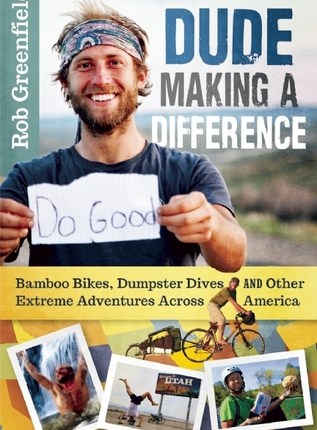
In Dude Making a Difference, Rob Greenfield has some interesting ideas about how to conserve resources, promote sustainability, and how to educate others on natural resources, transportation, personal hygiene, and more.

I don’t think that many of the methods that Rob uses will work for everyone, but they seem to make him feel better about his lifestyle.

In his quest to save the planet, Rob fights with the photographer who comes along on the 4,000+ mile bike ride (though he omits the details of these misunderstandings). I found that small detail to be ironic. It seems as if Rob cares more about the planet than he does about getting along with the people on it.

Photo by Leandro Boogalu on Pexels.com

I think that if he embraced working within the system rather than getting under other folk’s skin and bucking the system, then he might make more headway with convincing others to his point of view.

As it is, Rob runs afoul of multiple municipalities on his trip because of his dumpster diving and naked hi-jinks. I’m not saying that the system is perfect or that one shouldn’t question authority if you believe that the status quo is bogus — what I am saying is that I feel as if Rob pushes the issue just to see what he can get away with and to tell the story afterwards.

I learned quite a lot about small changes that I can make to my current lifestyle to save resources like changing out my faucets or utilizing a PowerPot (that particular product seemed exceptionally cool). But, the majority of this book felt repetitive and somewhat preachy.

Photo by Elina Fairytale on Pexels.com

Rob gets up from wherever he crashed for the night (rarely from a real bed, of course), he either feels energized or not, he scavenges for food from local dumpsters, gets yelled at for that or not, gets on the road where he either feels energized or not, promotes his sustainability initiative for the day- be that biking barefooted, or going without the seat on his bike, or using only leaky faucets to get drinking water- then he rides for awhile, finds somewhere to sleep, pops on social media while either plugging his computer into the grid or not- but justifying it either way- and then goes to sleep either energized by his day or not.

Repeat, repeat, repeat. For 104 days.

It’s interesting how Rob relies on waste to get by for much of the time because, if he succeeds in his quest to lower waste, he wouldn’t be able to live the lifestyle that he’s promoting anymore.

The cognitive dissonance in such a position would drive me bonkers, but Rob seems ok with it. I admire what he’s doing, but I just don’t believe in his methods.

If you enjoyed Dude Making a Different, you may want to read Outsmart Waste: The Modern Idea of Garbage and How to Think Our Way Out of It by Tom Szaky or The Art of Non-Conformity: Set Your Own Rules, Live the Life You Want, and Change the World by Chris Guillebeau.

I received a free copy of this book from the GoodReads First Reads Giveaway program. Thanks for reading!

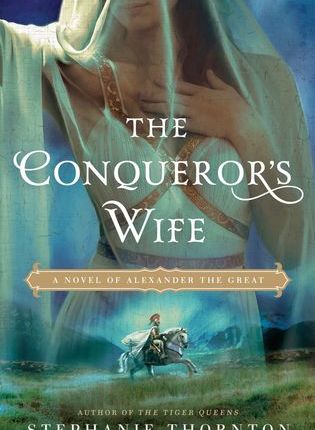
The Conqueror’s Wife: A Novel of Alexander the Great by Stephanie Thornton

The Conqueror’s Wife: A Novel of Alexander the Great by Stephanie Thornton

theconquerorswifeA historical fiction about Alexander the Great from the viewpoint of the women in his life.
I have mixed feelings about this one. I read it, well devoured it really, in just a few sittings. It falls right into the type of historical fiction that I love: pre-1700’s time period about mythological/royal persons. The Conqueror’s Wife is very readable.

The thing is, and the author wrote this too in her afterword, Alexander’s personal life, outside of his military conquests, generals, and favorite horse, is so shadowy that Thornton could have written this book really however she wanted. I loved that she focused on the females in Alexander’s life because, of all of the people from that time period, they received the least attention from historians. However, I feel that she did some of them, Roxana and Olympias in particular, a great disservice in her interpretation.

Remember, women had no rights at this time. Marriage was either a matter of wealth or position. Love didn’t enter the equation until the medieval troubadour tales of the 1200’s.

After his many, many successes on the battlefield, somewhere very far from home, Alexander takes a wife from among the ‘barbarians’ that he and his friends were working very hard to conquer. All that we know about this woman (Roxana) was written down or remembered by the very people who killed her after Alexander’s untimely demise. Why earth would he have married a woman with no connections or a ‘whore’? He wouldn’t have.

Let’s just take the facts: Alexander dies and then most of his wives are dead soon thereafter. From that, I would say that Roxana is one of the least likely people to have committed either of those crimes because all of her power stemmed from Alexander. I suspect strongly that Alexander’s Companions, the ones who were left after years of campaigning had taken its toll, were the culprits. How easy would it have been for them to spread the rumors about Olympias and Roxana as Dionysian witches and whores to explain to posterity why they were slaughtered. Alexander’s generals had the most to gain, an entire empire, by discrediting these women.

And, if Olympias was the master manipulator that she is portrayed as in this, then why wasn’t she able to protect herself or her grandson after Alexander’s death? I think it is because she had neither the resources nor the ability to do so, which means, that she wasn’t what history recorded her to be at all. She was a victim of the fallout after her son’s death just like Alexander’s wives.

Anyway, if I had been Thornton and written this book, I would have made each and every female character a hero. History is recorded by the victors and the powerful. The women deserved, if not a happy, then at least an honorable ending.

If you enjoyed this book, you may want to read The Red Tent by Anita Diamant or anything by Kate Quinn or Margaret George.

I received this book through the Good Reads First Reads program. Thanks for reading!

How to Talk About Places You’ve Never Been: On the Importance of Armchair Travel by Pierre Bayard

How to Talk About Places You’ve Never Been: On the Importance of Armchair Travel by Pierre Bayard
armchairtravel

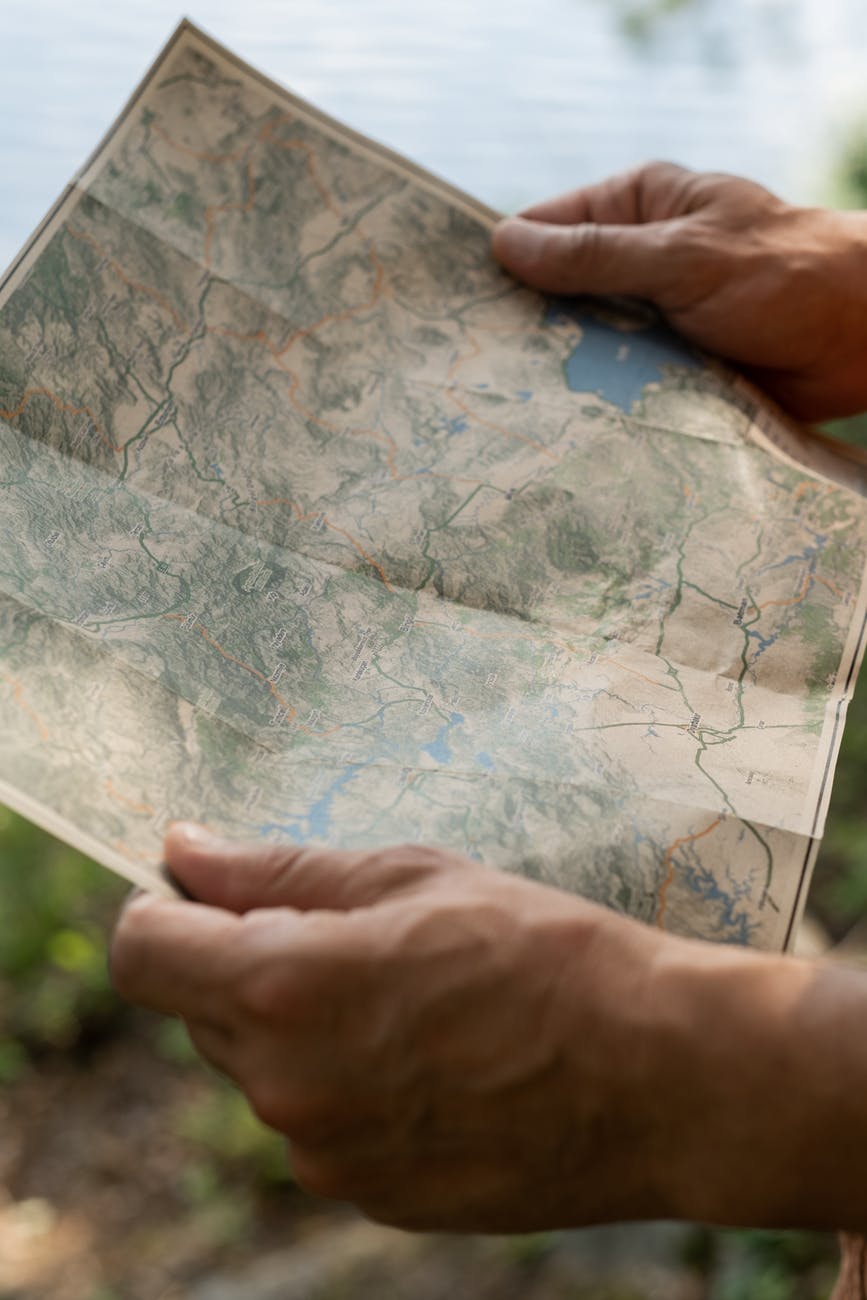
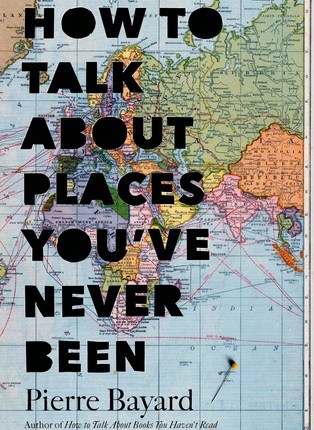
How to Talk About Places You’ve Never Been is a funny little non-fiction book about the skill of conversing about places you’ve never actually been.

At first, I couldn’t figure out what tone the author was wanting to convey because he, quite seriously, discusses why and how to describe places that the reader has never been- a topic that I, before I read this, didn’t take seriously at all.

I eventually settled my inner dialogue’s tone to “slightly grizzled professor who is smiling while lecturing” and that seemed to fit the bill.

There’s a lot to enjoy in here like Marco Polo’s hilarious description of unicorns.

Polo is presented as an armchair traveler because he left out so many important details about the area he was describing (like the Great Wall) and, quite brazenly, made other stuff up: “They have great numbers of elephants and also great numbers of unicorns, which are not smaller than the elephants. Here is what they look like: they have the same hide as a buffalo, feet like an elephant, and they have very thick, black horns in the middle of their foreheads.” pg 9

Photo by mark glancy on Pexels.com

Oddly enough, that sounds rather like the Siberian unicorn, doesn’t it? Only problem is- they became extinct so long ago, that Polo would have never seen one.

The character Phileas Fogg from Around the World in Eighty Days by Jules Verne, goes around the world and never leaves his cabin to see the sights.

Bayard thinks this is an excellent strategy: “The idea of staying in your cabin for the entire journey highlights the importance of the imagination and reflection in our approach to place. These are activities that Fogg is able to commit himself to completely vis-a-vis the places passed through, with all the more energy because he doesn’t waste precious time visiting them.” pg 29

Chateaubriand went beyond simply trying to describe his travels in Ohio, he put an island into the middle of it in his “memoir.”

Photo by Ron Lach on Pexels.com

Bayard applauds his imaginative creation as precise accuracy of physical locations is not what is necessarily important to an armchair traveler:“As Jean-Claude Berchet recalls, (the island) was first situated in what is now Florida at the time of Travels in America. Migrating, it then made a foray into the Mississippi at the time of an 1834 manuscript, before, following its movement northward, it found itself here in Ohio, several thousand kilometers away, clearly justifying the epithet of “a floating island.” pg 57

Bayard’s reasons why the reader may, one day, have to convince someone that they had been somewhere that they actually had not been: “The first is adultery. … The second, murder, is fortunately less common, but any one of us might become confronted with the necessity of having to take this route to ensure our peace and quiet one day. pg 103

How exciting and dramatic! And here I thought this book was just about sitting in your chair and day dreaming. 🙂

Photo by cottonbro on Pexels.com

“It is impossible to hope to speak with any conviction of places you haven’t been to without a vivid imagination. The capacity to dream and to make others dream is essential to anyone wanting to describe an unknown place and hoping to capture the imagination of their readers and listeners.” pg 123

Dream on, readers, dream on!

If you enjoyed How to Talk About Places You’ve Never Been, you may want to pick up The Art of Travel by Alain de Botton or The Art of Non-Conformity: Set Your Own Rules, Live the Life You Want, and Change the World by Chris Guillebeau but, keep in mind, these books recommend that you actually go to the places, not just dream it.

I received this book through the Good Reads First Reads program. Thanks for reading!

Under the Empyrean Sky (The Heartland Trilogy #1) by Chuck Wendig

Under the Empyrean Sky (The Heartland Trilogy #1) by Chuck Wendig

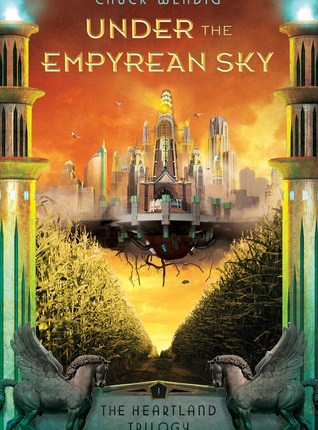
undertheempUnder the Empyrean Sky is the story of Cael and his friends, Rigo and Lane. They live in the Heartland, an agrarian world of genetically modified corn where no other crops thrive because of the aggressiveness of the new crop. There is little to no opportunity for education or work because the Empyreans, a separate section of their society that cruises overhead on their giant, flying machines, controls every aspect of their life from the food that they eat to who they can marry. Cael is the head of a scavenger crew who, in the course of their work day, stumbles across a forbidden garden and their lives change course forever.

This story was exciting. From the first scene of a race between scavenger crews for a malfunctioning piece of farm equipment to the end with an inevitable clash with the Empyrean, the story unfolds at a breakneck pace. If Cael isn’t dodging the local Overseers, he’s sneaking into quarantined cities or trying to harvest illicit vegetables. I loved how this novel was nearly constant action.

The dystopian world that Wendig creates feels scary and out of control. The plants, that the Heartlanders are forced to cultivate, attack them. The Empyreans, who aren’t properly introduced in this novel but I assume that they will be in future books, are outlandishly rich, extremely powerful through their advanced technology, and completely removed from the reality on the ground. The local authorities take advantage of the power of their position to line their own pockets at the expense of their neighbors. The reader feels Cael’s fury at his inability to control his life and the unfairness of the situation into which he was born.

It’s a small thing, but I didn’t like how the first half of the book was told nearly exclusively from Cael’s point of view and then towards the second half, the viewpoint began to bounce around between Cael and his friends. I think I would have enjoyed the story more if the narrator had remained the same throughout or had switched around from the beginning.

Another small complaint about the story is that the Empyrean lottery to join the ruling class on their air ships felt a lot like The Hunger Games or The Giver but with the outcome being presumably positive instead of a death match. Maybe it’s time for YA dystopian literature to move away from the lottery scenario.

That being said, fans of The Hunger Games or other survival/dystopian stories may really enjoy Under the Empyrean Sky. It’s fast-paced and surprising in its twists and turns. I sincerely hope that Cael’s story turns out well, but with the enormous odds stacked against him, it seems almost impossible that it could. I guess I’ll have to read the next book and find out.

I received this book as part of the Goodreads First Reads giveaway program.

Thanks for reading!