Tree of Ages (Tree of Ages #1) by Sara C. Roethle

Tree of Ages (Tree of Ages #1) by Sara C. Roethle

Tree of Ages is a fantasy novel about a tree who becomes a girl… or is it a girl who becomes a tree and then reverts back into a girl?
Photo by Maria Orlova on Pexels.com

Finn is trying to figure out who she is and so is the rest of the world- which itself is on the verge of something big, something having to do with the magical creatures.  Author Sara Roethle calls these creatures, ‘Faie,’ who disappeared years ago and now are reappearing all over the place.

The group’s trip into the fairy forest was my favorite part. That whole section had me flying through the pages, I just had to know what was going to happen next!

Photo by mali maeder on Pexels.com

Sadly, this is only the first installment and I was left with so many questions: will Finn ever figure out who she is? Will Aed come to terms with his shadowy past? Will Iseult clear his family name?

Guess I’ll have to read the next novel to find out…

This book, the first in a series, reminded me of Katharine Kerr’s Deverry saga. We have an old, wizard type person in Aed (Nevyn in Deverry), who is trying to help a young female, Finn (Jill in Deverry), come into her powers. Then there’s the confused, tormented, perhaps love interest, Iseult (Rhodry in Deverry) and a whole cast of other characters who are along for the ride.

Photo by Athena on Pexels.com

And, like Kerr’s creation, the world that Roethle has crafted is very large and unexpected with, sometimes terrifying, creatures.

I’d recommend Tree of Ages for anyone who loves high fantasy.

If you like this, I’d also suggest Katharine Kerr’s Deverry (start with Daggerspell) and Kage Baker’s The Company series (start with In the Garden of Iden).

Baker’s world is more of a steam punk/historical fiction/low fantasy type place, but I think that the relationships that she has knit together were quite like what Roethle has made in Tree of Ages.

Here’s a short book trailer for “Tree of Ages” by Sara C Roethle. Available on all digital platforms for only 99 cents: https://books2read.com/u/bw8XAe

I received a free copy of this book through Goodreads First Reads. FTC guidelines: check! And thank you for reading.

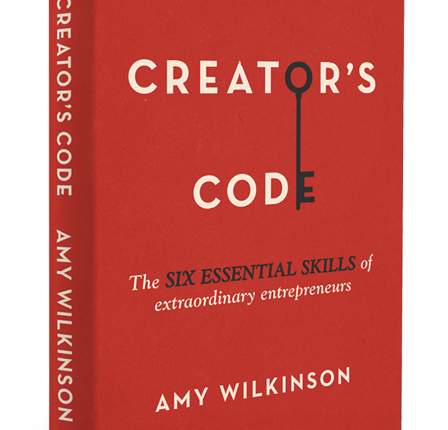
The Creator’s Code: The Six Essential Skills of Extraordinary Entrepreneurs

The Creator’s Code: The Six Essential Skills of Extraordinary Entrepreneurs

For The Creator’s Code, Amy Wilkinson interviewed over 200 wildly successful entrepreneurs and narrowed down the skills that they used to create their businesses to an “essential” six.

These essentials are the keys to the “creator’s code,” she writes.

Photo by Canva Studio on Pexels.com

My favorite chapter from The Creator’s Code is Chapter 5: Network Minds- Solve Problems Collectively. We’ve recently instituted some collaborative projects where I work and I’m excited to see this creative skill in action.

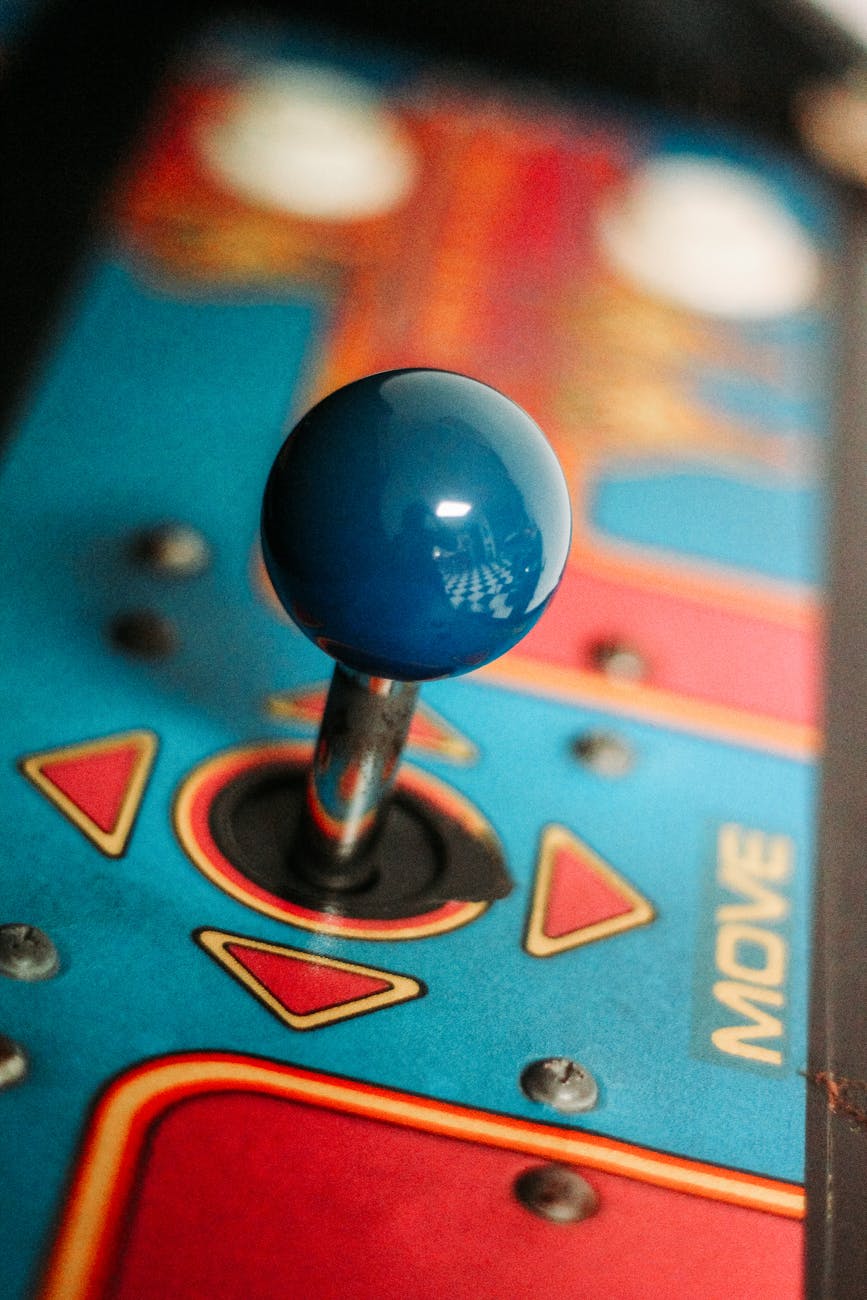
Also, I enjoyed the portion of the book where Wilkerson explored businesses trying to integrate computer games into the work day in order to encourage co-workers to help each other as well as to instill a sense of play into the creation process.

Photo by Garrett johnson on Pexels.com

I wish that my library management system could be tweaked to do something like that. Imagine how fun that would be! Playing computer games in order to boost productivity.

In some ways, this book reminded me of Napoleon Hill‘s Think and Grow Rich. He also interviewed hundreds of wealthy people to understand their mind set. However, unlike the New Age, positive thinking slant of Hill’s work, Wilkinson relies on scientific studies as well as real world results.

Of the two approaches, I personally favor Napoleon Hill’s, but readers of a more scientific mind-set might enjoy this book more.

Photo by Pixabay on Pexels.com

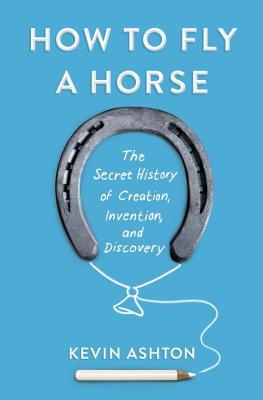
While we’re on the subject of read-alikes, I also read [book:How to Fly a Horse: The Secret History of Creation, Invention, and Discovery|20342540] by Kevin Ashton and it shared some of the stories from The Creator’s Code.

It felt slightly repetitive because of this. Otherwise, I may have given The Creator’s Code five stars instead of four. It felt like I was covering the same material. Despite this bookish deja vu, The Creator’s Code is very well researched.

Photo by Pixabay on Pexels.com

So, if you’ve already read the other book, don’t be hesitant to pick this one up too. It was just not ground-breaking reading for me- my reviewer’s bias, I suppose.

There are some differences between the two works: How to Fly a Horse focuses on the history of the creative process and uses that knowledge to encourage the average Joe to be creative today.

The Creator’s Code has distilled the essential nature of creation and lists guidelines that can be used for success in business, art, science, whatever.

Though both encourage creation, Wilkinson gives actionable steps to take at the individual level whereas Ashton focuses more on the big picture.

If you enjoyed The Creator’s Code, I highly recommend How to Fly a Horse by Kevin Ashton and Think and Grow Rich by Napoleon Hill. Both of these works share the themes of success in business through creativity exploration.

I received a free copy of this book through Goodreads First Reads. FTC guidelines: check! And thank you for reading!

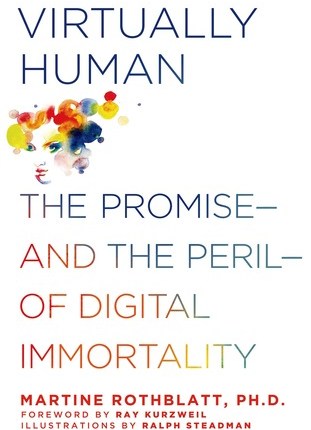
Virtually Human: The Promise and the Peril of Digital Immortality by Martine Rothblatt

Virtually Human: The Promise and the Peril of Digital Immortality by Martine Rothblatt

Dr. Martine Rothblatt, an expert in medical ethics, takes the time to imagine a future in which artificial intelligence is real and the potential problems that could arise from such interactions.

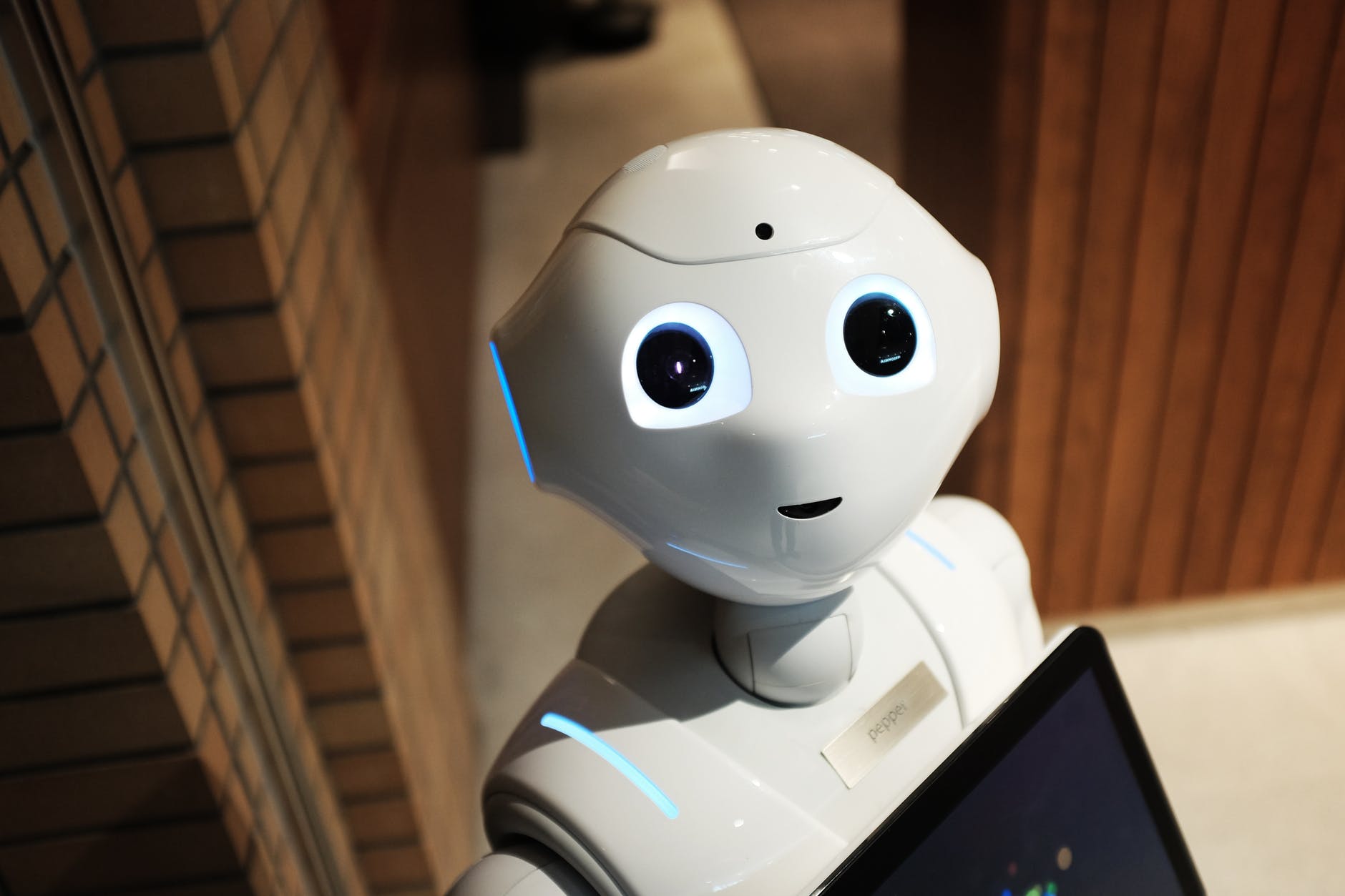
Photo by Alex Knight on Pexels.com

Unfortunately, I found Virtually Human to be virtually unreadable.

The introduction sounded promising enough — a description of the robot that Dr. Rothblatt created and its capabilities — but then Dr. Rothblatt launches into an abstract conversation about what is consciousness. She applies her definition to hypothetical artificial intelligences, which haven’t been created yet, and proceeds into a dizzying array of potential scenarios involving mindclones and “bemans”.

She talks about potential marriages between people and machines, various types of AI — some dysfunctional, some not — voting rights, reproduction rights, and more. It all reads like a discussion of very dry, very abstract human rights law mixed with a smidgen of science fiction, but not enough to be engaging.

Photo by Pixabay on Pexels.com

Dr. Rothblatt certainly knows her stuff, but is seemingly unable to impart her knowledge in an approachable manner. Perhaps, I should say, this is a book that would probably be enjoyed by scholars interested the subject.

I suppose this might be more interesting when such technology actually exists, but in the meantime, it seems rather pointless to be asking ourselves if mindclones should have the right to vote or not. I’m not convinced that by asking ourselves unanswerable questions we’ll be better prepared for when/if this sort of thing actually occurs. Maybe we’ll just have to take life as it comes.

I received a free copy of this book through Goodreads First Reads.

Thanks for reading!

Vita Maglia by Brit Malorie

Vita Maglia by Brit Malorie

In Vita Maglia, the spiritual realm is just beyond the fabric of the real world.

Within this other world, spiritual entities like souls, angels, and demons are physical realities.

The story begins with a mystery on a dangerous island called Kadera where reality seems “thinned” and visitors experience a strange ability to sense other people’s emotions.

Photo by Stijn Dijkstra on Pexels.com

Why is the island so strange? What is the subject of Zander’s father’s unending studies?

Why does that one person, at the start of the book, die screaming with her skin torn to shreds?

The story answers all of these questions in a timely and satisfying manner.

A warning: don’t start reading it unless you have time to finish it. It’s engrossing and addictive.

Photo by cottonbro on Pexels.com

Brit Malorie has crafted an extraordinary fantasy world.

It absolutely hooked me. I started to read it in the morning and ended up finishing it in one afternoon.

I felt that the characterizations were strong for this genre, particularly the antagonist.

Malorie’s villain, Lynch Katlan, is totally believable, psychotic, and terrifying.

I haven’t been this frightened while reading about a character since Ramsay Bolten in George R.R. Martin’s series. Seriously.

Photo by Lucas Pezeta on Pexels.com

Further on in the tale, I felt that we didn’t spend enough time in Maglia. Yes, we talked about it a lot and the characters were clearly focused on getting there, but we weren’t “there.”

So, if I had any criticism for this story, that’s it.

I wanted to spend more time in this fantastic world experiencing the different creatures and environments.

Strangely enough, I had the same complaint about Jeff Vandermeer’s Authority.

Recommended for readers who long for escape from reality and fantasy fans.

Thank you to Goodreads First Reads and the publisher for a free copy of this book for review purposes.

Thanks for reading!

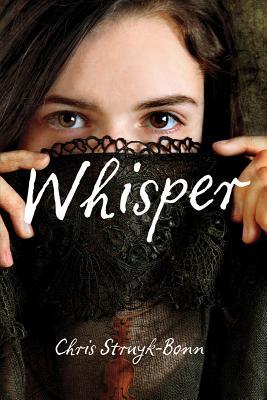
Whisper by Chris Struyk-Bonn

Whisper by Chris Struyk-Bonn

Whisper has a cleft palate. In this young adult dystopian tale, she and other deformed children are cast out of society because of their abnormalities.

This story is about how she survives and holds her new family, made up of other rejected children, together despite obstacles at every turn.

Whisper was a far darker story than I expected.

Photo by luiisrtz on Pexels.com

Terrible things kept happening to Whisper and I kept telling myself that it would turn around soon. And it didn’t.

If she wasn’t running from someone who was trying to harm her, she was freezing or starving. She’d get a modicum of security and then lose it.

I was really cheering for Whisper to embrace her special abilities, but she never seems to manage it.

Honestly, I was disappointed by the heroine’s decisions at multiple times in this story.

As one of the children tells Whisper: “You will never go far in this world if you don’t know how to rescue yourself.” And, in my opinion, she never did what was best for her own survival.

The author describes the setting as “near future” but if she had taken out the cars, refrigerators, and indoor plumbing, it could just as easily have been the recent past.

Photo by Stefan Stefancik on Pexels.com

It wasn’t too long ago that superstitious people believed birth defects marked someone who would ruin the crops, bring bad luck, or comets shooting across the sky spelled misfortune. In fact, in some parts of the world, this type of thinking still reigns.

I think it’s human nature to try to explain the unexplained and to condemn others for their differences, the physical differences being the easiest to pick out. That doesn’t make it right.

My main complaint about this read was the repetitiousness. After short bursts of frantic activity, Whisper’s life would settle into a routine that was really uninteresting.

If I had to read about her messing up the homemade bread one more time, I was going to put the book down.

Photo by Geraud pfeiffer on Pexels.com

Maybe the author was trying to get the reader invested in the process, but I simply wanted the story to move on. I was already interested in Whisper- I was just over the baking and cleaning.

The same feeling hit me during the multiple music lessons and the days spent playing violin on the streets for change. I guess I prefer my dystopian novels with more explosive action and less daily slogging.

Fans of How I Live Now or Gated may enjoy the pacing and story line of Whisper. As for me, I’m headed back to more action-oriented dystopian reads.

I received a free copy of this book through Goodreads First Reads. Thanks for reading!

Where the Rock Splits the Sky by Philip Webb

Where the Rock Splits the Sky by Philip Webb

Where the Rock Splits the Sky is the story of Megan, a girl who has lost both her father and mother and who lives on the edge of a strange, haunted area called “The Zone.” In this part of the world, people are driven mad by unknown forces and the world doesn’t follow the normal rules of physics.

The Earth itself has stopped spinning because it was invaded by an alien species that the surviving humans call “Visitors.” One day, Megan is told that her father is still alive and that he is in the Zone.

Photo by Pixabay on Pexels.com

She has no choice but to go find him. And the adventure begins.

This story was a surreal, heart-pounding adventure from start to finish.

I loved the dystopian aspect of it- the aliens are truly terrifying because the reader isn’t sure what they can or can’t do. It’s not even clear from the start who is or isn’t an alien.

The guessing game makes for some exciting tension. That same unknown quality is extended to the “Zone” itself so that the story at any moment could pass from normal to totally bonkers.

Photo by Darius Krause on Pexels.com

That uncertainty makes this a great read, in my mind.

I did have some complaints- I wanted more to happen during the final, climatic scene. It felt like after such a great build up that things ended too quickly and neatly. But I suppose one can’t have it all.

Also, this book required a great deal of suspension of belief. I mean, for goodness sake, the world has stopped spinning. That’s some fairly serious physics law breaking. And that is assumed from the start.

Photo by Harry Cooke on Pexels.com

This novel reminded me of The Gunslinger in that both have western themes and some horror elements to it. This is definitely a more young adult version while Stephen King’s novel was written for adults. It’s also a lot shorter

With those caveats in mind, fans of that series may enjoy this one. Also, anyone who likes to read young adult, dystopian books might enjoy Where the Rock Splits the Sky. It’s an interesting addition to the genre.

I received a free copy of this book through Goodreads First Reads.

Thanks for reading!

How to Fly a Horse: The Secret History of Creation, Invention, and Discovery by Kevin Ashton

How to Fly a Horse: The Secret History of Creation, Invention, and Discovery by Kevin Ashton

How to Fly a Horse takes many of the myths that I believed about creativity or the creative process and methodically takes them apart. Any perceived blocks are revealed for the fallacies that they are.

It is one of those great non-fiction books that educates the reader while simultaneously encouraging her to improve herself.

From the creation of a South Park episode to Coca-Cola, Kevin Ashton covers all sorts of ways the average person can, does, and should contribute to mankind through her own, innate creativity.

My biggest take-aways from this are Ashton’s descriptions and appropriateness of creativity (or lack of) within organizations. He writes about humanity’s need for the new while simultaneously pushing against it.

Here’s a quote about organizations that could be applied to any work place: “Organizations are made of rituals- millions of small, moments-long transactions between individuals within groups- and it is these rituals that determine how much an organization creates.” pg 225

Photo by Marc Mueller on Pexels.com

Be aware of these rituals and harness them to be more creative.

And, on humanity’s propensity to reject innovation, Ashton explains this is not unusual but is actually the normal response to expect when introducing new ideas into your work environment.

Don’t be discouraged; be prepared. Create anyway.

Photo by Pixabay on Pexels.com

I liked that he encouraged creation while also illuminating the many pitfalls, both internal and external, that one may encounter along the creative path.

Folks who enjoy How to Fly a Horse may also like Leonardo’s Brain: Understanding da Vinci’s Creative Genius or any of Malcolm Gladwell’s books. If you’re looking for another book about how to be more productive or creative in the workplace, I suggest Linchpin: Are You Indispensable?.

I received a free copy of this book through Goodreads First Reads. FTC guidelines: check!

Thanks for reading.

Leaving Tinkertown by Tanya Ward Goodman

Leaving Tinkertown by Tanya Ward Goodman

This is Tanya Ward Goodman‘s memoir about how she loses her father and grandmother- first through Alzheimer’s and then to death. Leaving Tinkertown is a powerful look at end-of-life issues and family love.

It is an incredibly raw and straight forward account of a period of unimaginable change in the author’s life.

Photo by Matthias Zomer on Pexels.com

Tanya handles the deterioration of her father very well. I suspect that this ability to quickly and seamlessly accustom herself to change probably evolved from her childhood experiences with her father at carnivals and on road trips. With the background changing continuously, she had to change too but hold on to some essential part of herself. This characteristic served her well during her adult years.

Tanya’s father was a prolific artist. Because of his extreme creativity, I think that she was exposed to his mercurial moods long before he began losing his battle with Alzheimer’s. Artistic types seem to walk a fine line between logical thinking and madness. Their families get to walk that journey with them. That doesn’t mean that his descent into darkness didn’t hurt Tanya, but that she was more able to cope with his moment to moment shifts in behavior because she had experienced them before.

Photo by Shelagh Murphy on Pexels.com

Through this adversity, she grows closer to her brother, step-mom, and mother as they work together to care for her dad.

Tanya doesn’t gloss over her family’s shortcomings but comes to accept everything that each person brings to the table: “… I am starting to understand that doing all you can do, even if it doesn’t seem like very much, is enough.” pg 193.

When a strong, vital person in your life is no longer able to care for themselves, it’s heartbreaking.

My own grandfather, a force of nature, lost some of his heart when the family had to take the keys to the car away because he didn’t have the strength to drive safely anymore. This book was hard for me to read because Tanya knows what it feels like to cause that type of pain too.

Photo by Pixabay on Pexels.com

It brought back so many small moments when I was in a care-taking position for him. You want to provide the best quality of life that you can, but when the person can no longer clean, feed, or clothe themselves, then the really difficult decision making begins. Tanya and her relatives seem to make the process relatively simple even though I know that it is anything but that.

We all know that we’re not going to live forever but when you’re dealing with loss of physical strength or mental capacity in your own life or the lives of those you love, you get very close to that idea. It’s like the difference between looking through a window and having your face smashed up against the glass. When it’s right there, you can’t look away.

I’d recommend this for anyone who is caring for an aging or ill family member and needs a reminder that it’s all going to turn out alright. As Tanya reminds us, we just need to do all that we can do even if it doesn’t seem like it is very much.

I received a free copy of this book through Goodreads First Reads program. Thanks for reading!

Pigs Can’t Swim: A Memoir by Helen Peppe

Pigs Can’t Swim: A Memoir by Helen Peppe

Pigs Can’t Swim is a collection of essays based on Helen Peppe‘s childhood memories. Frankly, it is amazing that she managed to live to adulthood.

The youngest of nine children, she was by turns ignored or over-directed. Her family lived on a farm in Maine on a dead end road in the middle of nowhere.

Photo by Pixabay on Pexels.com

Helen tells her tale, all of it, without flinching from what she perceives the truth to be: her family’s wild behavior, prejudices, poverty, dysfunction, and an episode with a child predator that was truly horrific.

I had to keep reminding myself that she made it out alive and, at least, managed to write a book because this memoir had some truly terrifying bits in it.

I think Pigs Can’t Swim is an amazing piece of non-fiction writing not only for its content but also for its execution.

Photo by Eva Elijas on Pexels.com

Helen’s parents weren’t perfect but she doesn’t seem to blame or justify their behavior. In Pigs Can’t Swim, she just tells what happened and leaves a majority of the interpretation in the hands of the reader.

I couldn’t put this book down.

Its flowing narration reminded me of a much grittier version of Life Among the Savages.

Its personal and tell-all style reminded me of She Got Up Off the Couch: And Other Heroic Acts from Mooreland, Indiana. Similar to She Got Up Off the Couch, this book talks about overcoming poverty and adversity to become something more.

If you enjoyed either of these books, you’ll probably love Pigs Can’t Swim.

I received a free copy of this book through Goodreads First Reads program. Thanks for reading!