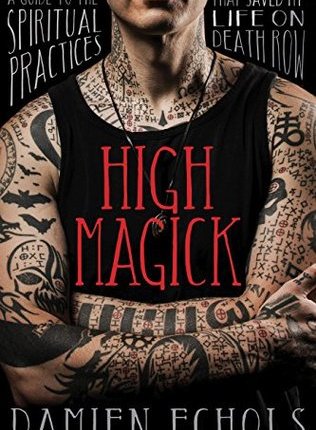
High Magick: A Guide to the Spiritual Practices That Saved My Life on Death Row by Damien Echols

High Magick: A Guide to the Spiritual Practices That Saved My Life on Death Row by Damien Echols

“Magick was out there in the world, and I could learn and practice it! That realization was like a bomb going off inside me. From that moment on, I pursued magick as if my life depended on it (and, in fact, later it did).” pg 11, ebook.

Damien Echols has penned a part-memoir/part-magic primer and, I believe, established himself as a new major voice in the Western Golden Dawn tradition. Many are familiar with Echols’ life. He was sentenced to die for a crime he didn’t commit. In High Magick, Echols shares the meditations and practices he used to keep his sanity and advance his spiritual development while behind bars.

Photo by RODNAE Productions on Pexels.com

It is a powerful book, not just because it is written in simple language and easy to understand, but because Echols is living proof that these techniques worked for him.

“Magick was the only thing in prison that gave my life purpose and kept me sane. Magick was the only thing I had to protect myself with. And that’s what this book is about — the practices that kept me alive for nearly two decades on death row.” pg 12

He shares some of the most basic practices like the Middle Pillar and Lesser Banishing Ritual of the Pentagram and, beyond the simple instructions of it, he gives the theory behind them. That’s helpful. Most of these kinds of books I’ve read don’t bother to go into the why’s. They’re too obsessed with the “how”.

“Every person on this earth is born with an entire universe of potential in them. Most people never cultivate the seeds of that potential, so the seeds go to waste and the people go through life wondering what went wrong, or blaming the world for everything that did go wrong. Magick waters those seeds to make that potential stir, grow, and flower.” pg 16, ebook.

Photo by Any Lane on Pexels.com

Echols avoids most “loaded” terms with an eye on appealing to every manner of reader. For example, he uses the term “energy” to describe the force behind the rituals he’s describing. I’ve heard it called many things and that particular word is a good one, I think.

He makes no unfounded promises. He simply offers a way to experience something that worked for him.

“Magick is both an art and a science. Some techniques are known for providing specific effects, but results vary, as they say.” pg 21, ebook.

An interesting side story: One of the librarians at my local library said “these types of books” (spiritual, nature-based, or “magic”) have been in high demand lately. She said there’s something of a renaissance going on in those who come to the library. They’re looking for something. It’s unique to each person, but she said libraries are purchasing more and more of this type of book in an effort to fill that need.

Photo by Matheus Bertelli on Pexels.com

“My grandfather used to say, “There’s more than one way to skin a cat.” I think most of you are familiar with the phrase, or at least an axiom with a similar message. It’s a curious way to remind ourselves that there’s more than one path to a particular destination…” pg 112, ebook

If you’re a reader looking for “this type of book”, I hope you find the right fit for you. Echols’ book should appeal to those looking for an introduction to the western occult tradition or simply the curious.

Thanks for reading!

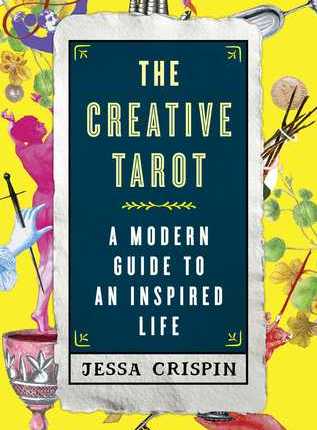
The Creative Tarot: A Modern Guide to an Inspired Life by Jessa Crispin

The Creative Tarot: A Modern Guide to an Inspired Life by Jessa Crispin

The Creative Tarot: A Modern Guide to an Inspired Life is an excellent tarot card reading manual for beginners to the more experienced card reader.

I loved that Crispin gives novel, art, and film suggestions for each card so that the reader can immerse herself in the “feel” or “mood” of them. That was a lovely touch and different from any other book on tarot cards that I’ve read.

Photo by Anna Tarazevich on Pexels.com

Mainly, the books that I’ve picked up have been about tarot card theory and how the cards tie in to the Tree of Life. It’s a complex system and can only be talked about in metaphors.

Imagine my relief to read a book about just the cards themselves and not an arcane “theory of everything.”

A.E. Waite was the co-creator of the Rider-Waite Tarot. He had some interesting thoughts about the tarot card reading qabalists, many of whom wrote books like the ones I’ve mentioned above.

A.E. Waite’s beliefs, which Crispin includes in the chapter entitled, A History of the Tarot, were: “Waite believed that the magical systems (tarot) of the Golden Dawn and other systems were not about imposing your will on a situation… or about telling the future… He believed they were for elevating the soul and for bringing what is unconscious conscious.” pg 7.

Photo by Jonathan Petersson on Pexels.com

I believe that too. But, if you can’t explain the system in a way that makes sense, then what’s the point of writing a beginner’s manual. There can be no “elevation of the soul” if the beginners can’t understand the first thing about reading tarot cards.

Thankfully, Crispin’s interpretations are simple and clear. This is a book that will see some use, not become another expensive paperweight.

I liked Crispin’s description of Temperance: “Temperance is an easily misunderstood card, as it has become associated mostly with abstention. Not drinking, not participating, denying yourself something. But that breaks away from the origins of the card, which traditionally portrays a hermaphrodite blending two cups of water- one hot and one cold- to create something in the middle between these two extremes.” pgs 76-77

Photo by Aleksandar Pasaric on Pexels.com

Temperance is about finding the middle way, not skirting along the edges from one extreme to another. Kind of ruins the idea of a “temperance movement,” doesn’t it.

I also liked this blurb about the Tower: “Remember that scene in Louisa May Alcott’s Little Women, where Amy throws Jo’s stories into the fire? That’s the feeling of the Tower: the realization that all is lost, and you will have to start over from the beginning.” pg 83

Yes, I’m a bookworm. Yes, Little Women is one of my favorite books. I think Crispin nailed the card’s description with that scene.

Photo by Pixabay on Pexels.com

I thought this description of The Moon was brilliant: “The Moon rules our dreams, and that’s a good way to think about this card. They don’t make sense on a logical level, but on a personal level, on an emotional level, they do. The location in a dream will shift without warning; dead people will walk beside the living; your mother will show up, say something nonsensical while wearing a jellyfish on her head, and then stab you in the heart. And you wake up and think, “Oh, of course, this is about that incident that happened when I was five.”

My dreams are just like that. In fact, I had that exact dream last night. 🙂

The tone in The Creative Tarot is very friendly and conversational, as if you asked your best friend to teach you a little bit about her favorite hobby- tarot cards. Highly recommended for artists, dreamers, and aspiring tarot card readers.

Its only weakness, in my opinion, is that I wanted more… more stories, more examples. I understand that we’re dealing with 50 plus cards and they can’t all receive extremely detailed treatment, otherwise we’d get the George R.R. Martin version of Tarot card books, but a girl can dream.

Jessa Crispin has modernized a system that seems to want to stay inaccessible to the beginner. I wish more of the books about the tarot were like this one.

Thanks for reading!