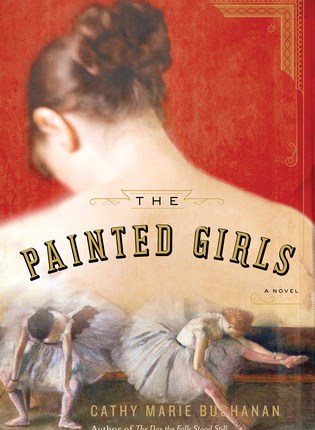
The Painted Girls by Cathy Marie Buchanan

The Painted Girls by Cathy Marie Buchanan

Three sisters live in poverty. Their father is dead and their mother is addicted to absinthe.

They have to find a way to feed themselves. The Paris Opera is an option, but ballet is expensive. There’s lessons and clothing to buy.

And whatever money they do manage to scrape together, there’s no guarantee their mother won’t use it to buy another bottle to feed her addiction.

Photo by Mizzu Cho on Pexels.com

The Painted Girls is about the haunting specter of abject poverty and addiction, but it is also about phrenology, a now-defunct science wherein experts believed they could judge the character of a person based on the shape of their head and face.

Marie, one of the girls in this story, frets because she has a low forehead and a jutting jaw. In her early religiously-based education, she was taught that outer beauty is a reflection of the soul. She fears her destiny is predetermined as hell bound because of her face.

Antoinette, the eldest of the sisters, wants to be adored and appreciated for how she holds her family together while her mother drugs herself into oblivion. But, she’s too aggressive and out-spoken to hold onto jobs for long and men can’t see past her outer shell to the aching heart within.

Plus, she sees herself as a hard worker, not a whore. Until she meets Émile Abadie and he takes her out for an evening of wine and oysters…

Photo by Elle Hughes on Pexels.com

The Painted Girls is about art, power and the blindness of love. It is also about sisters and the love family members hold for each other.

It is a work of historical fiction for girls who actually existed. Cathy Marie Buchanan takes the time to sort the real from the fictional at the end of the story.

I felt despair for the family in this book but also hope; that they could rise out of poverty despite everything holding them back.

Photo by Gustavo Tabosa on Pexels.com

Because, as society now knows, it doesn’t matter what you look like on the outside. What matters most is who you love and what you chose to do each day, each moment and for what reason.

This story has possible triggers for anyone who was sexually or physically abused as a child.

Thank you for reading.

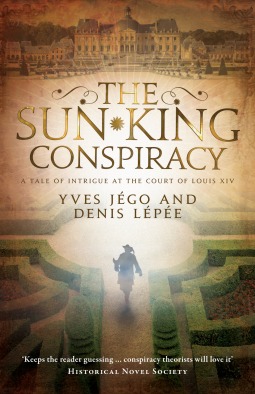
The Sun King Conspiracy by Yves Jégo

The Sun King Conspiracy by Yves Jégo

A historical fiction about a French King, his mistress, his minister, his mother, an aspiring actor with a secret past and a secret society with hidden knowledge that could change the world.

“A chief minister is dying, yet people are interested only in counting the supporters and detractors of an entertainer…” pg 9, ebook.

Unfortunately, I didn’t really care for The Sun King Conspiracy.

I felt like it was trying to be a mystery like The Da Vinci Code with the complexity of an epic historical fiction. It didn’t quite reach either pinnacle.

“According to Colbert’s report, the murderers took nothing else of any worth from my apartments. From this, I deduce that their only concern was to seize those papers.” pg 36, ebook.

It was probably just me, but I kept getting the ministers and their roles confused. Also, their alliances and reasons why they hated each other never really made sense to me.

“The truth is,” said the scholar with a sad smile, “that this question of succession seems to be the only matter that interests anyone in Paris, when the real subject that ought to occupy us, the only one worthy of any interest, is entirely different: it concerns the stability of the Kingdom.” pg 142, ebook.

Photo by Katarzyna Modrzejewska on Pexels.com

It felt like there were nuances to the court relationships that were never explicitly stated.

Maybe the author assumed a familiarity with the court of the Sun King that I don’t possess.

The whole secret society part of this story was just flat. I felt like I’d read the same conspiracy in half a dozen other books.

“I am more aware of this than anyone else. I have paid so dearly for it that my belief in its ultimate success is perhaps the only thing that still keeps me alive…” pg 229, ebook.

Photo by medium photoclub on Pexels.com

I didn’t connect with any of the cast of characters either. They were so cookie cutter.

Here’s hoping I like the next read more. 🙂

Thanks for reading!

Video guest post: The Beast of Gévaudan by The History Guy

Here’s another entry in the collaboration between the Help Desk and, my friend, The History Guy.

He has a degree in history. He likes history. And if you like history too, this is the video for you!

It killed over 100 people. What was it? Enjoy the curious history of The Beast of Gévaudan.

As always, thanks for reading.

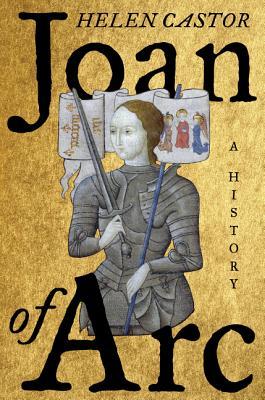
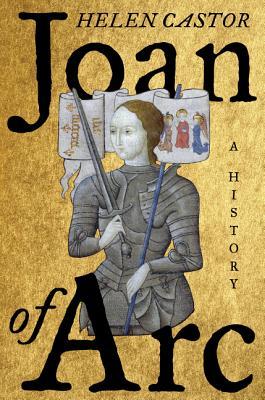
Joan of Arc: A History by Helen Castor

Joan of Arc: A History by Helen Castor
joanofarc

The review that I’m about to give Joan of Arc: A History has nothing to do with the historical accuracy of the book. On the contrary, I found this to be an extraordinarily well researched and cited biography.

Unfortunately, that mega-effort did not lend itself to a readable or enjoyable book.

The general idea behind Joan of Arc is sound. Helen Castor wanted to present Joan’s story in context with an extended history of France for years before and after her appearance on the world stage.

In that way, she thought that the legend of the woman could be separated away from the reality. The reader could appreciate the main players, the attitude towards spiritual visions, the belief of divine will in war and the monarchy, and capture the overall general flavor of the time period.

It was a good premise, but it just didn’t work. Maybe this was a doctoral thesis that Castor tweaked a bit and published? It reads like that.

Why is it that experts on topics are rarely able to translate that interest and depth of knowledge into stories that the general public would enjoy? I love medieval history, especially the backgrounds of the handful of female figures who made it into print during that period. This should have been right up my alley.

Photo by Pixabay on Pexels.com

Joan of Arc: A History read like a school textbook- the dull kind.

Actually, it reminded me of translating Livy’s History of Rome from Latin into English during college. It should have been fascinating stuff as he was writing about a particularly exciting period in Roman history when Hannibal was crossing the Alps to invade. But, sadly, Livy got caught up in listing endless details, particularly the size and shape of the elephants. Through description after description, the pace of Hannibal’s army slowed to a trickle and then it turned into a snooze-fest.

That also happened in this book.

If you enjoy scholarly research to the point that you just have to have it and nothing else will do, read this book. If you want history to come alive and punch you in the face, pick up something (anything really) by Margaret George or Bernard Cornwell.

I particularly liked The Memoirs of Cleopatra or The Autobiography of Henry VIII: With Notes by His Fool, Will Somers. George may not have the exacting research standards of this biography, but her historical fictions are informative in addition to a delight to read.

I received a free copy of this book through Goodreads First Reads. Thanks for reading!

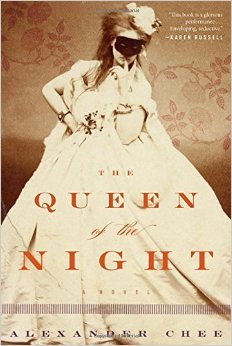
The Queen of the Night by Alexander Chee

The Queen of the Night by Alexander Chee

Lilliet Berne has secrets, many secrets hidden in her past and layered upon each other through time and circumstance. Now, she is a successful opera singer but, during a ball one night, a man brings a libretto to her attention that seems to be based on her life. Only a few people know the truth behind the secrets, which one would have made that truth public? Lilliet is going to find out and, along the way, the reader gets to experience the 18th century world from the American Midwest to the Paris Opera to Napoleon’s Imperial Court and beyond.

The Queen of the Night is a glittering, epic historical fiction, reminiscent of Margaret George’s style in that Chee weaves actual historical figures throughout his story. So, you’re learning as you’re entertaining yourself- two birds with one stone. I absolutely loved it.

Who is Lilliet? According to rumor: “I was innocent or I was the devil unleashed, I had nearly caused wars, I had kept them from happening. I was never in love, I had never loved, I was always in love. Each performance could be my last, each performance had been my last, the voice was true, the voice was a fraud. The voice, at least, was true.” pg 7, ebook.

Though true, the voice was not free from rumor either: “There’s a story told of my voice that says it was bought from a witch, the result of an occult surgery. … I never corrected this. … The real answer to where my voice came from is as ordinary as all of life. … I wanted to eat so I learned to sing.” pgs 65-66, ebook. But, as a public figure, Lilliet profited from being a spectacle on and off the stage. She encourages the stories because her notoriety brought her opera parts, connections, and money. Her true background, on the other hand, could ruin her.

The complexity of life in Paris: “Paris, which, when I looked close, was a vast 0péra-bouffe-féerie (opera with elements of comedy and magic in it)- and you did not know your role, I think, until it was too late, and the crowd was laughing at the joke you had uttered in all innocence.” pg 99, ebook. Chee explores many closed societies and the unwritten rules that are followed by them in The Queen of the Night. Among the many scenes examined are: the circus tent, the courtesan’s house, the opera, the French court, the Bohemian music culture, and the couture dressmaker. My favorite parts of this story were the glimpses into these forbidden or, in some cases, defunct cultures and learning the expected behaviors, way of dress, even the preferred perfumes. The fun is in the details.

The Queen of the Night is also a love story: “When love comes this way, the first dream of it feels like a prophecy that has come true. I had never known this feeling until now- he was my first. And so I let myself dream of him again and believe it could be the future.” pg 186, ebook. Swoon… “My theme here is love. Love and the gifts of love, love kept secret, love lost, love become hatred, war, a curse. Love become music. Love and those who died for love. Love- and, especially, first love. My first love, the one I could not keep and could never, will never, lose.” pg 215, ebook. Do you think he could have fit more “love” in there? 🙂

At one point, Lilliet says she feels like she has gotten “Fate’s attention”: “It is a peculiar thing to reach this conclusion, that a god has taken your life in hand. The sensation is not what people might imagine; it is not magic, nor is it a haunting, nor is it a miracle- there’s no storm of roses, no whistle that can put a raging ocean to sleep, no figure in the mirror besides your own.” pg 240, ebook. When I read that, I thought that Chee was going to break down the fourth wall. But, he didn’t. He kept the story flowing but I felt like he winked at me. “Where am I going to take Lilliet now?”, he seemed to say. I didn’t have any idea, but I was definitely along for the ride.

Recommended for readers who want a detailed, slightly (sometimes very) scandalous romp and mystery throughout the 18th century. If you’re into classical music, then it will be an even better fit. Some reads that you may want to explore after this one: The Dream Lover: A Novel of George Sand by Elizabeth Berg (same time period, same country), In the Company of the Courtesan by Sarah Dunant (different time period and country, some similar themes), The Night Circus by Erin Morgenstern (for the circus parts), and Before Versailles: A Novel of Louis XIV by Karleen Koen (different time period, French court).

Thanks for reading!