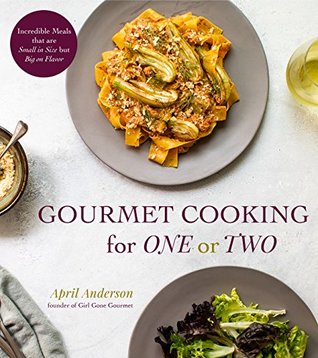
Gourmet Cooking for One or Two: Incredible Meals that are Small in Size but Big on Flavor by April Anderson

Gourmet Cooking for One or Two: Incredible Meals that are Small in Size but Big on Flavor by April Anderson

April Anderson, founder of Girl Gone Gourmet, has compiled a beautiful book of smaller portioned “gourmet” recipes. Photos of each dish are found opposite the instructions.

It is a pleasure to turn the pages and an even bigger one to utilize the recipes found within.

It is a truth universally acknowledged, that a person in possession of excellent cooking skills, must be in want of people to eat their food.

All joking aside, I love to cook. I find it profoundly relaxing to turn on some music and start chopping vegetables or heating the oven.
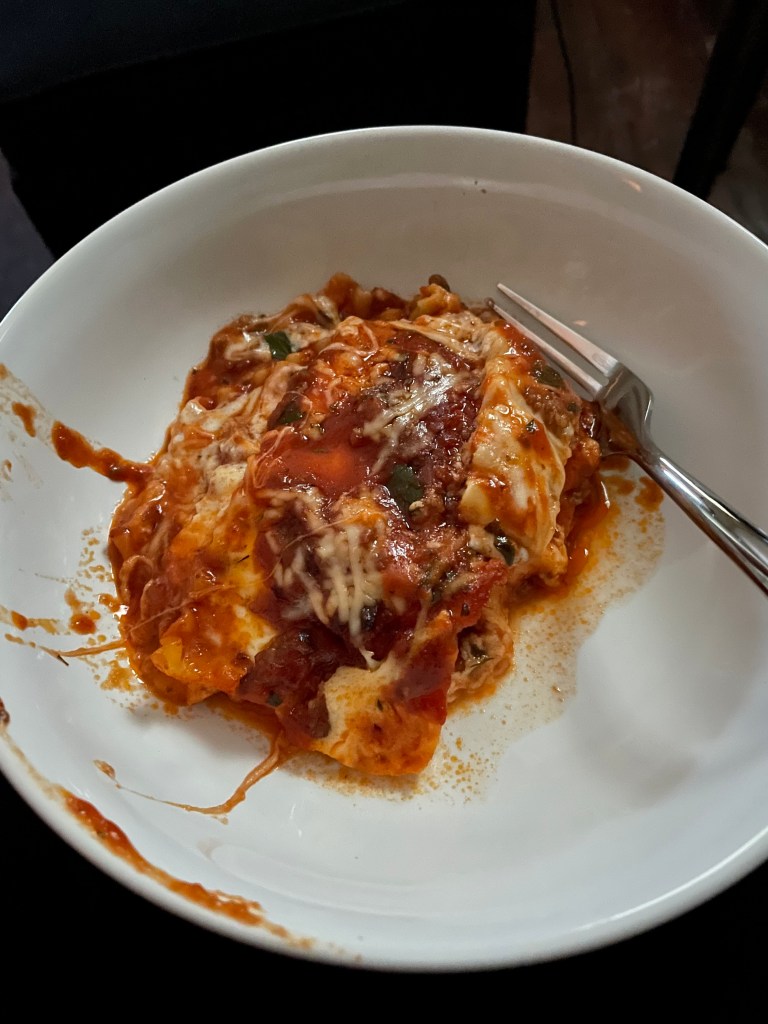
Here’s my two slice sun-dried tomato and sausage lasagna from page 31!

There’s a definite rhythm to cooking- like an ancient domestic hymn. Humanity must eat. Some of us have the good fortune and privilege of eating well.

However, when you’re by yourself, it can be difficult to control the portions. Most recipes assume at least two or more people are going to eat the food. It can be problematic and wasteful.

For example, I’ve made dishes and given three-quarters of it away to family, and still have three or four meals left for myself.

Anderson has scaled back her recipes in order to amply feed one, or so she writes. She reminds readers to have fun!

“Last but not least, I want you to enjoy yourself, because I believe time spent in the kitchen cooking for yourself is time well spent.” pg 10

My pork chops were yummy!

I tried a couple dishes in here (sun-dried tomato and sausage lasagna pg 31 and pork chops with savory apple bacon hash pg 123). They were tasty, but I still had way too much food for just me.

The moderate kitchen skills are required to make these dishes. You’re putting together sauces and browning meat, seasoning and slicing.

I took my time with it and didn’t have any difficulties. Beginner chefs might be a little overwhelmed, but if you take your time, you can do it.

Recommended for foodies who can find their way around the kitchen and aren’t afraid to try recipes that might be challenging. Make sure you have some containers on hand because you will probably still have leftovers.

Thanks for reading!

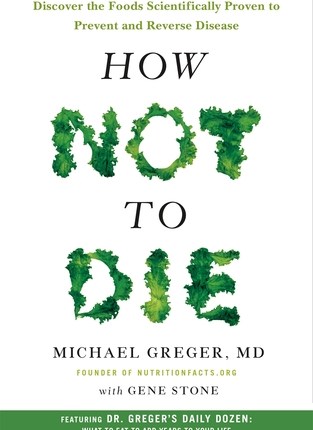
How Not to Die: Discover the Foods Scientifically Proven to Prevent and Reverse Disease by Michael Greger

How Not to Die: Discover the Foods Scientifically Proven to Prevent and Reverse Disease by Michael Greger

I think everybody is aware that your diet has an enormous impact on your health. This book is another reminder that this is true.

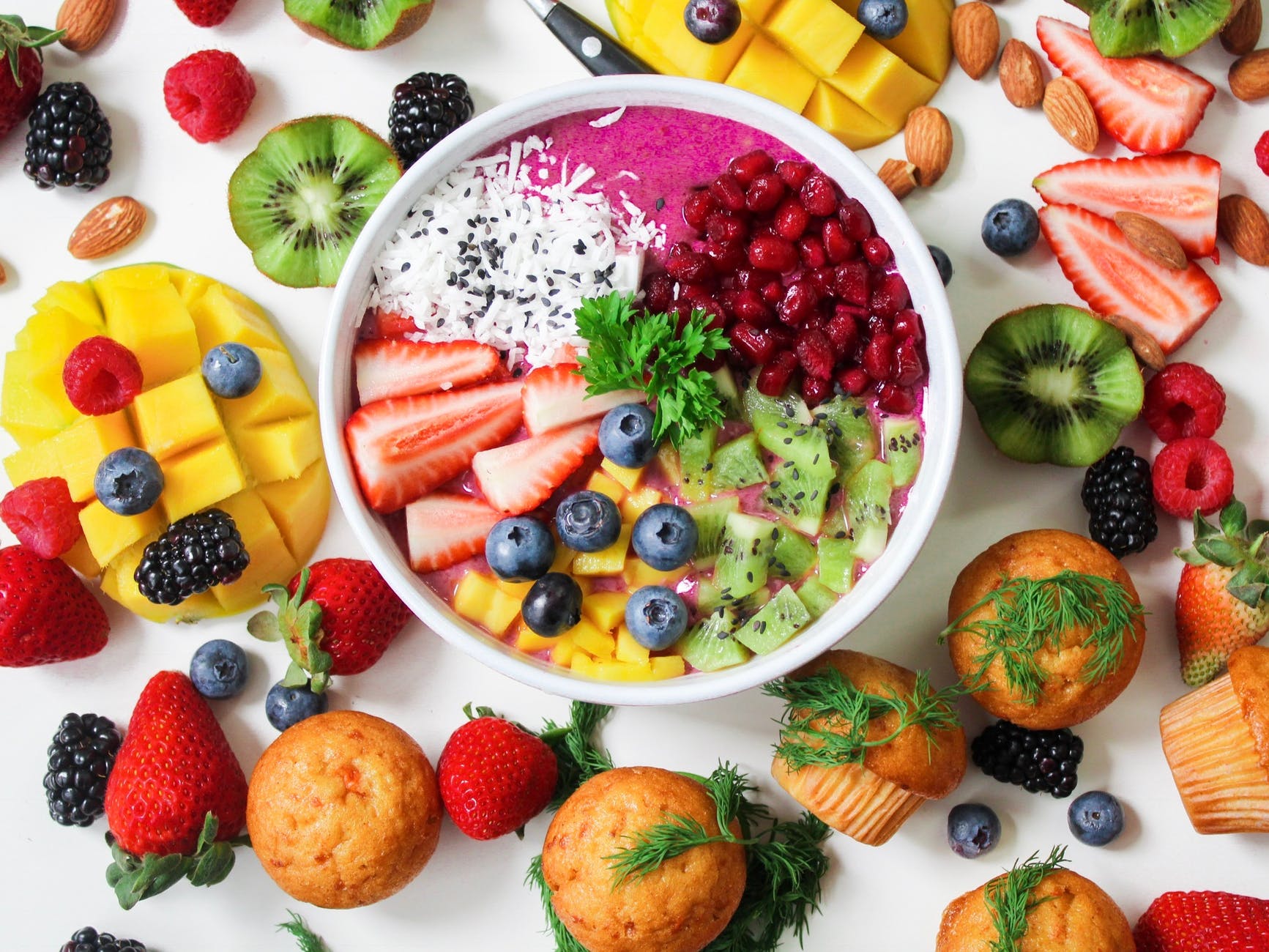
Photo by Trang Doan on Pexels.com

Though everyone will one day die, Michael Greger gives some tips to help you live as long and as healthily as possible.

I’m not going to debate the merits of different diets which seem to change as quickly as fads. I think everybody should try to incorporate healthy habits that are right for them as they are able.

How Not to Die is packed with ideas on that front.

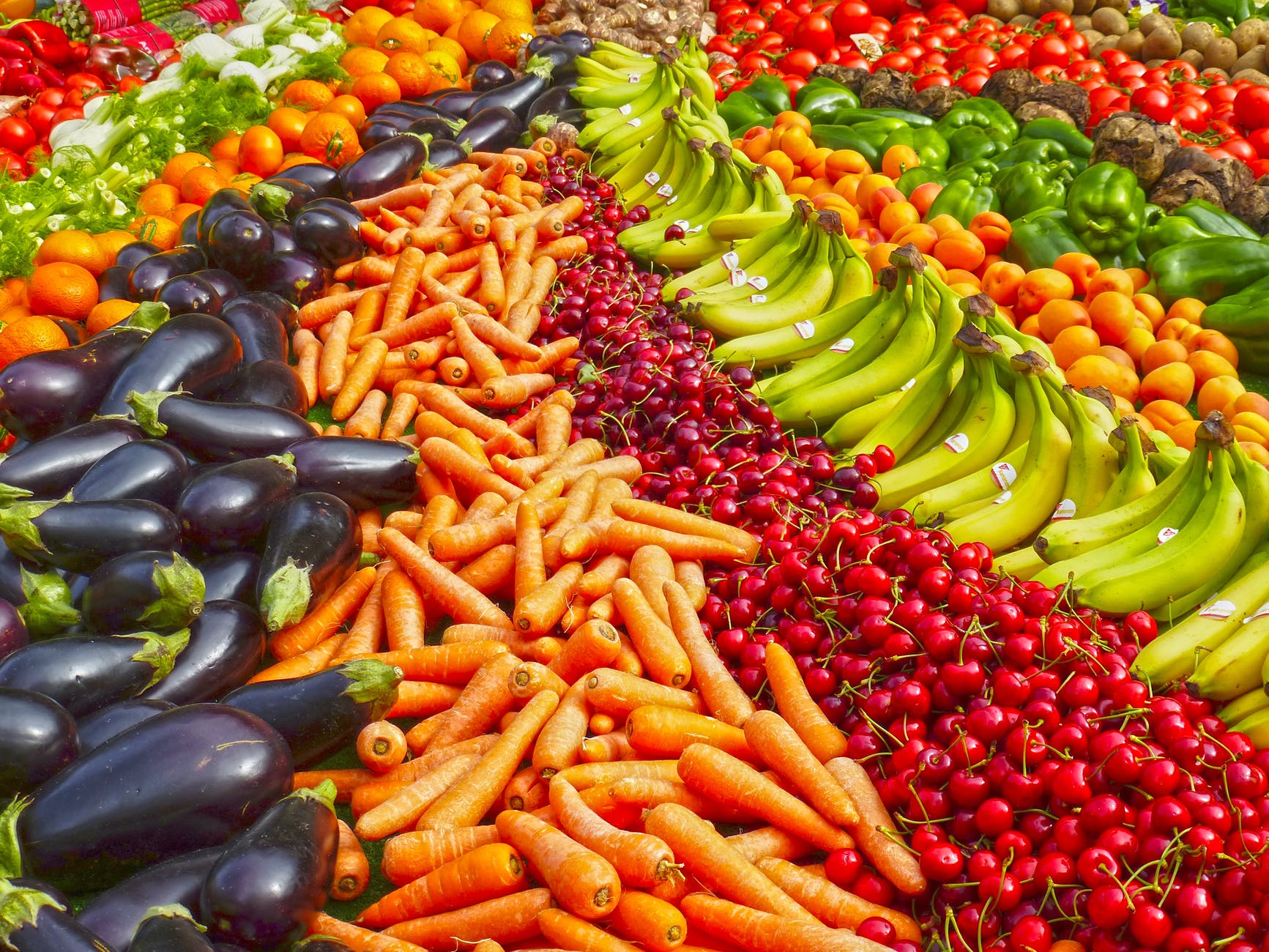
Photo by Pixabay on Pexels.com

I think the most interesting part of this book are the effects that various foods have on the body. But you don’t have to take Greger’s word for it, experiment and see what works for you.

Happy eating 🙂

The Botany of Desire: A Plant’s-Eye View of the World by Michael Pollan

The Botany of Desire: A Plant’s-Eye View of the World  by Michael Pollan

Packed with food-related history, trivia and stories, Michael Pollan attempts to explain how four types of plants have had such a large effect on humanity.

“We automatically think of domestication as something we do to other species, but it makes just as much sense to think of it as something certain plants and animals have done to us, a clever evolutionary strategy for advancing their own interests.”

Photo by John Finkelstein on Pexels.com

I believe that our lives are intimately intertwined with our environment, even if we can’t quite see how. Pollan removes the veil between apples, tulips, marijuana, potatoes, and mankind in order to illustrate how the plants evolved and what kinds of shenanigans they’ve brought on civilization in the process.

“Our grammar might teach us to divide the world into active subjects and passive objects, but in a coevolutionary relationship every subject is also an object, every object a subject. That’s why it makes just as much sense to think of agriculture as something the grasses did to people as a way to conquer the trees.”

My favorite chapter was about the tulips. Did you know at one point in the Dutch Republic a tulip bulb cost as much as a house? It was called “tulipmania” and it caused enormous havoc in the local economy when the tulip bubble burst.

I also learned about the evolution of flowers, which I didn’t know anything about before reading this. I had only ever considered them from a spiritual perspective — I think it was Eckhart Tolle who talked about flowers being the “spiritual evolution of plants”. It’s rather interesting actually if you’re into that kind of thing.

“But I do wonder if it isn’t significant that our experience of flowers is so deeply drenched in our sense of time. Maybe there’s a good reason we find their fleetingness so piercing, can scarcely look at a flower in bloom without thinking ahead, whether in hope or regret.

Photo by James Wheeler on Pexels.com

Pollan’s writing style wanders no where quickly, so readers who have little patience for storytelling non-fiction may want to choose a different book. I rather liked it.

I think he may have oversimplified the plants and humanity relationship by picking only one motivating desire per plant. Let’s be real, things are never as simple as that. But for the premise of this book, it worked well enough.

Basically, The Botany of Desire encourages readers to consider what plants get from us as much as what we get from them. It’s a different perspective, like looking at your home from the level of a toddler rather than your usual height. There’s things to learn and puzzle out and discover that you may have never even imagined.

Recommended for readers interested in botany and different worldviews. Thanks for reading!

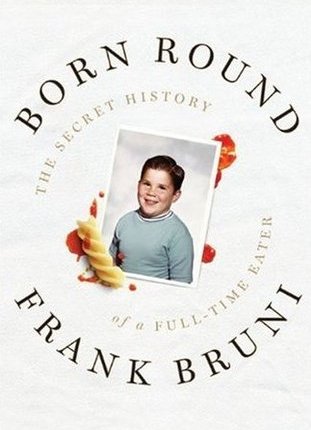
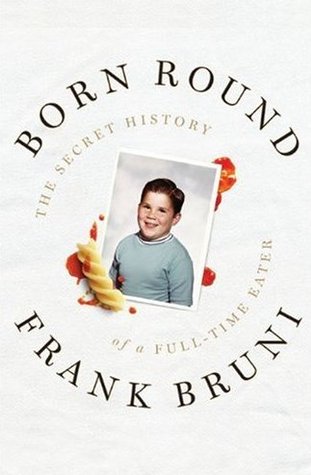
Born Round: The Secret History of a Full-time Eater by Frank Bruni

Born Round: The Secret History of a Full-time Eater by Frank Bruni
frankbruni

Born Round by Frank Bruni is satisfying memoir about a life-long struggle with food, a loving family and a journalist’s journey to find the beat he was born to eat… I mean, write.

I enjoyed all of Frank Bruni’s wandering memories. Like him, I grew up in a family where most of our gatherings center around food, eating, drinking and holidays. They still do.

Unlike Frank, I never tried “Mexican speed” or bulimia to try to manage my weight. Learning about some of the behaviors he used to maintain a weight he found acceptable was scary.

I can’t help but think that if we didn’t expect so much of each other, what a happier world this would be. Idolizing impossible body standards in the mass media does no one any favors.

When Frank goes on to become the food critic for the New York Times, I loved hearing about the subterfuges he used to hide his identity. I didn’t even know he was a food critic when I picked this book out of the digital audiobook pile.

Photo by Pixabay on Pexels.com

But, of course, that is what the boy, who loved to eat, became. Isn’t it funny how our life’s paths find us?

There are some extraordinarily vulnerable moments in Born Round. Frank is honest and doesn’t sugarcoat some of his tougher times, especially with his mother.

This memoir could potentially be a trigger for someone who suffers from an eating disorder, but, it is mainly a story about overcoming all that and adopting healthier behaviors.

Recommended for people who enjoy honest and open memoirs about families, food and how one man became the food critic he was literally born to be.

Thanks for reading!