I am Pusheen the Cat by Claire Belton

I am Pusheen the Cat by Claire Belton
pusheen

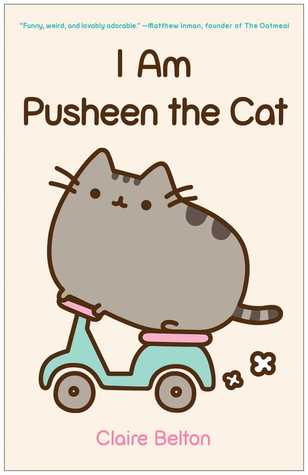
As I’ve mentioned in a few other reviews, my nine year old hates to read. It breaks my heart. I’m constantly searching for titles to pique her interest and I struck gold with this little book, I am Pusheen the Cat.

Usually, when I bring a book home from work for her, she takes one look at the title and then puts it on her desk…where it sits, until I have to take it back to the library again. This one was a completely different experience. I handed it to her. She sat down. She opened the book and read it cover to cover right then. I was blown away. Seriously, you could have picked my jaw up off of the floor.

There’s no story to this book. It’s just a series of cutsie pictures of Pusheen and her sister, Stormy. There are, however, some tricky vocabulary words thrown in like “inconvenience” or “procrastinator”. I was in mommy/librarian heaven, helping her sound out the words and explaining what they meant. I can’t say enough how much it meant to me to find something she liked, no, loved.

For me, I am Pusheen the Cat is a three star book at most. It’s cute, sure, but that’s about it. For my child, however, this is the holy grail of graphic novels. If you have a reluctant reader, I can’t recommend it highly enough. In fact, I may pay this book the ultimate compliment (in my mind) and purchase a copy of it for my home. Coming from a public librarian, that’s high praise indeed.  Thanks for reading!

The Red Queen by Christina Henry

The Red Queen by Christina Henry

redqueenThe second book in The Chronicles of Alice is scheduled to be published on July 12th.

Though it lacked the grittiness and extreme horror of Alice, Red Queen is a fantastic second effort by Henry. We’re reintroduced to Alice and Hatcher as they escape the City and make their way into the wilderness, on a hunt for Hatcher’s long lost daughter, Jenny. Magic, danger, and monsters wait on the path ahead, but those things are nothing compared to what Alice and Hatcher bring with them in their own damaged and twisted minds.

Cheshire, one of my favorite characters, gives a quick summary of the first book in the beginning of this one, in case you didn’t get a chance to read it:“Hatcher and Alice escaped from the hospital, and traveled through the Old City in search of their pasts and in search of a monster called the Jabberwocky who made the streets run with blood and corpses.” The girl shuddered. “I know about him… What about Alice? Did she have a happy ending?” “I don’t know,” Cheshire said.”

Henry weaves enough of the classic tale into her story so that you know that it is a retelling, but still manages to introduce enough original elements in to make it feel entirely new. Like the toll that magic takes on the people who wield it, something that Carroll never addresses: “Maybe power corrupts them,” Alice said. It was a frightening thought, one that made her suddenly reluctant to try any magic at all. She’d spent years under the influence of drugs that made her think she was insane. She was only just learning who Alice was, what it was like to be her own self. She would rather use no magic at all than become some one unrecognizable.”

The world that Hatcher and Alice inhabit feels like the real world in that, there are no guarantees of happily ever after for the main characters. It’s reminiscent of George R.R. Martin in that, Henry makes you feel truly concerned that either Alice or Hatcher are going to be struck down at any moment. But, Henry actually manages to tell a story in 300 or so pages, something that Martin can’t do. Not that I’m bitter or anything… : “The world gobbles us and chews us and swallows us,” Hatcher said, in that uncanny way she had of reading her thoughts. “I think happy endings must be accidents.” “But we hope for them all the same,” Alice said.” I do too.

Alice really comes into her own in this story. She’s brave, but fragile- a damaged hero but resilient. If you’re looking for a strong female protagonist, you’ll find one in this book: “Alice thought, my magic doesn’t seem to be good for much at all. And there is no one who can help me learn, for all the Magicians I have met have been mad or cruel or both. I was mad once too, but it doesn’t seem to have taken properly. I didn’t come out of the hospital with any powerful powers.” Or did she?

This passage summed up the book for me: “This is really all very strange,” Alice murmured. “One of the strangest things I’ve seen, and I have seen lots that is strange. More than my fair share, as a matter of fact.”

Highly recommended for adult readers who enjoy dark fairy tales, magic, and transformation through suffering. I’ve really become a fan of Henry and I can’t wait to see where she takes this story next. If you enjoyed this tale, you may want to try The Library at Mount Char by Scott Hawkins or The Circle by Mats Strandberg.

Thank you to NetGalley and Ace Publishing for a free digital ARC of this book. And, thank you for reading!

The Library at Mount Char by Scott Hawkins

The Library at Mount Char by Scott Hawkins

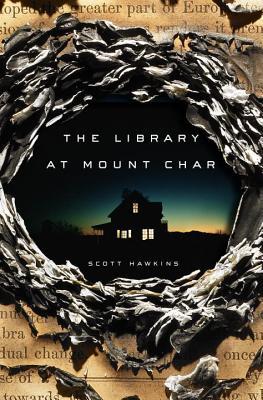
Review on Reread, August 2025: It has been ten years since I first read The Library at Mount Char (my original review may be read below this one). I think the book has held up incredibly well in the decade since its publication. Well done, Mr. Hawkins.

Rather than rehashing the plot, I’d like to take a moment to address a theme that I didn’t touch on my last review. If the spirit (or soul, if you will) of a person is truly immortal and said person, through magic or a technology so advanced that it appears as magic, does not die but instead lives on and on for 50 to 60 thousand years, what effect, if any, would this unnatural longevity of the body have on the spirit? What if the spirit retains all memories of this elongated life? How would that change their behavior in their every day interactions with other, non-immortal, beings?

My partner and I have discussed the potential devastating consequences of such a thing when considering the longevity of elves in Tolkien’s classic work The Lord of the Rings or the twisted upper class in the series Altered Carbon. The way I see it, the elves would probably start to lose the plot around year 150 or so and then it would be all downhill from there. Why? Imagine, if you will, the hurts, slights and every day micro-traumas that can cause such damage in a normal lifespan being extended over thousands or tens of thousands of years. How could someone possibly deal with such a thing and not lose their minds? My contention is that they can’t.

Yes, we are talking about magical beings with, I’m assuming, some sort of safety valve to the normal wear of time on the spirit. But what if there was no safety valve? What if, as time marched on and on for these beings, they became more and more removed from their elvishness (or in The Library of Mount Char and Altered Carbon, their humanity) and instead became aloof, immortal beings who would stop at nothing and have all of the resources in the universe to achieve their aims.

One might observe them abusing the beings around them because they no longer have the ability or desire to empathize with other flawed beings who are still existing in time. Or maybe they forget their reasons for wanting to change their world around them in the first place and become overly fixated on their own viewpoint to the detriment of all others.

Or maybe, just maybe, they can’t let go of what happened in the past and they make their current reality into a reoccurring nightmare of past traumas, perpetuating the cycle subconsciously into not only their future but everyone else’s too.

My point is, I believe physical death happens for a reason, perhaps a reason that we do not yet understand, but maybe it has something to do with the rehabilitation of the spirit that occupies the body more than the limitations of physical reality. As humanity develops more and more sophisticated methods for extending our lives (one thinks on a certain conversation two world leaders had recently about organ transplants), I think we should consider the potential spiritual cost of these strategies not only for those who are unable to afford such things but also for those who partake in them. What sorts of emotional baggage or past traumas are being dragged kicking and screaming into the future?

The Library at Mount Char could be read as a warning for the fantasy of the immortality of the body. At what point in a life that spans eternity does a person change from a person into something else? Does immortal life make one a god or simply a mortal who has outlived their own time?

I don’t know the answers to these questions. I invite you to give this book a read and let me know what you think. It really is worth the read and I highly recommend it.

Thanks for reading.

Original Review, May 2015: The Library at Mount Char is an urban fantasy/horror novel about Carolyn and her adopted “family” who are studying the seemingly endless knowledge of an immortal being that they call “Father”. The lessons that they learn are terrifying but powerful. After years of fear and torture at the hands of the Father and some of her siblings, Carolyn wants to break free from her living nightmare. She knows that she can’t trust anyone, but she also doesn’t know all of her Father’s secrets. How exactly does one escape from a god?

I think that this book is fantastic. The characters are more than human and divinely flawed, all of them. The plot proceeds at a breakneck pace, going from thrilling to apocalyptic so quickly that I couldn’t put this book down. Yes, I lost some sleep reading The Library at Mount Char. If you pick this up, I bet that you will too.

Sensitive readers, beware.  There is sexual violence/rape, physical abuse, mental abuse, and animal abuse in this book.  If any of those topics cause troubles for you, you may want to choose a different read.

The distinctive mix of godlike powers and very human, emotional, knee jerk reactions contained in this story reminded me of some of the darker Greek and Roman mythological story elements like the serial rapists (Zeus and about every other major god figure) and the unjust punishments of the innocents (Medusa, Actaeon, Laocoon, etc etc). Those mythologies were written to explain the unexplainable workings of nature, weather, time, and humanity itself. I think, if one makes The Library at Mount Char into a metaphor for reality, that in a modern way, it fills the same role as those more ancient stories. It gives a rhyme and reason to the mystery that is life. Pretty deep for a debut fantasy novel, yes?

Some of the twists I saw coming, but others, some of the big ones, I didn’t. It kind of reminded me of an M. Night Shyamalan film, except instead of one gasp worthy moment, there were maybe six of them. After each one, I’d sort of put the book down for a second and start to rethink the story from the new vantage point that the author had just provided. It’s really an amazing work for a first novel. Maybe Hawkins will give the world a series?? Please. I’d read it.

Thank you to the Goodreads First Reads program for an advance reader copy of this book.  And, thank you for reading!

Me Before You by Jojo Moyes

Me Before You by Jojo Moyes

Dear readers, warning!!  I don’t usually put spoilers in my reviews, but I had to in this one to discuss it properly.  Please do not read this if you haven’t read the book yet.

Time to talk about Me Before You. This is a difficult one. Louisa (Lou) Clark recently lost her job. She needs another one, quick, before her family loses the house. Will Traynor used to be an active, world traveling, 1%er, but, after a terrible accident, he’s stuck in wheelchair and suffers each day as a quadriplegic. Both Lou and Will are damaged in their own way, but they make life better for each other.

Me Before You addresses the difficult issue of assisted suicide, so if you have trouble reading about that topic, steer clear. There’s also some flashbacks to a rape, so another warning, for folks who are triggered by such things.

I didn’t struggle with either of those topics, but it bothered me that the author painted such a bleak world for Lou. Her family doesn’t treat her well, her boyfriend, Patrick, doesn’t treat her well, and, in consequence, she doesn’t treat herself very well. I realize that the point of the story is how Will changes Lou’s view about the world and herself but it is awfully depressing.

And then, of course, I hated the ending. After everything they go through, Lou’s love isn’t enough? Yeah, I didn’t like that. You’d think Will would see how he made such a difference in one person’s life and realize that he could help many, many more people, if he could just see his world as larger than his body, but no. This book didn’t make me cry, I just felt awful. Seriously, awful. Stomach hurting, headache inducing, post-book depression, awful. So, you may not want to read Me Before You if you’re feeling down before you begin. It’s not a happy book.

Moyes does a great job with the characterizations. Here is Lou explaining how badly she misses her job: “Unemployment had been a concept, something droningly referred to on the news in relation to shipyards or car factories. I had never considered that you might miss a job like you missed a limb- a constant, reflexive thing. I hadn’t thought that as well as the obvious fears about money, and your future, losing your job would make you feel inadequate, and a bit useless. That it would be harder to get up in the morning than when you were rudely shocked into consciousness by the alarm.” pg 30 ebook Dealing with some unemployed depression at my house right now. That passage rang some bells for me.

Will’s mother, Camilla, is also a major figure in the story. Lou describes her here: “I wanted to say: Well, here I am, being cheery every ruddy day. Being robust, just as you wanted. So what’s your problem? But Camilla Traynor was not the kind of woman you could have said that to. And besides, I got the feeling nobody in that house ever said anything direct to anyone else.” pg 71 ebook

Lou’s perception of time when caring for an ailing Will: “There are normal hours, and then there are invalid hours, when time stalls and slips, when life-real life-seems to exist at one remove. I watched some television, ate, and cleared up the kitchen, drifting around the annex in silence.” pg 90 ebook When my child gets sick, I’ve experienced that strange “between time” too.

Camilla’s frustration as a town magistrate: “It’s quite hard to stay calm and understanding when you see the same faces, the same mistakes made again and again. I could sometimes hear the impatience in my tone. It could be oddly dispiriting, the blank refusal of humankind to even attempt to function responsibly.” pg 112 ebook I feel that sometimes at my job. Why can’t folks learn how to use a copier! Sigh.

I laughed when Lou went to the library for the first time in years and was surprised by what she found. I think it makes a statement for the evolution of library systems: “It wasn’t what I remembered. Half the books seemed to have been replaced by CDs and DVDs, great bookshelves full of audiobooks, and even stands of greeting cards. And it was not silent. The sound of singing and clapping filtered through from the children’s book corner, where some kind of mother and baby group was in full swing. People read magazines and chatted quietly. The section where old men used to fall asleep over the free newspapers had disappeared, replaced by a large oval table with computers dotted around the perimeter. pg 141 ebook. My section! “A librarian stopped by my table, and handed me a card and a laminated sheet with instructions on it. She didn’t stand over my shoulder, just murmured that she would be at the desk if I needed any further help..” pg 141 ebook. If Lou had grown up in my town, that would be me!

The key to Lou’s character, in my opinion: “It felt like I was living a life I hadn’t had the chance to anticipate.” pg 234 ebook  I think a lot of people are like that, sort of stumbling through life without goals or dreams of any kind. For her, love was the key to turning that around.  If only more people could be that fortunate, without the abrupt ending.

If you enjoyed Me Before You, you may want to pick up The Fault in Our Stars by John Green or If I Stay by Gayle Foreman. All of which have film adaptations: so, read the book first, then keep those kleenexes close for the movie.

Thanks for reading!

Unshelved Vol. 1 by Bill Barnes and Gene Ambaum

Unshelved Vol. 1 by Bill Barnes and Gene Ambaum

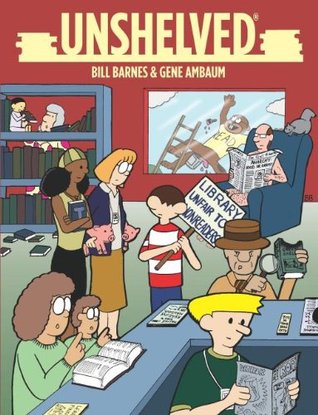
I enjoyed Unshelved, a comic about a public library, its librarians, and the ridiculousness that goes on when the library is open.  But, sometimes the cartoon hit too close to home. I’ve been treated and spoken to like Dewey at the information desk, tons of times. So, librarians beware. Some of these are almost too true to be funny. On the other hand, I like my job, so I’ve never responded like Dewey. It’s cathartic, reading his sarcastic responses to ridiculous questions and situations.

My library has this book classified as young adult and I feel that it is an appropriate categorization.  There’s nothing in here that I would find objectionable for a younger teen to read but some of the interpersonal problems may go over the head of a 12 year old.

Favorite character: Buddy the Book Beaver! Of course.

Favorite cartoons: The one where Merv writes a brochure to get more teens to come to the library pg 33 (My department is responsible for the young adult room, so I really appreciated the humor).

When the patron asks Dewey if he has any pens when he’s standing next to a pile of pens (Happens to me all the time). bottom of pg 41

And finally, when Dewey starts dispensing Eastern philosophy to the library patrons: “Search without searching. Look for nothing and find everything. Read the book but don’t look at the words.” top of pg 103. That’s probably me in about thirty years.

If you enjoyed Unshelved, you may want to pick up Rex Libris, Volume I: I, Librarian (Rex Libris, #1-5) by James Turner (another librarian themed comic) or The Black Belt Librarian: Real-World Safety & Security by Warren Graham (non-fiction book on how to deal with difficult patrons or security risks at the library).  Thank you for reading!

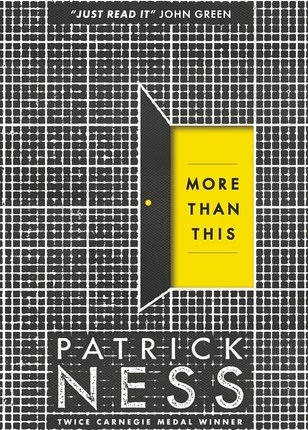
More Than This by Patrick Ness

More Than This by Patrick Ness

I picked up More Than This because I recently enjoyed A Monster Calls. This book, like Monster, is about a young man learning how to handle life’s major hurdles. That, though, is where their similarities end.  More than This opens with Seth drowning in the ocean and the story really begins when he opens his eyes after death…

Photo by Amber Janssens on Pexels.com

More Than This is darker than A Monster Calls in many ways. For readers who are concerned about the maturity level of themes in this book: there are some (short) scenes of physical abuse, non-graphic GLBT teen sex, teen suicide, brief moments of bullying, extremely brief nudity (both male and female), and a short masturbation bit. On the other hand, there’s a lot of empowering elements in here too. There’s a very strong, young, black female heroine, a plucky, brainy, Polish sidekick, and some really trippy depictions of reality itself. The GLBT relationship is healthy and non-abusive. The friendships that develop between the main characters are real and beautiful.

Depending on the young adult reading the book, I’d say 14+ might be a good age for this one.

I loved the ambiguity of Seth’s situation in the afterlife. No spoilers here, but that was my favorite part, the “what the heck is going on here” moments that Ness kept handing to me. Read it and you’ll see what I mean in mere pages.

Photo by Jonathan Andrew on Pexels.com

Patrick Ness is at his strongest when he’s writing his way around painful emotions, which there are piles of in this book. He’s at his lowest during the first part of More Than This because of the pacing. This starts out seriously slowly, but if you can make it through the first section, things pick up considerably afterwards.

Some of my favorite moments: “Is this a dream? he thinks, the words coming to him slowly, thickly, as if from a great distance. The last dream before death?” pg 13 ebook

“He looks out toward the darkened sitting room and wonders what he’s supposed to do here. Is there a goal? Something to solve? Or is he just supposed to stay here forever? Is that what hell is? Trapped forever, alone, in your worst memory? It makes a kind of sense.” pg 31 ebook

Seth’s relationship with his parents is pretty messed up, which is very sad, really: “His mother made a sign with her hands of sarcastic surrender, then stared firmly at the ceiling. His father turned to look at him, and Seth realized with a shock how rare it was for his father to look him straight in the eye. It was like having a statue suddenly ask you for directions. pg 97 ebook

Photo by Denise Duplinski on Pexels.com

My favorite character was Tomasz. He has wisdom far beyond his age:“Tomasz shrugs. “People ask for what they need in different ways. Sometimes by not even asking for it at all.” pg 149 ebook

The heroine: “People see stories everywhere,” Regine says. “That’s what my father used to say. We take random events and we put them together in a pattern so we can comfort ourselves with a story, no matter how much it obviously isn’t true.” She glances back at Seth. “We have to lie to ourselves to live. Otherwise, we’d go crazy.” pg 159 ebook. Very true.

One last passage, for my husband, who argues with people on the internet far too much and who came to mind here: “And that’s what the Internet age has done for us,” his mother says, sitting down. “Anything you don’t like is automatically disgusting and anyone who may like it themselves is an idiot. So much for a world full of different viewpoints, huh?” pg 319 ebook.

If you enjoyed More Than This, you may like A Monster Calls even more (I know I did) or try The Last One by Alexandra Oliva (a book written for adults, but a mature young adult would probably enjoy it too).  Thank you for reading!

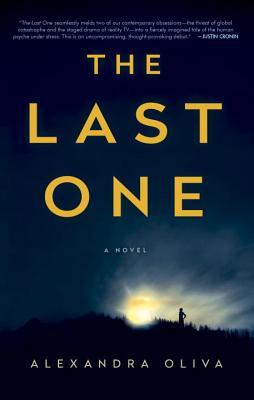
The Last One by Alexandra Oliva

The Last One by Alexandra Oliva

Twelve contestants go on a survival reality show.  It’s a brutal competition and the only way off the show is to say the safe word.  While the filming is taking place, something terrible happens in the real world… and no one tells the contestants.  Will any of them survive?  And, if they somehow survive, will they have a home to go back to?

In the book blurb, The Last One is compared to Station Eleven and The Passage neither of which I liked very much. I thought Station Eleven was boring and The Passage is the Game of Thrones of dystopian literature, it goes on and on and on… Unlike the other two titles, I think that The Last One got the mix of action to number of characters just right. If I had to pick the book that I think it’s most like, I would compare it to Oryx and Crake by Margaret Atwood but with far more like-able characters and a much more optimistic world view.

The Last One is told through a first person, present narrative and a third person flashback, alternating viewpoints between chapters. I was a bit frustrated with that set up until the timelines began to converge towards the end of the book, because Oliva kept putting in foreshadowing, but then not delivering on it until a couple chapters later- just long enough for me to completely forget about it. I’m much more of an instant gratification kind of reader, but I managed to push through it and really started to enjoy the novel despite the style of storytelling.

Mixing reality television with the end of the world was brilliant because the mind set of the people in the reality shows is already in survival of the fittest/game mode. I completely believed the mental breakdown that Zoo suffered when she tried to figure out where the game ended and reality began. She was put in a situation where she wasn’t supposed to know what was going on and then, she didn’t even know when exactly, no one knew what was going on. This type of world ending felt much more believable than the descent into chaos in World War Z or Station Eleven because of that slow transition to a different world provided by the reality tv show setting.

Also, anyone who’s ever watched reality tv will immediately grasp the archtypical roles that Oliva uses to label her characters and it makes it simple to keep a rather large group of people straight in your mind. Fans of Big Brother, Top Chef, The Jersey Shore, and any of the countless other offerings of that genre will eat this up.

What I loved most about this book is that it was so easy to put myself in Zoo’s shoes. In this passage, she’s talking about her reluctance to go on the show: “It didn’t used to be so difficult to leave, but it was different before I met my husband. Before- leaving Stowe for college, that summer hiking hostel to hostel across western Europe, six months in Australia after graduating from Columbia- my fear was always tempered by excitement enough to tip the scales. Leaving was always scary, but it was never hard. But this time I not only left familiarity behind, I left happiness. There’s a difference, the magnitude of which I didn’t anticipate.”advance reader, pg 24-25

Cooper, aka Tracker, was also so relatable. He reminded me of various people that I have known in my real life: “Cooper was kind of like that at first. Standoffish. I don’t know what drew me to him so strongly from the start. No- I do. His air of almost freakish competence. The way he scanned each of us, assessing without looking for allies, because from the moment he leapt into that tree it was clear he didn’t need anyone but himself. I bet his entire adult life has been like that: needing no one, being needed by no one- existing without apology and accomplishing wonders. I’d never been around someone so supremely independent before and was fascinated.” advance reader, pg 38

The reality show mentality begins: “Waitress’s animosity doesn’t surprise Exorcist, but Rancher’s agreement does, as do the many nodding heads around the campfire. Briefly, he looks into a camera lens, as though accusing the device of having put the others up to this. Indeed, that’s exactly what he’s doing; he thinks they’re performing- like he is. But the truth is most of the contestants have in this moment forgotten that they’re being recorded. An ancient instinct is kicking in, not so much a survival-of-the-fittest mentality as an unwillingness to carry an able but lazy individual.” advance reader, pg 174

Zoo’s confusion between reality and reality television makes for some really intense, introspective moments: “I wonder how I’m being portrayed now. I know what my role was when we started. I was the earnest animal lover, always cheerful and up for a Challenge. But now? Will they cast me as off my rocker? Probably not; that’s Randy’s role, with his stupid gold cross and his tales of possessed toddlers. But whoever I am now, I’m no longer who I was. I wonder if I can even do that anymore, be that person grinning until her cheeks ache. It was exhausting, as exhausting as this endless trekking, in its own way.” advance reader, pg 185 After awhile, I started to wonder if Zoo would ever accept what was really happening to her or choose to keep soldiering on and never come back from the world that she was building in her head. I liked her enough though, that I was cheering for her sanity, every step of the way. That’s the sign of a good book, I think.

Finally, I loved this moment, when Zoo’s happy mask begins to crack on the television show and how she’s received: “Waitress is shocked, as are Rancher and the camerman. The producers will be shocked too, and the editor, who will work so hard to explain away this moment. But there is at least one viewer who won’t be shocked: Zoo’s husband. He knows this secret competitive side of her, her impatience for wallowing and delay. He also knows how fear can turn her mean.” advance reader, pg 221. Ah marriage, the ultimate reality show.

There’s a lot more to The Last One that I’m not going to talk about here because I don’t want to spoil anything for anyone. It’s a great book. I recommend it for readers who enjoy dystopians, for television watchers who enjoy reality shows, and for anyone who has ever wondered about their capacity to survive the end of the world. Could you be as strong as Zoo? Could I? I wonder…

Thank you to the Goodreads First Reads and NetGalley for advance reading copies of this book.  And, thank you for reading! The full text of this review has also appeared on my public library’s blog : ofplblog.info

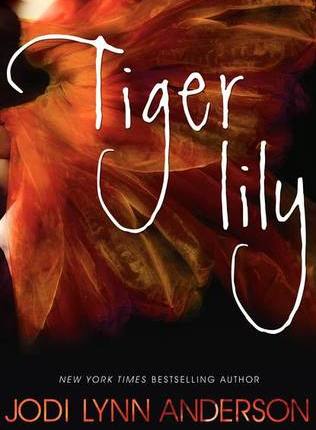
Tiger Lily by Jodi Lynn Anderson

Tiger Lily by Jodi Lynn Anderson

tigerlilyThis book is an absolutely magical re-telling of the story of Tiger Lily from Peter Pan. The narrator is the fairy, Tinker Bell.

I’ve always had a soft place in my heart for J. M.Barrie’s masterwork. Who among us hasn’t wanted to go to a place where you could remain young forever and never grow up?

Jodi Lynn Anderson writes that “never aging” magic of Neverland quite well: “Englanders had come to Neverland before. … The Englanders had the aging disease. As time went on they turned gray, and shrank, and, inexplicably, they died. It wasn’t that Neverlanders didn’t know anything about death, but not as a slow giving in, and certainly not an inevitability.” pg 13 (ebook)

Tiger Lily’s tribe may age, but how old they appear is contingent on something other than time. It’s curious and magical.

The lost boys come alive in this book with a wildness and unpredictability that I loved: “There was a joyfulness and- at the same time- a fragility about each of them. They were sloppy and uncared for and wildly alert and full of energy.” pg 61, ebook.

Despite their untamed natures, they are still children: “Straw beds had been separated haphazardly into different areas of the burrow, as if the boys hadn’t counted on wanting to live separately when they’d first built it, and only recently pushed themselves as far apart from each other as possible. Still, on one of the beds there was a worn home-sewn toy in the shape of a rabbit, and lying on a pillow, as if it had just been played with, a model of a ship.” pg 61, ebook.

Peter is the boy who has emotions but doesn’t understand them- perpetually young yet always on the verge of growing up.

He’s fiercely admired by his lost boys and, eventually, Tiger Lily: “Peter picked at his hangnail again. “Actually, I never get sad. It’s a waste of time, don’t you think?” Tiger Lily didn’t answer. She was impressed by the idea of deciding not to be sad. His words made him seem very strong. Impervious.” pg 67, ebook

Peter is still Peter in this tale. As far as girls go, he can be charming but also rude and aloof: “I think we could be good friends,” he said, falling into step with her. “It’s perfect because I wouldn’t fall in love with you, like I do with the mermaids. Girls always seem so exotic. But it would be okay with you, because you’re more like… you know. Not like a girl.” pg 77, ebook.

Tinker Bell was a sympathetic character in this book, rather than the spoiled, jealous creature that she is portrayed as in Peter Pan“A faerie heart is different from a human heart. Human hearts are elastic. They have room for all sorts of passions, and they can break and heal and love again and again. Faerie hearts are evolutionarily less sophisticated…. Our hearts are too small to love more than one person in a lifetime. … I tried to talk sense into my hard little heart. But it had landed on Peter, a creature two hundred times my size and barely aware of me, and there was no prying it loose.” pg 77-78, ebook.

Hook is extra creepy and villainous: “Neverland had called to him out of legends. A green place. A wild place. And most of all, a place where he’d never grow old. Most people in London hadn’t believed it existed, but some still insisted it did, and Hook had cast his lot with them. To get to the island, he’d begged, stolen, and eventually murdered.” pg 89-90, ebook.

And so is Mr. Smee. But, I’ll let Anderson tell you his story. She does a wonderful job of it.

The relationship between Tiger Lily, Peter, and Wendy makes a lot more sense in this story. It is less about any potential failings by the girls. The main source of conflict seems to be Peter’s emotional immaturity: “As you may have guessed already, Peter had a soul that was always telling itself lies. When he was frightened, his soul told itself, “I’m not frightened.” And when something mattered that he couldn’t control, Peter’s soul told itself, “It doesn’t matter.” pg 169, ebook.

The ending of this book was totally satisfying as well for all of the characters, even little Tinker Bell. I can’t say enough good things about it.

It’s easy to see why fairy tell retellings are so popular with books like Tiger Lily out there, waiting to be discovered.

Thanks for reading!

A Monster Calls by Patrick Ness

A Monster Calls by Patrick Ness

A Monsters Calls is a fantastic coming of age story. Conor’s mother is very sick. Since her illness, Conor has been treated differently at school and works hard at home, trying to keep everything running smoothly while she’s resting. He’s had a nightmare too- one that wakes him screaming almost every night. But then, one night, he dreams a different dream in which a monster formed from a yew tree comes to his home…

This book gave me goosebumps, it’s so good! I especially liked the monster’s tales.

Here’s the first time Conor meets the monster: “… here was a monster, clear as the clearest night, towering thirty or forty feet above him, breathing heavily in the night air. “It’s only a dream,” he said again. ‘But what is a dream, Conor O’Malley?’ the monster said, bending down so its face was close to Conor’s. ‘Who is to say that it is not everything ELSE that is the dream?'” pg 38 (ebook) Who’s to say?

“‘Here is what will happen, Conor O’Malley,’ the monster continued, ‘I will come to you again on further nights.’ Conor felt his stomach clench, like he was preparing for a blow. ‘And I will tell you three stories. Three tales from when I walked before.’ Conor blinked. Then blinked again. “You’re going to tell me STORIES?” ‘Indeed,’ the monster said. “Well-” Conor looked around in disbelief. “How is THAT a nightmare?” ‘Stories are the wildest things of all,’ the monster rumbled. ‘Stories chase and bite and hunt.'” pg 40-41 (ebook) Love, love, love! “Stories are the wildest things of all.” Yeah, they are.

I love the relationship that develops between Conor and the monster: “He (Conor) heard a strange rumbling, different from before, and it took him a minute to realize the monster was laughing. ‘You think I tell you stories to teach you lessons?’ the monster said. ‘You think I have come walking out of time and earth itself to teach you a lesson in niceness?’ It laughed louder and louder again, until the ground was shaking and it felt like the sky itself might tumble down.” pg 70 (ebook)

One more small passage that I had to include, not because it’s particularly important to the story but because it’s so very true: “Conor stared out the window… “How long are you here for?” he asked. He’d been afraid to ask before now. His father let out a long breath, the kind of breath that said bad news was coming. “Just a few days, I’m afraid.” Conor turned to him. “That’s all?” “Americans don’t get much holiday.” pg 103 (ebook) Mic drop!

This is a young adult book, but if you’re looking for more excellent fairy tales (like the monster’s stories) you may want to pick up In the Night Garden (The Orphan’s Tales, #1) by Catherynne Valente or, for another amazing coming of age story with fairy tale elements, try The Ocean at the End of the Lane by Neil Gaiman.

Thanks for reading!