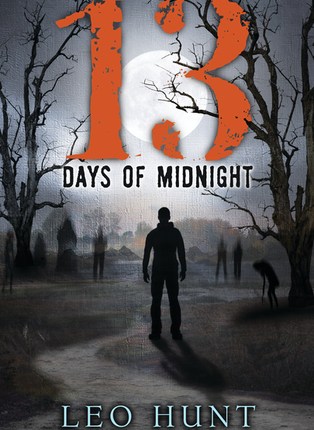
13 Days of Midnight is an enjoyable thrill ride through the world of Luke Manchett, a boy who is about to become a necromancer even though he didn’t know magic exists. His father dies suddenly and leaves him a “Host” which is a group of souls bound to serve and assist him.
The world of the new necromancer is fraught with peril and the souls that his father trapped do not respect him nor do they have his best wishes at heart. Will Luke survive long enough to discover his own power?
13 Days of Midnight is classified as a young adult novel and it has enough teen angst and non-graphic violence for that to be true, but I enjoyed it on its own merits, which is something that not all young adult books have going for them.
My favorite part of Hunt’s book is that the reader gets to discover the world and its magical rules along with Luke. You don’t know what the spirits are capable of or what the necromancer’s spell book is going to reveal- it’s exciting! I kept coming back to the story because I just had to know what was going to happen next.
The only issue that I had with 13 Days of Midnight was the premise that Luke’s father didn’t teach his son the magical methods that he knew to protect Luke from what went down after his father’s death. The story cleared up that question for me towards the very end, but I spent most of the book not buying into it. There’s something primal in the parent/child bond that would never allow such a thing to happen. At least, there is for me.
If you enjoyed this book, I’d recommend Shutter by Courtney Alameda (YA horror) or The Engelsfors Trilogy by Mats Strandberg (group of teens discover that they have magical powers and have to save the world).
Thank you to the Goodreads First Reads program for sending me a free copy of this book for review purposes. And, thank you for reading!
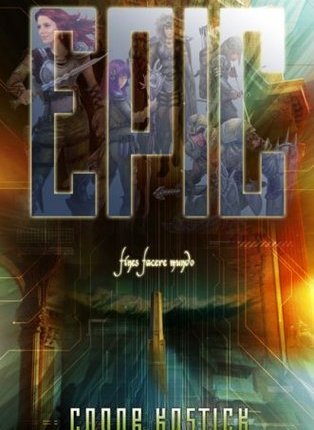
Perfect for fans of Ready Player One or anyone who has ever enjoyed playing an MMORPG. Erik, a young boy in a futuristic society, tires of scrabbling for his day-to-day existence in real life and in a virtual world, where all wealth and legal issues are decided by combat in a game called Epic. Almost everyone in Erik’s society kills kobalds and other low level monsters every day, to gather pennies to improve their online characters and, therefore, their society. After dying, yet again, and crushing his family’s hopes for his advancement in Epic, Erik creates a ridiculously attractive female character and puts all of his points into beauty, a skill that no one else ever considers because it is a useless stat from a fighter’s standpoint. What happens next is an exciting adventure through virtual worlds with magic, monsters, swords, and sorcery… who will triumph? Erik and his friends or the all-powerful Central Allocations team or the game, itself?
Erik’s creation of Cindella (his avatar): “Serious gamers, and the whole world consisted of serious gamers, never wasted a point on beauty that could be spent on more practical attributes, or combat skills, craft skills, weapons, magic items and spells. As a result, Epic’s population of players consisted entirely of dull, gray-looking humanoids. His friends were in for a shock; it would be impossible to explain his choices to them, as there was no rational argument in favor of throwing away every practical advantage in favor of beauty.” pg 15
The power of beauty: “While they made their way through the flapping canvas and rope of the market stalls, Bjorn noticed something unusual. The NPCs were not stationary; their heads were turning towards the two players. “Erik, look at the merchants.” “Hmmm. That’s odd.” Erik’s character made the actions that arose from the wave+smile command. A nearby seller of herbs smiled and waved back. “You try.” Bjorn had his big warrior wave. Nothing. “They like me!” pg 27
Librarians play a huge part in this story, which of course I LOVED: “Son, your story of Cindella and the pirate treasure is exciting. But you need to obtain more information.” “I know.” “Hope has a library. Where all the information ever learned about Epic has been stored. It is our right to be able to consult that information. So we are going to pay the librarian a visit.” pg 36
The villain in this book is just awful: “… the illicit thrill of being a player-killer was something that could not be understood with logic. Nor could logic explain the pattern of his killings. Curiously it was not the stronger looking players that attracted his attention- and if there was any justification for the deaths of players it was to eliminate possible threats to the Central Allocations team. No, it was the slightly heartrending players, with their one weapon and tiny pieces of armor, which drew his attention. There was something bewitchingly naive and tender about them, spending their spare time killing kobolds and orcs for pennies, saving assiduously and slowly. And so he rode them down, bringing their struggle up the ladder of Epic to an abrupt end.” pg 60 Haters gonna hate.
Doing the impossible… dragon slaying! : “I agree with Bjorn,” Sigrid interjected. “Farmers’ children just don’t kill dragons. Nobody kills dragons these days. But if they did, it would be the people in Mikelgard, with all their magic and expensive gear.” “But nobody even thinks about fighting dragons anymore.” Injeborg spoke up. Erik had known that he could count on her. “Only our Erik. That’s why he has seen something that they have missed.” She turned to her brother, “Come on, Bjorn. Let’s try it.” “No, it’s hopeless.” Injeborg stamped her foot in frustration. “You are always waiting for something to happen to you. But that’s not how life is.” pg 85
Big dreams: “Tell me,” said Injeborg. “Everyone, what is it that you would like from life?” She turned to look at Sigrid. “I would like to be allocated a small farm, somewhere near here.” “Bjorn?” “I would like the same.” “B.E.?” Slightly embarrassed, B.E. laughed, and then said, “I would like to be a successful Epic player, like Svein Redbeard.” “Erik?” “I would like nothing better than to be a librarian.” pg 89 🙂
A new way to play the game: “Wouldn’t it be wonderful if the game didn’t matter, other than to play it? We could explore snowy mountains, spectacular caverns, and remote desert civilizations. To journey just for the pleasure of the adventures would be something…” She paused. “Only now do I understand why this game was invented.” pg 192 A good metaphor for life, I think.
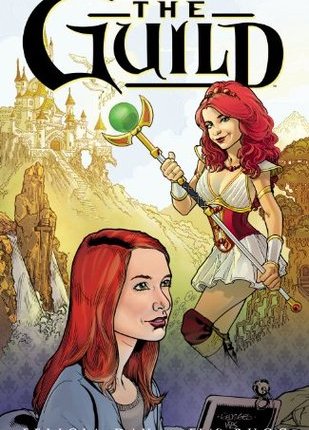
The Guild is a graphic novel prequel for the internet series of the same name. I think it is a must-read for fans of Day’s show and gamers who haven’t seen the show may enjoy it too. Other readers may want to give this a pass as it deals almost exclusively with gaming or RL relationships through gaming.
As much as I enjoyed this book, I felt like Day missed a golden opportunity to present the show in a completely different way. Day could have written this as characters in “The Game” with only brief moments of RL intruding into it. It would have flipped the show on its head and, in graphic novel form, she wouldn’t have faced any production limitations. Can you imagine it? I absolutely could. Maybe that’s what she did in the next book? Here’s hoping.
The glimpses that we had of the backstories of the Guild’s characters was awesome and I couldn’t get enough of “The Game” itself. Pretty much any scene where they were in the digital world was amazing. I also loved how their avatars had their real life faces.
The “one camera confessional” scenes worked so well in show, but didn’t translate as fluidly in the book. I think the reason why it works in real life is the expressiveness of Day’s face as she talks her way through her problems. The panels in the book didn’t have that aliveness and sort of fell flat.
But, that small gripe aside, I really enjoyed this one and highly recommend it. Some other graphic novels that readers may enjoy: Nimona by Noelle Stevenson (fantasy world), Fray by Joss Whedon (fantasy world), or The Order of the Stick series by Rich Burlew (for board gamers and fans of DnD).
“This is the story of a bloodstained boy.” That’s the first line of this strange and fantastical tale of giant creatures that “swim” in the earth’s soil and the brave and flawed “molers” who chase them for profit and life purpose. Miéville has created a dystopian world covered in railway ties with skies poisoned by chemicals and filled with monstrous, alien creatures who feast on those who get too close. But, there may just be something beyond the rails, if the characters in this story are determined and lucky enough to see their way through to the end of the world… Though based off of the tale of Moby Dick, Railsea is an engaging adventure and coming of age story that reads like nothing else I’ve ever experienced. Miéville has blended together steampunk, dytopian, and fantasy elements to create something completely different.
Sham is a boy on the cusp of manhood who can’t quite figure out what he wants to do with his adulthood: “Sham felt sure there was something he fervently wanted to do & to which he was excellently suited. Which made the more frustrating that he could not say what it was. Too vague about his interests for further study; too cautious in company, perhaps a little bruised by less-than-stellar school days, to thrive in sales or service; too young & sluggish to excel at heavy work: Sham’s tryings-out of various candidate activities left him het up.” pg 36, ebook. Anyone who has ever been lost about what path to follow in life will be able to empathize with Sham.
Miéville’s story, like Moby Dick has layers of meaning built into it: “Edging such places is the railseaside, called the littoral zone. Those are the shorelands. Port towns, from where transport, freight & hunting trains set out. Where lighthouses light ways past rubbish reefs breaking earth. “Give me the inland or give me the open rails,” say both the railsailor & the landlubber, “only spare me the littoral-minded.” pg 51 ebook. Clever, no? A warning, if you don’t enjoy reads where the author makes up words to tell the story, you may want to skip Railsea. There’s a bunch of creative adjectives and nouns mixed up in this one.
The religions of this world were a fascinating too. I wish Miéville had explored them more: “He muttered in his head to That Apt Ohm, the great rotund boss-god, one of the few deities worshipped across the railsea, whatever the peculiarities of local pantheons. Bollons was ecumenical, granted church-licences to any deities whose worshippers could pay the fees. But the disrespectful worship of That Apt Ohm was taken more seriously there, pursued with more verve, than at most stops on the railsea. Sham had no idea quite what, if anything, he believed, but there seemed little harm in a quick silent word with one of the few gods whose name he remembered.” pg 100, ebook.
Part of the homage to Moby Dick, finding a captain’s “philosophy”: “How many of these philosophies were out there? Not every captain of the Stereggeye Lands had one, but a fair proportion grew into a close antipathy-cum-connection with one particular animal, which they came to realise or decide-to decidalise-embodied meanings, potentialities, ways of looking at the world. At a certain point, & it was hard to be exact but you knew it when you saw it, the usual cunning thinking about professional prey switched onto a new rail & became something else- a faithfulness to an animal that was now a world-view.” pg 130 ebook. What’s your white mole?
I enjoyed Railsea but I can see how this writer might not be for everyone. He uses fragmented sentences and ampersands (&) to move the story along. The chapters are incredibly short which also kept the pace rolling but it could also be viewed as making the novel choppy. Sometimes, Miéville breaks through the fourth wall and addresses the reader directly. I thought that device was charming, conjuring up images in my mind of storytellers sitting in front of the fire or at a pub. But, again, this may not work for everyone.
Some read-alikes for Railsea: Chaos Walking series by Patrick Ness or Under the Empyrean Sky by Chuck Wendig. Thanks for reading!
Dear readers, there are some spoilers in this review, but they’re necessary for a thorough discussion of the comic. Please, if you haven’t read this one yet, go pick it up from your local library and then come back to this review. Thank you 🙂
The Princeless series continues to deliver strong female characters, beautiful (child appropriate) artwork, and storylines with meaning. Each time Adrienne and Bedelia venture out to rescue one of Adrienne’s sisters, a facet of relationships is dissected and examined. This volume dealt with abusive relationships and gender roles in government.
Now, it’s not that cut and dry on the surface- the story itself is really fun and engaging. Adrienne and Bedelia have to survive a cannibalistic tribe of goblins in a monster infested swamp in order to reach Angoisse’s tower. On the way, they befriend unlikely allies and encounter a plant-like terror.
While this is going on, Adrienne’s brother, Devin, refuses to embrace traditional gender roles and activities, which continues to infuriate his tyrannical father. Their relationship illustrates the eternal struggle between parent and child. Parents think they know better and push their child in the direction they believe they should go, while children want to follow their natural inclinations. In the push-pull dynamic, somehow everything works out fine, but with more bad feelings on either side than there need to be.
The abusive relationship portion is tactfully presented in the interactions between Angoisse and Raphael. Sometimes people act a certain way because they want something out of you, other than your company. Kids get it. But in an era of Twilight idealization, I think the presentation of a “vampire” who acts out of self-interest rather than undying love is an important topic to discuss.
Teen relationships are just as thorny and prone to abuse as adult relationships and, because they are some of the first experiences that teens have, they have the potential to color the rest of that person’s lifetime and set the stage for the relationships to come.
Angoisse is a victim of Raphael but also her own beliefs. She’s always thought that she needed a man to complete her and she was going to do whatever it took to keep that relationship intact, even to the point of giving up her humanity or betraying her own family.
It didn’t take a very smart predator to see that she could be manipulated through her feelings. Sadly, such people actually exist. Thank you, Princeless for opening a door to the discussion of how to remain true to yourself in relationships and a powerful example of how to leave the ones that have soured.
The story is not too complex and adult readers may find it rather simplistic (unless you dig deeper into the underlying meaning), but it’s perfect for the 8 to 12 year olds. This comic will appeal to reluctant readers of either gender. I highly recommend it.
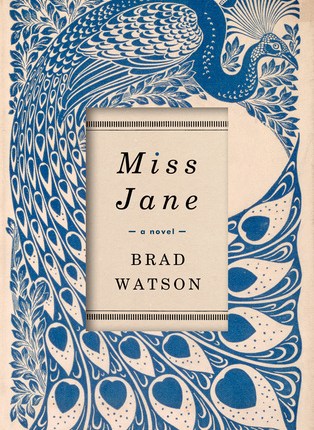
Confession time: I picked this one up because of the cover. I do that sometimes. Who could resist that peacock? It’s an exciting method of book selection because I read novels I would have never considered otherwise and occasionally discover a gem. Miss Jane is, fortunately, one of those gems.
Miss Jane is about Jane Chisolm- an extraordinary girl born in the deep South in the early 19th century with a physical deformity so extreme that she can never have children or even control her bowels. Though Jane struggles with her handicap, it doesn’t define her and she manages to have a beautiful and meaningful life in an otherwise hardscrabble, country existence. Jane’s father is an alcoholic, brewing his own stuff during prohibition, and her mother is deeply unhappy with their relationship, her life, and the world. Jane’s sister, Grace, just wants out of her childhood home and will do anything to achieve that goal. Jane’s doctor, Dr. Thompson, delivers Jane into the world and then spends the rest of his life trying to help her improve the quality of her existence and to also educate the medical community about her condition (there was very little information on it at the time). Miss Jane is based on one of Brad Watson’s actual relatives and I found it to be a fascinating study of not only the South at the turn of the century, but also how poor farming communities handled day-to-day drudgery, poor prospects, and major differences of mind and body.
The farm and nature portions of the story read a lot like a southern, more adult version of Laura Ingalls Wilder’s books, which I’ve always loved, so I guess it’s no huge surprise that I enjoyed this as well. I also loved the way that he wrote about dogs on the farm. Here’s Mr. Chisolm and his hound:“You got the face of bored sadness,” he said to the dog. The dog didn’t take umbrage. Came over beside his left foot and plopped down with a heavy sigh as if he were the one going through all the trouble on this evening.” pg 16 ebook. The peacock from the cover makes an appearance in the story as well, but that has a lot to do with Jane’s condition and I’ll let Watson tell you that detail in his own, lovely way.
Here’s Dr. Thompson, trying to understand the attitudes of the country folk he treats: “Sometimes he was astonished how often he forgot people’s cruel ignorance, people who’d never been anywhere but the little hamlets where they were born, raised, and would die. Not that he hadn’t known plenty of so-called sophisticated people with the same attitude.” pg 39 ebook. Dr. Thompson is a complicated character. He’s highly educated and open minded, but prone to indulging in vices like Mr. Chisolm’s homemade alcohol and prostitutes. Dr. Thompson sees the worst of those he treats- the abuse and neglect- but also their sacrifices and loves. At first, it seems that he only cares for Jane as a medical oddity, but as the story progresses, he comes to love her as a father figure.
In some ways, the isolated world that Jane grew up in was perfect for her. Take the description of her grade school: “It was a small school that took the community children all the way from first grade to high school graduation, and there were not many enrolled, so the environment was relatively intimate, like some great, overgrown family, in a way. The children seemed to know and understand one another like siblings, whether lovingly, or with hostility, or with the purposeful ignoring of this one or that.” pg 58 ebook. That’s the positive and negative of growing up in a small town- that everyone knows everyone else’s business.
Jane’s struggle to fit in is written very beautifully by Watson: “She’d never put a word to the sadness she could sometimes feel, especially in the last couple of years, that would linger at the edge of her thoughts like the invisible ghost of someone she thought she recognized but didn’t know who it was, some kind of familiar she couldn’t quite grasp.” pg 127 ebook
Or this: “She stayed so busy and tired that it seemed like time didn’t matter anymore. Didn’t so much pass as disappear, like memories neglected and forgotten. Years can slip away in such a manner, in such a life.” pg 156 ebook.
A read-alike for Miss Jane: Bull Mountain by Brian Panowich, a story about a family in the deep south but much more violent and with drugs.
Second read-through August 2021: I have a few thoughts to add on my second read-through of Gardens of the Moon. Unlike my first foray into Malazan, I came out of this reading with a better appreciation of the female characters of the story.
Instead of being focused on what the characters were not, I looked at what the characters were. Powerful leaders, most of them, who imposed their will on the world around them through violence. It is an unexpected role for women, but still feels somewhat one dimensional. I wish some of the characters were more fleshed out, but I have the feeling that this development will happen before the end of the series.
Also, this go-round, I had a better grasp on the complexities of Gardens of the Moon and was prepared to be dropped into the middle of the action. Steven Erikson doesn’t hold the reader’s hand. He pushes her through the door into another world. Some readers hate/love this strategy. I fall mainly on the side of hate, but if it’s a good story, I’ll put up with it.
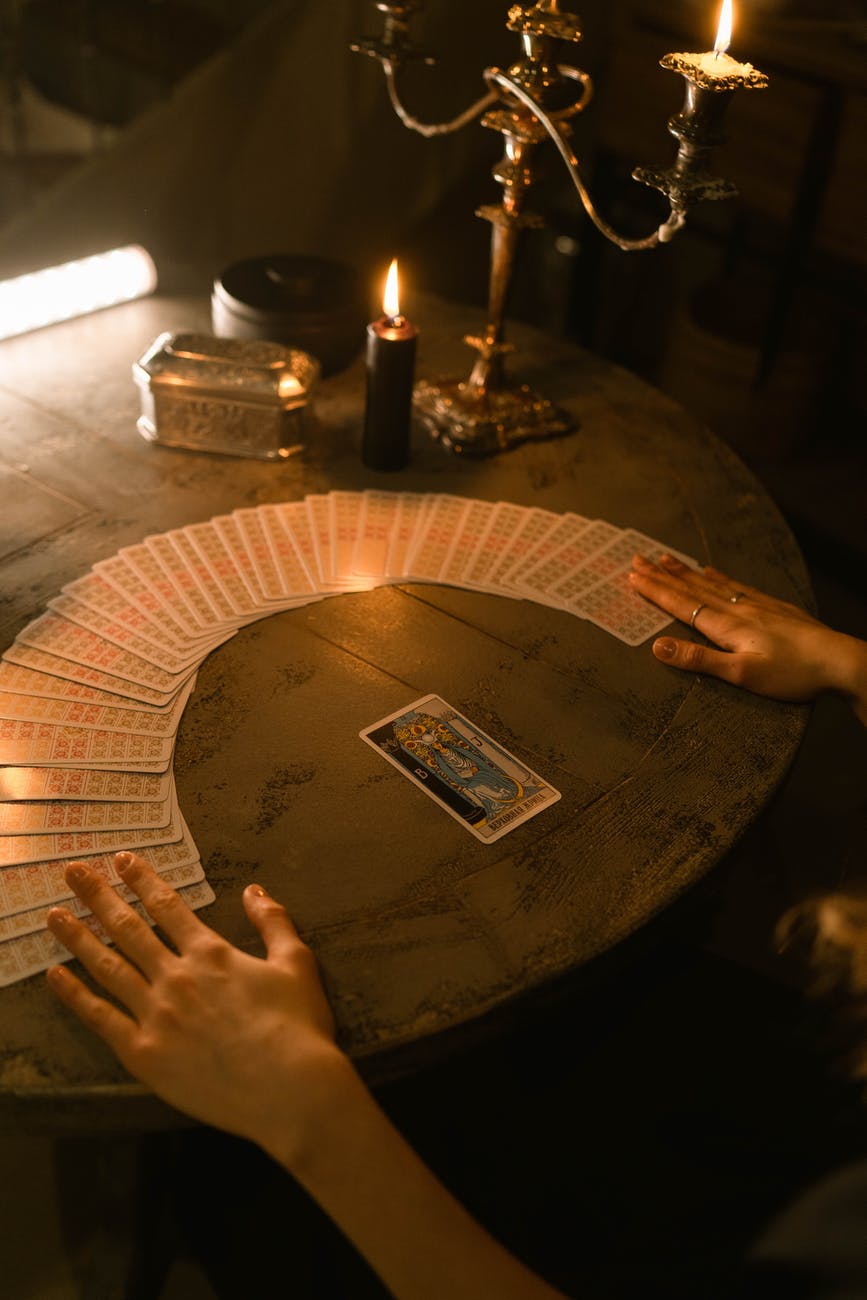
My favorite part is still the new tarot card deck that Erikson created.
Unlike last time, I’m going to keep pushing forward with this series. On to the next book!
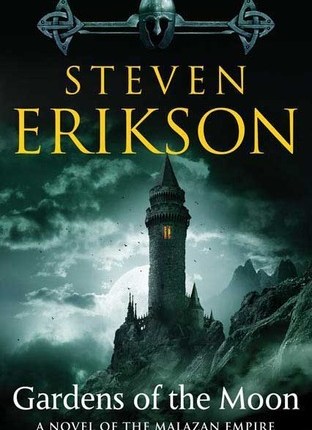
Review from first read-through June 2016: Gardens of the Moon is an extraordinarily complex fantasy. The over-arching story: the Malazan Empire (a militaristic conglomeration of nations) is invading everywhere and trashing cities as it goes. The Empress of Malazan, her High Fist Dujek (like a top general), Adjunct Lorn (a magic-hating fixer), Whiskeyjack and the Bridgeburners (like the A-team for Malazan, they go in and cause chaos before the main army arrives), Tattersail (a Malazan mage), Ganoes Paran (a soldier), and more are on the side of the Empire.
There’s about a dozen other main characters that I won’t list here for brevity’s sake.
One of the many heroes of this tale is Paran. The story begins with Paran as a child, gazing down from the walls of his city, towards destruction being wreaked by Malazan mages. He dreams of being a warrior and tells this dream to the aged soldier with him.
Their conversation: “Every decision you make can change the world. The best life is the one the gods don’t notice. You want to live free, boy, live quietly.” “I want to be a soldier. A hero.” “You’ll grow out of it.” pg 5
And so the story begins. Paran gets his desire, of course, but so much more than he bargained for… kind of like the reader who picks up this book.
At first, I thought that the story was going to go like The Game of Thrones. We were going to have a bunch of different characters all fighting for the same thing. I was so wrong. The only similarities between the two tales are that 1. they’re fantasies, 2. they have a bunch of characters, and 3. there is a power struggle, but otherwise, they’re very different.
Gardens of the Moon contains direct interventions between gods and humanity as well as magical creatures from the past and other realms of existence.
As for the magic system, the magically-inclined in this story take their power from different dimensions called “warrens“. There are half a dozen different ones, with further warrens hinted at as the story progresses.
Taken as a whole- it is a many layered cake of fantasy awesomeness. I was overwhelmed by it all at times.
Perhaps because of the sheer scope of the story, the characterizations suffered. The author could only build so much detail into each person.
For example, Erikson tried to make Paran more than just a simple hero, but it didn’t always work: “When he thought of himself, of that young noble-born man with the overblown faith in honesty and integrity, the vision that came to him now was of something cold, hard, and dark. It hid in the deepest shadows of his mind, and it watched. No contemplation, no judgment, just icy, clinical observation.” pg 110
I was unimpressed with the role of the females in this story. With as many characters that we had, I thought we’d have at least one or two amazing, strong, female heroes. I know that fantasies are not known for their gender equality but in a world with magic, gods, and other surprising things, I would count a strong female character as one of the greatest miracles of all.
Erikson’s world building was so complete that he even created a new set of Tarot cards, just for his world. It’s one of my favorite parts of the story.
Here’s a passage that I really liked: “Those whom the gods choose, ’tis said, they first separate from other mortals- by treachery, by stripping from you your spirit’s lifeblood. The gods will take all your loved ones, one by one, to their death. And, as you harden, as you become what they seek, the gods smile and nod. Each company you shun brings you closer to them. ‘Tis the shaping of a tool, son, the prod and pull, and the final succour they offer you is to end your loneliness- the very isolation they helped you create.” Never get noticed, boy. pg 510 Bleak, but beautiful.
Or this part, the explanation of the story’s title, which is so brief, if you blink, you’ll miss it: (On the moon) The Lord of the Deep waters living there is named Grallin. He tends vast, beautiful underwater gardens. Grallin will come down to us, one day, to our world. And he’ll gather his chosen and take them to his world. And we’ll live in those gardens, warmed by the deep fires, and our children will swim like dolphins, and we’ll be happy since there won’t be anymore wars, and no empires, and no swords and shields.” pg 531-532
That’s the dream of all of the characters in this story- to live in peace. But, because of the Malazan Empire, they can’t.
Recommended for true fans of fantasy. There’s so much to sink your teeth into that, unless you really love the genre, you’ll probably just put it aside for simpler fare.
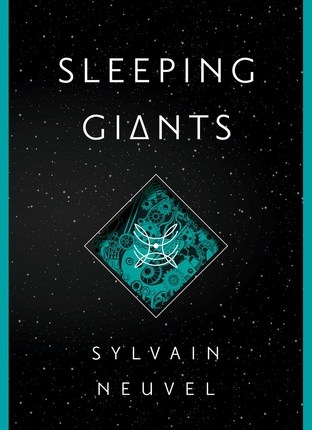
In Sleeping Giants, a large, metal object shaped like a gigantic hand is found in South Dakota. It glows with its own light and scientists have no idea what it is made of or what it can do. And so, the mystery and adventure begins.
I enjoyed the story a lot but not how it was written. Neuvel tells Sleeping Giants through a series of “case files” or question and answer sessions between the main characters and a mysterious, all-powerful figure who is manipulating the scenario from behind the scenes.
This method of storytelling seemed especially ridiculous during some of the action scenes, when Neuvel had the characters talking to each other on the phone, describing what was happening to them as it occurred.
But, otherwise, the Q & A setup gave readers a behind-the-scenes look at what was going on in the character’s minds and allowed for a lot of personality development.
I wish that Neuvel had switched back and forth between traditional storytelling and the “case file” thing, so that he could both tell the story and have the in-depth character portions. Maybe he could do something like that in the next book.
I was nervous that Sleeping Giants was going to be more science fiction than fantasy, but it wasn’t. There are only a few mind-boggling moments when the scientists are trying to figure out mathematics with a base of 8 rather than a base of 10.
Mostly, The Sleeping Giants asks the questions: what would happen to humanity if something very strange and not of our civilization was discovered on earth? What would that mean for world politics? And how, on an individual level, would everyone involved handle it?
Kara Resnik, a pilot, was my favorite character in this story. She’s impulsive, passionate, and honest.
In this passage, she’s talking about the possibility of leaving the project before it’s completed: What would I do anyway? Go about my business as if nothing ever happened? I couldn’t even talk about it to anyone. This is gonna sound incredibly selfish, but I’d get bored to death unless someone started World War III or something.” pg 54
The moral dilemma for the scientists involved in the project is interesting.
In this passage, lead scientist Rose Franklin talks about the fact that the technology discovered could be used for good or ill, depending on who controls it and how that makes her complicit in their actions, because she’s the one figuring out how it works: “What I’ve been trying so hard to deny is that I’m loving every minute of it. … I’m a scientist, and this is what I breathe for. If I had learn to live with that, I might be able to sleep again.” pg 167
If you enjoyed Sleeping Giants, you may want to pick up The Many Selves of Katherine North by Emma Geen (in which, advanced technology raises moral questions) or The Interminables by Paige Orwen (in a dystopian world, humanity tries to save itself from inter-dimensional creatures, but maybe some solutions aren’t worth the cost).
Big thanks to the Goodreads First Reads Program for a free copy of this book. And, thank you for reading!
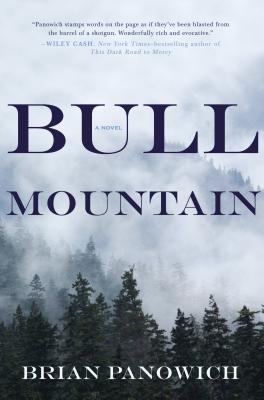
If you’ve ever thought that your family is too dysfunctional and you can’t, just can’t even, with them anymore, Bull Mountain is the book for you. You’ll read about the Burroughs family down in Georgia, and how through generations of crime, abuse, and out-right violence, they owned and ran everything that happened on their mountain, and you’ll think to yourself… maybe my family isn’t so bad after all.
For sensitive readers, there’s a lot of tough material in here. It runs the gambit from alcoholism to drug abuse, rape to mutilation, extreme poverty, prostitution, and physical violence of all kinds. Actually, I was surprised that I enjoyed it at all, but I really did. Panowich writes characters that I cared about and, when they were misbehaving in various ways, I kept yelling at the book in my head. “You’re better than that!” I kept telling them, but they didn’t listen to me…
The mystery, though not all that mysterious, was quite enjoyable as well. I think that the main point of Bull Mountain is the multi-generational struggle between nature vs nurture. Are people born a certain way, trained by their family to be that way, or is it a magical combination of both? What would it take to produce a good man from a mountain of bad ones? ReadBull Mountain to find out.
To the Burroughs, family is everything. Here, Rye is looking at Cooper’s (his brother) son: “As they ate, Rye studied Gareth’s face…. His eyes were set deep and narrow like his father’s. … They were Cooper’s eyes. It was Cooper’s face, without the calico beard, or the grit, or the anger. Rye remembered when his brother looked like that. It felt like a hundred years ago. pg 11, ebook. I was reminded of myself in that passage. When I look at my various sisters’ children, I see them in the child’s face. It’s just like that too, in that I’m transported to thirty years ago when we were all so young and carefree. None of us were/are what I would call angry though.
Another of the main story arcs is that Clayton (one of the Burroughs) is the town sheriff and the rest of his family are the people that he’s supposed to be protecting the rest of society from. They’ve had a big falling out and now, Clayton is no longer welcome on the mountain: “This place was his home, no matter how unkind it had been to him. Clayton knew he would always be welcome, but the badge had no business here at all. If a thing existed up here (on the mountain), it was because it belonged here. And if it didn’t belong, the people who lived here made damn sure it didn’t stay.” pg 109, ebook.
This part reminded me of my family too: “No hugs or small-talk sentiment, just a hand on a shoulder and a respectful nod made it obvious to anyone watching that these men were family. It wasn’t necessary to catch up. They were both thankful to be there now.” pg 127 ebook. That’s what it’s like to hang out with my father, a painfully shy introvert. But, you know he cares, because he’s there and he’ll sit with you if you’re family.
Finally, this moment between Clayton’s wife and Big Val captured the general feeling of reading Bull Mountain for me: “They shared a moment of crushing sadness that tightened her chest and suddenly made it hard to breathe. It was the kind of sadness brought on by turning corners that led you to places there was no finding your way home from. They had both looked deep within themselves and found an ugliness that couldn’t be stuffed back inside. She’d seen that look on the faces of people before, but now she understood it. Now she owned it. pg 225 ebook. And boom! Panowich breaks your heart. Consider yourself warned.





 The Help Desk Book Blog