Margaret the First by Danielle Dutton

Margaret the First by Danielle Dutton

This book is life story of Margaret Cavendish, a duchess and one of the first popular female writers in England.
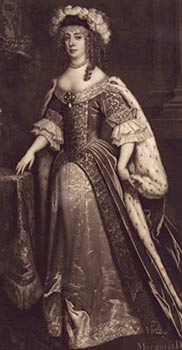
cavendish

Nice hat, right?  Digital image from nottingham.ac.uk

Margaret the First is written like a dream- the scenes come and go with little or no explanation in them and years pass in the blink or an eye or turning of the page.

Usually, I read historical fiction to immerse myself in the details of a time period, but this book doesn’t really cater to that. It’s a bubble in the wind or a glimpse from the windows of a fast moving car. It hints at depth more than delivers it.

Photo by Lucas F. on Pexels.com

But still, despite this strangeness, I was mainly captivated.

Margaret describing her mother: “As for our mother, she was beautiful beyond the ruins of time. None of her children would be crooked, of course, nor in any ways deformed. Neither were we dwarfish, or of a giantlike stature, but proportional, with brown hair, sound teeth, sweet breath, and tunable voices- not given to wharling in the throat, I mean, or speaking through the nose, unless we had a cold- yet we were none so prone to beauty as she, and I perhaps the least of them all.” pg 14, ebook. Beautiful.

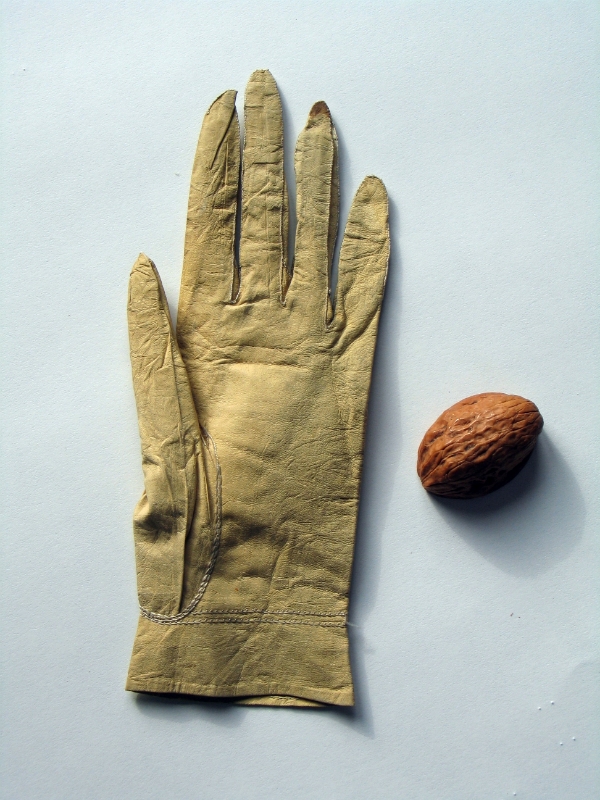
Margaret describing the difference between her childhood education and her brother’s: “You must wear chicken-skin gloves on your hands all night,” my mother began… “When inside the house,” my mother went on, “you must not spend all your time writing little books.” Yet out the window, as she spoke, under a net of branches, my youngest brother, Charlie, arrived on the lawn with a hawk. … It is nobler to be a boy, I thought- and looked back with nostalgia, as if I just had been.” pg 18, ebook
chicken-skin-gloves-0031

Actual chicken skin glove. Image from www.museumofleathercraft.org

The first time Margaret speaks out in a group of intellectuals: “A second man then sportingly suggested they debate the nature of woman. “You will find, sir,” I abruptly spoke, “women as difficult to be known and understood as the universe.” The room fell silent. I was surprised as any man.” pg 43, ebook.

This may be a work of fiction, but I feel like that’s something that Margaret would have actually said. Don’t you?
theblazingworld

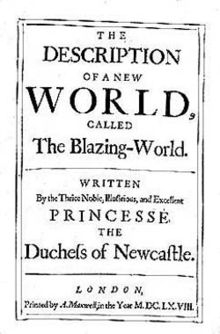
Cover of one of Margaret’s books.  Photo from wikipedia.org.

The attitudes of that time period were astonishing: “Unlike Mr. Hobbes in his Leviathan, then under production in Paris, William thought that common man should be kept illiterate and happy, with sport and common prayer. “Too much reading,” he said, “has made the mob defiant.” I chewed my mutton and considered.” pg 56 (ebook)

Margaret undergoes a lot of unfortunate medical treatment in this book.

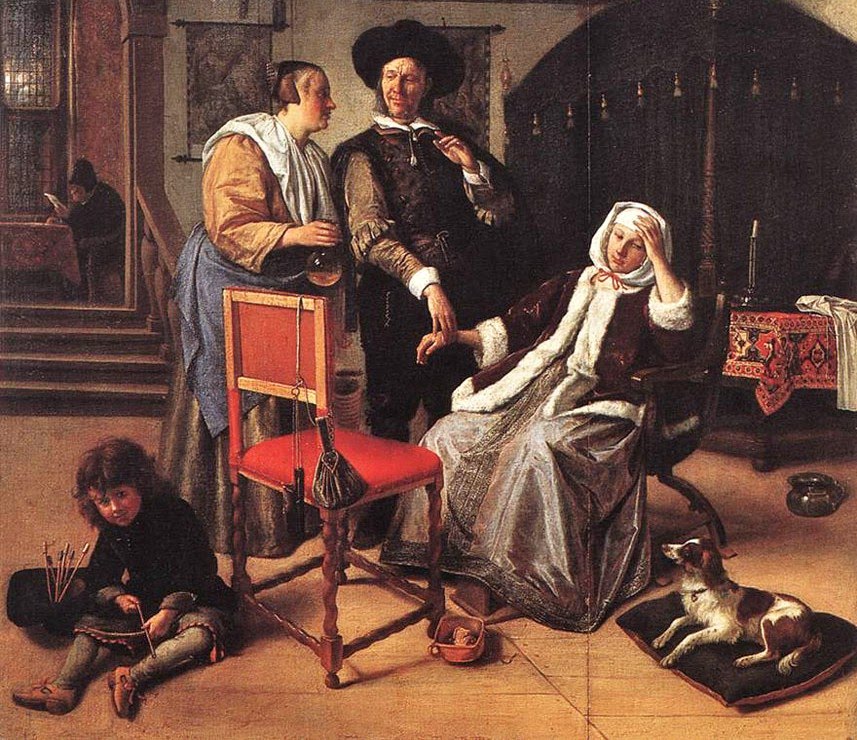
I thought that this passage was charming and really showed the time period rather than purely grotesque, bodily manipulations like some of the other doctor visits: “He (the doctor) tapped and patted, then scribbled in a book: how clear, how pale, how pink. I looked, he assured me, ten years younger than my age, in blossom, in perfect health, and prescribed only a new herb from China called tea. “The decoction of it drunk warm doth marvels,” he told Charles. “Very comforting, abates fumes.” To me he spoke nonsense, as he would to any child, suggesting candy or gossip, or candy with gossip, to lift my mood.” pg 64 (ebook)
thedoctorsvisit

Painting: The Doctor’s Visit by Jan Steen.

Digital image from b-womeninamericanhistory17.blogspot.com

The science of the 1600’s was so off from reality as to seem absurd now in retrospect.

Take this scene where Margaret and an intellectual friend are viewing a map of the North Pole:“Here,” he said, “lies the very pole of the pole of the Earth, where all the oceans’ waters circle round and fall, just as if you’d poured them down a funnel in your head, only to see them come back out the southern end. And in the middle of the middle sits a large black rock, the very pole of the pole of the pole of the Earth, wholly magnetic, possibly magic, and thirty-three miles across!” “Where is the ice?” she wanted to know.” pg 100, ebook.
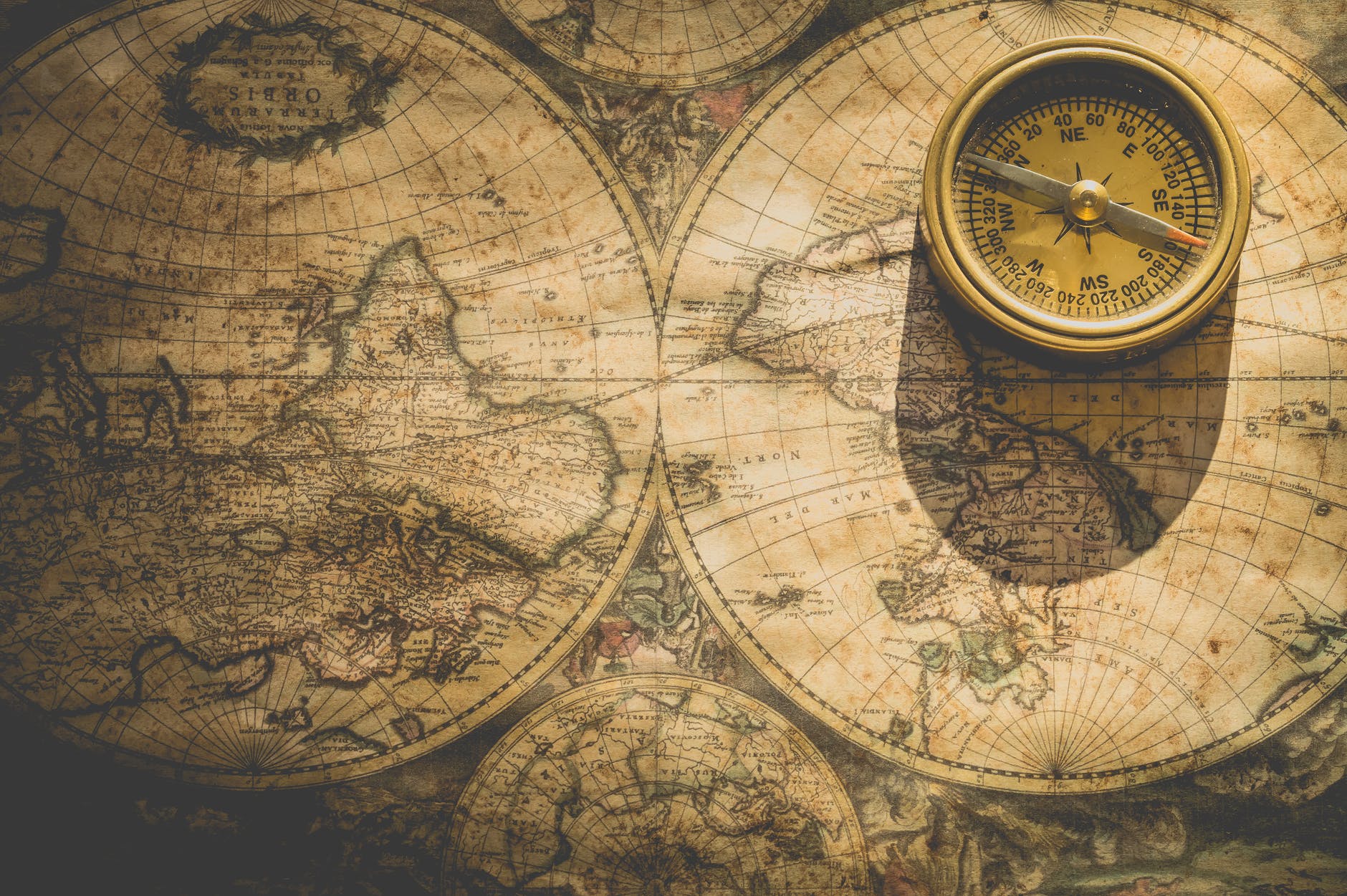
Photo by Ylanite Koppens on Pexels.com

In this passage, Margaret’s husband asks her what she wants in life and I thought that Dutton captured the (occasionally) unsettled attitude of every woman who has ever lived nearly perfectly:“But Margaret wanted the whole house to move three feet to the left. It was indescribable what she wanted. She was restless. She wanted to work. She wanted to be thirty people. She wanted to wear a cap of pearls and a coat of bright blue diamonds. To live as nature does, in many ages, in many brains.” pg 102, ebook. I’ve been there.

If the reader is looking for a historical fiction with more umph to it, she may want to consider The Dream Lover: A Novel of George Sand by Elizabeth Berg.

But, if she wants a frothy, fun, and fantastical journey into what might have been, look no further than Margaret the First.

Thanks for reading!

This review also appeared on O’Fallon Public Library’s blog.

Finding Jake by Bryan Reardon

Finding Jake by Bryan Reardon

A heart-wrenching yet ultimately uplifting story of psychological suspense in which a parent is forced to confront what he does—and does not—know about his teenage son, in the vein of Reconstructing Amelia, Defending Jacob, and We Need to Talk about Kevin.

While his successful wife goes off to her law office each day, Simon Connolly takes care of their kids, Jake and Laney. Now that they are in high school, the angst-ridden father should feel more relaxed, but he doesn’t. He’s seen the statistics, read the headlines. And now, his darkest fear is coming true. There has been a shooting at school. -Goodreads

I wouldn’t have touched this title without the encouragement of the library book club. Books and Brew challenges me to read different books, which I like, but I don’t always enjoy the topics that are discussed.

At first, I did not like Finding Jake. I thought that Reardon was presenting the glaring differences between introverts and extroverts as traditional gender role difficulties. I didn’t think that Simon was avoiding playdates because he was a “guy” but because he was an introvert. But, I suppose, being a guy didn’t help him build any common ground with the stay-at-home moms, which Reardon discusses in depth.


Also, I never liked the way that Simon and Rachel treated each other. I think that all too often, marriages tank because of the careless way that couples stomp on each other’s emotions. Yes, it’s a legitimate topic to discuss, but I don’t like reading that kind of thing for fun. Because, it’s not really fun at all, is it?

I empathized with Simon’s feelings about staying home and taking care of Jake and, later, his daughter, Laney. I never planned on having a kid, so the assumption that I was going to stay home and care for her really blind sided me. It was never even discussed in any serious way just presented like- so this is your life now, full time caregiver. That part of the book was hard for me to get through, in addition to all of the obvious school shooting horror emotions, because it brought up a lot of old angst that I would have rather had stayed buried at the bottom of my subconscious: “I never realized how much I’d miss seeing the cast of characters that make up an office. I also did not realize how much I identified with my job, or how much my job identified me.” pg 15 Yeah, either did I.

Here’s part where I just wish Simon had admitted to himself that he was an introvert: “I, for one, could go days (maybe weeks) without talking to the neighbors. Not that I disliked them. There were days I could go without talking to anyone, a new trait that expressed itself since I’d left the office. Conversations at work, whether about the job or not, had been simple. In the suburbs, though, the same exchanges left me either confused or apologetic.” pg 19 Classic introvert. Business is one thing, but personal relationships are a whole other can of worms.

The mother in this story, Rachel, asks Simon to stay home and raise the children, but they never seem to make peace with that decision and it seriously bugged me: “The rest I (Simon) left unsaid. It presented itself like a hippo in my kitchen, though. She should have stayed home with the kids. I don’t think Rachel picked up on it, thankfully, or the rest of the conversation would have progressed very differently. pg 47 Tons of exchanges like that, peppered throughout the book. Not fun.

And why do teachers make parents sit on those child sized chairs at parent teacher conferences? I’ve always wondered: “Ms. Jenkins motioned toward a low, round table. One full-size chair rested on her side. An array of three miniaturized versions lined our side. … I tried to fit my rear on the tiny seat, teetering back and forth until I found a semblance of comfort. When I turned to Ms. Jenkins, I realized I had to look up at her. I instantly felt like a child, folding my hands in my lap and waiting to get in trouble.” pg 101 It’s ridiculous.

Simon was far too hard on himself for about the whole book: “The past hours lost all clarity. Inexcusably, I think about the movies. Those parents, caught up in some awful tragedy paralleling our own, act the heroes, persevere against all odds, track down the clues and find the answers, gun in hand, nursing a nonfatal wound to the shoulder. For me, it is nothing of the sort. Instead the tsunami of reality pushes me, all of us, along, forcing us down this path of inactivity, bureaucracy, and flashbulbs. It is a wave of staggering weight that holds us captive to the nothingness.” pg 113 He should have given himself some credit. Who among us could have done any differently in the same situation?

What I loved about Finding Jake is that it is so relatable. At almost any point in the story, I could put myself in Simon’s shoes: “Maybe life is just a series of banal moments punctuated by tragedy. … Rachel and Laney sat in the living room, both reading. Laney flipped through a People magazine while my wife read a brief on her iPad. A familiar yet diaphanous annoyance colored my vision of what could have been a nice family moment. Instead, I blamed my wife for being a workaholic and at the same time wondered why Laney wasn’t reading her assignment from school instead of a glossy periodical.” pg 221

In conclusion, Finding Jake wasn’t a walk in the park, but I’m glad I read it, because now I’ll have plenty to say tomorrow night at book club. And, I’m glad that we meet at a bar, because I’m going to want that drink in my hand to soften and fuzz the lines of the less palatable emotions that will inevitably arise while we talk about school shootings, raising kids, gender roles, and life.

Thanks for reading!

Grey by E.L. James

Grey by E.L. James

We all know what this book is about and why I didn’t like it. If you don’t have any idea what it is, here’s the Goodreads link.  Instead of writing a negative review about that, let me tell you a story about Fifty Shades of Grey and my first days as a librarian.

It was March of 2012. After being unemployed for four years to be a stay-at-home mom, I was hired to work behind the circulation desk at the public library in town. That particular day, a line formed at the front desk, which, as I would discover, happens all the time- but it’s stressful to have people waiting while you’re learning the ropes.

At the front of the line, a sweet, little elderly lady asked me, “Honey, do you have that book about the color grey?” I looked at my manager in confusion and he immediately answered, “Yes, ma’am, we do, but all SIX of our copies are currently checked out. Would you like me to put you on hold for it?” He walked me through the process of doing a hold request and then we were on to the next person in line. This time, a teenage girl giggled behind her hand as she asked me about, “That Fifty Shades book, do you have it?” I gave her the answer that we just gave the little old lady, and I put the girl on hold for it too.

All day long, for my first two weeks on the job, women, old/young and from all walks of life, asked me to get the book, Fifty Shades of Grey, for them. I still had no idea what this series was about… remember, this was before E.L. James did the talk show circuit in the states. After she made her appearances on Rachel Ray and, I can’t remember where else- was it Ellen?-, all hell broke lose. We couldn’t keep the books on the shelves and irate patrons were calling and storming the circ desk, wanting to know why the second book in the series arrived on their hold shelf before the first book did. (Short answer-the first book had four times as many holds on it as the others in the series.) To accommodate the demand, the library bought another six copies of the regular print books, bringing our own total copies to a dozen, not counting the audiobooks and large print versions. The library system that we take part in, owned nearly 500 copies of Fifty Shades of Grey, altogether. It was a literary phenomenon.

I decided, that even though it wasn’t my thing, I was going to read this trilogy that was blowing up the library world. So, I did. I wasn’t floored by it, but I could see how it appealed to a certain crowd. Erotica is very popular at the library, after all. Conscientiously, I read all three of the books, because that’s just the kind of professional reader that I am. :p After awhile, I started skipping the sex stuff because, frankly, it became repetitive and boring. I soldiered on because I wanted to know what happened to Ana. And, I found out.

In this book, on the other hand, I knew what was going to happen before I even picked it up so I didn’t bother to finish it when I discovered that it had nothing really new to offer. Grey is just for the true fans of the series and, unfortunately, I am not a true fan. I’ll always equate Fifty Shades with my first days on the job and my whirlwind introduction to the world of public libraries. I believe that it is a cultural touchstone for me in that regard. But, that doesn’t mean that I think it’s worth the ridiculous hype that it has garnered. Pick up Grey if you truly loved the original trilogy and wanted it to go on and on. I’d advise all other readers to steer clear.

Thanks for reading!

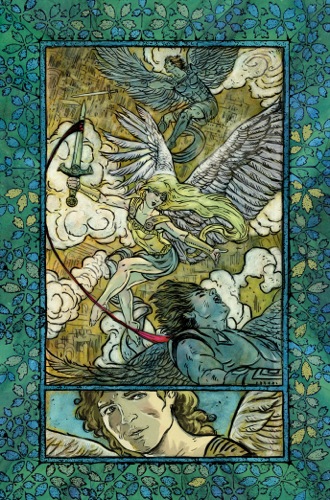
A Flight of Angels, Illustrated by Rebecca Guay

A Flight of Angels, Illustrated by Rebecca Guay

A Flight of Angels includes stories by Holly Black, Louise Hawes, Todd Mitchell, Alisa Kwitney, Bill Willingham.

Lovely art elevates a so-so collection of short stories about angels. Rebecca Guay, in my opinion, is one of the most talented illustrators I’ve ever seen. The artwork is classic but ephemeral with tasteful nudes and multi-layered backgrounds. In a word: gorgeous.

flightofangels

I picked this one up because of The Last Dragon by Jane Yolen. In that book, as in this, I loved the art but thought that the story was predictable. I feel like the authors that Guay has partnered with, at least so far, don’t measure up to the masterworks she produces.

flightofangels2

Borrow this one from your nearest library so that you can see how beautiful it is.

Read alikes: some of the Fables, Vol. 1: Legends in Exile series has art on this level but they’re kind of hit or miss. Saga, Volume 1 is beautiful but the story has some very vulgar moments popped in there. If you can handle that, and I know that some people are huge fans of Saga, then that series might be a good fit. Or, of course, you may want to pick up The Last Dragon as that is done by the same illustrator.

Thanks for reading!

Lord of the Flies by William Golding

Lord of the Flies by William Golding

Spoilers abound in this review, dear readers, so beware!  If you haven’t read this one yet, stop now.

I had never read this classic before now. It was one of the options in Advanced Literature, my freshman year of high school, along with Wuthering Heights and Dune. I ended up choosing Wuthering Heights, which, is an excellent read if you’re into the gothic romance stuff. So, I was bringing adult eyes to a book that most people seem to have read as a young adult. And, I have to say, I was enthralled.

As I mentioned in previous reviews, my undergraduate degree is in political science. For whatever reason, I love studying the building blocks of society, the structures of power, and the shifting sands of public opinion and group think. Lord of the Flies is a powerhouse of a book for all of those things.

For those like me who haven’t read this (I imagine there must be somebody out there), we start out on an island. There has been a plane crash and only children have survived. We’re on an island full of boys- no girls, interestingly enough. I guess Golding didn’t want to muddy the waters with gender issues in addition to the social hierarchy stuff. So, there’s a charismatic boy named Ralph who meets an overweight kid. Overweight kid shares with Ralph in confidence that the boys back at school used to call him, ‘Piggy’, but he’d rather be called anything but that. They find a huge conch shell on the beach and use it to call the other survivors to the shoreline. They’re sharing names and Ralph tells the group to call the fat kid, Piggy. Now, that was a huge red flag to me. When you tell somebody a secret and, not ten minutes later, they turn around and use that secret against you, you’ve got to know that you’ve got problems heading your way.

Well, the newly christened Piggy doesn’t have a lot of choice in the matter, because there’s an older group of choir boys on the island and the head of that group doesn’t like Piggy. So, to protect himself from the provocations of the bigger and stronger boy, Piggy allies himself with Ralph. The entire group takes a vote and decides that Ralph is going to lead this rag-tag bunch. Ralph wants to keep a smokey fire burning at all times, in order to attract the attention of any passing ships, and get the heck off of the island. Choir boy leader, Jack, wants to hunt the wild pigs on the island for meat. He becomes strangely obsessed with this chore and begins to go a bit bonkers- sort like Colonel Kurtz in Apocalypse Now. Remember, there are no adults around to keep the peace. And then things start to fall completely apart…

That’s the basic plot.  Now for some quotes: “This is our island. It’s a good island. Until the grownups come to fetch us we’ll have fun. pg 54 ebook. Famous last words, right?

Superstition and fear enter the picture in some of the first moments on the beach: “He wants to know what you’re going to do about the snake-thing.”… Either the wandering breezes or perhaps the decline of the sun allowed a little coolness to lie under the trees. The boys felt it and stirred restlessly. pg 55 ebook. Golding could have taken this story a completely different direction and made the beast real. It would have been so cool in a science fiction type of way. Oh well.

My favorite character was, of course, Piggy: “Ralph moved impatiently. The trouble was, if you were a chief you had to think, you had to be wise. And then the occasion slipped by so that you had to grab at a decision… Only, decided Ralph as he faced the chief’s seat, I can’t think. Not like Piggy. … Piggy could think. He could go step by step inside that fat head of his, only Piggy was no chief. But Piggy, for all his ludicrous body, had brains. Ralph was a specialist in thought now, and could recognize thought in another.” pg 125, ebook. You think Roger ever got any psychological treatment for being such a psycho and killing people? One can only hope.

One of the original young adult dystopian reads, Lord of the Flies is an excellent pick for reluctant readers. Don’t let the label of “classic” fool you. It has a very fast pace and I’m still picking apart the details in my head even though I finished it a couple days ago. Some read alikes: The Hunger Games by Suzanne Collins (of course) and The Girl with All the Gifts by M.R. Carey (fresh take on a dystopian world, accepted social order, and power struggles between characters).

Thanks for reading!

Harry Potter and the Cursed Child by J.K. Rowling, John Tiffany, Jack Thorne

Harry Potter and the Cursed Child by J.K. Rowling, John Tiffany, Jack Thorne

There are spoilers further on in this review.  Please, dear readers, do not read this if you haven’t had a chance to read the book yet.  Thank you 🙂

I had a disagreement with my husband about this book. He’s of the opinion that J.K. Rowling said she wasn’t going to write anymore Harry Potter stuff and that she should just let the seven books remain as they are- like a magnum opus. He was irritated that, with the film coming out in November, and this play being performed, and that new set of Pottermore stories that are being published, it seems like Rowling is just out for more money.

I, on the other hand, just kept saying, “But, it’s Harry Potter!” “But, it’s her creation and she should do whatever the heck she wants with it!” “But, it’s Harry Potter!” Neither of us convinced the other, so I just gave up trying to talk him into reading it and read it myself. I read it through in one sitting and cried and just adored it.

It’s funny- I’d never read a play before and this year I’ve read two, Hamilton: The Revolution and now this. I thought that it’d be annoying with the character listings and stage directions, but, as you read, all of that melts away and you’re just left enjoying the story.

And what a story it is! ***If you have not read it, do not read past this point. I have to talk about things that may ruin your enjoyment of the story and you do not want that. Here’s your warning. You’ve been warned. Seriously. Do yourself a favor and stop now!!!***

Ok. Who else thought that Ron was written like a complete moron in this? I mean, I know he wasn’t the brightest crayon in the box, but come on! He’s bumbling around, constantly eating… at least in the other books, he had moments of brilliance. I was completely let down by the way his character was developed. But, that is really my only complaint in the whole thing.

Hermione continues to be awesome in all the timelines- as it should be. She was always my favorite. I don’t know if it is because she’s a girl, or reads a lot, or both those things, or what. Minister of Magic? Of course! We all knew that she was going straight to the top.

Now Harry… he had Ginny have an interesting relationship. I thought that there’d be more affection and less judgement between the two of them, but maybe that was just me reading between the lines. Also, who else was relieved that Harry finally had a moment to confront Dumbledore and say, totally paraphrasing, “What the heck! I was a kid and you knew all of these terrible things were going to happen, that I’d probably have to die, and you didn’t say a thing! That was not your best moment.” I think we’ve all thought that.

So… FINALLY! It was quite a release. And then, that moment, when he’s there for the death of his parents as an adult- totally understanding what was going down but unable to change it because it would ruin the timeline forever? Oh my gosh, you guys. I don’t cry when I read, but this one had me sobbing. It was so poignant and heartbreaking…

Also, in the alternate timeline when Snape was still alive… aaaaaah! Loved it.

Let me put some of my favorite quotes in here and end this review. I could gush for pages if you let me.

GINNY: “People always look when you three are together. And apart. People always look at you.” pg 14, ebook. Can you imagine having that kind of notoriety? I guess a real world equivalent would be if you were a Kardashian or something… ugh.

DRACO: “I don’t care what you did or who you saved, you are a constant curse on my family, Harry Potter.” pg 58, ebook. Who else missed Draco? Raise your hands, friends…

SCORPIUS: “I, uh, I opened a book. Something which has- in all my years on this planet- never been a particularly dangerous activity. … DELPHI: “She’s weaponized it. She’s weaponized her library.” pg 63, ebook. Good old, Hermione. Fighting back with books.

I’ll leave you with the wisdom of Dumbledore: “Harry, there is never a perfect answer in this messy, emotional world. Perfection is beyond the reach of humankind, beyond the reach of magic. In every shining moment of happiness is that drop of poison: the knowledge that pain will come again. Be honest to those you love, show your pain. To suffer is as human as to breathe. … Those that we love never truly leave us, Harry. There are things that death cannot touch. Paint.. and memory.. and love.” pg 185 & 186 ebook.

Now to see the play performed! If you loved the original series, you will probably get a huge kick out of this. Recommended for ages 10+ or younger, if they can handle some intense magical sequences.

Thank you for reading!

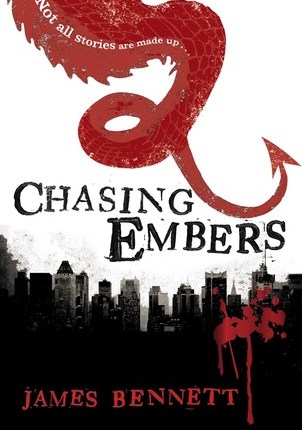
Chasing Embers by James Bennett

Chasing Embers by James Bennett

I seem to be on a dragon themed reading kick lately. And, as far as I’m concerned, that’s awesome!

Red Ben is a dragon, masquerading in human form so that he can walk down the street without everybody freaking out. Hundreds of years before this, he signed a pact called the Lore with a bunch of other magical creatures and knights, in which, he essentially agreed to hide his existence from humanity at large and the knights, in turn, would protect him. Tonight, he was attacked twice. What’s up with that? Ben doesn’t know, but he’s going to find out. He’s also had a falling out with his lady fair. Hiding your true nature from someone doesn’t make for a healthy relationship, but Ben’s enemies seem to know Rose’s (the girlfriend) name. So, now, he has to save his hide, her life, and still preserve the Lore.

Meanwhile, in a desert in Africa, an ancient power is awakening…

I enjoyed Chasing Embers. I really dig the basic premise that there’s a magical world existing alongside ours but we just can’t perceive it. Also, the idea that the Magna Carta wasn’t a political document but a secret, magical pact is fun too.“John, by the grace of God, King of England, Lord of Ireland, Duke of Normandy and Aquitaine and Count of Anjou, doth decree and grant this day, by common counsel of our kingdom, this Pact devised by the Curia Occultus and witnessed by those guardians of our realm. Those Remnants of the Old Lands, which yet linger amongst us, shall forthwith succumb to the Long Sleep…” loc 362, ebook.

The other magical creatures are straight up creepy- like magical creatures should be in my opinion. Also, Bennett seems to ascribe to the Terry Pratchett view that too much magic use thins the veil between worlds and draws attention of the things outside of this world to the magic user, which is also pretty creepy: “The nether wasn’t space, nor the ambient cosmos, but a place that lay beyond, or between, as inner as it was outer. Perhaps it was the raw, empyreal stuff of creation, for all Ben knew. Things lurked in that astral sea, creatures hungry for life, and all magic had its price. When a person drew on the nether- drew on it like a thread in a carpet- they risked unravelling the world entire.” loc 393, ebook.

The romance between Ben and Rose is just the perfect amounts of dysfunction and sparks (nothing graphic in here though for folks who look for such things): “I miss you,” she said, quiet and fierce. “I hate you.” Defeated, Ben rested his head on her shoulder, smoothing down the flowers on her dress. He let her anger hit him like a wave, tasting her muted fury at her love for him. Since he’d first crawled out of his egg, it had always been this way. Some women went for the knight. Others wanted the beast. Neither stood a chance of a happy ending.” loc 711, ebook.

Ben’s angst at his long-lived existence reminded me of Atticus in The Iron Druid Chronicles. He loves deeply but, at the same time, he realizes that those he loves aren’t going to be around that long: “Your love of humans. Do you never grow tired of it? You might as well love a sunbeam that flickers through a cloud. This world was not meant to hold them. Time will take them all so quickly. A blink in the life of a god.” loc 3112, ebook.

What kept Chasing Embers from being a five star read to me is that I thought Bennett explained himself too much. Leave some of the plot mysterious and murky, like magic itself. I don’t need to be spoon-fed why this happened or that happened. Otherwise, this was an excellent read. There’s some language in here and a few disturbing, physical descriptions, but nothing that a mature teen couldn’t handle. Highly recommended for urban fantasy and dragon readers!

Some read alikes: Hounded by Kevin Hearne or Lords and Ladies by Terry Pratchett.

A big thank you to NetGalley and Orbit books for a free, digital advanced reader’s copy of this book for review purposes.  And, thank you for reading!

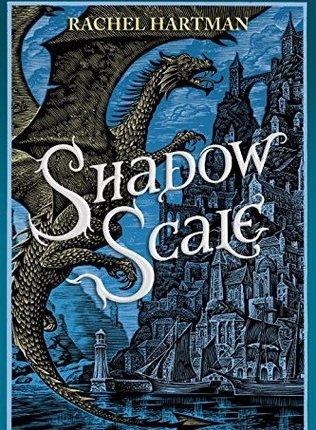
Shadow Scale by Rachel Hartman

Shadow Scale by Rachel Hartman

This is the second book in the Seraphina series. Seraphina is a half dragon/half human musician who, in the last book, was trying to hide her identity from those around her because, in this world where dragons are real, her existence was considered an abomination by religious authorities. How would a human and a dragon come together to make such a child, you ask? Dragons can take human form when they choose to, the trouble is that, they’re not very human-like in their actions and behavior, even when they do. Dragons consider emotions to be beneath logic, so, to put it in Star Trek terms, Hartman wrote them like Vulcans.

Seraphina, for a young adult novel, was rather complex. Not only was Seraphina dealing with her species identity, there’s also religious conflicts, internal/emotional conflicts, a meditation based “magic” system, a burgeoning war between the humans and dragons, factions on both sides who are opposed to the majority, dragon culture and hierarchy questions, tricky cross species friendships, the obligatory romance that every young adult book seems it MUST have and, in Shadow Scale, the added complication of Seraphina trying to find other half dragons like herself. It’s mind-boggling really when you write it all down and try to sort it out. I enjoyed trying to keep it all straight but I can see how Seraphina might not be a good fit for reluctant readers. There is a long list of characters at the end so that if you get confused, you can look each one up. If that kind of thing makes you crazy, you may want to pass on this one.

Seraphina has really come into her own in this story. Hartman certainly doesn’t skimp on the characterizations:“These scales, my visible emblem of shame… which I had hidden, suppressed, and even once tried to pry off with a knife- how was i now able to laugh about them with strangers? Something had changed in me. I was such a long way from where I had started.”pg 436, ebook.

My favorite parts of this book were anything to do with dragons! :“Dragons lay one egg at a time, and we grow slowly. Each death is significant, and so we settle our differences with litigation, or with an individual combat at most. It has never been our way to fight on this scale; if the war continues, our whole species loses.” pg 38, ebook.

Seraphina has a dream- to bring all the half-dragons like herself together to create a family, of sorts: “I am on a mission to find all our kind. Goredd requires our assistance with the dragon civil war, but once that’s over, I hope we might form a community of half-dragons, supporting and valuing each other.” Dame Okra rolled her eyes so hard I feared she’d give herself an aneurysm.” pg 112, ebook.

The intolerance taught by the religion in Seraphina’s world was terrifying, perhaps because it sounded so real: “I was no great hand at scripture- I avoided most of it- but I knew every line written about my kind, thanks to the pamphlet Orma had made me. “Half human, all malevolence” was one of Abaster’s best. Or: “If a woman hath lain with the beast, beat her with a mallet until she miscarries or dies. Let it be both, lest her horrifying issue live to claw its way out, or the woman live to conceive evil again.” pg 287, ebook. One of the main messages of Seraphina is tolerance for different cultures- that everyone has something positive to contribute in their own way.

As much as I gripe about the romance that always crops up in the young adult books, at least this one is well written:“However strenuously the world pulls us apart, however long the absence, we are not changed for being dashed upon the rocks. I knew you then, I know you now, I shall know you again when you come home.” pg 491, ebook. Awww, right?

This is a well written fantasy about dragons- fire breathing, scaled, roaring dragons! There’s nothing in here that parents should find objectionable for their teens to read and the messages that it teaches are worth while and should be repeated. Some read alikes: Daggerspell by Katharine Kerr (first book in a long, adult series, but, eventually, there’s dragons!) or The Last Dragonslayer by Jasper Fforde (appropriate for young adults).

Thanks for reading!

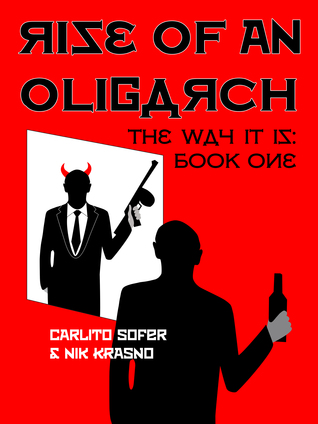
Rise of an Oligarch by Carlito Sofer and Nik Krasno

Rise of an Oligarch by Carlito Sofer and Nik Krasno

I only knew what an “oligarch” is because of my political science degree. For folks who do not know, here’s the definition:

oligarch
noun ol·i·garch \ˈä-lə-ˌgärk, ˈō-\
: a person who belongs to a small group of people who govern or control a country, business, etc.
Source: Merriam-Webster’s Learner’s Dictionary

I remember learning about the different types of government in college and one of the students in class asked, “Where might one find an example of an oligarch?” The professor replied, “Eastern Europe, pretty much.” So, now you know.

Rise of an Oligarch is basically The Godfather set in Europe with a Jewish protagonist. The book starts with an assassination attempt on Mikhail Vorotavich, the boss of his crime syndicate, I mean, business group. The story is told in a series of flashbacks to Mikhail’s childhood and then the current investigation by his associates into the situation with the shooter. Mikhail grew up poor with no connections Through various illegal schemes and associations, he clawed his way to the top. Along the way, he makes a ton of enemies, any one of which could be responsible for the bullet in his skull.

I loved the childhood flashbacks. It reminded me of the film,The Godfather Part II which was my favorite of that trilogy: “I learned that the best way to fight violence was with violence. Eye for an eye beats turning the other cheek every time. Bullies bully easy targets, not those who fight back. Never again was I impressed by physical superiority after that.” pg 18, ebook

Mikhail’s childhood and knowledge of what it is to have nothing drives him to become one of the richest men in the world: “Poverty became our reality. No more ice cream, cinema or toys. My mother’s answer to anything I asked was, “We don’t have money for that, Mishenka,” as she tried to suppress her tears. The colour of my childhood turned grey- the grey buildings, the grey filthy snow after the first day it falls, and the grey, sullen face of my mother.” pgs 24-25 ebook

He also develops his philosophy for life: “I learned many lessons during my high-school days: the value of friendship, never snitching on your friends, the state is the enemy and manipulating it is a virtue not a sin, and if something is prohibited it means you just need to pay to make it allowed. But most importantly, and never forget it, the key to survival is to fly below the radar, unnoticed. Once noticed, you’re doomed.” pg 36 ebook

As much as I enjoyed the scheming and unique ways in which Mikhail bent the law, I gave Rise of an Oligarch only three stars because of the occasional (not constant) vulgarity which wasn’t necessary, because it became repetitive when the story focused on Mikhail’s actions rather than the relationships with his partners (which were discussed briefly but honestly felt tacked on to me rather than incorporated into the story), and because there wasn’t a single, strong female protagonist in the whole thing. There were opportunities for a female character (Mikhail’s mother, his wife, Masha) but the authors chose not to develop them.

Mikhail sees himself as the “best” of the bad men: “Many oligarchs hated the state. Their families lived in Monaco or Sardinia, their children were educated in London and their wealth was stashed in Switzerland. Ukraine was used only as a place where you make money and squeeze it of its last drop of juice… Was this line of thought a kind of self-loathing? Definitely. I hoped I was a bit different though.” pg 260 ebook. Which struck me as the kind of mental gymnastics that everyone goes through- we never see ourselves as the problem. Maybe that’s the problem?

If you enjoyed Rise of an Oligarch, you may want to pick up Bull Mountain by Brian Panowich or Amish Confidential by “Lebanon” Levi Stoltzfus. A big thank you to the authors of this book for a free digital copy for review purposes. The opinions expressed in this review are entirely my own.

Thank you for reading!