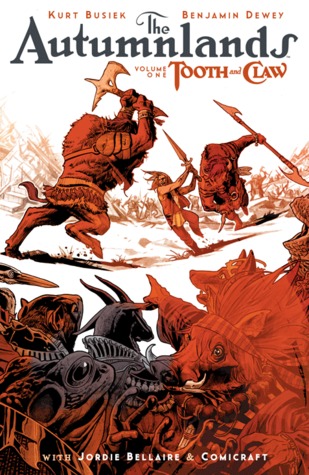
Excellent introduction to a world where anthropomorphized animals live on cities that float in the sky with the help of a magic that is fading from existence.
To combat this magic shortage, a talented magic user gathers a coalition of wizards to bring a great warrior from the past to the present in order to reawaken the powers.
The warrior is surprising, his summoning has unintended consequences, and the reader, after just a few pages, finds herself quickly caught up in a strange new world.
Highly recommended for adult readers who enjoy fantasy graphic novels.
There is a bunch of graphic violence and full frontal male nudity in here so, head’s up librarians. Make sure to shelve The Autumnlands in the appropriate section.
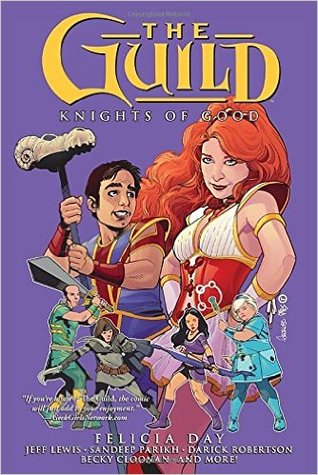
A continuation of the first Guild comic. Please watch the show before you enjoy these comics!
If you don’t know what The Guild is about, let me give you a quick recap: Cyd likes to play videogames, specifically MMORPG’s. She spends much of her time avoiding reality and playing a character named Codex.
Codex is a member of an online guild, which is a group of other real life people who are also playing the computer game.
Together, they forge friendships and explore real life issues, online and off. It’s a heart-felt series and perfect for any fans of MMORPG’s or loved ones of computer players who want to understand their partners more.
On to the context of the comic itself: the first chapter/issue with Vork’s backstory and the story behind Bladezz’s infamous sausage photo were engaging but the rest was so-so.
I felt like all of the other characters were basically re-hashing what happens on the show rather than giving the reader any huge surprises. On the plus side, there are some more panels showing the characters in-game, which is more than we were ever given on screen.
If you’re going to read any of the Guild comic books, I recommend reading The Guild (the first one) and skipping this. Unless you’re a major fan of the show and you have to read every little piece of literature that is out there on it, by all means, borrow this from the nearest library.
The Given World gave me a headache. Why is it that when “serious” fiction “examines” life that it only focuses on the bad stuff?
Riley is a young girl in Montana who worships her brother. He’s drafted and shipped off to war in Vietnam. It breaks her heart and she systematically begin to ruin her life, because she can’t get past it. She eventually leaves home, gets lost in worlds of drugs, domestic violence, and alcoholics on the California coast. Everyone she meets is as dysfunctional as she is or on their way to dysfunction. Personal opinion here: if society was only composed of people like that, it would have fallen apart a long time ago.
Riley is a character that I tried to like but just couldn’t. She always made the worst decisions and if there was a way to improve her situation, she didn’t choose it. It was like she had blinders on to the possible goodness in life and jumped enthusiastically into the darkness. She turns her back on her family, blames everyone else in life for her problems, and consistently isolates herself from anyone who could possibly lend comfort or stability. In this passage, she’s talking about her father: “The way they smoke, so casually oblivious, reminds me of my father- on the porch, maybe, or out in the yard at night, looking up at the sky, for weather, but it’s not as if he could miss the stars. I hear my name in his voice: “Riley…” Never loud or angry, just gentle reminders: try to grow up with some degree of intentionality and grace; try to believe the world is more benevolent than not. I wonder if he knows I did hear him.” pg 10, ebook. Riley, I don’t think you did.
I did grow to feel sorry for Riley. She didn’t ask for her family to be ripped apart by war. I guess, after experiencing that sort of emotional turmoil at an early age, that it might be almost impossible to put your life on track to begin with. “She reminded him of a deer who knew you weren’t out to shoot it. Like she’d let you get just so close, and then bolt to the edge of the clearing; the forest nearly impenetrable behind her where she knew you couldn’t easily follow.pg 40, ebook. But, I just couldn’t get over the fact that she didn’t use her intimate knowledge of pain to help other people.
Riley’s mother was a hot mess too, but she managed to raise two children fairly successfully. I was surprised that Riley didn’t use her as a role model, even for a moment. In this passage, Riley’s mother writes her a letter, trying to connect with her wayward child: “And lost as you already are these days, or as I think you must be, you still probably understand, maybe better than most, that kids don’t necessarily hold you steady. Even if they do, somehow, hold you in place.” pg 97, ebook.
Rather than continue on in this vein, I will end this review with acknowledging that The Given World was not for me. But, if you enjoy reading coming of age stories with multiple flawed characters and plenty of bad decisions, you may want to pick this one up. Some trigger warnings for sensitive readers: domestic abuse, racially motivated violence, and drug use.
All Darling Children asks the question: what if something corrupted the ‘boy-who-never-grew-up’?
Peter Pan is one of my favorite fairy tales and it has featured in quite a few beautiful re-tellings. (Tiger Lily is one.)
All Darling Children is a masterful, twisted take on a literary classic. I loved this for its horror filled examination of the spiritual cost of eternal youth and the strong female lead.
From her first moments in Neverland, Madge, the grandaughter of Wendy, can tell that something isn’t right: “Neverland. It seemed a hodgepodge of landscape ripped from a dream. Or maybe a nightmare. On one side, lush forest grew dense with heat and energy. Flowers bloomed in a rainbow of colors. They shuddered as Madge gazed at them, and then, as Pan looked in their direction, shriveled to pale, dry nothings.” loc 525, ebook.
This is not Disney’s version of Neverland.
Peter and his Lost Boys are dangerous in this world. Immature and wild, they try to force the traditional gender role of ‘mother’ on Madge (because they don’t know how to handle girls otherwise) and she resists: “Outsiders aren’t supposed to know how to find the tree house until they’ve been initiated.” “Initiated?” Madge’s stomach fell. “What’s that mean?” “It means you’re in the club, not that you’d ever get in, being a girl and all.” loc 692.
I never questioned the ‘Father’/’Mother’ roles of Peter and Wendy from the original book but, if the authority of the position was abused… it gets so creepy very quickly.
Madge’s story is told in-between entries from Wendy’s old diary. Here’s one of the passages: “I’ve learned much about (Peter), and while he is erratic and inconsistent in most ways, in one he is steadfast. Predictable. Peter must always be forced to try harder. If one gives in, he loses interest. I will never give in.”loc 921.
The back and forth from the story that the reader thinks she knows that is presented in Wendy’s diary, to the new story that Monroe is weaving with Madge, is awesome. There are enough similar elements drawn in from the original that the whole thing feels chillingly familiar- a mirror version of the classic.
Peter’s bragging about his exploits is presented as charming in Barrie’s version- Monroe takes a far more modern view: “Who wants to hear the story of how I cut off Captain Hook’s hand?” The boys whooped and smacked the table. Madge paled. He’d cut off someone’s hand? What was worse, he was bragging about it? Psycho.” loc 973
If you like twisted fairy tale re-tellings, you may love All Darling Children. I did. Another one that you’ve got to pick up if you liked this is Alice by Christina Henry. It’s an incredible, dark re-imagining of Alice in Wonderland and it’s also amazing.
Thank you to NetGalley and Red Adept Publishing for a free, digital ARC.
Also thank you to my Goodreads friend, Rosemarie Short, for writing a fantastic review that convinced me that I just had to read All Darling Children. You can see her review here: https://www.goodreads.com/review/show…
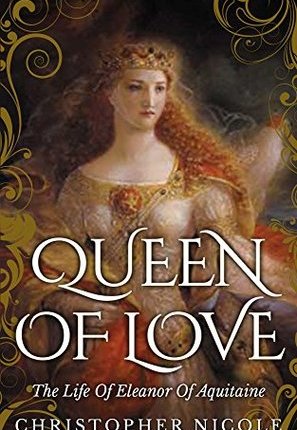
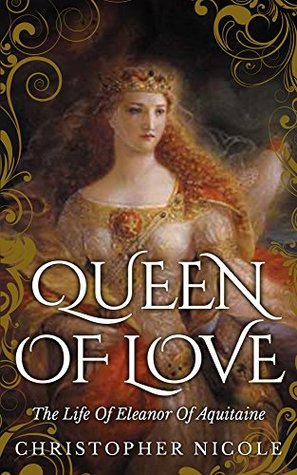
So, this lovely lady lived in the 1100’s, when women were property, but somehow, she managed to become one of the most powerful people of her time.
Granted, she was born into a privileged position, was one of the largest landholders in France, and, by all accounts, was absolutely gorgeous. I’m sure that helped.
But, imagine the social and political acumen she had to possess to make it all work.
This historical fiction is written as a first-person memoir of the time period after her marriage to the King of France was annulled and she was forced into marriage with Henry, the soon to be, King of England and the narrative continues until her death.
I understand that the first person point-of-view doesn’t work for everyone, but I loved it. Then again, there are few historical fictions that I don’t enjoy, so take my review with a grain of salt.
Historical fiction is literary candy for me. When I need to escape reality, I jump into the past, usually with royalty because, let’s face it, the life of a peasant was probably nothing to write home about.
The manner in which Henry acquired the most eligible woman in Europe for his bride was rather questionable. In essence, he kidnapped her, raped her, and then insisted on the match.
She forgave him because, frankly, she could have made worse matches and wasn’t really in a position to bargain.
Here are her thoughts about the man: “… the aspect of Henry which most strikes one is his energy. It was such as almost to make one believe the tales of a devilish ancestor. From the moment my new husband rose in the morning until the moment he collapsed exhausted in bed at night, he never rested either his body or his brain for a moment.” loc 81, ebook.
Henry was known for his energy and fiery temper. I didn’t mark the passage, but Eleanor relates how, when the King became angry, he would throw himself to the floor and eat the rushes.
For modern folks who may not know what rushes are- these are essentially plants that were used to keep the floor clean, sort of like throw away rugs. Remember, floors were pretty disgusting back then as transportation was done mainly by horse and certain things were tracked in on people’s boots.
The King of England would get so mad that he ate poop-covered rushes! In the modern age, that would so not fly. I can just see the covers of the tabloid mags.
I completely forgot that it was Eleanor’s husband who had the infamous disagreement with Thomas Becket. “The quarrel thus commenced dragged on for some time. It was fairly well known, and i do not propose to go into details about it- during this period I had a fair number of problems of my own, and while I felt sorry for Thomas, placed in such a dilemma as having to choose between King and Church, I am bound to admit that he made life unnecessarily difficult for himself.” loc 880, ebook.
That seemed to be Eleanor’s way- go with the flow of what happens, but don’t forget what happened and strike back when you’re in a place of power.
In this passage, Eleanor is fretting over turning 40, which, had she only known it, wasn’t even halfway through her life: “I should point out that in the summer of 1162 I reached my fortieth birthday. This is a most depressing milestone, for anyone, but more I think for a woman than a man, and most of all for a woman once accounted the most beautiful of her time. At forty there could be no disguising the fact that I was growing old, and that even my beauty was fading. In addition, forty brings with it the approach of the dreaded end of fertility, and what has a woman got left?” pg 915.
She had ten kids, how many more does a woman need? And, although much of her power was based in her beauty and fertility, she was still a formidable spirit. I mean, the lady was locked up by her husband for over a decade and yet, she manages to come back from it! Talk about aging gracefully…
Here, Eleanor is holding her own after being defeated in battle with the King of England, her husband. (She went to war against him for her sons- how hardcore is that!): “I would say that it is fairly well established that you have recently been in arms against your king.” “I acted as Duchess of Aquitaine,” I pointed out. “As we are now in Aquitaine, you are an invader, and I am a prisoner-of-war.” “I am the ruler of Aquitaine,” he argued. “In my name,” I riposted. “I have now withdrawn that privilege from you.” “Madame, your effrontery is startling.” “I am Eleanor of Aquitaine.” loc 1988. Boom.
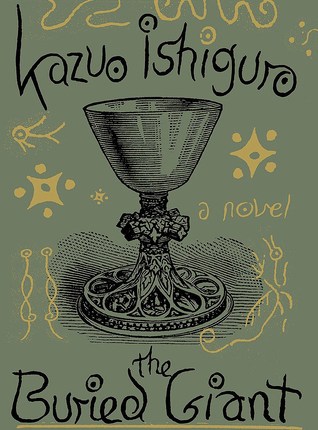
Axl and Beatrice are an aging married couple in the time of King Arthur. They’re on a quest to visit their son and face otherworldly threats like ogres and pixies as well as more regular dangers like Saxons on the road. They meet a boy named Edwin, who has a secret, and a warrior named Wistan, who is on a quest of his own.
Making matters even more difficult, there’s a mind-fogging mist covering the land that makes people forget things that just happened to them moments ago and the past is a puzzling blank. Axl and Beatrice would also like to solve the mystery of this mist, but first, they need to remember where their son lives.
This fantasy novel tackles the themes of love, forgiveness, and war- but, be warned, this is a ‘love it or hate it’ kind of read and will not appeal to everyone.
This is the first book I’ve read by Ishiguro and my feelings about it are complicated.
At first, I hated it because of the plodding pace and the fact that, although the author hinted at plenty of magical creatures and cryptic places, he didn’t do anything with them. But then, Ishiguro layered the themes on each other and brought the novel to a conclusion that I can’t stop thinking about… so I’m torn.
Depending on where I was in the book, this was either a one star or a five star- so I’m going to come down right in the middle with three.
The mist is so pervasive throughout this story that it almost a character all of its own: “It’s queer the way the world’s forgetting people and things from only yesterday and the day before that. Like a sickness come over us all.” … She had said this while looking away into the mist-layered distance, but now she looked straight at him and he could see her eyes were filled with sadness and yearning.”pg 21, ebook.
A life lived without memories makes day-to-day living more simple, but remembering and appreciating the good times, almost impossible.
Throughout this story, I was cheering for Axl and Beatrice to remember their shared past. They’re my favorite characters in this tale.
“Yet are you so certain, good mistress, you wish to be free of this mist? Is it not better some things remain hidden from our minds?” “It may be so for some, father, but not for us. Axl and I wish to have again the happy moments we shared together. To be robbed of them is as if a thief came in the night and took what’s most precious from us.” pg 113, ebook
Wistan is a Saxon warrior beyond compare, but he does not love Britons: “It was Britons under Arthur slaughtered our kind. … We’ve a duty to hate every man, woman and child of their blood. So promise me this. Should I fall before I pass to you my skills, promise me you’ll tend well this hatred in your heart. And should it ever flicker or threaten to die, shield it with care till the flame takes hold again.”pg 172, ebook.
Despite his efforts to remain detached, he develops a soft spot for Axl and Beatrice (Britons). Perhaps if he didn’t label people under blanket terms like “Britons” then he’d feel more kindly disposed towards them. Blind hate softens when you get to know someone and understand who they are. I think that is part of Ishiguro’s point… maybe.
There were plenty of confusing moments in The Buried Giant for me.
What’s with the old lady slaughtering small animals in that ruin? What’s with the island where people go to live entirely by themselves? (Metaphor for death or a trip to fairyland?) What’s with Edwin’s memories? Or the priests who feed themselves to the vicious birds for things they can’t remember?
Or that ending? (Geez, that ending!)
I can see how this would make an excellent book club choice because there is so much that can be interpreted different ways and discussed.
Picking read alikes for this novel was tricky because the tone, pacing, and complexity of this book is so unique.
The Last Unicorn is a fairy tale with layers, like this read, but for young adults. Mythago Wood might be another solid choice, but it takes place in the modern era rather than the distant past. Or you could try: Suldrun’s Garden. I read that a long time ago and didn’t like it much, but it is a classic fantasy book set close to the same time as The Buried Giant.
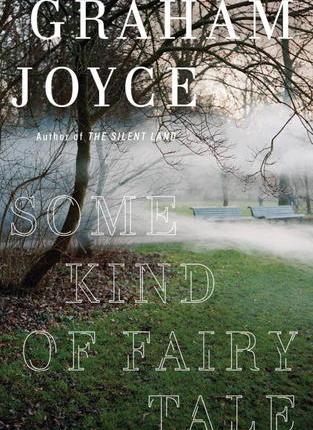
Some Kind of Fairy Tale is a fantasy set in modern times. Peter is a farrier (shoes horses and fixes small, metallic things). He has a lovely wife and four beautiful children. He also has a sister whom he hasn’t seen for nearly twenty years, presumed dead. Imagine his surprise, when she shows up at their parent’s home on Christmas Day. Where has she been? Where indeed…
The magic in this book isn’t in your face, it’s hidden in the shadows and rocks of the woods and glens- very much like I imagine magic really is: “The Outwoods was one of the last remaining pockets of ancient forest… It was an eerie place, swinging between sunlight and damp, flaring light and shadow; a venue of twisted trees, its volcanic slopes of ash and granite ruptured by mysterious outcropping crags of the very oldest rocks in Britain.” pg 14, ebook.
I loved the twists and turns of the story and it had me questioning myself the entire time. Is Tara bonkers, injured in some way, or did something outside of her power actually spirit her away? “There is a veil to this world, thin as smoke, and it draws back occasionally and when it does we can see incredible things.” pg 142, ebook.
I also loved how Joyce used quotations from poetry, books, and an actual trial where a man was convicted of killing his wife because he thought she was a changeling (can you imagine?!) to introduce a few of the chapters. It was chilling- the deadly combination of superstition and violence and the trial in question happened, not in the dark ages, but 1895. Here’s Joseph Campbell’s thoughts that preface Chapter Twenty-Six: “Nevertheless- and here is a great key to the understanding of myth and symbol- the two kingdoms are actually one. The realm of the gods is a forgotten dimension of the world we know.” pg 169, ebook.
I did not like the surprising vulgarity of this tale, the few violent moments it contains, or when something terrible happens to a neighborhood cat but, if such things don’t bother you, you really must give Some Kind of Fairy Talea try. If you don’t already, it makes you believe in the possibility of other worlds and every day magic.
Funeral Games is a unique, fantastical romp through a medieval world. Syphax is a prince, but an unimportant one, being the younger son of one of his father’s many wives. He doesn’t excel in much of anything, other than reading and daydreams of greatness (reminds me of myself in some ways… I jest… but really). Syphax is a member of the nobility who are called the Undying because, when they shuffle off this mortal coil, they rise again as tangible ghosts called ancestors. These ancestors help govern the living and form another spooky faction in the sprawling complex of the capital city that is Ingerval Palace. The walls of the palace are filled with dead and living nobility who are divided into many different houses with a tangled history of treaties and backstabbing, all with the goal of more power for the members of their clan. The future looks, if not bright, then at least rosy, for our hero, Syphax, until, at one very memorable funeral celebration, something completely unexpected happens. And then, all hell breaks loose inside and outside the walls of Ingerval.
I loved the juxtaposition of the living and the dead in Funeral Games. It added a whole other level of political machinations to the usual struggles of a monarchy and its nobility. Here is the scene at one of the funerals: “The crowd roared with laughter- at least the Living among them. The Dead sat at their assigned places. They didn’t eat or drink, and weren’t the least bit amused by the antics of their descendants. There must have been two hundred ghosts and at least as many Living in attendance. Normally, the Dead kept their own company, but the day was a special one.” loc 56, ebook. I also loved how, in the course of the story, Heintze dealt with the ghost’s eternal nature, limitations, and struggle for recognition beyond the grave. It really is unlike anything else I’ve ever read.
There is a love interest in this but it doesn’t dominate the storyline or descend into the ridiculous. In fact, the girl/heroine, though she doesn’t play a huge part, is kind of hard core, which is a refreshing change of pace for the genre. In this passage, she’s talking to Syphax about one of the ancestors: “I feel like he watches me, Syphax.” “You’re in a palace full of ghosts. It’s natural to feel that way.” “Sometimes I have these dreams. And when I wake up, he’s always nearby…” … “It will be fine,” I said. “He’s harmless. All ghosts are.” loc 136, ebook. (suspenseful music building…)
My favorite part of Ingerval is, of course, the Library! “Ingerval Palace had many wonders. None were as great, nor so underappreciated, as the Library. Books were one of the few pleasures afforded to ghosts, and the Dead’s demand for the written word made Ingerval the world’s leader in the production, purchase, and dissemination of books.” loc 367, ebook. I would fit in well with the Undying, I think.
There is some rough language in this, some tense moments, and a small, if not too graphic, torture scene, so I’d suggest a reading audience of 14/15+ depending on the maturity level of the reader. I’d recommend Funeral Games for not-too-serious fantasy fans as it lacks the complexity of, say, the Malazan books, but for some folks (myself included), that may be considered a plus. Some similar reading: The Interminables by Paige Orwin (a ghost plays a large part in this story too), Ink Mage by Victor Gischler (fantasy world, lots of adventure), or The Quick by Lauren Owen (different time period, but also a fantasy).
Thank you to NetGalley and Curiosity Quills Press for a free digital copy of this book. And, thank you for reading!
Full credits for Snow White, Blood Red by Ellen Datlow (Editor), Terri Windling (Editor), Elizabeth A. Lynn (Contributor), Harvey Jacobs (Contributor), Steve Rasnic Tem (Contributor), Melanie Tem (Contributor), Caroline Stevermer (Contributor), Ryan Edmonds (Contributor) , Neil Gaiman (Contributor), Leonard Rysdyk (Contributor), Esther M. Friesner (Contributor)
This is a very adult collection of fairy tale re-tellings. From Little Red Riding Hood to Snow White, these are not stories that I’d share with my child or any impressionable young mind.
Fairy tales haven’t always been exclusively for children as Terri Windling explains in the introduction: “..most fairy tales were never initially intended for nursery duty. They have been put there, as J.R.R. Tolkien so evocatively expressed it, like old furniture fallen out of fashion that grown-ups no longer want. And like furniture vanished to the children’s playroom, the tales that have been banished from the mainstream of modern adult literature have suffered misuse as well as neglect.” pg 2
But fairy tales are important because they touch on dreams, archetypes, and the psyche. However, these re-workings were far more bleak than I expected. “The fairy tale journey may look like an outward trek across plains and mountains, through castles and forests, but the actual movement is inward, into the lands of the soul.” pg 10. And personally, I think that the soul is a rather light place.
The most disturbing of the bunch, in my mind was, Little Redby Wendy Wheeler, which told a tale of sexual relations between a mother/wolfish boyfriend/daughter. (A warning for any sensitive readers, triggers abound in these stories from rape to physical/sexual/emotional abuse towards adults as well as children.) “Before she climbed in, Helen looked in my face as though something in my smile disturbed her. “I’ve never noticed before what white teeth you have, Josef,” she murmured. “So large and white.” pg 140 The only saving grace for the darkness of these tales are that they’re short and you’re soon on to the next one.
My favorite was Puss by Esther M. Friesner: an excellent but nightmarish re-imaging of Puss-n-Boots. “Help! Help, ho!” My paws flailed the air; I brandished my plumed hat to make the coachmen see so small a creature as a cat before the horses trampled me. “Robbers, thieves, rascals and hounds! They have despoiled my good master, the Marquis of Carrabas!” pg 319
A close second was Troll Bridge by Neil Gaiman, based on The Three Billy Goats Gruff. His depiction of a troll was creepy but magical, that curious blend of two unrelated traits that Gaiman crafts so well. “Trolls can small the rainbows, trolls can smell the stars,” it whispered, sadly. “Trolls can smell the dreams you dreamed before you were ever born. Come close to me and I’ll eat your life.” pg 286

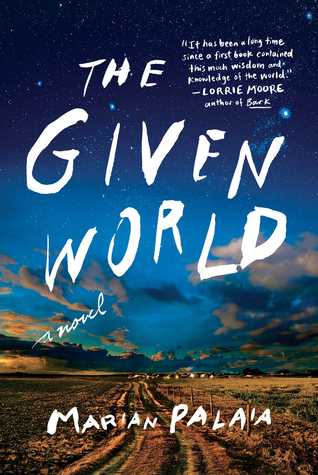 The Given World gave me a headache. Why is it that when “serious” fiction “examines” life that it only focuses on the bad stuff?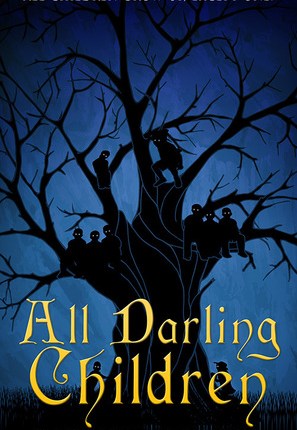







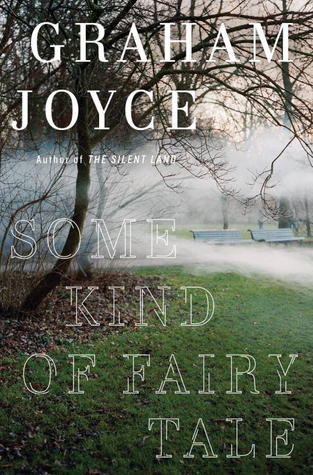 Some Kind of Fairy Tale is a fantasy set in modern times. Peter is a farrier (shoes horses and fixes small, metallic things). He has a lovely wife and four beautiful children. He also has a sister whom he hasn’t seen for nearly twenty years, presumed dead. Imagine his surprise, when she shows up at their parent’s home on Christmas Day. Where has she been? Where indeed…
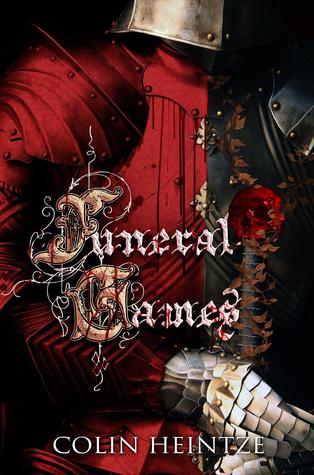 Funeral Games is a unique, fantastical romp through a medieval world. Syphax is a prince, but an unimportant one, being the younger son of one of his father’s many wives. He doesn’t excel in much of anything, other than reading and daydreams of greatness (reminds me of myself in some ways… I jest… but really). Syphax is a member of the nobility who are called the Undying because, when they shuffle off this mortal coil, they rise again as tangible ghosts called ancestors. These ancestors help govern the living and form another spooky faction in the sprawling complex of the capital city that is Ingerval Palace. The walls of the palace are filled with dead and living nobility who are divided into many different houses with a tangled history of treaties and backstabbing, all with the goal of more power for the members of their clan. The future looks, if not bright, then at least rosy, for our hero, Syphax, until, at one very memorable funeral celebration, something completely unexpected happens. And then, all hell breaks loose inside and outside the walls of Ingerval.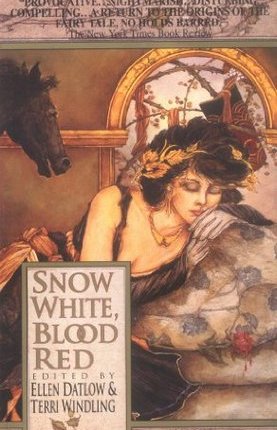
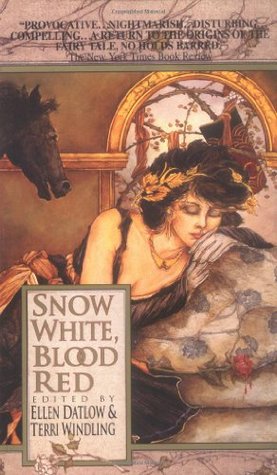 Full credits for Snow White, Blood Red by Ellen Datlow (Editor), Terri Windling (Editor), Elizabeth A. Lynn (Contributor), Harvey Jacobs (Contributor), Steve Rasnic Tem (Contributor), Melanie Tem (Contributor), Caroline Stevermer (Contributor), Ryan Edmonds (Contributor) , Neil Gaiman (Contributor), Leonard Rysdyk (Contributor), Esther M. Friesner (Contributor)
 The Help Desk Book Blog