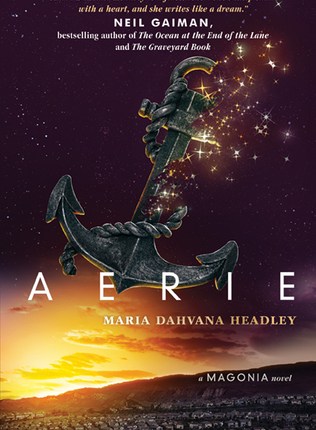
Aerie (Magonia #2) by Maria Dahvana Headley

Aerie (Magonia #2) by Maria Dahvana Headley

Warning: minor (and major if you haven’t read the first book) spoilers, proceed with caution.

Aerie is a very strange and complex, young adult fantasy. Allow me to explain.

In the first book, we met Aza, a girl who was drowning on Earth because, though she doesn’t know it, she’s actually from a kingdom in the clouds. She’s in love with Jason, a genius boy with obsessive thoughts like repeating the numbers of pi in his head over and over again.

Photo by Pixabay on Pexels.com

Many adventures happened in the first book, but essentially we learned that in Aza’s home, the Magonians use their voices in magical ways. Through changing vibrations, Magonians can make elements appear and change, control the weather and animals, manipulate the molecules of reality itself.

Like most young adult stories, Aza is special, a savior with godly abilities that she didn’t know she had until she was tested. She’s supposed to bring balance back to Magonia because Aza’s mother is crazy and wants to kill everyone on the ground- Jason included.

One of the things that happens at the end of the first book is that Aza’s mother is imprisoned. (Lots of other stuff happens too.)

This book picks up where the last one left off. Jason and Aza are deepening their relationship though Aza looks like a completely new girl because she trashed her “skin,” essentially a suit that allows her to look and breathe like a human, and had to acquire a new one.

Did I mention that Magonians have naturally blue skin with orange/red eyes and white tattoos that change depending on their emotional state? Yeah, that’s a thing.

Photo by Marcelo Dias on Pexels.com

Aza’s mother, Zal, breaks out of prison and someone has to stop her before she destroys the world. There are rumors of “The Flock,” a weapon of some sort that can stop Zal, but no one knows where or what it is.

And that, I think, is where this story really begins.

Headley’s world building is epic. Magonia itself is a treasure and the other supernatural creatures that the author introduces are tantalizing in their possibility.

However, I didn’t care much for the characterizations or the obvious plot twists.

The grand showdown itself was a huge disappointment like expecting a brightly colored balloon on your birthday only to have it pop in your hands when you receive it. Headley gathered all of these potentially awesome characters together but only the actions of three mattered.

I wanted ships firing at each other, creatures made of flame, earth, water, feathers… slamming into each other in waves, with the earth itself rising in fountains in an effort to touch the sky.

Photo by Pixabay on Pexels.com

But that didn’t happen.

Aza’s special, I get it.

Aza can sing a song that only she can sing, I get that too.

She FEELS things deeply then SINGS them deeply. Blah.

I just never connected with Aza the way Maria Headley wanted me to. Headley built a lovely world that was so much more than just three characters.

Perhaps I’m being unfair- did anyone who read this book feel differently? I would love to hear from you.

Photo by Ylanite Koppens on Pexels.com

Recommended for readers who are willing to overlook a weak story for some fantastical and wildly imaginative elements.

You don’t have to read the first book to appreciate this one, but I think you’d want to in order to absorb the outlandish world that is Magonia. Some similar reads: The Breedling and the City in the Garden, Archivist Wasp, or Under the Empyrean Sky.

Thanks for reading!

Fahrenheit 451 by Ray Bradbury

fahrenheit451In a not too distant future, owning books is against the law. Firemen burn property instead of protect it and everyone is dialed in to their televisions, subsisting on a steady stream of sensational media stories and vapid entertainment to numb their quickly congealing brains. The nation is always at war, but you would never guess it from the populace’s empty conversations and emptier dreams. Guy Montag longs for something different, but what exactly, he can’t even say, until he meets a girl who wanders outside for fun and sees faces in the moon. He becomes convinced that what society has labeled as wrong and anti-social is more real than anything he’s experienced in a long time. However, these are dangerous thoughts. And, being a fireman, Guy knows, more than anyone, the price that is demanded of people who dare to think, read, and entertain original thoughts.

Fahrenheit 451 was shocking to me. Ray Bradbury predicted internet/social media addiction long before such things existed. He also called society’s horrifically shortened attention spans. Where once, we would have read through a novel or a long article, now we spend less than thirty seconds absorbing information before scrolling onwards to the next thing, then the next, and the next. (Goodreads friends excepted from the majority, of course.)

I listened to the audiobook version where Tim Robbins performed the narration. It was brilliant. He is a natural fit for this material and I highly recommend it.

The only annoying thing about listening to the audiobook is Bradbury’s use of repetition to build the tension and pound his ideas home. You’ll particularly notice it when the war planes fly overhead or when Guy gets into a big fight with his wife and she won’t turn off the television. It’s headache inducing but Bradbury certainly knows how to make a point.

This is one of those classics that I never got the chance to read in school, but I wish I had. I would have enjoyed this much more than Hard Times, which I managed to yawn my way through. Recommended for those who are disturbed by the shallowness of modern life and long for real connections with the people and world around them. The lessons that Bradbury teaches are still very applicable today and, as I said, shocking in their implications.

Thanks for reading.

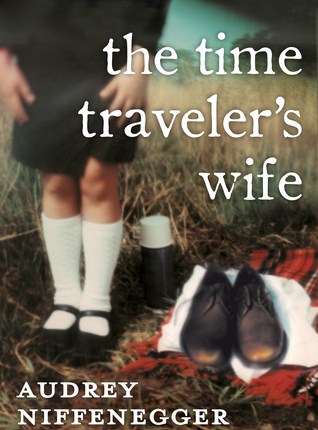
The Time Traveler’s Wife by Audrey Niffenegger

The Time Traveler’s Wife by Audrey Niffenegger

This was the description from Goodreads:

“Audrey Niffenegger’s dazzling debut is the story of Clare, a beautiful, strong-minded art student, and Henry, an adventuresome librarian, who have known each other since Clare was six and Henry was thirty-six, and were married when Clare was twenty-three and Henry thirty-one. Impossible but true, because Henry is one of the first people diagnosed with Chrono-Displacement Disorder: his genetic clock randomly resets and he finds himself misplaced in time, pulled to moments of emotional gravity from his life, past and future.”

Goodreads
Photo by Aphiwat chuangchoem on Pexels.com

Unpopular opinion time: I found the story to be quite different from that and have to say a big no thank you to The Time Traveler’s Wife.

To the legions of fans of this book, I’d like to know what you enjoyed about it. What did I miss? I see that it’s won a pile of awards and I just don’t get it.

I thought I was in for a sweet romance but all I got was a time traveler who cheated at the lottery, beat people up for clothes, and engaged in sexual hijinks with time traveling versions of himself.

I was completely creeped out by the fact that Henry is Clare’s best friend from the time that she was 6. She was groomed from that young age to be his wife, no matter that it wasn’t consummated until later. How awful is that.

Photo by David Bartus on Pexels.com

When she is essentially date raped, she doesn’t go to the police, Clare goes to Henry who engages in some vigilante justice. It was horrible what happened to her, but she should have reported it to the authorities.

The yuck factor from a bunch of places absolutely ruined the book for me not to mention that fact that Clare never really had a childhood or life at all without Henry in it. That’s not romantic, it’s sad.

Anyway, my apologies if you loved it. Like I said, I am willing to consider other opinions on this book, I just really can’t recommend it.

Thanks for reading.

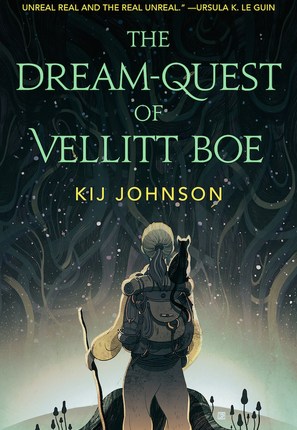
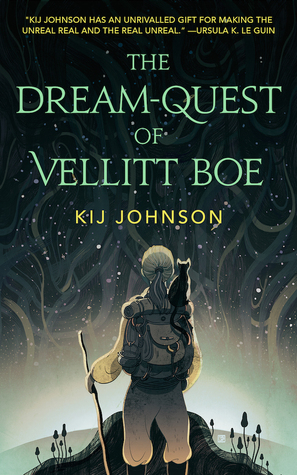
The Dream-Quest of Vellitt Boe by Kij Johnson

The Dream-Quest of Vellitt Boe by Kij Johnson

dreamquestWarning: minor spoilers ahead! Read with caution.
Weird and wonderful short tale of a university professor who is looking for a missing student. I hadn’t read any of Lovecraft’s stories but I still enjoyed this very much.

First of all, I learned what a group of cats is called: “A clowder had congregated with the quad, as well; they ceased whatever was their business and watched as Vellitt and Oure passed, and one, a small black cat, separated itself from the rest and followed them into Jurat’s stairwell.” pg 15. A clowder, how cool is that. I nearly have a clowder of cats at my house. Also, this story has a bit about talking to cats: “In her far-travelling days, Vellitt had known a dreamer who claimed to understand the speech of cats, but of all the cats she had ever met in Ulthar- a town crammed with them- none had ever spoken to her, nor anyone else; none that she knew, anyway.” pg 43, ebook.

Besides all of the cat things, there is an awesome twist to this story:“When Vellitt Bow was young, she had been a far-traveller, a great walker of the Six Kingdoms, which waking-world men called the dream lands.”pg 29 If I had read a Lovecraft novel, I wouldn’t have been so surprised about this aspect of the world. So, happy accident for me. 🙂

There’s also a silly bit about librarians that I have to include because, well, you know: “She reopened the book and began to read, but an aged man in violet robes so old they had faded to lavender entered the room and castigated her for touching the books. Despite the differences in language, age, and sex, his tone was a mirror of that of Uneshyl Pos, the librarian at the Women’s College; for all librarians are the same librarian.” pg 55. Pretty much.

The criticism of the original work, that I only caught because it hit me like a ton of bricks, was the sexism built into it. Like I said, I wouldn’t known, having not read it, but read this passage: “Women don’t dream large dreams,” he had said, dismissively. “It is all babies and housework. Tiny dreams.” pg 71. Well, we all know that’s not right. Thank you, Kij Johnson, for writing a version of the world that I really enjoyed.

Recommended for readers who enjoy adventure, horror, and fantasy fiction. You also may appreciate it more if you read the original text, but as you can see from my review, that’s not required.

Thanks for reading.

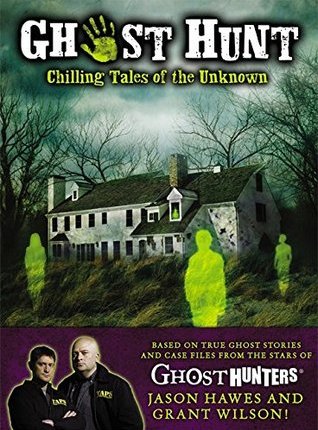
Ghost Hunt: Chilling Tales of the Search for the Unknown by Jason Hawes and Grant Wilson

Ghost Hunt: Chilling Tales of the Search for the Unknown by Jason Hawes and Grant Wilson
ghosthunt

I didn’t realize that this book was for middle grade kids when I picked it up from the library, but I still enjoyed it. Yes, the chapters that are based on the Ghost Hunter’s explorations overly simplistic but they’re also incredibly creepy. However, this isn’t just a horror book: Jason and Grant use these pages to educate the public about what they believe ghosts are and to diffuse any fear that a kid would naturally feel when confronted with something that she doesn’t understand. The last part of the book is composed of Ghost Hunter protocols so that kids can run investigations of their own and the definitions of commonly used phrases used in the book to build reader’s vocabularies.

Take the ending of the investigation into Fort Mifflin: “It’s a great historical site. And the paranormal activity going on is what we call a residual hunting. These ghosts don’t mean you any harm. In fact, they probably don’t even know you’re here. They are just so attached to the place that they can’t leave. So they do the same things over and over.” pg 115.

Or during an investigation when a four year old sees her deceased grandma and her parents are flipping out: “Kids are very open,” Jason agreed. “Sometimes they see and hear more than adults.” “Because they don’t know they’re not supposed to,” Lyssa added. pg 193. And isn’t that a shame?

A fun resource for children interested in paranormal investigations, societies, or television shows. This could be a great read for a reluctant reader as well. Depending on the sensitivity of the child, Ghost Hunt should be just fine for second to sixth grade. There are some truly terrifying moments, but the overall message is about moving beyond your fears of the unknown towards new knowledge. I think that’s a message worth spreading no matter what your area of study may be.

Thanks for reading!

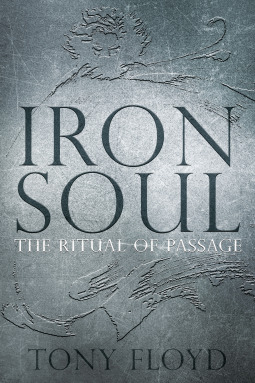
Iron Soul: The Ritual of Passage by Tony Floyd

ironsoulAn ambitious book with complex world building, I nearly gave up on Iron Soul because I felt like it was too much for one story. But, I stuck with it and really enjoyed the ending. Here’s just a taste of this book: there’s multiple worlds in which the dead spend their after lives that all have their own sets of immortal (sort of) warriors each with their own unique magic system, the struggles of the dead stuck on Earth, the plight of the dead who don’t know that they’re dead, the living who have no faith and no where to go after they die, the spaces between the worlds that are filled with monsters, a sophisticated system of hierarchy and trade among souls, a process of augmentation of powers among the dead, souls trapped in dolls, animal spirits and soul bonding…
That’s all in addition to the basic story line- Aldus fights spectres and saves lost souls, he is called a Ferryman. While out on duty, he finds a powerful soul bound to Earth, whose name is Robert. Together, with a Jewish warrior named Benjamin, an ancient animal spirit, and an unlikely wandering soul who is bound in an unexpected container, Aldus and Robert will face one of the greatest threats that the living and immortal worlds have ever known- a mad man who will stop at nothing to allow spectres (monstrous spirits) to enter the world and prey on the living. Like I said, this is very ambitious and well-conceived novel but I felt that the book, like Robert in his earth bound chains, struggles under the huge weight of so many story elements.

The characterizations were awesome though:
“Aldus Vorkis was an old soul. To an elder Ferryman of his caliber there were ways, there were means, there were paths, and therein lay the answers for every question worth answering if people could only be bothered to take the time and look.” loc 78, ebook. Aldus makes an excellent mentor figure.

Robert was my favorite character: “Being an Iron Soul is not just about raw power, Robert. You were isolated from any true, intelligent contact whatsoever for two hundred years, boy, and yet I have no doubt that you are psychologically the same now as when you still lived. An Iron Soul has the power to not only face mighty forces on the same footing, but to also endure trials that would break a normal man’s spirit.” loc 1600, ebook.

This story may not appeal to atheists as atheists are written as clueless wanderers who don’t belong in any after life and are gathered up and shunted to the Christian world out of pity. Liberal readers may also take exception as an abortion clinic is depicted as the spawn point for countless spectres and the greatest of all evils on Earth. Granted, Floyd never uses the world “abortion” but it is clear what he’s talking about. But, on the other hand, this book may appeal to readers because of those very reasons. So, my friends, choose whatever option is appropriate for you. As I said, I was tripping over the sheer amount of information contained in this book and am rarely offended by anything that I read, but I noted it because it could potentially trigger people with strong opinions about these topics one way or another.

Also, I noticed that the Christian and Jewish after lives are shown but no Buddhist, Muslim, or Hindu worlds… yet. They’re hinted at certainly and this is the first book in a series, so maybe Floyd is saving them for later.

This all sounds far more negative than I was intending this review to be. As I said, the ending packs quite a punch (in more ways than one) and if you can wind your way through this book, there are rewards to be found. I very much enjoyed the character development, the relationships between the characters, and Robert’s awesome ride (which I will not detail here as it is one of the best parts of Iron Soul in my opinion). Recommended for readers who enjoy complex science fiction/fantasy and truly unique concepts.

Some similar reads: The Interminables, The Breedling and the City in the Garden, or Funeral Games.

Thank you to NetGalley and North Loop Books for a digital advance reader’s copy of this book! And, thank you for reading!

Interview with the Vampire by Anne Rice

Interview with the Vampire by Anne Rice

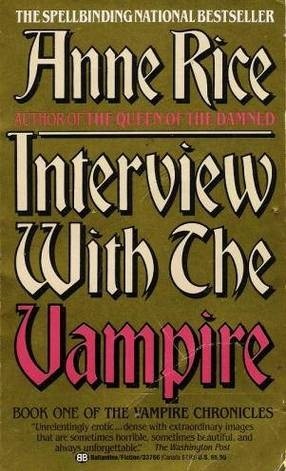
interviewwiththevampHalfway through reading this one, it occurred to me that I read Interview with a Vampire in high school, but it left so little impression that I promptly forgot about it until 16 or so years later when, as I was reading it again, I began to recall some of it as I went along. This is a cerebral treatment of the vampire genre, an examination of good vs evil, what immortality really means, the first of its kind in “vampire books” and an allegory of the soul itself. It is all of those things, but it’s not very fun to read. The pace drags along and, for being a horror novel, it’s not horrific, mainly dull.


Now, as back in high school, I wanted more information about what happened to Louis’s brother at the very start. Rice hints at paranormal interference on the stairs and in the brother’s religious vision, but the truth is never revealed. Maybe I have to dig through subsequent novels to find out what happened. That is the start of Louis’ troubles, the lynch pin of the whole book and Rice just glosses over it.

I also was unimpressed by Louis’s self professed “sensitivity” to life. It all combined to make him into an unending complainer. “People who cease to believe in God or goodness altogether still believe in the devil. I don’t know why. No, I do indeed know why. Evil is always possible. And goodness is eternally difficult.” pg 14, ebook. He monologues like that a lot as the book is set up as an interview, which I didn’t mind too much, but I could have done without for the last third. I mean, at that point, we know the kid with the tape recorder is there. I wanted to get lost in the story but we’re never really allowed to because we’re always flashing back and forth.

It’s difficult to enjoy a book when you don’t really like the main character.“I lived like a man who wanted to die but who had no courage to do it himself. I walked black streets and alleys alone; I passed out in cabarets. … And then I was attacked. It might have been anyone- and my invitation was open to sailors, thieves, maniacs, anyone. But it was a vampire.” pg 13, ebook. Interview with the Maniac just doesn’t have the same ring, does it. And yet, I might read it. 🙂

Rice’s vampires are emotionless, except for Louis who is seemingly exploding with sensitivity and angst: “By morning, I realized that I was his complete superior and I had been sadly cheated in having him for a teacher. … I felt cold towards him. I had no contempt in superiority. Only a hunger for new experience … Lestat was of no use.” pg 29, ebook. Or later with Claudia: “I even conceived a savage jealousy of the dollmaker to whom she’d confided her request for that tinkling diminutive lady, because that dollmaker had for a moment given her something which she held close to herself in my presence as if I were not there at all.” pg 176, ebook. On and on it goes. Lestat doesn’t understand him. Lestat’s a boor. Lestat this, Lestat that. Claudia’s out of control. Claudia too much like Lestat, Claudia’s too much like him…. Louis has eternity to explore the world and everything in it, and he chooses to hang out with the two people who makes him nuts. But, I hear you say, Lestat created him so he had control over him and he couldn’t leave Claudia because she was like an eternal child, wasn’t she?  As the story unfolds, we discover that separation was possible. Louis was simply too “sensitive” to do what was necessary.

Anyway, between the whining, the incomplete background information, and black/white view of good and evil, I did not enjoy Interview with the Vampire nearly as much as I had hoped I would. Perhaps I will revise my view if I read the rest of the series, but just thinking about digging into it makes me feel tired so I’m not sure that I’ll ever get that. Maybe I was ruined on this book by reading the Sookie Stackhouse novels, which I surprisingly loved (until the painfully awful final ones, skip those). Jump into Charlaine Harris’ novels for some vampire brain candy, save Anne Rice for the more serious, contemplative mood as it is considered a classic and beloved by many- just not me.

I plan to watch the film now and do a comparative review with the book. I watched it a long time ago too and can’t really recall it at all, but my Goodreads friends seem to think that it was better than the novel. We’ll see. 🙂 Thanks for reading!

Farewell, 2016!

Farewell, 2016!

helpdesk2What a year! Thank you to everyone on Goodreads (and WordPress!) for sharing their reads and giving me a safe space to write my thoughts. I look forward to seeing what everyone gets up in 2017!
Speaking of next year, I have some big news. After almost five years as a public librarian, I am starting a new job as a news assistant at a major local newspaper. It is an incredibly bittersweet move because I absolutely loved being a librarian, but I find myself ready for new challenges and, honestly, a full time position, which was not available at the library. I will continue to read and review as much as I am able, but you may not see me on here as much as 2016.

And that’s ok. I also may change my online name to Heidi the Hippie or I may just leave the librarian moniker because, in my heart, I will always be a librarian. Now, I’ll have a slightly different Help Desk and new duties, but, it will always be a part of who I am. That’s just how it is.

May your holidays and New Year be filled with awesome new books to read. Peace and love to you all!

Heidi’s Best of 2016 (not necessarily published in 2016, but read by me this year)
Overall favorite: Quiet: The Power of Introverts in a World That Can’t Stop Talking

Best Self Help: Every Breath You Take: How to Breathe Your Way to a Mindful Life

Funniest: How to Be Dull: Standing Out Next to Genius

Best Non-Fiction: Unmentionable: The Victorian Lady’s Guide to Sex, Marriage, and Manners or Born to Run: A Hidden Tribe, Superathletes, and the Greatest Race the World Has Never Seen

Non-Fiction I Thought I Wouldn’t Like but Did: Hillbilly Elegy: A Memoir of a Family and Culture in Crisis

Most Overrated: Me & Earl & the Dying Girl

Favorite Book Club Pick: The Sound of Gravel

Best Fantasy: The Golem and the Jinni or A Monster Calls

Most Disconcerting: Marie Antoinette’s Darkest Days: Prisoner No. 280 in the Conciergerie

Most Polarizing: Hillbilly Elegy: A Memoir of a Family and Culture in Crisis

Most Inspirational: Thank & Grow Rich: A 30-Day Experiment in Shameless Gratitude and Unabashed Joy

Best Graphic Novel: Descender, Volume 1: Tin Stars

Strong Female Role Model: Running with a Police Escort: Tales from the Back of the Pack

Will Blow Your Mind: Zen Dogs

Best Dieting: The Taco Cleanse: The Tortilla-Based Diet Proven to Change Your Life

Best To-Be-Made-Into-A-Movie: Red Rising

Best Memoir: The Princess Diarist or Voracious: A Hungry Reader Cooks Her Way through Great Books or You’re Never Weird on the Internet

Best Historical Fiction: The Queen of the Night

Young Adult: Tiger Lily

Horror: Alice or All Darling Children

Favorite from NetGalley: Happiness and Other Small Things of Absolute Importance

Thank you so much for reading my blog and I hope that you get the chance to enjoy some of my favorites from 2016!

Hyde by Daniel Levine

Hyde by Daniel Levine

hyde**Please do not read this review if you intend to read this book and haven’t yet. I discuss a major plot twist and don’t want to spoil it for anyone.**

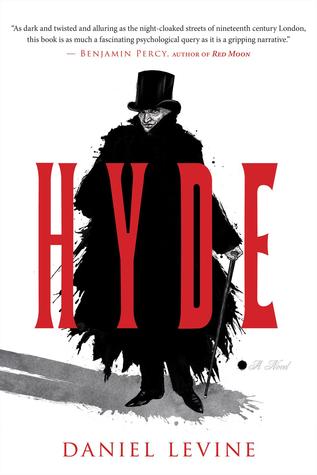
Hyde is the story of Jekyll and Hyde from the villain’s point of view and what a story it is. The visceral and sense obsessed descriptions are just what one would expect from a character that is made almost completely of someone’s baser nature, but if you have a weak stomach, you may want to steer clear of this disturbing tale.

The story is told in flashbacks from Hyde’s final days as he’s holed up in Dr. Jekyll’s lab: “I don’t want to die at all, but if there’s no escaping it, then at the very least I want to remember everything properly first, the way it truly happened. The truth is inside this head. I simply must extract it. In the end no one will know it but me, but that will be enough.” pg 10, ebook. I never considered it before, but how would it feel to be shut away inside someone’s mind in a type of half life, always looking out from someone’s eyes, then to be suddenly thrust into a body, given complete control, and then blamed for everything that inevitably goes wrong.

Levine’s darkly imaginative reasons why Jekyll would have “created” Hyde in the first place were chilling. I found myself pitying Hyde rather than fearing him: “It was a frustrating, blinding feeling, my ignorance. I wanted to know what my purpose was, what Jekyll needed me for.” pg 36, ebook. I always wondered that too. After the first failed experiment, Jekyll summons Hyde forth again and again with increasingly awful results. He could have just stopped after the first time and been like, “whoa, THAT was a bad idea” and chucked the rest of his solution into the river. Hyde examines the twisted motivations behind the repeated transformations.

It also looks into the infinite nature of the human psyche. The rest of this review is going to have a major spoiler in it, but I have to talk about it to truly discuss this story because this twist is what elevated Hyde in my mind from a horror story with cheap thrills to a spine tingling look into the darkness of the abyss that could exist in the soul.

How about the idea that Mr. Hyde could have a dark side of his own? That, within a damaged and fractured mind, there’s no end to the shadows that could emerge. The worst of the actions recorded in Jekyll and Hyde were not done consciously by either man, but by a monster that was created by the rage that Jekyll suppressed in his childhood. I thought that was genius. I only wish Mr. Seek had a bigger part in this tale! Because, beyond that huge twist, this story felt repetitive.
Recommended for readers who enjoy dark, violent re-tellings and can tolerate a slower paced read. Some similar, grisly tales: The Last Werewolf or Black Moon.