Grendel by John Gardner

Grendel by John Gardner

Grendel is the ill-fated monster from the ancient story, Beowulf. This is his tale.

There are very few details shared about Grendel in Beowulf. I thought that this story would be an opportunity for the reader to get to know him.

Unfortunately, we spend most of the time in Grendel’s mind, circling endlessly around the ideas of time, brutality, nature and the meaninglessness of existence.

I wanted to know more about Grendel’s mother, but there was very little about her.

John Gardner wrote her as some kind of void-filled slug monster: “Behind my back, at the world’s end, my pale slightly glowing fat mother sleeps on, old, sick at heart, in our dingy underground room. Life-bloated, baffled, long-suffering hag. Guilty, she imagines, of some unremembered, perhaps ancestral crime. (She must have some human in her.) Not that she thinks. Not that she dissects and ponders the dusty mechanical bits of her miserable life’s curse.” pg 10, ebook.

Not like Grendel does, endlessly.

Photo by Laker on Pexels.com

“I understood that the world was nothing: a mechanical chaos of casual, brute enmity on which we stupidly impose our hopes and fears. I understood that, finally and absolutely, I alone exist.” pg 17, ebook.

I think that was the biggest reason I didn’t enjoy this read. I believe every moment in life is, or can be, filled with purpose, meaning and happiness. Grendel falls on the exact opposite end of the scale.

In that way, Grendel is one of the biggest downers you could ever read. He believes that life means nothing. He acts and kills from this empty center.

Out of this morass, the one part I kind of enjoyed was Grendel’s conversation with a dragon in its hoard.

The dragon lives for millennia and sees the world from a view so wide that it is almost outside of time. Again, there’s a nihilist bent to his view, but the dragon brought a weird bit of humor to an otherwise bleak story.

Photo by Suraphat Nuea-on on Pexels.com

“Don’t look so bored,” he (the dragon) said. He scowled, black as midnight. “Think how I must feel,” he said.” pg 43, ebook.

Yeah, think how I must feel. All I wanted was the story of Beowulf from a unique perspective and what I received was a vague feeling of depression about the meaninglessness of it all.

Thanks for reading.

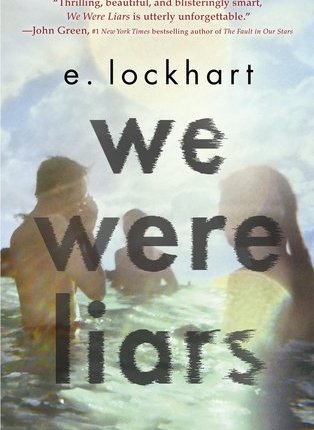
We Were Liars by E. Lockhart

We Were Liars by E. Lockhart

The Sinclair family is blonde, beautiful and wealthy. They gather together in the summer on a private island owned by the patriarch of the family.

Cadence Sinclair Eastman is ill. A terrible accident a few summers ago left her with debilitating migraines and a faulty memory.

Can she put together the pieces of what happened before she has to leave for the summer?

We were Liars is a fantastic coming-of-age book with an unreliable narrator, forbidden love and an excellent twist that I’ll bet you won’t see coming. (I know I didn’t.)

“We are Sinclairs. No one is needy. No one is wrong. We live, at least in the summertime, on a private island off the coast of Massachusetts. Perhaps that is all you need to know.” pg 26, ebook.

This is not a family who wears their hearts on their sleeve: “We believe in outdoor exercise. We believe that time heals. We believe, although we will not say so explicitly, in prescription drugs and the cocktail hour. We do not discuss our problems in restaurants. We do not believe in displays of distress. Our upper lips are stiff, and it is possible people are curious about us because we do not show them our hearts.” pg 55, ebook.

Photo by Matt Hardy on Pexels.com

Cadence, her cousins and Gat, the nephew of one of the boyfriends of a Sinclair daughter, call themselves, ‘The Liars’. Why they do so is one of the biggest mysteries in the story and I won’t ruin it for you.

I loved this book. I loved the tone, the mystery and the slow reveal.

I also loved how the reader gets to know Cadence so completely. This is not a story that leaves you wondering about character motivations.

Highly recommended for fans of young adult books, coming-of-age tales and stories with unreliable narrators. We were Liars may just be one of my favorite reads of 2017.

Thanks for reading!

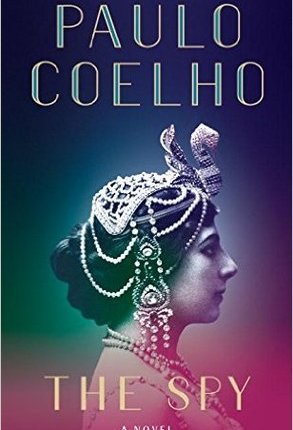
The Spy by Paulo Coelho

The Spy by Paulo Coelho

The Spy is the story of Mata Hari, told first in her voice and then from the point of view of one of her male admirers.

Paulo Coelho isn’t at his best in this novel.

Photo by Faisal Rahman on Pexels.com

He prefers and excels at metaphorical stories. For example, in this tale, Coelho has Mata Hari comparing herself to the nightingale that impaled itself on a thorn to grow a bright red rose for a young man in love.

I get what he was reaching for- but I think this tale would have been told better through details rather than metaphors.

Also, it’s so short. The audiobook was only a couple hours long.

It wasn’t nearly long enough to do Mata Hari’s life justice.

I first learned about the fascinating life of Mata Hari in Inspired!: True Stories Behind Famous Art, Literature, Music, and Film by Maria Bukhoninia. There were enough unbelievable things that happened in Mata Hari’s life to make a compelling historical fiction.

Photo by Pixabay on Pexels.com

Sadly, this didn’t quite fit the bill for me.

If you’re going to read a Coelho novel, may I recommend The Alchemist. (Which is also a novel people love or hate. I fell on the side of love.)

Thanks for reading!

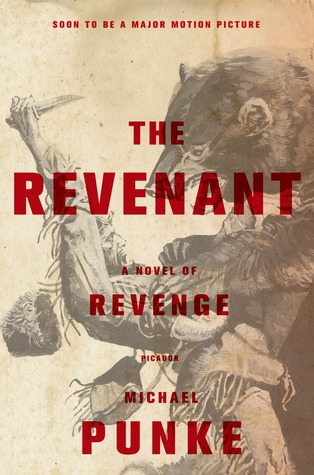
The Revenant by Michael Punke

The Revenant by Michael Punke
therevenant

The Revenant is a fictional tale based on the real life account of Hugh Glass, a trapper who was attacked by a grizzly bear and then left for dead by the men who had been left to care for him.

This story is so gripping. From the explosive opening moments until the very last page, the reader is practically swept up into the action.

Not only are the men in The Revenant struggling with each other, but Nature herself has a huge role in this survival tale. If the characters aren’t freezing, they’re starving or looking for a safe place to sleep.

This is a particularly excellent read for a cold winter night with a cup of something hot to drink near your elbow.

This would have been a five star read except for the ridiculously unsatisfying conclusion.

It felt like The Revenant suddenly turned from a survival/adventure/revenge story into a tame morality play.

I realize that it is a morality play the whole time, but with all the action and nail-biting tension, it doesn’t “feel” like one until the ending- which I won’t ruin for you, except to say that it was very lame.

My husband read a version of this story called Lord Grizzly when he was in college so, while I was into this one, we were comparing notes on the differences between the two works.

Photo by Pixabay on Pexels.com

Although varying in small details, the major arcs were the same. I felt as if The Revenant did a better job of building the tension than Lord Grizzly but we both agreed that the ending to the story (in both books) was a let-down.

If you enjoyed reading The Revenant, you may enjoy The Knife of Never Letting Go. Though not based on a true story, it shares the traveling-through-the-wilderness feel and tension of this book.

I received a free copy of this book through Goodreads First Reads. FTC guidelines: check!

And thanks for reading!

Batman: The Killing Joke by Alan Moore

Batman: The Killing Joke by Alan Moore

I’ve decided to explore the world of superhero comics. First on my list, Batman: The Killing Joke by Alan Moore.

Photo by BROTE studio on Pexels.com

The story opens on a dark and stormy night. We’re heading into Arkham Asylum with Batman. After passing a few famous inmates, we’re outside inmate #0801, Name Unknown’s cell.

A shadowy figure is playing solitaire within the barred room. It’s The Joker.

By far, one of the creepiest villains of the Batman pantheon.

“So when you find yourself locked onto an unpleasant train of thought, heading for the places in your past where the screaming is unbearable, remember there’s always madness. Madness is the emergency exit…”

He is mad, yes, but brilliant in his insanity. And, in that, is he so different from the rest of the human race?

“Faced with the inescapable fact that human existence is mad, random and pointless, one in eight of them crack up and go stark slavering buggo! Who can blame them? In a world as psychotic as this… any other response would be crazy!”

Photo by adnorf on Pexels.com

Recommended for the more mature graphic novel readers because of some disturbing content and images, Batman: The Killing Joke is no joke and one heck of a ride.

Watchmen, also by Alan Moore, is one of my all time favorite graphic novels, so I was expecting to enjoy this one. If you haven’t had a chance to read it yet, it’s another must-read for the graphic novel fan.

Thanks for reading!

Hellhole by Gina Damico

Hellhole by Gina Damico
hellhole

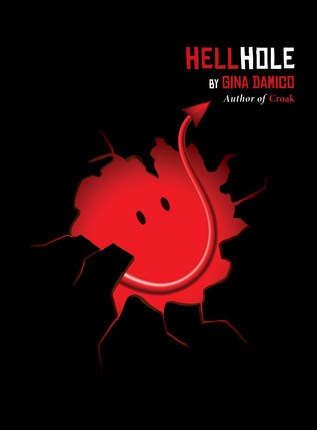
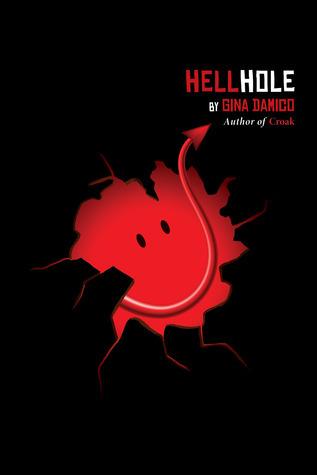
Hellhole is a modern Faustian tale about Max Kilgore, his deathly ill mother and the devil.

Though written for a young adult audience, readers need to be aware that there are some bad words in the dialogue and innuendo in some situations. All kids are different, but I’d lean towards 15 and up forHellhole.

Our hero is just a regular guy: “Seventeen-year-old Max Kilgore suffered from the unfortunate curse of having a name that was far cooler than the person it was attached to.” pg 8, ebook.

Max attends high school, holds down a job and cares for his ailing mother in Eastville. “The town of Eastville was known for four things: its renowned hospital, its renowned high school football team, its renowned granite quarry, and its stupid, stupid name. No one could say with authority what Eastville was supposed to be east of…” pg 13, ebook.

One day, after a bad decision on Max’s part, Burgundy Cluttermuck (Burg) walks through his door. “The name is Burgundy Cluttermuck, devil-at-large. I do bachelorette parties and retirement galas, but no more children’s birthday.” He sucked in some air through his teeth. “Too much screaming.” pg 38.

How is Max going to get rid of him? And how long is this devil going to stick around? It’s dangerous to have a devil around the house: “He won’t go after you. He’ll go after the ones you love, and then you’ll have to live with the guilt. That’s your ‘punishment for dealing in devilry’…” pg 107, ebook.

Photo by PhotoMIX Company on Pexels.com

Recommended for young adults, 15 plus. If you enjoy this book, a similar read is The Gentleman by Forrest Leo.

Thanks for reading!

A God in Ruins (Todd #2) by Kate Atkinson

A God in Ruins (Todd #2) by Kate Atkinson

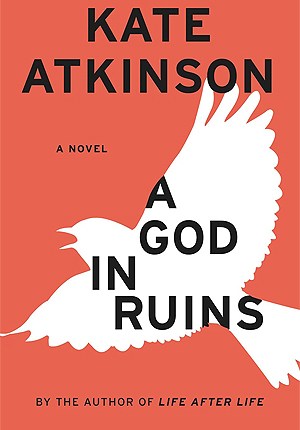
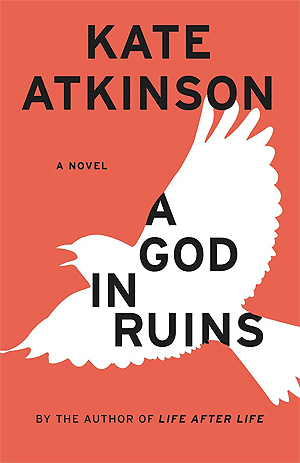
godinruinsEven though Kate Atkinson took readers back into the beautiful world that she created for the Todd family, this story wasn’t nearly as enjoyable as Life After Life.
This time, the story focused on Teddy. It is told through the mixed up timeline that I’ve come to expect from Atkinson. We get to see Teddy’s relationships, family and inner thoughts.

It didn’t have the magic of Ursula’s story, in my opinion. In Life After Life, I was enthralled. For the majority of A God in Ruins, I was not.

I was surprised that I liked very few of the characters. Viola, in particular, was awful. I realize that that is partially the point, but still- it’s hard to appreciate the story when you don’t like most of the major characters.

The writing was still lovely, but I didn’t connect to this book the way that I did with the other one. I’m rather disappointed actually.

Thanks for reading.

Gather the Daughters by Jennie Melamed

Gather the Daughters by Jennie Melamed

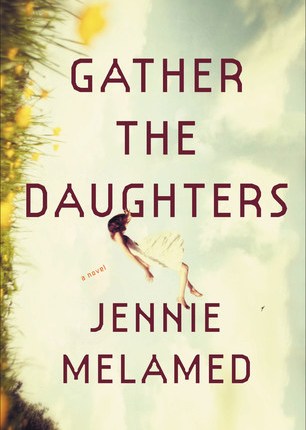
Gather the Daughters is about a small community that lives with no electricity or modern conveniences on an island. They have a church made of stone that sinks into the ground and a holy book written by “the ancestors.” These ancestors are saint-like founders who, according to tradition, fled the wider world to preserve the human race during an apocalypse.

Traditions are dark and strange on the island, but not questioned because they were written by the ancestors.

Photo by Ingo Joseph on Pexels.com

The tale is told from the viewpoint of four girls: Vanessa, Caitlin, Janey and Amanda.

From the fires of wickedness we grew forth, like a green branch from a rotten tree,” he reads. “From the wastelands of want came the hardworking men of industry and promise. From the war-stricken terror came our forefathers to keep us safe from harm.” Like everyone else, Vanessa mouths the words along with him. loc 122, ebook.

Because of the small number of people on the island, everyone has an assigned job- that they keep for life. Reproduction, meetings and courtships are also controlled by tradition.

Sometimes the way things are done seem irrational or cruel, but the community does not change. Take the perpetually sinking church: “Every ten years or so, when the roof is almost level with the ground, all the men on the island gather to build stone walls on top of it, and the roof becomes the new floor. Vanessa asked Mother why they couldn’t just use wood, but Mother said it was tradition, and it would be disrespectful to the ancestors to change it.” loc 229, ebook.

Photo by Zac Frith on Pexels.com

Similar to The Handmaiden’s Tale, Gather the Daughters is ultimately about what happens when society dictates and controls relationships, sexuality and education through religious doctrine. It is also examines the male/female balance of power.

Gather the Daughters is a gripping read. But not mysterious. It was fairly clear in my mind from the start where this story was headed, but I cared about the main characters. They have heart and I couldn’t help but want them to live in a better world than the one they were born into.

I could see this being a great choice for book clubs. There’s plenty to talk about, especially with character motivations and the structure of society.

Photo by David Bartus on Pexels.com

Reader warnings: survivors of childhood sexual abuse could be triggered by this read. There are also some domestic violence scenes.

Thank you to NetGalley and Little, Brown and Company for a free advance reader’s copy of this book. Reminder: the short quotations that I pulled for this review may vary in the final printed version.

Thanks for reading!