Elizabeth I by Margaret George

Elizabeth I by Margaret George

Margaret George writes about Queen Elizabeth I of England and the last years of her reign.

I think most people are aware that Elizabeth’s father was Henry VIII and the tumultuous going’s on that preceded and then ushered in her reign. But fewer are aware of what happened during the later years of her life.

The last years were still exciting and dangerous, filled with invading Spanish armadas (more than one) and power hungry lords. That’s what this book is all about.

I confess: I am a major fan of both Elizabeth I and Margaret George.

“I know I have the body but of a weak and feeble women, but I have the heart and stomach of a king and of a king of England, too- and think it foul scorn that Parma or any prince of Europe should dare to invade the borders of my realm.” pg 41.
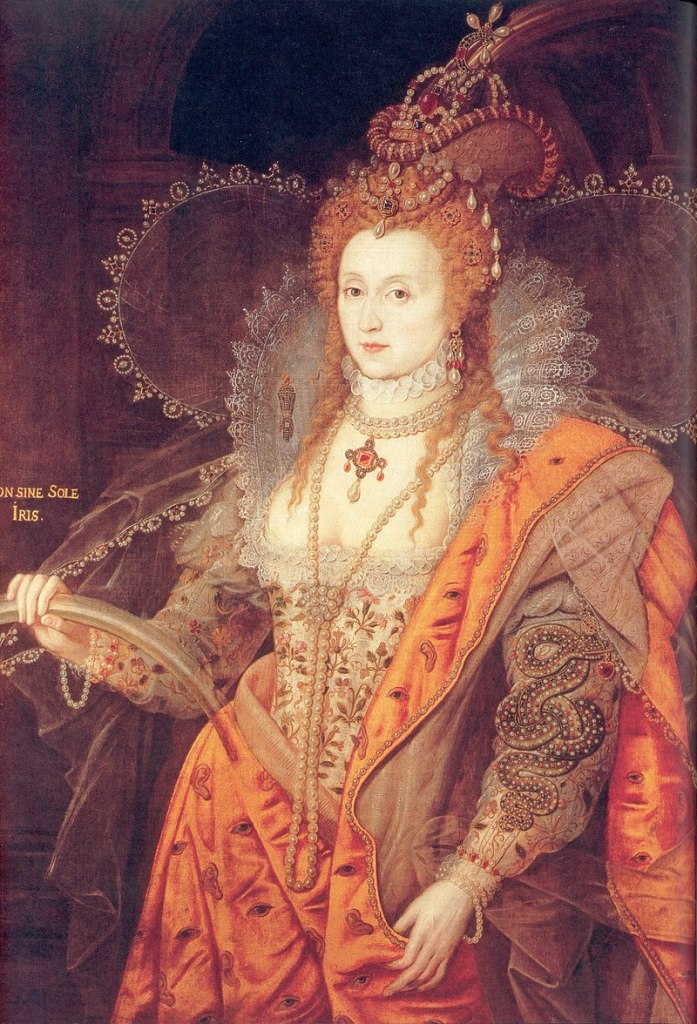
A few years ago, I had the privilege of visiting Westminster Abbey and seeing the tomb of Elizabeth I. The crowds were such that I couldn’t linger by the effigy but was forced into constant motion, rushed past.

I burst into tears as I exited the area of the church that contained her tomb and I was completely overcome with emotion. My husband led me through the throng again, just so I could spend a moment more near one of my favorite historical figures.

What do I love about Elizabeth I? Let me count the ways!

First of all, she insisted that she was a ruler in her own right, not because she was married to a royal. Elizabeth used the game of courtship to increase her power. That’s hard core.

“Francois had been my last, and in many ways my only, serious marriage possibility. I had been wooed by twenty-five foreign suitors over the years. I never intended to marry any of them, but it was my best tool of diplomacy.” pg 72.
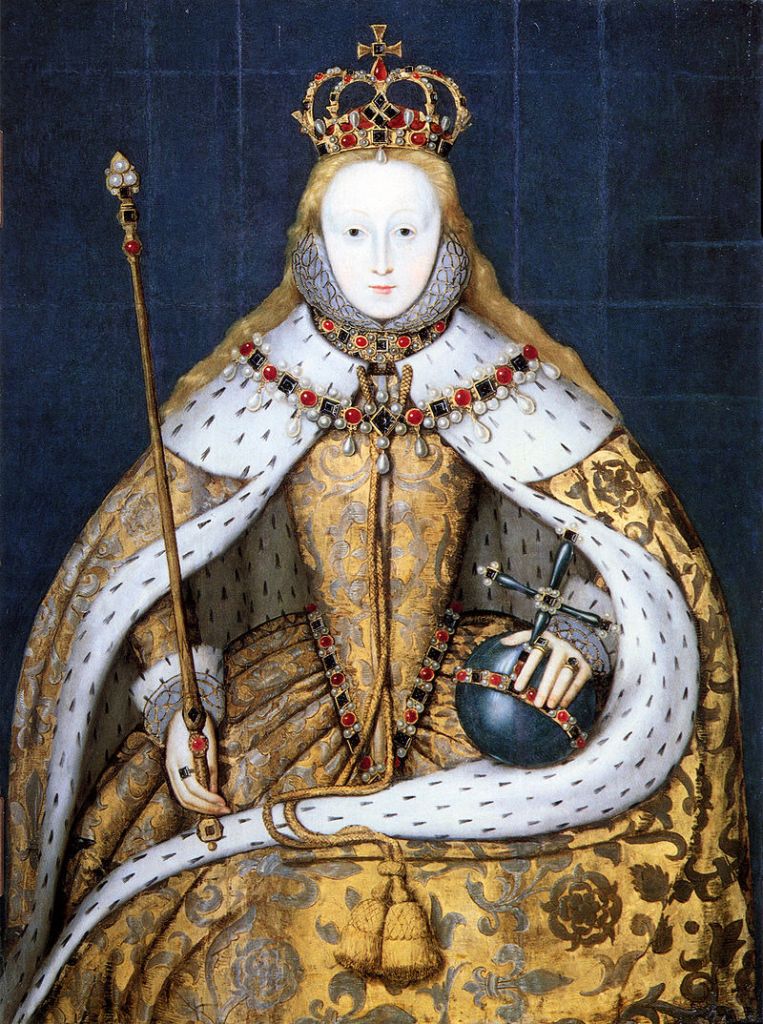
Second, she smart with her power rather than greedy. She navigated a world in which she had few allies because of her religion. And she never accepted defeat. “For my own part, I swear that my heart has never known what fear is. In ambition of glory I never sought to enlarge the territories of my land. If I have used my forces to keep the enemy from you, I have thereby done it for your safety, and to keep dangers at bay.” pg 145.

She was well-learned, charismatic and always knew what to say in public situations.

“It is not possible to see a woman of so fine and vigorous a disposition both in mind and in body. One cay say nothing to her on which she will not make an apt comment. She is a great princess who knows everything.” pg 363.

And finally, she was honest and true to the end of her life to the responsibility of leading her country. Elizabeth I loved her people.

“There will never queen sit in my seat with more zeal to my country, care to my subjects, and that will sooner with willingness venture her life for your good and safety, than myself. … And though you have had and may have many princes more mighty and wise sitting in this seat, yet you never had or shall have any that will love you better.” pg 608.

Photo by Pixabay on Pexels.com

My quibble with this book was not with the research or the story, which were both fine in my opinion. It was the fact that George split the narrative- most of the chapters are told from Elizabeth’s point of view, but some are from Lettice’s point of view, the mother of Robert Devereux.

I understand Lettice’s narrative was used to explain Devereux’s motivations and unexplained behavior, but I felt as if it slowed the story down. Coming in at 662 pages, this was a book that needed to stay at a fast clip. I didn’t feel as if it achieved that.

That being said, George provides an amazing escape from the world and unparalleled historical fiction, with this story.

The weekend I started this book, my mother had an unexpected heart attack and nearly died. She was in good health and relatively young. It was quite a shock.

Some people spend hours worrying, others in conversation or watching TV to wile away stressful hours.

Photo by Photography Maghradze PH on Pexels.com

I picked up Elizabeth I by Margaret George and transported myself to Elizabethan England. There was worry, danger, intrigue… and when I needed to put down the book and attend to family concerns, I could. By the time the weekend was over, I had completed this book and my mother was discharged from the hospital.

It looks as if she will make a full recovery. And I learned quite a bit more about Elizabeth I.

If you are looking for distraction from every day life, this epic tale could fit the bill. Recommended for historical fiction lovers, of course, but also for anyone who desperately needs a way to pass the time.

Thank you, Margaret George, for providing that for me, just when I needed it most.

Thanks for reading!

The Book of Speculation by Erika Swyler

The Book of Speculation by Erika Swyler

Simon works in the reference section at a struggling library in Maine, whose biggest draw is a whaling archive. He’s hard up for money and his historic home on the coast is in such disrepair that it’s about to fall into the ocean.

One day, Simon receives a very old book in the mail. Strangely, it has some of his family member’s names in it.

Photo by Suzy Hazelwood on Pexels.com

The text describes a circus, a boy who can’t speak, and a girl who can hold her breath so long that they call her a mermaid.

But, what does this have to do with his family? And why do so many of the people in the book die on the same day?

In addition to the mystery, The Book of Speculation includes one or two love stories: “Redheaded and pretty, Alice has her father’s smile and a way with kids. She’s better with people than I am, which is why she handles programming and I’m in reference.”pg 9, ebook.

Photo by Maycon Marmo on Pexels.com

I did not like how the reference section was stereotypically depicted as the “bad with people” part of the library. I have a soft spot in my heart for those reference types, having been one myself in my previous job. 🙂

Also, for being a librarian, Simon doesn’t act very librarian-y.

Take this part when he receives the mysterious book: “The box contains a good-sized book, carefully wrapped. .. A small shock runs through me. It’s very old, not a book to be handled with naked fingers, but seeing as it’s already ruined, I give in to the quiet thrill of touching something with history.” pg 15.

Photo by cottonbro on Pexels.com

No self-respecting archivist would do that. “Already ruined” so who cares? I don’t think so.

The fantasy/magic portions of this book are subtle and written so that one could almost believe that it was real.

Take Amos’ (one of the characters from the old book) ability to disappear: “People may live for a century without discovering the secret of vanishing. The boy found it because he was free to listen to the ground humming, the subtle moving of soil, and the breathing of water- a whisper barely discernible over the sound of a heartbeat. Water was the key.” pg 18 ebook.

Photo by Jess Vide on Pexels.com

The history recorded in the old book is revealed to the reader through a series of flashbacks. That bothered some of my friends on Goodreads but the circus folk stories are my favorite parts of this book.

The characterizations are ok, nothing extraordinary.

My favorite minor character, Benno, could have used more fleshing out: “After a time Benno climbed down from the wagon. “You are my friend and you are kind,” he said quietly. “More than is good. I was taught to watch for gentle souls, as they’ve not the wit to look after themselves.” pg 124, ebook.

Some similar reads (perhaps a bit more magical than this): The Golem and the JinniMagonia or The Mermaid’s Sister.

Thanks for reading!

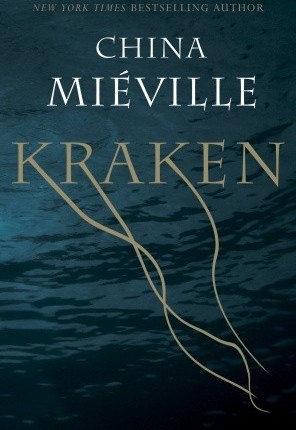
Kraken by China Miéville

Kraken by China Miéville

A book review of Kraken by China Miéville.

Kraken is a complex urban fantasy about a missing squid, an astonishing large cast of characters and the end of the world – in no particular order.

Photo by Anni Roenkae on Pexels.com

China Miéville is an incredibly imaginative author. In this story, he has created a half dozen separate religions with their own gods and customs. (Hundreds more are hinted at.) Not content with that, he also created magic of all kinds, a strike by familiars, protective London-based angels and a supernatural police force.

And that’s just the tip of the storytelling iceberg.

I would put forth the argument that he is one of the most inventive authors I’ve ever read.

That being said, I wanted more story and less world building.

Miéville has a cadence to his storytelling. Just when I thought the next important point in the plot would be revealed, he’d unveil a new character. It started to become annoying rather than astonishing.

Photo by Yura Forrat on Pexels.com

The pace of Kraken is slow, so slow. But, for readers who enjoy a complex setup and completely unexpected reveal, this may be the read for you.

Personally, I like my stories to move at a faster clip.

There’s also a good bit of coarse language in Kraken. I’m not the most sensitive person in the world, but it did grate my ears at times. Consider yourself warned.

My absolute favorite character, out of the legions to choose from, is Wati. It’s not just for his unique premise either, which is incredibly inventive. (Another tip of the hat to Miéville.)

Photo by Allan Mas on Pexels.com

Wati has so much heart. He fearlessly goes where others can’t or won’t, putting himself in danger for his friends.

And Miéville certainly takes the time to build his characters. That is his absolute strength – world and character building.

Recommended for readers who enjoy complexity and stunningly fantastical worlds, and who have the patience to thoroughly savor all of it.

Thanks for reading!

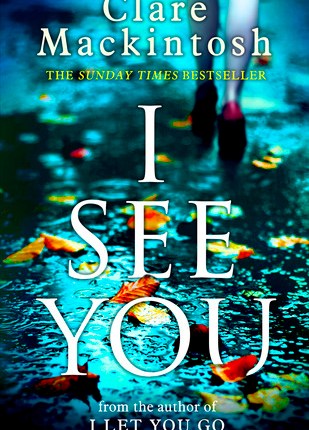
I See You by Clare Mackintosh

I See You by Clare Mackintosh

I See You is a tense thriller with fairly good execution that stumbles on its ending.

It takes place in London. The scary parts mainly take place on the public transport system.

“…I don’t know how you do this every day.” “You get used to it,” I say, although you don’t so much get used to it as simply put up with it. Standing up on a cramped, malodorous train is part and parcel of working in London.” pg 42.

Photo by Jean-Paul Wright from Pexels

Zoe Walker sees her photo, or what she believes is her photo, in the papers on her way to work. It’s weird and scary because she didn’t submit her photo to the press.

“Routine is comforting to you. It’s familiar, reassuring. Routine makes you feel safe. Routine will kill you.” pg 51.

Kelly is a member of the police. She has secrets in her past and reasons to prove herself.

“Kelly thought of all the crime prevention initiatives she’d seen rolled out over her nine years in the job. Poster campaigns, leaflet drops, attack alarms, education programs… Yet it was far simpler than that; they just had to listen to victims. Believe them.” pg 83.

Photo by sum+it from Pexels

When Zoe comes to Kelly with her concerns and her photo in the paper, she sounds crazy. But she finds a sympathetic ear with Kelly.

Can they figure out what is going on before its too late?

I read this title for book club. And even though I was disappointed in the ending, this story scared me. It also scared some members of the club.

I was frightened partly because I don’t usually read this type of book. But, it also felt so real to me.

Photo by Lennart Wittstock from Pexels

We are creatures of habit, after all. It certainly made me consider taking a different route to work. You never know who could be watching…

Recommended for brave readers who don’t shy away from unsatisfying endings. Thanks for reading!

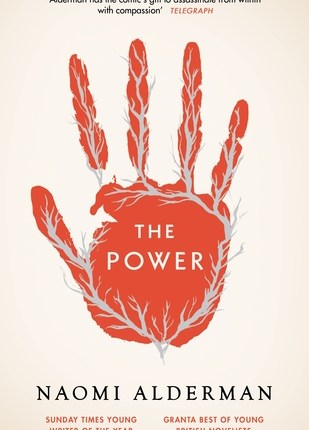
The Power by Naomi Alderman

The Power by Naomi Alderman

In The Power, young women have developed the ability to control electricity. It shifts the balance of power between the sexes and the world begins to come apart at the seams.

It is told from the point of view of a few women and a man. They each have different stories and experiences that Naomi Alderman blends together to create a powerful statement about how we live.

Photo by Sora Shimazaki on Pexels.com

This is one of the most disturbing books I’ve ever read, but also, most brilliant. It made me think about all of the internal biases I have when it comes to gender, cultural expectations and roles.

Who was it who said: “Absolute power corrupts absolutely.” This book is an examination of power and how it has shaped the world, not always for the better.

The monumental societal shift starts out small enough. A man named Tunde captures a moment between a young woman and a man who was hitting on her at the grocery store: “Tunde is recording when she turns around. … There she is, bringing her hand to his arm when he smiles and thinks she is performing mock-fury for his amusement. If you pause the video for a moment at this point, you can see the charge jump.” loc 261, ebook.

Those who have been abused are more likely to become abusers. And there are many, many abused women in the world.

“A strange new kind of fighting which leaves boys- mostly boys, sometimes girls- breathless and twitching, with scars like unfurling leaves winding up their arms or legs or across the soft flesh of their middles. Their first thought after disease is a new weapon, something these kids are bringing into school, but as the first week trickles into the second they know that’s not it.” loc 316, ebook.

Photo by Pixabay on Pexels.com

Entire governments crumble to powerful women. Women who have been locked up their entire lives roam the streets, free. Soon enough, they’re locking up and abusing the men, because they can.

Religions change. Sexual predilections change. New politicians are elected. New soldiers are trained.

“Allie thinks, God is telling the world that there is to be a new order. That the old way is overturned. The old centuries are done.”loc 681, ebook.

The new scourge of third world countries are powerful, uncontrolled women.

“He wounds three of the women in the leg or arm and the others are on him like a tide. There is a sound like eggs frying. When Tunde gets close enough to show what has been done, he is perfectly still, the twisted-vine marks across his face and neck so thick that his features are barely discernible.” loc 884, ebook.

Photo by tugay aydu0131n on Pexels.com

I think book clubs may find plenty to talk about in this book- if they can make it through. There are some very disturbing scenes.

“Gender is a shell game. What is a man? Whatever a woman isn’t. What is a woman? Whatever a man is not. Tap on it and it’s hollow. Look under the shells: it’s not there.” loc 4780, ebook.

In a time when so many women may feel powerless or voiceless, The Power may speak directly to them. It is, as I’ve said, a disturbing book, but also a conversation starter.

To quote Victor Hugo: Nothing is as powerful as an idea whose time has come. And, in my mind, it was the perfect time for this book to be written.

Thank you to NetGalley for a free digital copy of this book and thanks for reading.

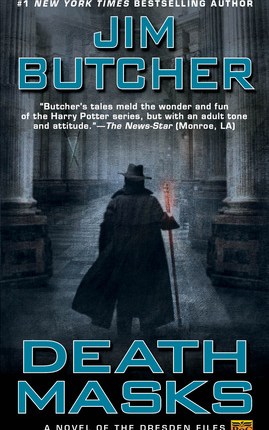
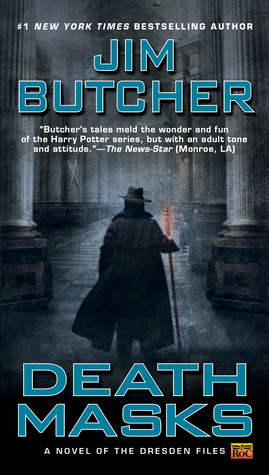
Death Masks (The Dresden Files, #5) by Jim Butcher

Death Masks (The Dresden Files, #5) by Jim Butcher

deathmasksHarry Dresden can’t catch a break… or a full night’s sleep. He’s up against the Red vampire court, he’s being attacked by supernatural creatures with powers he’s never seen before and his ex-girlfriend is back in town.


But, you can’t keep a good wizard down, right?

Even when you introduce a holy relic into the tale: “Someone stole the freaking Shroud of Turn?’ I demanded. ‘Yes.’ I settled back into the chair, looking down at the photos again. This changed things. This changed things a lot.” pg 28

In case you haven’t read the first four entries in this series: Harry Dresden is a wizard for hire. He solves supernatural crimes, he finds lost items and he never seems to make enough money to be comfortable.

“I’d learned something in several years of professional wizarding. Never walk into a fight when the bad guys are the ones who set it up. Wizards can call down lightning from the heavens, rip apart the earth beneath their enemy’s feet, blow them into a neighboring time zone with gale winds, and a million other things even less pleasant- but not if we don’t plan things out in advance.”pg 58

Some criticisms of this series are that the humor is juvenile and corny. I’ll confess: it is. But I still love it.

“I get more threats before nine a.m. than most people get all day,” I responded, and shut the door on him. Purely for effect, I locked it too. Me, petty? Surely not.” pg 110

If I was a male wizard, I think I’d be something like Harry. I’d go in with the best of intentions and end up with the most mediocre of results.

Harry stands up for the little guy and has a soft spot for the ladies. He protects children and holds the door for women.

He likes to drink, wears a leather duster and can’t seem to sleep even when he’s exhausted.

Aren’t we all, in some ways, Harry Dresden? Fighting the good fight, even though we know that death waits around the corner?

“Apocalypse, as you refer to it, isn’t an event. … Apocalypse is a frame of mine,” he said then. “A belief. A surrender to inevitability. It is despair for the future. It is the death of hope.” pg 353

Recommended for fans of urban fantasy and especially the Iron Druid Chronicles by Kevin Hearne. I am a fan of The Dresden Files despite the fact that it can seem formulaic. I think Harry Dresden is worth the read.

Thanks for reading!

Boy’s Life by Robert McCammon

Boy’s Life by Robert McCammon

Boy’s Life is about Cory Mackenson, the southern town of Zephyr and the magic of every day life.

We had a monster in the river, and a secret in the lake. We had a ghost that haunted the road behind the wheel of a black dragster with flames on the hood. We had a Gabriel and a Lucifer, and a rebel that rose from the dead. We had an alien invader, a boy with a perfect arm, and we had a dinosaur loose on Merchants Street. It was a magic place.” pg 10, ebook.

Photo by Swapnil Sharma on Pexels.com

The story begins with a death and a mystery.

“On that morning before the sun, as I sat eating my breakfast with my dad and mom in our house on Hilltop Street, the year was 1964. There were great changes in the winds of earth, things of which I was unaware.” pg 15.

After witnessing something terrible sinking into the lake, Cory sets about discovering what or who put it there.

The trauma is almost too much for Cory’s father to bear.

“Whoever did it had to be a local. Had to be. … It might be somebody who sits on our pew at church. Somebody we buy groceries or clothes from. Somebody we’ve known all our lives… or thought we knew. That scares me like I’ve never been scared before.” pg 35, ebook.

Photo by Kirill Belotserkovsky on Pexels.com

But this book is about more than just the central mystery. It is also about the community of Zephyr and the relationships between the people who live there.

There is a racial divide in the town. When the river overflows its banks, the white and black communities come together to prevent disaster.

“There is something about nature out of control that touches a primal terror. We are used to believing that we’re the masters of our domain, and that God has given us this earth to rule over. … The truth is more fearsome: we are as frail as young trees in tornadoes, and our beloved homes are one flood away from driftwood.” pg 97, ebook.

Boy’s Life also examines coming-of-age issues like bullies, over-bearing parents, and accepting the realities of old age and death.

“But I’ll tell you a secret, Cory. Want to hear it?” I nodded. “No one,” Mrs. Neville whispered, “ever grows up. … They may look grown-up but it’s a disguise. It’s just the clay of time. Men and women are still children deep in their hearts.” pg 221, ebook.

Photo by Skitterphoto on Pexels.com

I loved this book. It is a far-reaching tale made for winter nights, to be read with a hot drink in your hand and a warm blanket on your lap.

It vaguely reminded me of The Help because of its southern location, the racial issues and some of the mystery elements. But really, Boy’s Life stands on its own.

Recommended for readers who enjoy historical fiction with a touch of magic and mystery.

Room by Emma Donoghue

Room by Emma Donoghue

Told from a 5-year-old’s point of view, Room is the story of Jack, his mother and the room that they never leave.

To Jack’s mother, it is a prison. To Jack, it’s just the world.

Photo by Porapak Apichodilok on Pexels.com

“…it was a garden shed to begin with. Just a basic twelve-by-twelve, vinyl-coated steel. But he added a sound-proofed skylight, and lots of insulating foam inside the walls, plus a layer of sheet lead, because lead kills all sound. Oh, and a security door with a code. He boasts about what a neat job he made of it.” pg 85.

Jack and his mother have no contact with the outside world, except for ‘Old Nick’ who only comes at night, brings food and the occasional ‘Sunday treat.’

They are his prisoners.

“…we mustn’t try and hurt him again. When he came back the next night, he said, number one, nothing would ever make him tell me the code. And number two, if I ever tried a stunt like that again, he’d go away and I’d get hungrier and hungrier till I died.” pg 97.

Photo by Lucas Pezeta on Pexels.com

Though this book covers some seriously dark subject matter, it is told through the point-of-view and voice of a child.

At first, I didn’t like it, but then I realized- hearing the story from Jack made it bearable. I think if we had heard it from his mother’s point of view, it would have been too bleak.

Jack confuses television and reality because he’s never been outside ‘room’: “Women aren’t real like Ma is, and girls and boys not either. Men aren’t real except Old Nick, I’m not actually sure if he’s real for real. Maybe half? He brings groceries and Sunday treat and disappears the trash, but he’s not human like us. He only happens in the night, like bats. Maybe Door makes him up with a beep beep and the air changes. I think Ma doesn’t like to talk about him in case he gets realer.” pg 18.

Photo by George Becker on Pexels.com

The beauty of this story is in the resiliency of Jack and the love he and his mother have for each other. They keep each other going when life becomes unbearable.

There are also some surprising twists to the story too.

I loved it.

I took the time to watch the movie after I read the book and it is a great adaptation. Not, of course, as stellar as the book, but well worth the time.

https://www.imdb.com/title/tt3170832/

Highly recommended, but keep your tissue box close.

Thanks for reading!

The Autobiography of Mrs. Tom Thumb by Melanie Benjamin

tomthumb

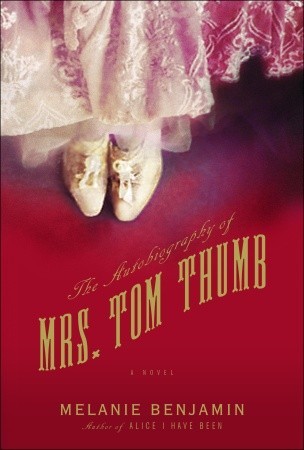
The Autobiography of Mrs. Tom Thumb is a historical fiction novel based on the real life of Lavinia Bump Warren, an extraordinarily small person.

Lavinia participated in P.T. Barnum’s museum, traveling acts and circus, becoming one of the most popular acts of her era. Her wedding to Charles Stratton, another little person, was such a huge story that it bumped the Civil War from the front pages for a time.

Melanie Benjamin speculates at the end of the book that Lavinia had a pituitary gland problem and today would receive appropriate treatment. But, in the 1800s, no such treatment existed.

As a journalist, I appreciated the actual stories and newspaper headlines from the time period. It shows just how far we’ve come and how the public appetite for sensational stories has never changed.

Benjamin writes a heroine that is so easy to love. Lavinia is different but determined, small and brave. She doesn’t let her size define her and always seeks to be a proper lady, even when those around her aren’t minding their manners.

This book was sad in that, because of her deformity, Lavinia had very few options. Early in her life, she felt as if she either had to display herself as a freak or depend upon her family in a backwater town where nothing ever happened.

In some ways, she never fit in to a world that was simply too big for her. I can’t imagine how difficult that must have been.

Photo by RODNAE Productions on Pexels.com

But in other ways, Lavinia traveled more than any woman of her era would be expected to. She experienced a world beyond the reach of all but the ultra-rich and privileged. There was a high price to be paid for it, but I don’t think Lavinia would have had it any other way.

Benjamin wrote in an unlikely twist in the story that I thought was unnecessary and it soured the ending of the book for me. I understand why she did it but it felt like a bridge too far, especially when the author admits at the end that there was nothing in the historical record to support her creative decision.

The Autobiography of Mrs. Tom Thumb becomes repetitive in Lavinia’s traveling years. I felt as if I was reading the same thing over and over again.

But I did learn a great deal about Lavinia Warren, Charles Stratton and P.T. Barnum. How extraordinary that these people even existed. It seems like a piece of American history that has been all but forgotten.

Recommended for readers who enjoy historical fiction novels about people overcoming adversity and about heroines who won’t give up, no matter the odds or size of the problem.

Thanks for reading!