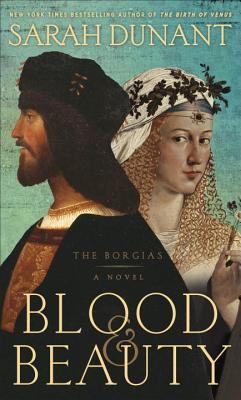
Blood & Beauty: The Borgias by Sarah Dunant

Blood & Beauty: The Borgias by Sarah Dunant

A historical fiction novel about one of the most politically savvy families of all time.

Oh, the Borgias. What an extraordinary family and what a story.

Painting by John Collier“A glass of wine with Caesar Borgia”

Just when you think that things couldn’t become more scandalous, they do.

A Pope with a family? Check. Forbidden attraction between siblings? Check. Poisonings and intrigue and, dare I say, murder?

The attraction of this story is not just the crazy Borgias, it’s also Rome itself.

All roads lead to it, the center of power in Europe for centuries. One never really “rules” Rome, you just ride your wave of popularity until it crashes.
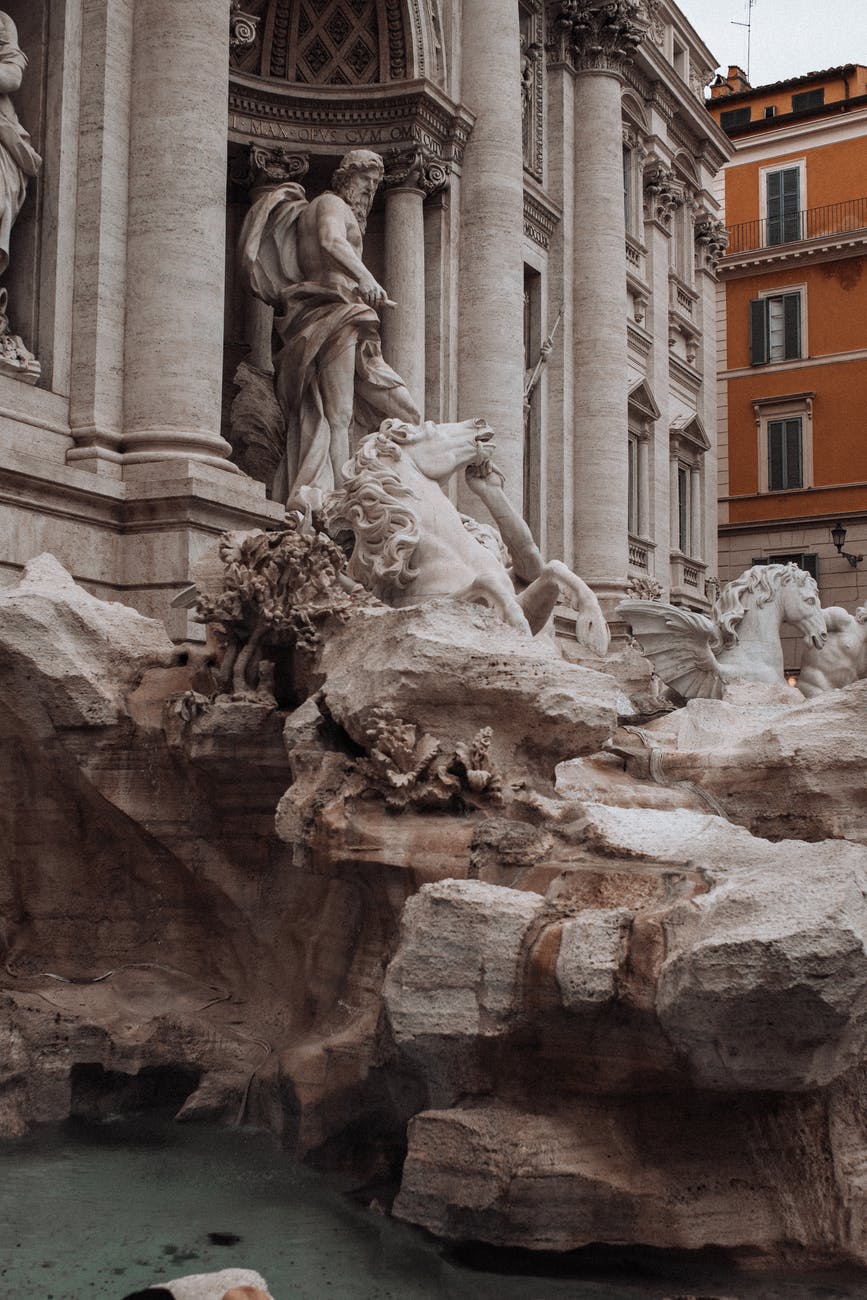
Photo by Rachel Claire on Pexels.com

This city was the perfect backdrop to showcase the political acumen of Alexander VI, Cesare Borgias, and, eventually, Lucrezia Borgias.

Blood & Beauty contains political as well as personal drama, the shifting alliances of kings, queens, and city-states, and some very unique family dynamics.

Sarah Dunant ranks among my favorite historical fiction authors. Her stories are well-researched and never dull.

Photo by Suzy Hazelwood on Pexels.com

Somehow, she distills the legend to find the human being within.

If you enjoy historical fiction about the Renaissance and Rome, it doesn’t get much better than this.

Thanks for reading!

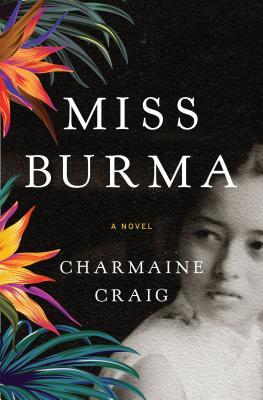
Miss Burma by Charmaine Craig

Miss Burma by Charmaine Craig

A layered and subtle historical fiction about a family in Burma and how they make it through all sorts of terrible things that happen there.

This is an incredibly dark book based on the true family history of Charmaine Craig. My book club had a tough time discussing it.

“Your problem is that you believe in right and wrong. Don’t you know evil will find you no matter what?” pg 11.

Photo by Charly Severino on Pexels.com

First of all, the introductory portion doesn’t make sense until the last half of the book. The pacing is glacially slow. A few of our club members couldn’t make it through the first couple of chapters.

Secondly, the constant warring and torture of innocents by the conquering forces is really difficult to read.

“We welcomed them because we’d been persecuted by the Burmans for centuries, we’d been their slaves – our villages perpetually attacked, our people perpetually preyed upon, stripped of everything from our clothing to our lives.” pg 37.

It is an important history, certainly, but the darkness of it made me feel sick.

A third problem club members had with Miss Burma is it feels disjointed.

Photo by Anthony Beck on Pexels.com

At first, readers thought Khin and Benny were the focus of the book. But then, the point of view drifted around to Louisa, their beautiful daughter, and her story took over.

We must find a way to rejoice in our circumstances. We must find a way to do more than endure.” pg 145

Basically, the Karen are an ethnic minority in Burma, now Myanmar. For centuries, the Karen have been enslaved by the Burmese. The underlying story is about how the Karen tried to unite against the ruling government to create a federation.

“Our modesty that runs so deep it is almost self-annihilating. But now.. our relative invisibility strikes me as very sad. … If you stand for a moment behind their eyes- behind the eyes of anyone for whom modesty is not an ultimate virtue- we appear to value our lives less than they do.” pg 168

Photo by AM wendy on Pexels.com

Against this background, the family of Khin and Benny tries to survive and do what they believe is right.

This story is full of flawed characters and whole passages where most of the action takes place in people’s minds.

There is fairly graphic torture, rape and violence. If any of those are triggers for you, beware.

Recommended for patient readers and those who can handle a very dark history. The book club certainly learned a lot about Burma from this book. And bullets still fly in Myanmar today.

Thanks for reading!

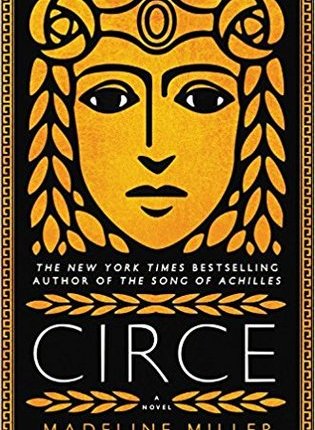
Circe by Madeline Miller

Circe by Madeline Miller

Circe is an epic fantasy that reads like a historical fiction novel, based on the Greek mythology of the witch of Aiaia, the daugher of a Titan- Circe.

I minored in the classics at university and one of my favorite classes was mythology. I love taking apart stories that mirror humanity’s foibles and try to explain the origin of some of life’s harder truths.

Photo by jimmy teoh on Pexels.com

In the war between the Titans and the Olympians, a creation story that could be interpreted to mean the ascension of modern culture over more ancient superstitions, the Olympians triumph. But the Titans are not wiped off the face of the earth.

“Beneath the smooth, familiar face of things is another that waits to tear the world in two.” loc 272, ebook.

Some of the Titans’ powerful and mysterious children play central roles in the great mythological stories. Circe is one of those.

“They called me nymph, assuming I would be like my mother and aunts and cousins. Least of the lesser goddesses, our powers were so modest they could scarcely ensure our eternities. We spoke to fish and nurtured flowers, coaxed drops from the clouds or salt from the waves.” loc 102, ebook.

Photo by ArtHouse Studio on Pexels.com

She began her life in the halls of Helios, a Titanic deity who was a god of the sun, much like Apollo.

“At my father’s feet, the whole world was made of gold. The light came from everywhere at once, his yellow skin, his lambent eyes, the bronze flashing of his hair. His flesh was as hot as a brazier, and I pressed as close as he would let me, like a lizard to noonday rocks.” loc 158, ebook.

Compared to her great father and gorgeous, manipulative mother, Circe was nothing- one of the many faceless children of the greater gods, whose future was destined to be a wife and then mother to more godlings.

Circe’s future is not as simple as all that.

She, and her brothers and sister, have a unique power that no other gods possess. They have the ability to harness the plants and power of the earth, to create potions and salves with miraculous effects. They call it: pharmakeia.

Photo by Daria Shevtsova on Pexels.com

Modern readers can recognize the roots of the word “pharmacy” in the name.

“Pharmakeia, such arts are called, for they deal in pharmaka, those herbs with the power to work changes upon the world, both those sprung from the blood of gods, as well as those which grow common upon the earth.” loc 909.

It is a power no one understands and, because of its mysteriousness, it makes even the gods afraid.

There is more to Circe’s story than pharmakeia. She also interacts with Hermes, Daedalus and Odysseus. She creates a god and a monster. She shakes the foundation of the oceans.

Photo by Kevin Menajang on Pexels.com

Highly recommended for those who enjoy mythology or historical fiction. It will transport you to a world where gods and goddesses walk the earth and humanity can do nothing but tremble in their shadows.

Thank you to NetGalley and Little, Brown and Company for an advance, digital copy of this book.

Thanks for reading!

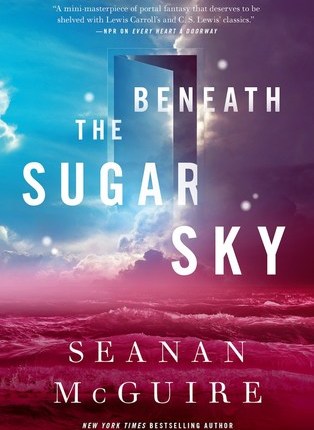
Beneath the Sugar Sky (Wayward Children, #3) by Seanan McGuire

Beneath the Sugar Sky (Wayward Children, #3) by Seanan McGuire

Beneath the Sugar Sky takes readers back to the world of Eleanor West’s Home for Wayward Children, but not to a moment in time before the events of the first book. It is a sequel rather than a prequel.

I found it strangely satisfying in a way that Down Among the Sticks and Bones was not.

“They can be hard for their families to understand, those returned, used-up miracle children. They sound like liars to people who never had a doorway of their own.” pg 7, ebook.

And instead of just one world other than our own, readers get to experience a couple in Beneath the Sugar Sky.

Photo by ArtHouse Studio on Pexels.com

The trouble begins when someone from a different world shows up in the everyday world and asks to see her mother. The thing is, her mother died in the real world some time ago.

The world that the girl comes from doesn’t pretend to follow time the normal way- it’s a nonsense world. Now, this visitor is disappearing and needs help from some of the residents of Eleanor West’s Home before she vanishes altogether.

“That makes no sense at all,” she said. “That means it may well work. Go, my darlings, and bring your lost and shattered sister home.” pg 29, ebook.

Photo by Yousaf Abbasi on Pexels.com

A new character in this book is Cora, a girl who went to a water world. She has an insightful way of viewing reality and seems able to see to the heart of people with little trouble: “They always had their shoes, their scissors, whatever talisman they wanted to have to hand when their doorways reappeared and they had to make the choice to stay or go.” pg 19, ebook.

Kade, Christopher and Nancy are in this book as well. “So many different doors, and yet here you are, all of you together, trying to accomplish the impossible.” pg 40, ebook.

Photo by Antonio Dillard on Pexels.com

I recommend reading Every Heart a Doorway before this book, to get the most enjoyment out of it. It’s perfect for young adults or readers who like fairy tales.

Thanks for reading!

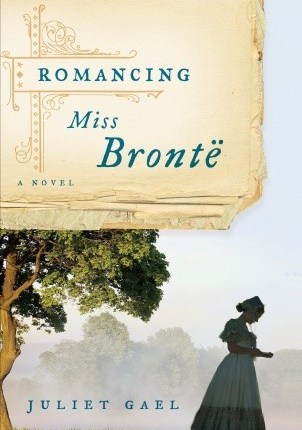
Romancing Miss Brontë by Juliet Gael

Romancing Miss Brontë by Juliet Gael

Warning: minor spoilers ahead if you don’t know the history of the Brontë family. Read with caution.

Romancing Miss Bronte is a disappointing historical fiction about Charlotte Brontë, her sisters Emily and Ann, and how they came from obscurity to write some of the most enduring fiction the West has known.

The first part of this story was the best. The reader gets a unique glimpse into the minds of the Brontës, what their lives were probably like and how unfortunate their brother’s existence turned out to be.

Photo by Suzy Hazelwood on Pexels.com

I loved hearing Juliet Gael’s vision of their character and personality quirks.

The second half of the book, focused primarily on Charlotte and her relationship with Arthur, was a drag.

Up until that point, the women were surprisingly self sufficient, considering the times in which they lived. Yes, they coddled their alcoholic and opium-addicted brother. Yes, they indulged the whims of their ailing father, but for the most part, they acted how they pleased.

Once Arthur enters her life, Charlotte centers every action around him. He tells her who she can write. He controls their social schedule.

The book enters a repetitive loop: Charlotte does something Arthur doesn’t like, he reprimands her, she writes her friend a letter about how annoying it is but she simply adores her husband so it’s ok… and repeat.

Photo by cottonbro on Pexels.com

This was probably the reality of her situation but it sucked. I can’t imagine that I would have been happy living like that. I don’t believe she was either.

The cringe-inducing letters Gael describes in the story actually exist. I also think that if I was a sensitive and reclusive person like Charlotte Brontë, having my personal letters published after my death would be a nightmare situation.

Charlotte and her sisters were forced to live a sub-par existence because they were women.

Traditional roles for women left so little room for living. It’s astonishing that the Brontës were able to write anything at all, when you consider when they lived and the disadvantages to their station.

Photo by Felix Mittermeier on Pexels.com

They were poor, lived in the middle of nowhere and had no one they could rely on except themselves.

Add to the mix a dose of religious guilt and social expectations… again, the world is fortunate to have their stories.

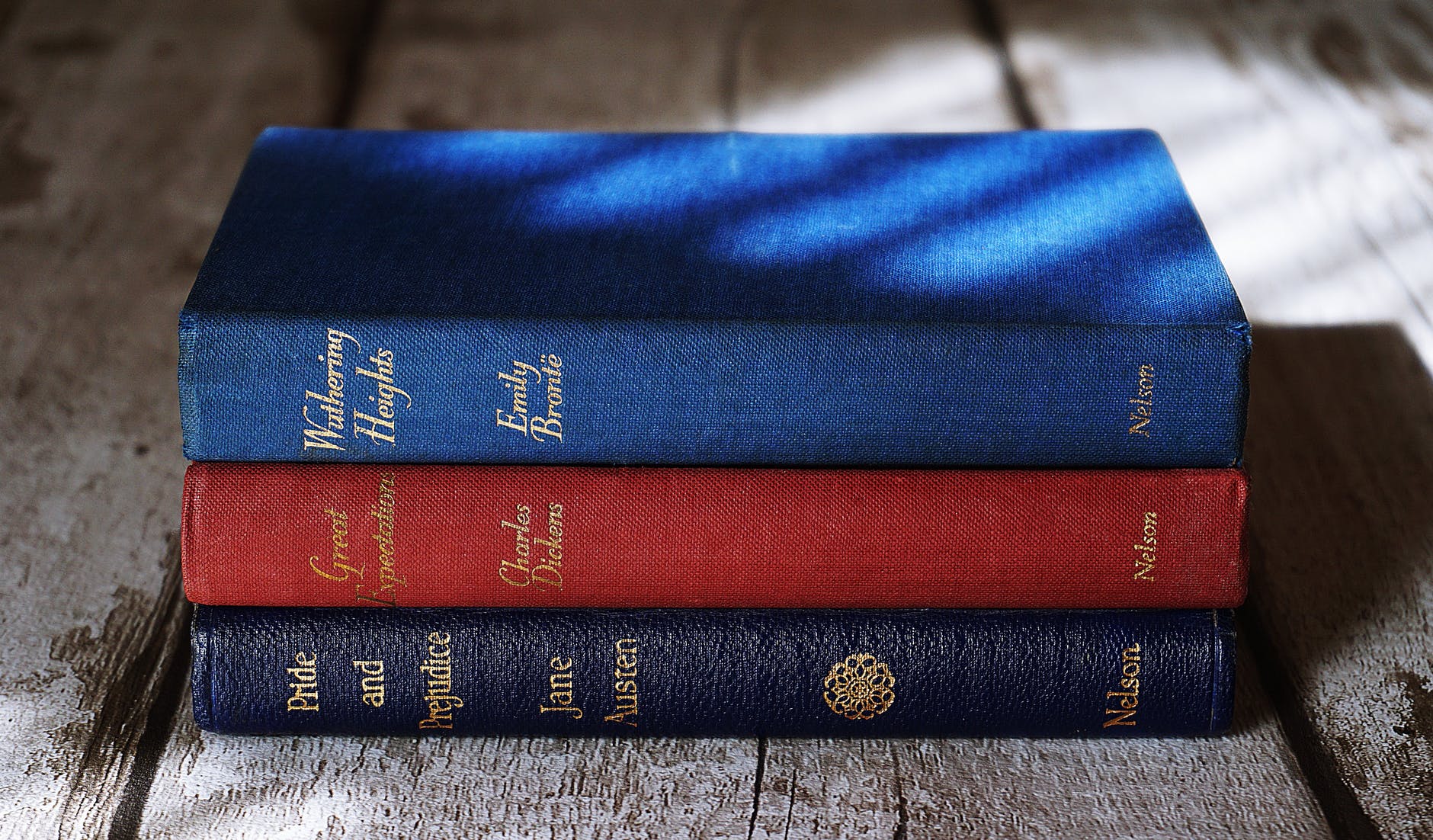
I suggest reading Jane Eyre or Wuthering Heights instead of this.

Thanks for reading!

The Lady Who Plucked Red Flowers Beneath the Queen’s Window by Rachel Swirsky

The Lady Who Plucked Red Flowers Beneath the Queen’s Window by Rachel Swirsky

The Lady Who Plucked Red Flowers Beneath the Queen’s Windowis a fantasy short story about how much one’s world view is shaped by culture, the time period in which one lives, and love.

The main character, Naeva, is a powerful magician. She serves the queen of a matriarchal society to the best of her capability.

Naeva’s love for the queen is used to trap her soul, so she can be summoned from beyond the grave to serve forever.

Photo by Maria Orlova on Pexels.com

“The Queen needs you, Naeva. Don’t you love her?” Love: the word caught me like a thread on a bramble. Oh, yes. I loved the queen. My will weakened, and I tumbled out of my body. Cold crystal drew me in like a great mouth, inhaling.

This binding is problematic, because the queen doesn’t live forever.

I was captivated by this story. It surprised me because short stories aren’t usually my thing.

During a bout of insomnia one night, I read The Lady Who Plucked Red Flowers in one sitting.

You can read it too, if you’d like. It is available in its entirety online: https://subterraneanpress.com/magazin…

There are subtleties in the story about feminine and masculine power, but also mankind’s penchant for judging current culture as superior to all others that have ever or will ever exist.

Photo by Teddy Yang on Pexels.com

“It was becoming increasingly clear that this woman viewed me as a relic. Indignation simmered; I was not an urn, half-buried in the desert. Yet, in a way, I was.”

Naeva suffers not only because she’s trapped and cannot die, but also because her matriarchal culture is left behind in the depths of time.

“I had never before been aware of the time that I spent under the earth, but as the years between summons stretched, I began to feel vague sensations: swatches of grey and white along with muted, indefinable pain.”

Photo by Aistu0117 Sveikataitu0117 on Pexels.com

She changes, but reluctantly and slowly. And love has as large a role in shaping her development as it did in her entrapment.

It is a wonderful fairy tale. I highly recommend it for sleepless nights or a boring lunch hour.

Thanks for reading!

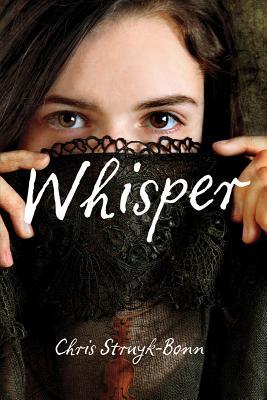
Whisper by Chris Struyk-Bonn

Whisper by Chris Struyk-Bonn

Whisper has a cleft palate. In this young adult dystopian tale, she and other deformed children are cast out of society because of their abnormalities.

This story is about how she survives and holds her new family, made up of other rejected children, together despite obstacles at every turn.

Whisper was a far darker story than I expected.

Photo by luiisrtz on Pexels.com

Terrible things kept happening to Whisper and I kept telling myself that it would turn around soon. And it didn’t.

If she wasn’t running from someone who was trying to harm her, she was freezing or starving. She’d get a modicum of security and then lose it.

I was really cheering for Whisper to embrace her special abilities, but she never seems to manage it.

Honestly, I was disappointed by the heroine’s decisions at multiple times in this story.

As one of the children tells Whisper: “You will never go far in this world if you don’t know how to rescue yourself.” And, in my opinion, she never did what was best for her own survival.

The author describes the setting as “near future” but if she had taken out the cars, refrigerators, and indoor plumbing, it could just as easily have been the recent past.

Photo by Stefan Stefancik on Pexels.com

It wasn’t too long ago that superstitious people believed birth defects marked someone who would ruin the crops, bring bad luck, or comets shooting across the sky spelled misfortune. In fact, in some parts of the world, this type of thinking still reigns.

I think it’s human nature to try to explain the unexplained and to condemn others for their differences, the physical differences being the easiest to pick out. That doesn’t make it right.

My main complaint about this read was the repetitiousness. After short bursts of frantic activity, Whisper’s life would settle into a routine that was really uninteresting.

If I had to read about her messing up the homemade bread one more time, I was going to put the book down.

Photo by Geraud pfeiffer on Pexels.com

Maybe the author was trying to get the reader invested in the process, but I simply wanted the story to move on. I was already interested in Whisper- I was just over the baking and cleaning.

The same feeling hit me during the multiple music lessons and the days spent playing violin on the streets for change. I guess I prefer my dystopian novels with more explosive action and less daily slogging.

Fans of How I Live Now or Gated may enjoy the pacing and story line of Whisper. As for me, I’m headed back to more action-oriented dystopian reads.

I received a free copy of this book through Goodreads First Reads. Thanks for reading!

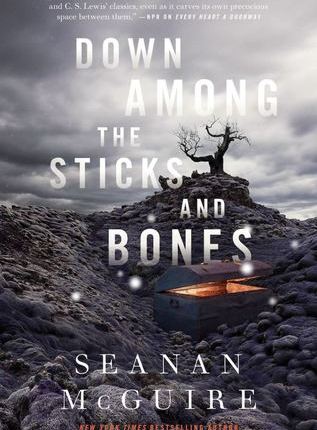
Down Among the Sticks and Bones (Wayward Children, #2) by Seanan McGuire

Down Among the Sticks and Bones (Wayward Children, #2) by Seanan McGuire

Down Among the Sticks and Bones is the back story of the twins, Jack and Jill, and the dark world they wandered through.

It takes place before the events of the first book in the series, Every Heart A Doorway.

The reader learns why the twins are so different and how their strange and disturbing other world opened its door to them in the first place.

The majority of the problem was Jack and Jill’s parents. They had children for reasons other than love.

The father wanted to children to move up in his career. The mother wanted to improve her status with her group of female friends: “A person may look at someone else’s child and see only the surface, the shiny shoes or the perfect curls. They do not see the tears and the tantrums, the late nights, the sleepless hours, the worry. They do not even see the love, not really.” pg 13.

Photo by RODNAE Productions on Pexels.com

So, instead of loving Jack and Jill for themselves, their parents instead seek to mold them into a perfect of ideal of what they thought their children should be.

The one bright spot in the twin’s childhood is their grandmother, Louise Wolcott. Chester and Serena, Jack and Jill’s parents, call her in desperation after the birth of the children because they have no idea what they’re doing or how to balance their careers while raising children.

Louise steps in without complaint. She is quite easily my favorite character in the book: “There’s nothing tiring about caring for children you love like your own,” said Louise… pg 34.

Despite Grandmother Louise’s best efforts, Jack and Jill end up fairly emotionally stunted from their parents’ dysfunction. The twin’s discovery of another world leads to some hard lessons about love, belonging and consequences.

“The Moors were beautiful in their own way, and if their beauty was the quiet sort that required time and introspection to be seen, well, there was nothing wrong with that. The best beauty was the sort that took some seeking.” pg 171.

Photo by Lachlan Ross on Pexels.com

I enjoyed this story. But, I think it should have been combined with Every Heart A Doorway.

I felt like so much of the plot of this book was given away in the first, by what happens. It would have been more enjoyable to learn about Jack and Jill’s Moors in flashbacks rather than a separate story.

That being said, it is a good enough young adult tale for what it is. The fairy tale quality to it is undeniable.

Recommended for readers who like a dark undercurrent of emotion, coming-of-age and self knowledge in their fairy tales. If you liked this book, you may also enjoy A Monster Calls.

One may be better served reading this book before Every Heart A Doorway. I think, if I had read this first, I may have enjoyed it more.

Thanks for reading!

Where the Rock Splits the Sky by Philip Webb

Where the Rock Splits the Sky by Philip Webb

Where the Rock Splits the Sky is the story of Megan, a girl who has lost both her father and mother and who lives on the edge of a strange, haunted area called “The Zone.” In this part of the world, people are driven mad by unknown forces and the world doesn’t follow the normal rules of physics.

The Earth itself has stopped spinning because it was invaded by an alien species that the surviving humans call “Visitors.” One day, Megan is told that her father is still alive and that he is in the Zone.

Photo by Pixabay on Pexels.com

She has no choice but to go find him. And the adventure begins.

This story was a surreal, heart-pounding adventure from start to finish.

I loved the dystopian aspect of it- the aliens are truly terrifying because the reader isn’t sure what they can or can’t do. It’s not even clear from the start who is or isn’t an alien.

The guessing game makes for some exciting tension. That same unknown quality is extended to the “Zone” itself so that the story at any moment could pass from normal to totally bonkers.

Photo by Darius Krause on Pexels.com

That uncertainty makes this a great read, in my mind.

I did have some complaints- I wanted more to happen during the final, climatic scene. It felt like after such a great build up that things ended too quickly and neatly. But I suppose one can’t have it all.

Also, this book required a great deal of suspension of belief. I mean, for goodness sake, the world has stopped spinning. That’s some fairly serious physics law breaking. And that is assumed from the start.

Photo by Harry Cooke on Pexels.com

This novel reminded me of The Gunslinger in that both have western themes and some horror elements to it. This is definitely a more young adult version while Stephen King’s novel was written for adults. It’s also a lot shorter

With those caveats in mind, fans of that series may enjoy this one. Also, anyone who likes to read young adult, dystopian books might enjoy Where the Rock Splits the Sky. It’s an interesting addition to the genre.

I received a free copy of this book through Goodreads First Reads.

Thanks for reading!