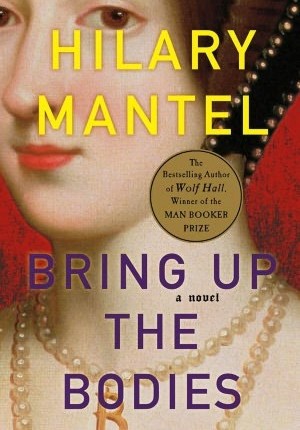
Bring Up the Bodies by Hilary Mantel

Bring Up the Bodies by Hilary Mantel

Hilary Mantel’s brilliant and Man Booker Prize-winning books about Thomas Cromwell continue with Bring Up the Bodies.

Cromwell is the right-hand man of Henry the VIII. His masterful manipulation of people and circumstances to make the world as Henry wants it has brought Cromwell wealth and power.

Getting Anne Boleyn on the throne was a struggle. Now he has to get her off of it without losing his own head in the process.

Mantel doesn’t just tell history, she makes it come alive.

Photo by Daria Shevtsova on Pexels.com

In one scene I can’t get out of my head: Henry has a temper tantrum because of the Spanish ambassador’s continued disrespect towards his new wife, Anne, and the repeated requests from the Spanish crown for money owed. The king blows his top at Cromwell and screams in his face.

He says he believes Cromwell has always manipulated him and laughed at him. But he is king and he will not be steered.

And, even though I knew the history, I thought for a moment Cromwell was going to be taken to the Tower in that instant.

Instead, he quietly apologizes to the king and dismisses himself, then goes to a different room to take a drink. With shaking hands, Cromwell spills a drop of the wine on himself and sits there, contemplating the small stain on his shirt.

Photo by Polina Tankilevitch on Pexels.com

And I said to myself, “Mantel is a genius.”

In that passage, it was as if I was in that room, living the moment. She makes you forget you’re reading a book. It’s so immersive. It’s almost magical.

Cromwell’s efforts to collect evidence against Queen Anne fills much of this book. As he tightens his net around her, you can almost feel it tighten around yourself.

Cromwell jokes with his sworn men to ease some of the tension, but it is always there, buzzing beneath the surface.

Highly recommended for historical fiction readers. Bring Up the Bodies is one of the best books I’ve read this year.
Photo by Rachel Claire on Pexels.com

To see my review of Mantel’s Wolf Hall, click here.

If you enjoyed Wolf Hall or Bring Up The Bodies, you may also enjoy Elizabeth I by Margaret George.

Thanks for reading!

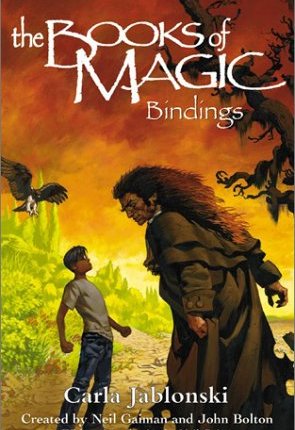
Bindings (The Books of Magic, #2) by Carla Jablonski

Bindings (The Books of Magic, #2) by Carla Jablonski

Faerie is slowly dying from a mysterious wasting disease. Tim Hunter, the new and as-yet-untrained magician, may be the only one who can save it.

But could Timothy Hunter, who briefly visited the realm of the Fair Folk, be the child of the prophecy?” pg 2

Photo by Tom Fisk on Pexels.com

You don’t have to read the previous entry in the series about Timothy to understand this stand-alone story. Carla Jablonski does a good job recapping what has gone on before.

“Throughout all the journeys, it seemed like there were always people trying to kill him or take his magic.” pg 12

My beef with this book is, even though she uses Neil Gaiman’s characters, she doesn’t write with the magic of Gaiman.

The plot is incredibly straight-forward, the bad guys are sadly predictable and it just doesn’t sparkle.

Photo by Maria Orlova on Pexels.com

Even Tamlin, the man who went to Faerie long ago and fell in love with its Queen, isn’t as complex as I wish he would be.

Tamlin knew that to the Fair Folk, as something was, it always would be. Nothing ever changed. The ability to see reality and to change was man’s magic. My magic, Tamlin thought.” pg 42

It’s not her fault. Jablonski has written a thoughtful young adult novel about reality not always being what it appears to be and explaining some of Tim’s origins.

She’s just not Neil Gaiman. There’s nothing wrong with that, but if you’re going to write someone’s characters, you need to embody who they are.

Now that he was in a real-life fairy tale, complete with its own monster, he realized how unlikely those stories really were.” pg 111

Photo by Johannes Plenio on Pexels.com

Read this entry in the series if you’re a completionist. Otherwise, may I recommend The Sleeper and the Spindle.

See my reviews of the first entry of The Books of Magic on my blog or the third entry in the series, Free Country: A Tale of The Children’s Crusade.

Thanks for reading!

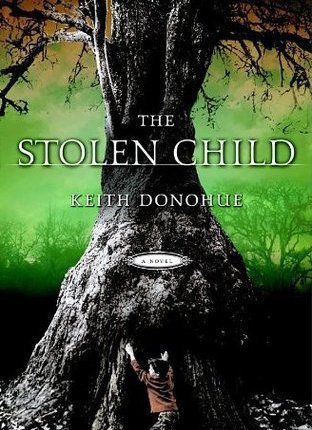
The Stolen Child by Keith Donohue

The Stolen Child by Keith Donohue

If you must give me a name, call me hobgoblin. Or better yet, I am a changeling- a word that describes within its own name what we are bound and intended to do. We kidnap a human child and replace him or her with one of our own.” pg 7, ebook.

The Stolen Child is the story of a changeling and the boy whose place he took, Henry Day.

The chapters alternate between the real Henry Day and the false Henry Day. It is a captivating story about magic, family and belonging.

Photo by Gary Barnes on Pexels.com

“This is my confession, too long delayed, which I have been afraid to make, and only now reveal because of the passing dangers to my own son. We change. I have changed.”

It also addresses the issues of the modern world and how technology and humanity has driven nature into corners.

The changelings are basically immortal children (but they can die through accidents) who live in the woods until their turn comes to rejoin the human world. Years before, they were all ripped from their families and made a part of the same group their replacement just deserted.

Their world is brutal, cold and always on the verge of collapse. One of their only rules is they don’t discuss a new changeling’s prior life during his new one.

Photo by Stijn Dijkstra on Pexels.com

The adjustment period from human to changeling is difficult enough without keeping the memories alive through the long years of their unchanging childhood.

But things aren’t much easier on the changelings who take the child’s place. If they are discovered, in the past, the changelings have been killed or their family members have gone mad from the strain.

They must carry a secret with them for the rest of their lives. It is as a lonely an existence as the changeling group separated from humanity in the forest.

Photo by ArtHouse Studio on Pexels.com

I enjoyed this story. Keith Donohue has a way with making the fantastical seem real and the miraculous into the mundane.

But that ending. It didn’t complete the excellent characters and storyline Donohue had constructed, in my mind.

Recommended for those who like to read modern fairy tales. Just don’t expect a life-changing finale.

Thanks for reading!

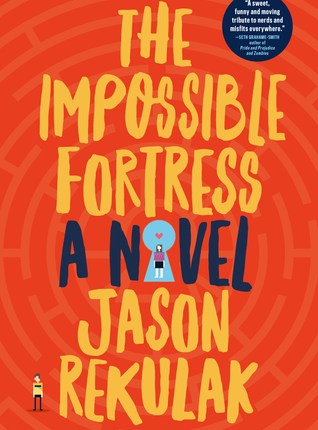
The Impossible Fortress by Jason Rekulak

The Impossible Fortress by Jason Rekulak

A cute coming-of-age novel about a boy, a computer, a Playboy magazine and first love.

Billy and his awkward friends are in love with Vanna White, the girl-next-door who flips the letters on Wheel of Fortune. When some pictures of Vanna appear in Playboy, they know they have to get that magazine, at any cost.

One problem, none of them are even close to eighteen years old.

This was the moment of truth- the moment I’d rehearsed with Alf and Clark again and again. They’d coached me to keep my pitch exactly the same- to speak the words like I used them all the time: “Just some Tic Tacs,” I said, “And a Playboy.” pg 29

Photo by Athena on Pexels.com

Part of this story is enjoying the humor and innocence of the boys in an era before the internet. The other part of this story, the one that occupied my book club, was reminiscing about technology and early computers.

We spent most of the time at book club talking about what our first computers were, who knew coding, and what were our favorite early games.

“If I was serious about Planet Will Software, I couldn’t work on a Commodore 64 much longer. Newer computers offered more memory and better graphics, and C64s would be obsolete in another year or two. I needed to upgrade to the latest technology, and the contest was my best chance to do it.” pg 43

Photo by Soumil Kumar on Pexels.com

That part of the evening seemed to entertain the older members of our book club more than me. It’s not that I didn’t have an early computer, I did, I was more interested in the coming-of-age part of this story and the heist-type scenarios the boys go through to get their dirty magazine.

I also enjoyed Billy’s struggles to understand Mary and the cute dynamic between them. I liked learning about his loyalty to his friends and his dreams for future computer programming greatness.

“I’m going to make video games,” I said. “I’m going to start my own company, and I’ll only hire cool people.” pg 81

Photo by Barik5ive on Pexels.com

If I ever start my own company, in whatever business sector that it may be (not computer programming), I’ll only hire cool people too.

Recommended for book clubs or if you just want a sweet, light read by the pool, The Impossible Fortress just may fit the bill.

Thanks for reading!

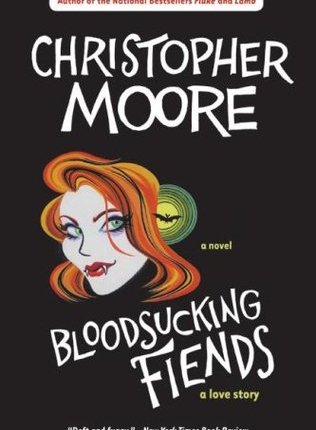
Bloodsucking Fiends (A Love Story, #1) by Christopher Moore

Bloodsucking Fiends (A Love Story, #1) by Christopher Moore

Jody was attacked by a man who bit her neck and left her for dead in an alleyway. She woke up a vampire. What is she going to do now?

“(Jody) was twenty-six and pretty in a way that made men want to tuck her into flannel sheets and kiss her on the forehead before leaving the room; cute but not beautiful.”

Photo by Mariah Green on Pexels.com

C. Thomas Flood wants to be an author, but where he comes from (Indiana) that’s not an acceptable trade for a man. He flees to San Francisco to “starve in the city.” After some misadventures with too many roommates and turkey bowling at the Safeway, he meets Jody and his life is never the same.

“Turkey bowing is not recognized by the NCAA or the Olympic Committee. There are no professional tournaments sponsored by the Poultry Farmers of America, and the footwear companies do not manufacture turkey bowling shoes. … Despite this lack of official recognition, the fine and noble tradition of ‘skidding the buzzard’ is practiced nightly by supermarket night crews all over the nation.”

Christopher Moore takes on the “vampire genre” and it’s not his best effort. If you’re going to read one of his books, I recommend Lamb: The Gospel According to Biff, Christ’s Childhood Pal.

It’s still ridiculous fictional literature, but I enjoyed the characters in Lamb more. In Blocksucking Fiends, everybody reads like one cliché after another.

Photo by cottonbro on Pexels.com

“In another time she would have called a girlfriend and spent the evening on the phone being comforted. She would have eaten a half gallon of ice cream and stayed up all night thinking about what she was going to do with her life. .. But that was another time, when she had been a person.”

And perhaps that was Moore’s point. It was as if he was mocking the sub-genre of vampire novels by his one-dimensional characters and thin plot.

Or maybe it is just a sub-par effort.

I don’t think I’ll be picking up the other books in this series.

Thanks for reading!

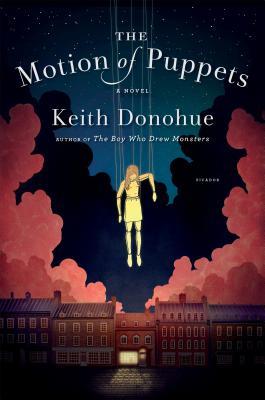
The Motion of Puppets by Keith Donohue

The Motion of Puppets by Keith Donohue

The Motion of Puppets is a clever play on an ancient Roman myth.

Orpheus was a musician who was so talented he could charm the birds from the sky and make the forest spirits weep. He madly loved a woman named Eurydice.

One day, she stepped on a serpent and died. Orpheus nearly lost his mind out of grief for her. So, he made his way to the underworld to beg Lord Hades for his bride.

Photo by Ekaterina on Pexels.com

Orpheus plays such sweet music that Persephone weeps and Hades allows the bard to take the shade of his dead wife back to the living world. There’s one condition, he can’t look back to see if she’s following.

I think we all know what happened then. This book takes that tragedy and places it in the modern world.

Everything is fine until Theo’s wife, Kay, goes missing. “She should be more responsible, should know that he would worry, but he could hear her laughing it off when she came home. You’ll give yourself ulcers, she’d say. You fret too much. I just went out for croissants.” pg 18

Photo by Daria Shevtsova on Pexels.com

He assumes she stumbled into the bed of one of her coworkers and is sleeping off a hangover. But the truth is much worse.

Kay has been transformed into something else, something magical and monstrous. “We lucky few can move about as long as the people are not watching. Midnight to first light, we are free.”pg 41

She is trapped in a metaphorical “underworld,” ruled over by an ancient power and his minions. “You cannot go home,” he said. “You cannot ever leave the Back Room.” pg 76

Even if Theo can figure out where she’s gone, how on earth will Kay go back to the shape she had before?

Keith Donohue has crafted a clever and haunting novel, putting a horror-tinged lens on the myth.

Photo by Irene Lasus on Pexels.com

“And, besides, let me tell you a secret: all art needs a little sadness in it, a small tragedy to balance the human comedy.” pg 111

Like Moulin Rouge, Baz Luhrmann’s musical take on Orpheus and Eurydice, the elements of the original story are in both works of art. I think The Motion of Puppets is more weird and other-worldly.

To truly enjoy this tale, you have to be willing to believe in magic.

Highly recommended for readers who like twists on mythology or not-too-terrifying horror stories.

If you like mythological re-tellings, you may also enjoy The Snow Child or Circe.

Thanks for reading!

Under the Harrow by Flynn Berry

Under the Harrow by Flynn Berry

Nora’s sister is dead. Through the fog of her grief, one thing is clear: Nora is going to find out who did it. And she’s going to make him pay.

The sky foams, like the spindrift of a huge unseen wave is bearing down on us. Who did this to you, I wonder…” pg 9.

Photo by u0410u043bu0435u043au0441u0430u043du0434u0440 u041fu0440u043eu043au043eu0444u044cu0435u0432 on Pexels.com

As she frantically tries to piece together the last days of Rachel, her sister’s life, Nora discovers things she never knew about her secretive sibling. There are some secrets that should have gone to the grave…

“He might have come in the house on one of the days he watched her. She left a key under the mat, he could have let himself in when she was at work or asleep.” pg 62

Like other thrillers, Under the Harrow slowly dishes out the clues to the mystery and introduces elements of danger just when the reader is starting to feel comfortable.

“There are too many people I don’t recognize, which I hadn’t expected. I thought I would be able to note any strangers. Whoever did it might come today.” pg 69

Photo by Max Flinterman on Pexels.com

It also flirts with the “unreliable narrator” trope. Not in an annoying, over-done way, but, just enough so it makes the reader question the bits of information we are receiving.

Is what we’re learning true or only true in Nora’s mind?

“I wanted both of us to forget what we had learned. For the past five years, I’ve pretended that we did forget, and ignored any signs otherwise.” pg 83.

Readers experience Nora passing through the stages of grief, sometimes making better choices than other times. She desperately misses her sister.

“It is so easy to think about her. Each memory links to another one, and time doesn’t seem to pass at all. I sit for hours remembering, until the first commuters, unbearably sad, begin to arrive, waiting in the darkness on the platform for the early train to London.” pg 111

Photo by Leon Warnking on Pexels.com

Recommended for readers who enjoy thrillers and quick reads. At less than 250 pages, you can finish this book in one afternoon. I did. 🙂

Thanks for reading!

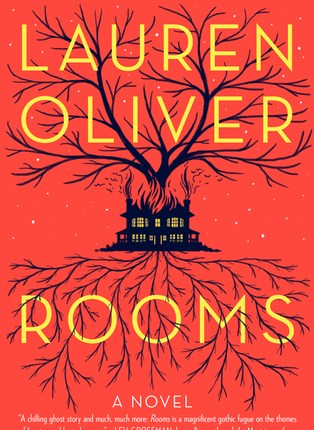
Rooms by Lauren Oliver

Rooms by Lauren Oliver

The patriarch of a family has recently died. The home he leaves behind is haunted and his family comes to divide up the remains of his earthly possessions.

Secrets are about to be revealed that concern both the living and the dead.

Rooms is part-mystery and part-family drama. My favorite characters were the ghosts and their interactions with each other.

“We expand into all five bedrooms. We hover in the light coming through the windows, with the dust; we spin, dizzy in the silence. We slide across empty dining room chairs, skate across the well-polished table, rub ourselves against the oriental carpets, curl up in the impressions of old footprints.” pg 12, ebook.

Photo by Meru Bi on Pexels.com

Though they are stuck together in the same house, the two ghosts couldn’t be more different. It makes for some amusing dialogue.

“I’ve never been one to sugarcoat the truth, and at least I’ve still got a sense of humor, even if I’m all splinters and dust everywhere else. That’s another thing that drives me crazy about Alice: no sense of humor at all.” pg 34, ebook.

The living characters of this story have some serious problems.

There’s Minna, a nymphomaniac with a young daughter. Her brother, Trenton, a perpetually insecure teen with suicidal tendencies. And their mother, Caroline, an aging alcoholic.

To make matters worse, Trenton’s starting to hear disembodied voices in the house.

“In the quiet, Trenton heard it again. A voice. Not quite a voice, though. More like a shape: a solidity and pattern to the normal creakings and stirrings of the house. It was the way he’d felt as a kid listening to the wind through the trees, thinking he could make sense out of it.” pg 52, ebook.

Photo by Skylar Kang on Pexels.com

As if they didn’t have enough problems.

“That’s what a broken heart looks like,” she said, and stood up. “Like a haunting.” pg 64, ebook.

Strangely enough, I recently read another book with a ghost’s point of view. The Last To See Me by M. Dressler is about a ghost trying to stay alive and solve the mystery of her previous life, before the person hunting her could discover it and use it to destroy her.

I compared The Last To See Me to this book and, I confess, I liked Dressler’s book more. Dressler has fewer characters, but she gives those few more depth.

Photo by Karolina Grabowska on Pexels.com

I felt like Lauren Oliver, though she did develop her characters, struggled a bit to fit all of the different story lines together. I did like the ending of Rooms.

Recommended for readers who like their mystery with a touch of the paranormal. Age appropriate for mature teens and up because of the sexual content, hints of abuse and suicide themes.

Thanks for reading!

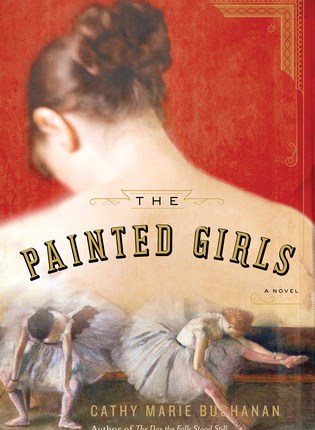
The Painted Girls by Cathy Marie Buchanan

The Painted Girls by Cathy Marie Buchanan

Three sisters live in poverty. Their father is dead and their mother is addicted to absinthe.

They have to find a way to feed themselves. The Paris Opera is an option, but ballet is expensive. There’s lessons and clothing to buy.

And whatever money they do manage to scrape together, there’s no guarantee their mother won’t use it to buy another bottle to feed her addiction.

Photo by Mizzu Cho on Pexels.com

The Painted Girls is about the haunting specter of abject poverty and addiction, but it is also about phrenology, a now-defunct science wherein experts believed they could judge the character of a person based on the shape of their head and face.

Marie, one of the girls in this story, frets because she has a low forehead and a jutting jaw. In her early religiously-based education, she was taught that outer beauty is a reflection of the soul. She fears her destiny is predetermined as hell bound because of her face.

Antoinette, the eldest of the sisters, wants to be adored and appreciated for how she holds her family together while her mother drugs herself into oblivion. But, she’s too aggressive and out-spoken to hold onto jobs for long and men can’t see past her outer shell to the aching heart within.

Plus, she sees herself as a hard worker, not a whore. Until she meets Émile Abadie and he takes her out for an evening of wine and oysters…

Photo by Elle Hughes on Pexels.com

The Painted Girls is about art, power and the blindness of love. It is also about sisters and the love family members hold for each other.

It is a work of historical fiction for girls who actually existed. Cathy Marie Buchanan takes the time to sort the real from the fictional at the end of the story.

I felt despair for the family in this book but also hope; that they could rise out of poverty despite everything holding them back.

Photo by Gustavo Tabosa on Pexels.com

Because, as society now knows, it doesn’t matter what you look like on the outside. What matters most is who you love and what you chose to do each day, each moment and for what reason.

This story has possible triggers for anyone who was sexually or physically abused as a child.

Thank you for reading.