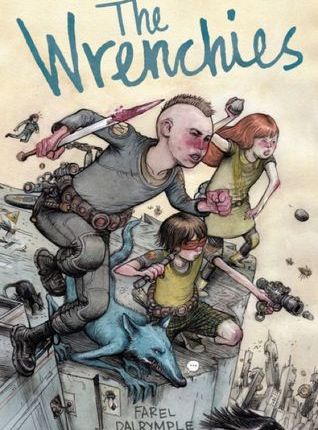
The Wrenchies by Farel Dalrymple

The Wrenchies by Farel Dalrymple

A gorgeously-drawn graphic novel that suffers from a bonkers plot and scrambled timeline.

I’ll try to give a brief summary here, but understand that this is gleaned from every part of the book — beginning, middle, end. Farel Dalrymple doesn’t present the story in a linear fashion, which is incredibly frustrating.

A boy and his brother enter a cave and are attacked by a demon-like creature called a shadowman. During the course of the attack, the demon messes with the first boy’s eyes and something radically shifts in his brain/destiny. After his brother saves him, the boy’s eyes are drawn to a medallion in the demon’s cave through which he sees/astral travels into a different dimension where he can view aspects of the future.

Photo by Francesco Ungaro on Pexels.com

This future is an apocalyptic world filled with these shadowmen and children who fight against them. All grownups in the world have become shadowmen. When a child reaches a certain age, they are “harvested” by the demons and become part of the problem. Something powerful and magical is fueling these shadowmen, but discovering and disabling that artifact is the large story arc so I won’t spoil it for you here.

Meanwhile, the boy-with-the-demon-altered-eyes is (I kid you not) kidnapped by aliens while his brother goes on to fight the shadowmen in the real world. Then there’s some character development about the children/warriors in the apocalyptic world, the involvement of a child from our time, a blind child who uses technology in a way that borders on magic, another child who actually uses magic… And, at one point, I think the author tries to add the difficulty he had writing the comic into the comic itself. 

Photo by Michael Herren on Pexels.com

I think that’s enough of a summary. Don’t you?

This isn’t a fairy tale story for teens though it seems to reach for a coming-of-age feel. The children use drugs to protect themselves from the mind-altering powers of the shadowmen and are constantly fighting bugs that pop out of the shadowmens’ heads after they kill them. It is a paranoid schizophrenic’s nightmare.

The Wrenches is violent and disturbing, rather like Peter Pan on acid with demons instead of pirates. And not in a good way.

I suppose if you just looked at the artwork and didn’t read it, you might enjoy this graphic novel. Honestly, the panels are stunning. Shame about the story tho.

Thanks for reading!

The 7½ Deaths of Evelyn Hardcastle by Stuart Turton

The 7½ Deaths of Evelyn Hardcastle by Stuart Turton

A science fiction twist on the mystery genre — each morning a man, who can’t even remember his own name, wakes up in a different body at a party in the country. Each night, the daughter of the hosts dies. It is his job to solve the mystery to break the cycle. But where to begin?

“My dear man, what on earth happened to you?” he asks, concern crumpling his brow. “Last I saw —” … “We must fetch the police,” I said, clutching his forearm. pg 7

Photo by Skylar Kang on Pexels.com

As the man lives the same day again and again, he discovers that he is not the only one trying to solve this mystery. And none of the people in the house are who they appear to be.

“A party?” she says, shaking her head. “Oh, my dear man, you really have no idea what’s happening here, do you?” pg 48

Any readers out there watch the television show, Quantum Leap, in the 80’s and 90’s? (It may be on Netflix now too, I don’t know.) I devoured that show every time it was on.

The television show is about a doctor named Sam Beckett who enters a time travel/quantum physics experiment and it goes terribly wrong. He finds himself stuck in the body of other people throughout history. He has to solve a mystery or right a wrong in each life and then he “leaps” into somebody else.

From the introduction to Quantum Leap“And so Dr. Beckett finds himself leaping from life to life, striving to put right what once went wrong and hoping each time that his next leap will be the leap home.”

This story is quite similar to a mystery version of that show.

“Somebody’s going to be murdered at the ball tonight. It won’t appear to be a murder, and so the murderer won’t be caught. Rectify that injustice and I’ll show you the way out.” pg 68

Photo by Pixabay on Pexels.com

I enjoyed it immensely. My only complaint is that the introduction is completely baffling until the author begins to drop clues about what’s going on. Other than that, prepare yourself for a twisting, complex ride through the same day, over and over again.

“Somebody wants me dead.” It feels strange to say it out loud, as though I’m calling fate down upon myself, but if I’m to survive until this evening, I’ll need to face down this fear.” pg 34

It doesn’t sound like very much fun, but similar to the film Groundhog Day, the reader soon discovers that much more goes on in one day than can be entirely lived through one viewpoint or life.

This book helped me ponder how complex life actually is. Imagine everything you’re missing by living each day in just one body.

Photo by Josh Sorenson on Pexels.com

Highly recommended for science fiction and mystery fans.

Thanks for reading!

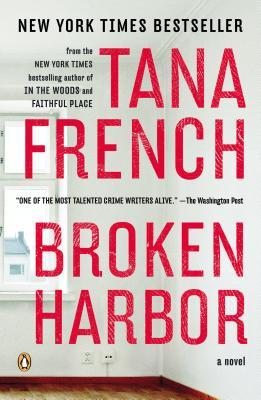
Broken Harbor (Dublin Murder Squad, #4) by Tana French

Broken Harbor (Dublin Murder Squad, #4) by Tana French

When a family is attacked and three of its members die, the Dublin Murder Squad activates Detective Michael “Scorcher” Kennedy to solve the case.

“Here’s what I’m trying to tell you: this case should have gone like clockwork. It should have ended up in the textbooks as a shining example of how to get everything right.” pg 13, ebook

Photo by Rachel Claire on Pexels.com

But things are never that simple in Tana French’s thrilling, mystery series.

I said, “This is a bad one.” O’Kelly laid one heavy palm on the call sheet, like he was holding it down. He said, “Husband, wife and two kids, stabbed in their own home. The wife’s headed for the hospital; it’s touch and go. The rest are dead.” pg 15, ebook.

Readers were introduced to Scorcher in the last book, as the tight-laced and slightly inept officer assigned to investigate the cold case that took place in Faithful Place. I didn’t like him much in that book and this one didn’t change my opinion.

“Probably he was thinking what a boring bollix I was. … Only teenagers think boring is bad. Adults, grown men and women who’ve been around the block a few times, know that boring is a gift straight from God.” pg 22, ebook.

Photo by Dimitry Anikin on Pexels.com

I thought he was kind of boring too.

Unlike the last books which mainly dealt with psychological tension caused by fear, Broken Harbor delves into the murky waters of mental illness.

“I don’t know what word you want me to use, but if this fella’s mental, then nobody has to go asking for trouble. He’s bringing it with him.” pg 81, ebook.

In addition to juggling his case, Scorcher is trying to protect his sister, who is bipolar and refuses to seek help. The family hides her illness from their neighbors because of shame and something that happened in their past.

Photo by Daria Shevtsova on Pexels.com

This plot point seemed outdated to me. Culture has shifted in the past decade so that mental illness is no longer something that is swept under the rug. Maybe this is different in Ireland than the States, but I kept getting hung up on that and it spoiled my enjoyment of what would have otherwise been another thrilling story.

Recommended for readers who enjoy psychological thrillers. Be aware of potential triggers for anyone who struggles with auditory hallucinations, suicidal tendencies and mood swings.

Thanks for reading!

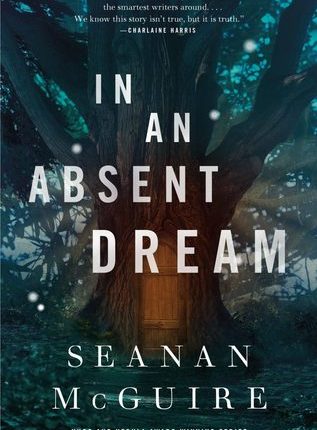
In an Absent Dream (Wayward Children, #4) by Seanan McGuire

In an Absent Dream (Wayward Children, #4) by Seanan McGuire

In this enjoyable entry in the Wayward Children series by Seanan McGuire, we learn the other-worldly wanderings of the person who calls herself Lundy and why she is the way she is.

Like the other children from this series, the world, in this case the Goblin Market, chose the child for specific reasons.

“Katherine’s remarkability took the form of a quiet self-assuredness, a conviction that as long as she followed the rules, she could find her way through any maze, pass cleanly through any storm.” pg 18

Photo by carboxaldehyde on Pexels.com

The most enjoyable aspect of this story is Lundy’s unrepentant bibliophilia. I think anyone who loves to read can empathize with much of her character.

“Mysteries in books were the best kind. The real world was absolutely full of boring mysteries, questions that never got answered and lost things that never got found. That wasn’t allowed, in books. In books, mysteries were always interesting and exciting, packed with daring and danger, and in the end, the good guys found the clues and the bad guys got their comeuppance.”pgs 27-28

But it is Lundy’s penchant for always trying to find a loophole in reality, which serves her well in reading and the Goblin Market, that eventually creates a problem.

“If she thought of this as a fairy tale that she had somehow stumbled into, she could handle it. She knew the rules of fairy tales. Most importantly of all, she knew that fairy tales ended with “happily ever after” and everything being just fine.” pg 48

Photo by Guilherme Rossi on Pexels.com

Like McGuire’s other entries in this series, nothing is simple in this tale and there are decisions far more complex than a child can easily make. That’s part of the brilliance of it. These worlds that the children stumble into are dangerous and sometimes innocent people get hurt.

“What’s the Goblin Market?” “It is a place where dreamers go when they don’t fit in with the dreams their homes think worth dreaming.” pgs 56-57

Highly recommended for readers who like their fairy tales told with just enough reality to make it feel real. The Wayward Children series is a treat.

My other reviews in the series:

Every Heart a Doorway

Down Among the Sticks and Bones

Beneath the Sugar Sky

Thanks for reading!

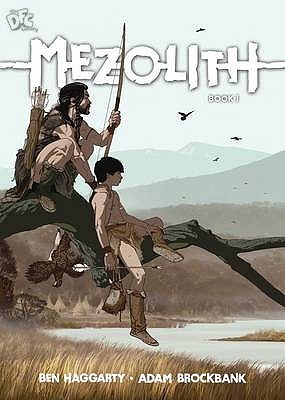
Mezolith by Ben Haggarty, Adam Brockbank

Mezolith by Ben Haggarty, Adam Brockbank

A beautifully illustrated coming-of-age tale about a boy who lives with his stone age tribe. Reality and mythology are mixed in his life to create something else, something that feels true though it couldn’t possibly be.

“Poika, at the heart of the world there is a cave and in that cave there are countless urgas, all sleeping… all dreaming… and when one dreams that a brother has been destroyed he wakes. Crawls into the world. Finds some humans and cries pitifully near them… until someone comes to care for him…”

Photo by Rozemarijn van Kampen on Pexels.com

How do you imagine that Stone Age peoples explained phenomena that scientists today have only begun to unravel? Where does love come from? What brings a fever or trouble? They explained these things by telling stories.

There’s the story of a man who fell in love with a woman who was actually a swan, so he travels to the end of the world to convince her father, the Swan King, to let her live with him.

There’s a demon who conceals itself as a baby and then in the night, if you take it into your tribe, it wakes and consumes everything in its path.

There’s a woman who should have died, but survived, and now has an uncanny relationship with crows and can see through their eyes… and more.

Photo by Pixabay on Pexels.com

It’s magical and strange, and Adam Brockbank has illustrated Ben Haggarty’s stories beautifully. It is easy to see why this was a Times pick for Best Graphic Novel.

Despite this excellence, only one library in my enormous, interconnected library system owned this book. I was surprised. It has appeal for both young adults and the young-at-heart. The violence in it isn’t overly graphic. The themes are appropriate and intriguing for reluctant readers.

If any librarians read this review, please consider buying a copy of Mezolith for your shelves. I think your patrons would enjoy it. I certainly did.

Thanks for reading!

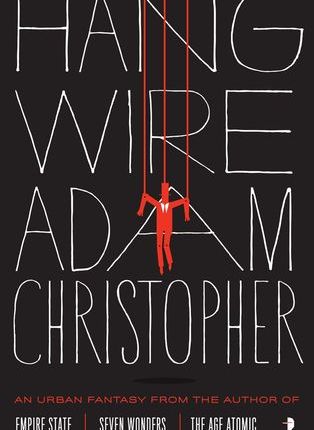
Hang Wire by Adam Christopher

Hang Wire by Adam Christopher

Hang Wire is an urban fantasy novel with a half dozen characters, some immortal, some every-day people, who come together to face a threat of a magnitude that humanity has never known.

In between flash backs to the villain setting up his ghastly scheme, readers get to follow the trail of a killer in San Francisco who garrotes his victims with thick cable and then hangs them by their necks in a grisly display. 

“When the second surge threw him up to the surface, and the third pulled him down, he knew something was wrong. When he surfaced again he could hear it, a moaning, like a deep wind howling through a canyon a million miles away.” pg 10

Photo by Alex Azabache on Pexels.com

It’s actually a rather complex plot between the flashbacks and the modern day with nearly constant back and forth skips in time, almost like waves in an ocean.

“You are the master of every situation.” pg 45

Which leads to my main complaint about this book. Similar to other urban fantasies I’ve had the privilege of reading in the past, it felt like the plot either needed to be simplified or fully fleshed out. By zipping over so much in so few pages, I felt like we only got part of the story.

“Of course it had happened before. Several times. San Francisco, like an unfortunate number of other cities across the United States, knew what it was like to have a serial killer in their midst.” pg 47

Photo by Pedro Figueras on Pexels.com

I guess the lesson I took from Hang Wire is that less is more when it comes to storytelling. And Hawaiian gods of death are incredibly cool.

Recommended for readers who don’t mind multiple flashbacks in their urban fantasy.

Thanks for reading!

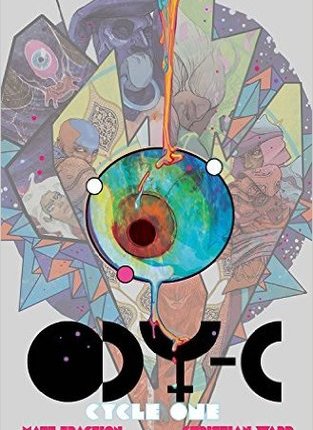
ODY-C: Cycle One by Matt Fraction

ODY-C: Cycle One by Matt Fraction

ODY-C is an incredibly strange, but beautiful graphic novel that takes the classic story line of Homer’s The Odyssey and flips it on its head.

“Here where so many great women died. Three ships leave Troiian space. Three adventures now start. Three great heroes begin their last odyssey.”

Photo by Edvin Richardson on Pexels.com

The book begins with the warriors returning home from an epic war in space. Instead of Helen of Troy, the war was fought over one of the only males in the galaxy, a latex-covered man named “He.”

Like in the old tale, the goddesses, children of Titans, overthrew their father, Kronos. In a twist in this world, they decided that all children grow up to throw down their parents and kill several generations of their own children. In order to ultimately control humanity, Zeus, a curvaceous, powerful woman, in an extraordinary display of power, destroys every male in existence. Eventually leading to the events I just described…

“Sing in us, Muse of Odyssia, witchjack and wanderer. Homeward bound. Warless at last.

Honestly, this book is hard to explain. I think “acid trip” might do it justice. The colors are vivid and the characters can be nightmarish, vulgar or gorgeous. The universe within this book is a science fiction-themed romp with monsters, goddesses, and all sorts of unbelievable settings — a world of bones wherein the child of a goddess forever seeks its prey, a type of space station fueled by a star in which a rare male child of a goddess endlessly mates with women and then kills them when they inevitably give birth to another female… and more.

“Down in the ruinous piles of viscera once her command and her crew, Odyssia recalibrates. Watching the Cyclops of Kylos make feast of the ODY-C’s girls, they know for the first time since Troiia did fall just what fear really feels like inside.”

Photo by Cosmopolitano Model on Pexels.com

It helps to be familiar with classic mythology because the authors don’t take the time to explain how the two are related. Or, I suppose, you could just jump into it blind. I felt like I enjoyed it more knowing both sets of stories.

I was fortunate that the library’s copy of this book included creator interviews in the back to give more context to this incredible work they’ve created.

“Between bearded-lady gods, gender-flipped heroines, gender-uncertain sebex and the odd character who keeps the same gender as their source, the ODY-C is less a gender-bent Odyssey than it is an Odyssey-flavored gender pretzel. Rather, ODY-C is an early next step into what comes after the gender flip: the unfurling of the gender spectrum both to comment on and to dismiss outright what we understand as gender roles and norms in classic literature.”

There is certainly a lot to unpack in here. And it is such a good story.

“The act of telling a story — especially of telling one well — turns your audience’s brain into a photocopy of your own, overriding any other stimuli that the listener is experiencing independently. When a story is so good you feel like you were actually there in the middle of it, it’s because, at least as far as your brain is concerned, you actually were.”

Photo by Engin Akyurt on Pexels.com

In addition to the Greek and Roman mythology, there’s shades of Scheherazade in the unfolding of the fate of He. Readers are also treated to a new twist on the foundation of Rome myth. At least, I think that’s what it is. With the level of creativity in here, it’s honestly hard to tell.

Recommended for readers who are looking for a graphic novel that is completely different from anything you’ve ever seen before. This is that book.

Thanks for reading!

The Testament of Loki (Loki, #2) by Joanne M. Harris

The Testament of Loki (Loki, #2) by Joanne M. Harris

“Once more the Wolf at Hel’s gate greets Asgard’s heroes, one by one. Battle rages, Worlds collide. Stars fall. Once more, Death has won.” pg 5

Ragnarok has come and gone. It didn’t end well for any of the gods, goddesses or, everyone’s favorite Chaos demon, Loki. He begins this story in the same place we left him in the last one — a dungeon in the world of Chaos, wishing and dreaming for light.

Photo by Athena on Pexels.com

What happens next is surprising and told in only the way that Joanne Harris can do it.

“Stories can do so many things. Build empires, topple kings. They can even raise the dead. I should know; they raised me.” pg 10

This wholly unique tale is more along the lines of what I had expected from The Gospel of Loki, but didn’t get. In the previous book, Harris rewrites Norse mythology in much the same way as it has always been told. I get it, she was giving us context. But, it wasn’t very much fun to read… just rehashing old stories.

In this entry, we see Loki in a whole new light with modern characters and his typical problems. It makes for a more cohesive and, in my opinion, entertaining story.

“You know, ‘crazy’ is such a negative word. I prefer ‘disordered.’ Order’s so dull. Chaos is where the party is.” pg 25

Photo by Anni Roenkae on Pexels.com

What has an immortal trickster god learned over his long lifetime? In The Gospel of Loki, he learned the only person he could trust in the world is himself. He learned what it was to be hated for what you were, rather than any actions that one may take. (Though, perhaps, he didn’t always behave in a way to endear himself to others. Not that Loki would ever admit that, of course.)

He learned that prophecies are tricky things and can be bent to be of use to those who deliver them.

“The Prophecy promised us new runes, new gods, a new beginning. And I mean to find those new runes with whatever resources this World can provide.” pg 68

Is it too late for Loki to learn new tricks?

It’s been awhile since I read Harris’ other fantasy series Runemarks, but from what little I can remember of it, I think this book leads perfectly into that one. Which is a curious thing, because Runemarks was published years before this.

Oh, that Joanne Harris. She’s so sneaky. I wonder if she planned that or was embracing a bit of chaos in her writing career. If there’s anything I’ve learned from this book and the last one, it’s that a little chaos can be a good thing.

Thanks for reading!

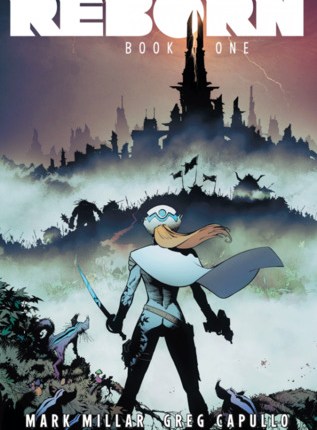
Reborn: Book One by Mark Millar

Reborn: Book One by Mark Millar

Beautiful artwork highlights a so-so story about a woman who dies, only to be reborn into a fantasy-themed world where a perpetual war of good versus evil rages on.

I think the basic idea of this graphic novel is fascinating. What happens to us after we die? We have faith, religion and all sorts of near-death experiences to fall back on, but who can say with any certainty.

From an interview in the back of the book with Greg Capullo, one of the creators: “What I loved about the story is that it deals with all of our fears about what happens when we die, but amidst the fear and the sorrow, we have this spectacular adventure that takes place in a fantastic and exciting world — a world I got to invent.”

Photo by Susanne Jutzeler on Pexels.com

Some of my quibbles with this story include that the good versus evil theme makes all of the characters seem so simplistic. You can predict almost exactly what they’re going to do before they do it — no gray areas. Also, everything is based around Bonnie, one character, and she becomes the savior archetype for the entire tale.

But, on the other hand, if you take this book, as a whole, for a metaphor of what happens after death, it works. Like so many near-death experiences, it all boils down to one view point, that of the newly departed. If you consider it like that, of course the story would be based around one person. She is seeing the next world entirely from her point of view, everything is interpreted through that lens.

It’s a curious phenomena, those who have had NDE’s, generally describe imagery and a storyline that makes sense to them culturally and fits within their framework of faith. Bonnie didn’t want to die, but when she does, she sees a world so similar to where she just came from, except it contains people who have died before she did.

Bonnie’s relationships with the people she knew before her death determine so many of the other character’s roles in the story. She has a curious relationship with the “faerie queen” which I found interesting.

Photo by Ferdinand Studio on Pexels.com

I can’t decide if I’m reading more into this story than is actually there, or if it was actually touching on some of the larger themes I mentioned. As I said, I got bogged down in the predictable characters.

At least the artwork is pretty…

I’m interested to see where Netflix goes with this, as I read in Variety that they’re developing it into a film starring Sandra Bullock.

Thanks for reading!