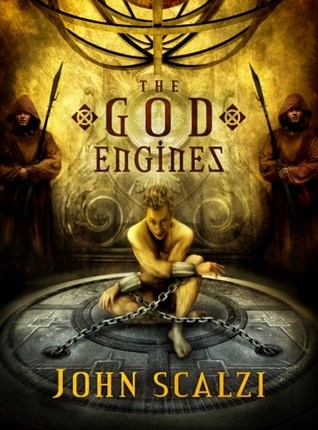
The God Engines by John Scalzi

The God Engines by John Scalzi

In the world of The God Engines, beings called gods power the ships that take humanity between the stars. How the world became this way is not for Captain Tephe to question, instead it is a matter of faith. As part of Tephe’s service and devotion to his own deity, he has to keep the being that powers his engine in check and subservient to his will.

That is not a simple task.

Photo by Pixabay on Pexels.com

“I do not know why this is. Why single made iron can kill a god. I know only that it can. I know the gods fear death more than do men. I can kill you with this, god.” pg 8, ebook

When Tephe is called to perform a secret mission of great importance for his deity, it throws his entire world view in jeopardy. He discovers his god, and all the others, may not be what they appeared to be.

“Words. They have power. To name a god is to give it power. To deny it such is to take it.” pg 16, ebook

I feel like this story was too short to fulfill its full potential. The general idea was very promising – what would a world where embodied gods were used as power sources look like? How would the society be structured? And how would a worshiper’s faith change or be challenged through day-to-day interactions with the gods?

Photo by Ben Yi on Pexels.com

The plot felt rushed as the characters raced from one place to another. I also wanted a bit more background about the universe of The God Engines, but the lack of it added somewhat to the mystery of the story.

“You are charged with silence,” proclaimed the third Bishop. “What is spoken to you here is not to be spoken again, on remit of your soul.” pg 31, ebook

I think the strength of this story is in how it addresses faith. Faith in the goodness of the unseen shapes lives and guides actions. It explains why some gods power ships and others rule empires. Because of faith, humanity has waged wars and conquered planets.

Perhaps someone should have made certain this faith wasn’t misplaced…

Recommended for readers who enjoy short science fiction novels with a liberal dash of horror.

Peanuts Treasury by Charles M. Schulz

Peanuts Treasury by Charles M. Schulz

Some works of fiction, after enchanting countless readers, become classics, a touchstone of culture for generations. I would submit “Peanuts”, created by Charles Schulz, as one of these classics.

The existential struggles of the boy named Charlie Brown, the adventures (real and imagined) of his beagle, Snoopy, and the rest of the Peanuts gang, seem timeless.

Charlie Brown wants to fly his kite, but it is always getting “eaten” by the “kite-eating tree.” He pitches for a baseball team that never wins. He tries to kick a football, but it is always removed at the last moment.

Photo by erdinu00e7 ersoy on Pexels.com

And yet, Charlie Brown soldiers on.

I first read Peanuts in dusty paperback books kept in the spare bedroom at my grandparents’ house. Through lazy Sunday afternoons or the occasional sleepover, I learned the names of all the Peanut characters and their defining traits.

My favorite was Schroeder, the virtuoso on his tiny piano. I even had a watch with piano keys on the plastic band and Schroeder on the watch face, pounding out his music as the second hands ticked by. I loved that watch so much – I wore through the plastic wristband, replaced it, and wore through it a second time.

Photo by Timo Piredda on Pexels.com

When I read Peanuts Treasury, it transported me back to a time when my biggest concern was finishing my homework before the end of the weekend and to a sense of comfort that family members who loved me were just in the next room. It was a nice escape from the current reality, where my biggest concerns seem so impossibly out-of-my-hands and loved ones are all in their separate spaces.

Recommended for readers who are looking to spend a few hours away from this world and in the life of a boy who never succeeds and never ever gives up.

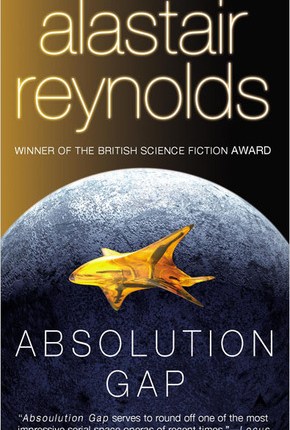
Absolution Gap (Revelation Space, #3) by Alastair Reynolds

Absolution Gap (Revelation Space, #3) by Alastair Reynolds

Alastair Reynolds ends his space opera trilogy with Absolution Gap. Many of the characters from the last book are desperately fighting the Inhibitors, but humankind seems to be losing the war. In a final hail Mary, the Conjoiners and a new member of their race seek a distant star system where a planet seems to disappear and the phenomena is worshiped by a group of fanatics led by a prophet with religious fervor literally in his bloodstream.

For a fraction of a second something inexplicable had occurred. A sensor anomaly. A simultaneous hiccup in every sensor that happened to be observing Haldora as the ship made its approach. A hiccup that made it appear as if the gas giant had simply vanished. Leaving, in its place, something equally inexplicable.” pg 54

Photo by Edvin Richardson on Pexels.com

Reynolds weaves two main story lines together to create an adequate, but perhaps not entirely satisfying, ending. The science in his books is impeccable. But, like in my previous reviews, I wanted a bit more from the characters.

“Are you all right, sir?” he had asked. Clavain had looked at him sharply. “I’m an old man,” he had replied. “You mustn’t expect the world of me.” pg 77

Readers have come to care about Clavain, Anoinette Bax, Scorpio, and the myriad others characters in this world. The endings given to them are, in my opinion, abrupt and almost given as an aside.

But some of Reynolds writing is simply beautiful and it makes up for a variety of quibbles I had with the story telling.

“It was quiet now, but coming nearer, and he knew that when it reached its awesome crescendo it would fill his soul with joy and terror. And though the bridge looked much the way it had before, he could see the beginnings of stained-glass glories in the black sky beyond it, squares and rectangles and lozenges of pastel light starting to shine through the darkness, like windows into something vaster and more glorious.” pg 100

Photo by Pixabay on Pexels.com

The broader themes are worth considering as well. What would happen to the human mind if the body becomes essentially immortal? Why does it seem like we’re so alone in the universe when there are so many inhabitable planets? What would advanced technological warfare look like? How would technology and its awesome capabilities change society, our modes of transport, and us?

“Brane theory suggested that the universe the senses spoke of was but one sliver of something vaster, one laminate layer in a stacked ply of adjacent realities. There was, Quaiche thought, something alluringly theological in that model, the idea of heavens above and hells below, with the mundane substrate of perceived reality squeezed between them. As above, so below.” pg 286

Photo by Miriam Espacio on Pexels.com

Recommended for science fiction readers who want to ponder those types of questions.

All the Forgivenesses by Elizabeth Hardinger

All the Forgivenesses by Elizabeth Hardinger

From the front of the book: “As we know, forgiveness of oneself is the hardest of all the forgivenesses.” – Joan Baez

Bertie, the heroine of our tale, was the eldest girl born in a family of nine in rural Kentucky in the early 19th century. Because of her gender, her mother taught Bertie everything about keeping house and how to care for children, which Bertie ended up doing all the time to the detriment of everything else, including her education.

Photo by Lukas Kloeppel on Pexels.com

“We was living in the Appalachian hills in southeast Kentucky, but I didn’t know that then. It was just the place where we lived at. For all I knowed, it was the whole world.” pg 5

An early childhood tragedy cements in Bertie’s mind that she is unworthy of the trust and scant love her mother gives to her. She carries that burden in her subconscious mind throughout the tragedies that follow and it shapes everything in her life.

Elizabeth Hardinger has penned a beautiful historical fiction novel about family, secrets, struggles and the life-saving power of forgiveness, not just for yourself but for everyone around you. The characters in this book are complex and so flawed that sometimes I wanted to reach into the pages and hug them until they came to their senses.

That’s how you recognize an extraordinary author, they make you care.

“If you was a bawl-baby, you got shamed, you got teased, or people just ignored you like you’d embarrassed yourself, which I reckon bothered me the most of all. … So you learned to hide your feelings or wait till you was out behind the barn and nobody could hear you.” pg 8

Photo by Kristina Paukshtite on Pexels.com

The culture examined in All the Forgivenesses is rural, impoverished and male-dominated, mainly because of the time period. The reader is able to juxtapose Bertie’s tragic situation with her best friend Alta Bea, the daughter of a wealthy banker.

“For sure I hadn’t never met nobody like Alta Bea. I never knowed nobody that had that look in their eyes like she could see into you. It made a person tired and jangled, like somebody was shining an oil lamp in your eyes, but it also give you a feeling of glittering, fluttery things you couldn’t hardly not look at.” pg 52

The girls’ friendship is strained at times and built upon a foundation of mutual loneliness, though Bertie has little to no time in her day-to-day routine to just be a person. It’s fascinating to watch the two characters develop from children to adults and the character traits they drag along with them as well as the ones they leave behind.

The vernacular of All the Forgivenesses was distracting for a page or two, but it started to flow for me after that. I appreciated Hardinger’s skill in making Bertie’s rough-edges part of the story. She’s such a relatable character. You know she wants to live her own life, but with her family’s situation, she just can’t. And yet, for the most part, she loves them anyway.

“Read it, Bertie, you’ll like it,” she said. Hearing somebody use my name – and not to curse me out or ask me for something – I confess that made me glow a little bit.” pg 67

Photo by Andrea Piacquadio on Pexels.com

Highly recommended for readers who enjoy historical fiction or as a book club pick. My book club chose this and we had plenty to talk about – from gender roles to romance to families. Not everyone liked it as much as I did, but I absolutely loved the characters, Bertie being the top of my list.

And I do agree with the opening quotation of this book, “to forgive yourself can be the hardest of all the forgivenesses.” Funny that we, like Bertie, find it easier to extend that to others than to ourselves. I wonder what that ultimately says about us.

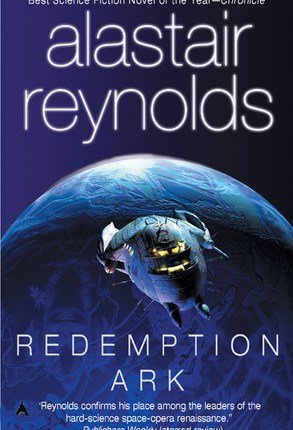
Redemption Ark (Revelation Space, #2) by Alastair Reynolds

Redemption Ark (Revelation Space, #2) by Alastair Reynolds

In Redemption Ark, we return to the universe of Revelation Space in the second book of Alastair Reynolds’ science fiction series. Some of the characters readers will recognize, others are new. As usual, we are treated to Reynolds’ prodigious talent when it comes to heaping helpings of the science part of science fiction.

Those are the best parts of this book: the futuristic space battles and the mysterious machinations of the Inhibitors, machines designed by an alien intelligence to wipe out civilizations that develop the technology to travel among the stars. For the reasoning behind this decision, you’ll have to read the book. 🙂

Photo by Pixabay on Pexels.com

They had never encountered another extant machine-using intelligence, nothing to measure themselves against. Until now. And what this machine-using intelligence did, so it seemed, was stalk, infiltrate and slaughter, and then invade skulls. pg 7

Humanity has divided itself into distinctive groups during its expansion into space, one of the most notable of these being the Conjoiners, a technologically advanced society that has linked its digital implants in a sort of hive mind. This link created a sort of “enlightenment” and connected the Conjoiners together in ways that aren’t quantifiable by those outside of the group.

“Down at the very deepest level Skade detected a few partitioned private memories that he did not think she could read. For a thrilling instant she was tempted to reach in an edit the man’s own blockades, screening one or two tiny cherished memories from their owner. Skade resisted; it was enough to know that she could.” pg 30

Photo by Suzy Hazelwood on Pexels.com

However, not everyone wants to allow the neural Conjoiner implants for fear of the loss of autonomy or privacy (see above) and embrace a more Luddite view of technology. This limited use of technology was pushed further by the appearance of a “melding plague,” an alien infestation that invades technology in an organic manner and consumes it, creating something else.

As you can tell from my rambling, Reynolds has created a universe populated with fascinating cultures, technologies and relationships. My main quibble with this book, as it was with his last, is his seeming inability to write about emotions. The extraordinary breakthrough of the Conjoiners was intimately connected to emotion and sharing it in a way that was impossible prior to the neural implants- an evolution of mankind. Reynolds puts all that depth into one or two lines of one paragraph of the book, which was fascinating to me, but also infuriating.

“Once you’ve touched someone else’s mind, walked through their dreams, seen the world through their eyes, felt the world through their skin… well… there never seemed to be any real need to go back to the old way.” pg 528

Photo by cottonbro on Pexels.com

He could have written a whole book about that one idea if he wanted to- I’d read it.

Another issue I had was the conclusion, which I won’t spoil for anyone here, but he writes it as almost an afterthought. For more than 500 pages, he built to this spectacular conclusion, which he then tossed away.

I was so mad.

On the other hand, he sets up the next book in the series beautifully, which must have pleased his publisher.

Highly recommended for science fiction readers. There are few who write the science better than Alastair Reynolds, but don’t expect too much in the way of emotional depth or exploration.

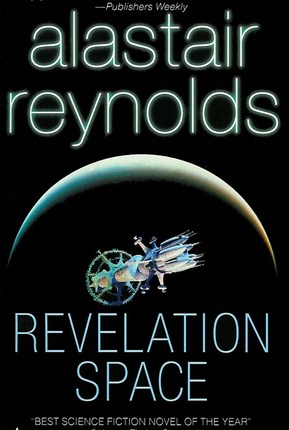
Revelation Space (Revelation Space, #1) by Alastair Reynolds

Revelation Space (Revelation Space, #1) by Alastair Reynolds

Through the interweaving stories of a scientist, soldier, and weapons expert, Alastair Reynolds explores classic science fiction themes in Revelation Space, a space opera and mystery.

“Despite being buried for nine hundred thousand years – at the very least – the chambers were almost intact, with the bones inside still assuming a rough anatomical relationship to one another. They were typical Amarantin skeletons.” pg 11, ebook

Photo by Pixabay on Pexels.com

Nearly a million years previous, an entire species called Amarantin disappeared in a mysterious celestial-based disaster called, by those who study the geological record, “The Event”. Dan Sylveste, a scientist with unique machines for eyes, is trying to unearth the truth of what happened to them.

Khouri, a former soldier turned assassin for a semi-secret agency, goes on a routine assignment, only to have the experience turn into something entirely unexpected.

“Assassins, it turned out, had to be among the sanest, most analytic people on the planet. They had to know exactly when a kill would be legal – and when it would cross the sometimes blurred line into murder and send a company’s stocks crashing into the Mulch.” pg 45, ebook

Photo by Ivan Siarbolin on Pexels.com

Meanwhile, on an enormous space ship capable of traveling across the universe at nearly the speed of light, Volyova has a serious problem. Her captain has a strange disease that is assimilating his ailing body into the ship itself and the man she hired to run the ship’s guns has gone insane. Could these two disasters be connected somehow?

“It was not something to which she was ever going to become totally accustomed, Volyova knew, but in recent weeks visiting the Captain had begun to take on definite tones of normality. As if visiting a cryogenically cooled corpse infected with a retarded but potentially all-consuming plague was merely one of life’s unpleasant but necessary elements…” pg 35, ebook

Throughout the story, Reynolds asks the reader to imagine a humanity that has split itself into factions. Some groups travel among the stars, assimilating rare machines into their bodies, losing touch with what it means to be human as they spend years in frozen animation while the rest of the universe ages as usual.

Other groups are just as isolated on far-flung planets and develop their own cultures, ways of government, and quickly-shifting alliances.

Photo by Felix Mittermeier on Pexels.com

Also, through the story of the extinct Amarantin, Reynolds examines what it would mean if humanity discovered aliens were real, but mysteriously absent from huge swathes of what is otherwise inhabitable space. Are we really as alone in the universe as we appear to be? And why is that so.

“Something had reached into his mind and spoken to him. But the message that was imparted to him was so brutally alien that Sylveste could not begin to put in human terms. He had stepped into Revelation Space.” pg 100, ebook

The broad themes of Revelation Space are fun questions to ponder, but Reynolds’ storytelling suffers in some of his more technical moments and during a truncated love story. A couple times during the beginning of the book, I had difficulty picturing scenes because I would get so bogged down in the details. But that became easier as the story progressed.

The love story though, was one of the worst I’ve read in science fiction literature. It made me feel like the woman was just a plot device for Reynolds to be able to explain some of the more complex plot twists. That’s fine if that’s what she was meant to be, but it was rather off-putting. I do enjoy a good love story and felt like, if you were going to make it so awkward, maybe it didn’t belong in there.

Photo by burak kostak on Pexels.com

Otherwise, I enjoyed this read and intend to start the next soon. Highly recommended for readers who enjoy science fiction and stories that make you want to go stand outside and stare at the stars for awhile.

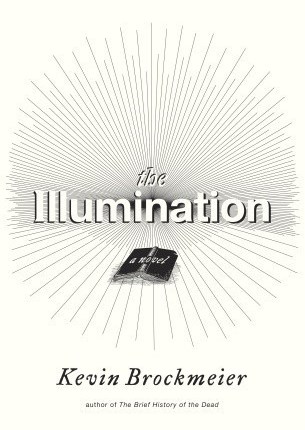
The Illumination by Kevin Brockmeier

The Illumination by Kevin Brockmeier

Humanity suddenly changes as emotional and physical pain begins to shine out of our bodies like light. How would a shift like that change culture? And what does it all mean?

Kevin Brockmeier examines these questions through six different lives that are tied together through a diary filled with love notes from a husband to his wife.

Rarely has a book stuck in my mind like The Illumination. Since putting it down, I’ve found myself thinking about it and asking myself what the author was saying.

Photo by Pixabay on Pexels.com

“Through the haze of drugs, it seemed to her that the light was not falling over her wound or even infusing it from the inside but radiating through it from another world. She thought that she could live there and be happy.” pg 8, ebook

Throughout the centuries, mystics and others considered “holy” or infused with spirit have been depicted with light shining from their bodies and hands. The ineffable connection to God or gods is shown in the artistic shorthand of light, an illumination in the dark.

In the day-to-day business of living, many of us are too busy with our individual lives to stop a second and ask ourselves, what is the purpose of this experience? It feels so random for the most part. Terrible things happen to good people, good things happen to terrible people. It feels arbitrary and, worst of all, meaningless.

So many are in pain and we can’t possibly heal them all. We don’t acknowledge that. But what if it became so obvious that we couldn’t ignore it.

Photo by Luis Dalvan on Pexels.com

“The world had changed in the wake of the Illumination. No one could disguise his pain anymore.” pg 29, ebook

The Illumination illustrates another of humanity’s foibles – the tendency to demote the miraculous to the mundane once it becomes a common place experience. Babies are born every day. People die every day. Life in its beginnings, endings, and everything in the middle, is extraordinary but I don’t think we appreciate the enormousness of it unless something unexpected or earth-shattering happens in our own lives.

“He watched with interest as his body was chafed and torn, thinking, Look what’s here inside me. Who ever would have guessed? pg 164, ebook

Maybe, if we truly tried to let it all in, we would all stand around paralyzed by awe.

“It turned out that the world at the end of time was just like the world at the beginning: a single set of footsteps printing the grass, everything lit with its own newness, a brighter and much, much emptier place.” pg 48, ebook

Photo by Stanislav Kondratiev on Pexels.com

In this world, the past is reexamined in the wake of the new light-filled reality. Historic photos are doctored to make the pain visible through light. Hospitals develop new protocols to address the change in reality. Communication and politeness take on new meaning as private pain becomes public knowledge.

“For a few months, church attendance spiked. Some of the seats at Fellowship Bible were taken by visitors, some by the Christmas-and-Easter set. It didn’t matter – each new face showed the guilt, fright, or confusion of someone confronted by a game whose rules had suddenly changed.” pg 104, ebook

The dystopian worlds of literature present authors’ various views on what the world would look like at the end of all things. Brockmeier’s world is so very much like ours except for one glaring difference. Perhaps that’s the point. The end of the world is much like today – light or no light, we’re all wandering around seeking meaning and bumping into each other and causing pain, intentional and unintentional.

Photo by Rodolfo Clix on Pexels.com

The spiritual and religious beg for illumination, a shining light through the confusion, a removal of a metaphysical blindfold. But what would we do if those prayers were answered in a concrete way? Probably nothing once the initial shock wore off.

Recommended for readers who seek the answers to unanswerable questions. Some trigger warnings for cutting, self mutilation, and violence.

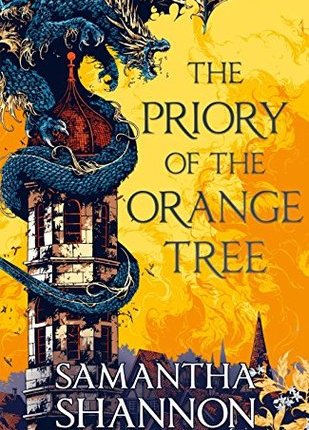
The Priory of the Orange Tree by Samantha Shannon

The Priory of the Orange Tree by Samantha Shannon

A cast of interesting and well-imagined characters stumble through poorly-written plot twists on their way to saving the world from “The Nameless One”.

“The House of Berethnet may protect us from the Nameless One, or it may not. There is no proof either way. … That is the problem with stories, child. The truth in them cannot be weighed.” pg 109

Photo by Suraphat Nuea-on on Pexels.com

I started out enjoying The Priory of the Orange Tree. The way the story builds is engaging and moves along at a fast clip.

My main quibble with this fantasy book is Samantha Shannon takes more than 800 pages to create her world with its countries, religions, magic systems, but then resolved major plot points in two to three sentences or less in some cases.

We learn about items that have been missing for a millennia and I thought, oh this is going to be interesting to figure out. But then, two pages later, through a series of ludicrous coincidences, two of the main characters have one of the items in their hands.

In one of the major confrontations of the book, Shannon doesn’t even write dialogue and played it out through the eyes of a character who had no idea what was going on. I wouldn’t have been so put off by it if she hadn’t spent literally hundreds of pages getting us to that point. That particular villain may not have been the focus of the tale, but I think she at least deserved a final monologue.

Photo by Snapwire on Pexels.com

When traveling from place to place, there aren’t tantalizing descriptions of the trip. Basically, the character gets in the conveyance and, boom, they’re at the destination. Shannon used more descriptive words when she talked about the food characters were eating than she did when her characters were moving from here-to-there.

The exception to this rule were her descriptions of “the Abyss”. The way she depicted the stars shining down from above and out of the depths was beautiful.

Complaints aside, there were plenty of things I liked about the book. I enjoyed the way Shannon took real life alchemical principles and wove them into something otherworldly for her story.

“What is below must be balanced by what is above, and in this is the precision of the universe. Fire ascends from the earth, light descends from the sky. Too much of one doth inflame the other, and in this is the extinction of the universe.” pg 150

Photo by Pixabay on Pexels.com

I also liked the secret order whose name graces the front cover of the book. The different cultures Shannon created were a treat a learn about. I thought her characters were, for the most part, quite relatable.

“So you see, Ead,” the queen said, “I do not sleep because I’m not only afraid of the monsters at my door, but also of the monsters my own mind can conjure. The ones that live within.” pg 203

The characters were diverse and, as I mentioned, well-written. A couple times in the story, particularly in the portions about the Abyss, I felt Shannon’s writing was elevated to something like prose.

“Love and fear do strange things to our souls. The dreams they bring, those dreams that leave us drenched in salt water and grasping for breath as if we might die – those, we call unquiet dreams. And only the scent of a rose can avert them.” pg 416

Photo by Irina Iriser on Pexels.com

I think this story could have been extraordinary if Shannon hadn’t been trying to fit so much into one volume. A trilogy with lingering descriptions of landscapes and nail-biting conclusions to the various story arcs would have been much more enjoyable.

Thanks for reading!

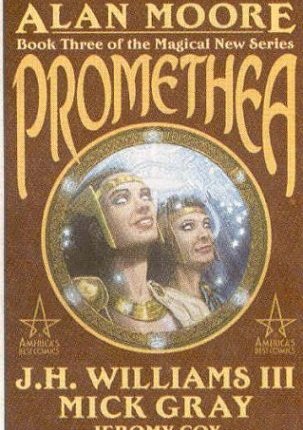
Promethea, Vol. 3 by Alan Moore

Promethea, Vol. 3 by Alan Moore

The saga of Promethea continues in Volume Three of the five book series.

Promethea, the version embodied by Sophie Bangs, has embarked on an adventure through the myriad worlds of the Tree of Life. She seeks another of the avatars of Promethea who recently died. Together, they hope to find the deceased woman’s husband and learn about the occult on the way.

Photo by Stacey Gabrielle Koenitz Rozells on Pexels.com

Meanwhile, back in the real world, Sophie has left someone unexpected in charge of keeping the baddies at bay while she’s away. Is Stace up to the task?

The artwork of the series continues to impress with its beauty and ingenuity. I especially enjoyed the mobius strip path of the world of Hod.

Alan Moore’s writing is at its best when he’s waxing on about the complexity of the universe and delivering punchy one-liners ending those conversations.

Photo by Pixabay on Pexels.com

However, he takes the characters through so many different places so quickly that the adventures themselves end up feeling rather stilted. I think I may have enjoyed this entry more if he had spent a little more time exploring the worlds rather than simply explaining them.

I get that Promethea has places to be. But she could have savored the journey along the way.

Recommended for graphic novel readers who enjoy a mix of fantasy and occult in their stories. Thanks for reading!

Here are links to the other two reviews I’ve written for this series:

Book One

Book Two