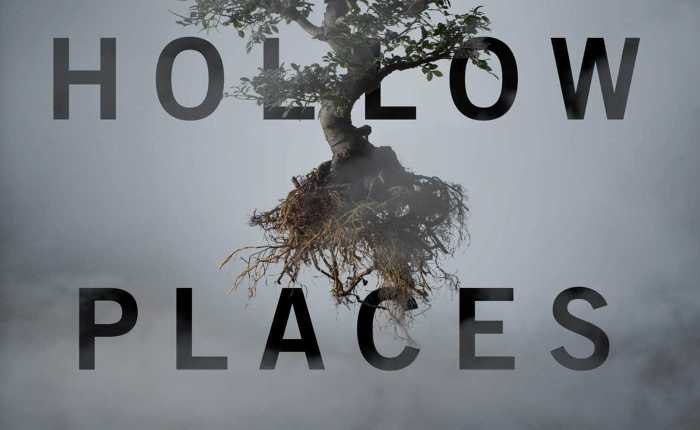
The Hollow Places by T. Kingfisher

The Hollow Places by T. Kingfisher

Kara is going through a hard time and is grateful for a chance to help out at her Uncle Earl’s museum. She has always loved it there.

“Nobody ever believes me when I tell them my uncle Earl owns a museum. They start to come around when I explain that it’s a little tiny museum in a storefront in Hog Chapel, North Carolina, although there’s so much stuff jumbled together that it looks bigger than it is.”
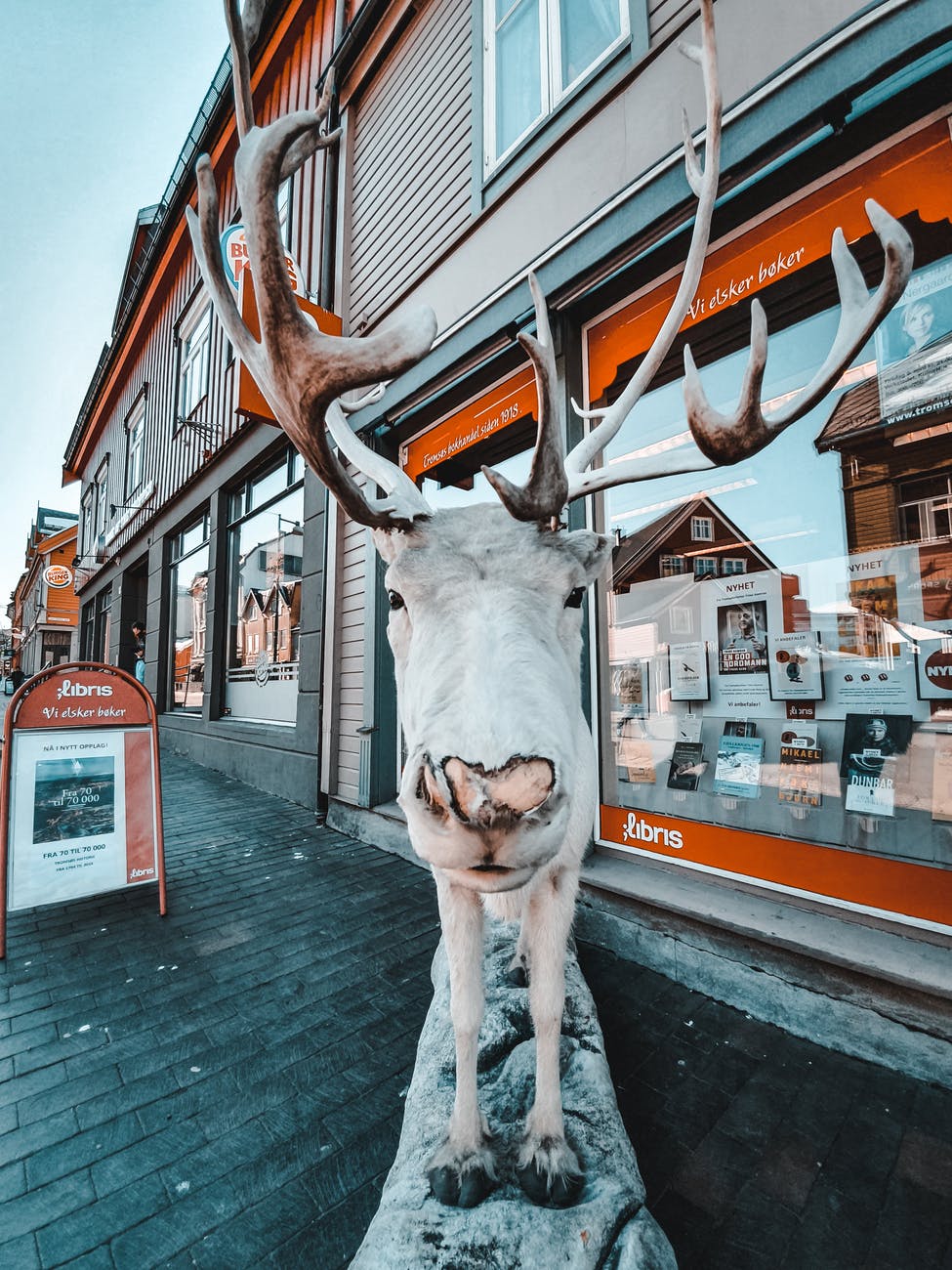
Photo by Tobias Bju00f8rkli on Pexels.com

But when Kara and Simon, the barista next door, attempt to repair a hole in the wall of the museum, they discover a hallway that shouldn’t be there.

“Frankly, I wasn’t even sure what you were supposed to do when you had an impossible hallway in the walls. Did you call the police to report that the laws of time and space were getting broken?”

What lies beyond the hallway? Kara and Simon are going to find out, and their lives are never going to be the same.

Photo by Elina Krima on Pexels.com

First, I am not a big fan of the horror genre. But, The Hollow Places, is horror done the way I like it best.

There’s an unknown world with as-yet unknown dangers. The story is one of exploration and carefully-crafted reveals so you feel as if you’re on an adventure.

The characters are fantastic. Kara and Simon are people I would walk down a mysterious and magical hallway with, no question.

The author slowly builds the tension of the story so, for the most part, the main emotion the reader feels is a growing sense of dread. It’s an emotion a reader with an anxiety disorder (like me) is familiar with and there’s something very satisfying about having that feeling validated and then resolved.

I believe life rarely gives the same kind of closure.
Photo by Elina Krima on Pexels.com

The voice of the main character, Kara, is down-to-earth and, occasionally, quite funny. I liked how the author gave her all sorts of relatable, every-day type problems and then, once the story started rolling, she re-evaluated the importance of issues that would have caused her major headaches prior to her life-changing experience.

I could see myself doing the same sort of thing if I was in her shoes.

The Hollow Places contains some nightmare-inducing moments but nothing I considered gratuitously violent. There’s some mild sexual references in the banter between the two main characters. This book might work for older teens who are looking for a spooky October read.

Highly recommended for readers of horror or who like their fantasies to have some thrills and chills.

Thank you to NetGalley and the publisher for a free digital copy of this book.

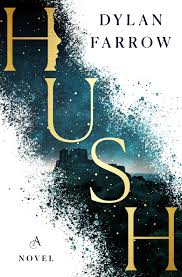
Hush (Hush, #1) by Dylan Farrow

Hush (Hush, #1) by Dylan Farrow

In the world of Hush, ink, the suspected origin of a deadly plague, has been declared the enemy of humankind and outlawed. The keepers of the law, High House and its magical soldiers called bards, roam the world, rooting out those who break the law and rewarding those who bend to their will.

“Our history shows that vigilance and caution are tantamount to survival. Burn the ink from the page. Turn away from forbidden words, toxic tales, and deadly symbols. Cleanse the country of this malignant blight. Join us.”

Photo by Dids on Pexels.com

Shae lost her brother to the mysterious plague early in her life and her family has been outcast from her small village since. When tragedy once again darkens her family’s doorstep, what will Shae do not only to seek justice for her brother but, potentially, the whole world?

The premise of Hush had some interesting ideas, but this debut, young adult novel suffers from wooden characters and predictable plot twists.

“The Bards arrive today.” The Bards. Suddenly I feel as though the house has been encased in ice. The town elders say there’s power in words- that certain phrases can change the world around you.”

Photo by Polina Zimmerman on Pexels.com

Weakness in the character development aside, Shae is a strong protagonist who struggles to create her own reality which differs quite markedly from the reality that her small town has imagined for her. Teens might connect with her more strongly than I did, which is to say, not at all.

I’m not sure what it was. Maybe I’m suffering from YA dystopian reading burnout?

Instead of appreciating Shae for her flaws which include falling in love too quickly, trusting everybody and pushing all her friends away the moment she could really use their help, I found myself annoyed with her.

“I spent countless nights lying awake, staring at the austere wooden beams of the ceiling, trying to figure out if I was mad or cursed- or both.”

Photo by Joshua on Pexels.com

Be smarter, I thought. The odds are stacked against you, and you need to pay attention, not fall for the first stranger you meet who has a dreamy pair of eyes.

But as I said, I’m definitely not the intended audience for the book.

Here’s the author, Dylan Farrow, talking about Hush:

Thank you to NetGalley and the publisher for an advance reader copy. And thank you for reading!

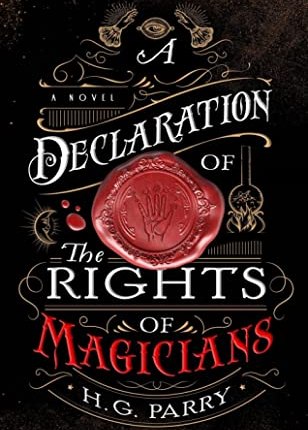
A Declaration of the Rights of Magicians by H.G. Parry

A Declaration of the Rights of Magicians by H.G. Parry

In a world where magic is real and controlled by government authorities, H.G. Parry re-imagines true historical events and people, inviting readers to add an additional layer of conspiracy to movements that changed the course of history like the French Revolution or the slave rebellion in the Caribbean.

Photo by Andreea Ch on Pexels.com

The premise didn’t work for me for a couple reasons.

I felt like this book minimized the atrocities that were committed during the era. The slave trade and the French Revolution’s cost in both human lives and suffering is immeasurable, and it felt somewhat flippant to take those events and say, “Well, magic,” as the main driving force behind the conflicts.

I felt the same could be said for the subtle twisting of the lives of historic figures.

“His quiet voice spoke of a country built on Enlightenment principles, whose people were virtuous, where magic was a free resource to be used for the betterment of all, where food was well distributed and plentiful, where courts were in the hands of the people and not the talons of the Aristocracy, where the poorest Commoner was free to vote and grow and be educated.” pg 155

Photo by Dominika Greguu0161ovu00e1 on Pexels.com

That is not to say that history or historic personages couldn’t or shouldn’t be in fantasy novels. It is a hallmark of the genre to take a reality, change the rules of that reality, and then tell the story with the new rules. Though if that was what the author was going for, perhaps she should have staged her story in another world or made the focus of the story characters she invented with the real people living their lives in the backgrounds.

Taking real events, real people and real world locations to drive the story didn’t coalesce into the fantasy novel I believe she was reaching for.

I think fantasy, alternative-historical fiction is something that can be done successfully, but I have yet to see its promise fulfilled. This may be an unpopular opinion, but I had the same issues with this story that I had with Abraham Lincoln: Vampire Hunter.

Photo by eberhard grossgasteiger on Pexels.com

Students of history may find themselves frustrated by A Declaration of the Rights of Magicians because of the way the true events are spun. I didn’t have any specialized knowledge of the era, but a friend who is somewhat of an expert told me the complexity of the time period is so dumbed down that he was distracted by it.

“It had seemed so simple after the fall of the Bastille. The National Assembly of Magicians had risen up, exactly as Robespierre had hoped. They had issued a proclamation declaring it the right of all citizens to be free to practice their own magic: a Declaration of the Rights of Magicians.” pg 179

Setting my concerns with fantasy clumsily applied to horrific real life events aside, my biggest issue with this book was the glacial pacing. Readers sit through meeting after meeting, and it’s incredibly dull. But with the time period we were in, it should have been gripping. I told myself that a big payoff for all of this story building was coming, as the book clocks in at over 500 pages, but I felt like it never materialized.

I don’t mind a long book. But please, tell the story.

The Loop by Jeremy Robert Johnson

The Loop by Jeremy Robert Johnson

“It was so surprisingly calm that it took a few minutes before anyone in the room even noticed the way that Chris Carmichael was twitching at his desk.”

Photo by Pixabay on Pexels.com

The first hint that something has gone wrong in Lucy Henderson’s town is a horrific event in her high school classroom. The violent-nature of the event triggers trauma from Lucy’s past, an emotional wound that goes so deeply into her psyche that she hasn’t begun to process it- let alone the damage it has left behind.

It doesn’t help that Lucy feels like an outcast and an outsider in her small hometown. Part of this is baggage from Lucy’s past, but the majority of it is the racism and tribalism she faces from the small-minded young adults in the community. They won’t let her forget she looks different from them and torment her with their racial hatred on a near-daily basis.

The only semblance of friendship in her life is with a young man who goes by the name of “Bucket,” for reasons that are explained in the story. (No spoilers.)

Photo by Anna Shvets on Pexels.com

When all hell breaks loose in town, Lucy and Bucket only have each other and a few acquaintances to help in a race to save their families. The nightmare that they had been living solely in their minds becomes all too real.

“What the hell is going on in this town? Sometimes it feels like things are f*cked up in every direction, you know?”

The character and world-building of The Loop is well done in that I connected deeply with Lucy and Bucket before the story took off.

My lack of enjoyment of the book stems from the graphic nature of the violence against people and animals, both physical and mental. There are also brief instances of sexual abuse between underage teens as well as the discussions of porn with descriptions vague enough that young adults reading this book will immediately turn to Google to answer any questions they may have. There is bullying, unaddressed by the adults in the young peoples’ lives, as well as the trauma Lucy suffered at the hands of a system that should have protected her.

Photo by cottonbro on Pexels.com

Which brings me to another discussion point, this is not a book for young adults. If it was television, it would carry a mature rating. The horror genre has a huge following and graphic violence is definitely a part of that. That being said, it is strange to me how cavalierly some treat depictions of absolutely horrific things.

I feel like society has become desensitized to violence in the media we mindlessly consume. Descriptions of fingers popping through eyeballs and knives cutting through flesh is delivered as a matter-of-course, part of what makes the story so scary.

I picked this title out of the myriad being published in the next months because it was compared to Stranger Things, a horror show, true, but one that leans on the psychological and paranormal scares far more than the physically violent ones. I watched that show with my young daughter. I would not let her read this book, at least until she’s 18.

I say that as a former librarian but also a mother.

All that being said, there are beautiful lines in the book that perfectly capture the agony of mental pain.

For example: “She imagined herself tilting her head back and opening her mouth to scream again, only this time her mouth kept opening and her jaw detached like a snake’s and she kept splitting until she was cleaved in two and all that came out of her was white flame.”

Photo by Matej on Pexels.com

But I didn’t feel that the beauty of those fleeting moments made the time I spent reading the title worth it.

Recommended only for adult horror readers who can handle the triggers of violence and everything else described above.

Thank you to NetGalley and the publisher for a free digital advance readers copy of this book. The brief quotations I cited may be changed or omitted in the final, printed version.

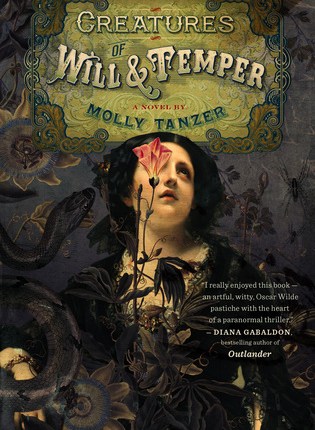
Creatures of Will and Temper by Molly Tanzer

Creatures of Will and Temper by Molly Tanzer

Creatures of Will and Temper is a historical fiction and fantasy novel that takes some of the magic contained in The Portrait of Dorian Gray and mixes it with some demons, and a pair of extraordinary sisters.

“Death is an illusion, just like anything else – like distance, for example, or time, or the separateness of one thing from another. The whole universe is only matter forming and reforming itself, endlessly, beautifully.” pg 6

Photo by Francesco Ungaro on Pexels.com

The author, Molly Tanzer, builds layered characters with distinctive personalities who are a pleasure to read about. However, she takes so long doing this, that I nearly put the book down before I hit page 200 and the main story arc took off.

“Never let anyone tell you demons are unnatural things – they are perpetual, like fragile flowers that blossom anew each year, like the majestic pine that never goes brown.” pg 53

Photo by Brett Sayles on Pexels.com

Prior to around page 200, Creatures of Will and Temper reads like a historical fiction with magical realism rather than the fantasy it actually is. The pace was incredibly slow.

But once I was over that two-thirds slump, the rest of the story (another 150 or so pages) was fantastic. I couldn’t put the book down at that point.

“We must give in to beauty, surrender ourselves to pleasure and enjoyment. We must return to hedonism, but we must also make it our own – for we are not sentimentalists, seeking to recreate an emotion time and again. It is our holy duty to create a new hedonism, a philosophy of passionate experience.” pg 170

The strength of this book is in the complex demonic world Tanzer hints at throughout. I wish she had focused on that world instead of this one! What a unique story it would have been.

As it stands, only recommended for readers who can tolerate a glacial pace on the way to a breath-taking ending.

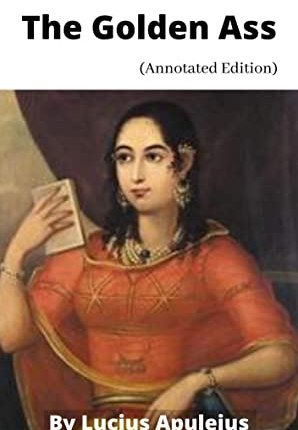
The Golden Ass by Apuleius

The Golden Ass by Apuleius

Lucian longs to experience real magic. When he discovers it, an unfortunate misstep turns him into the title character. In the shape of an ass, Lucian suffers through a series of misadventures.

Photo by Nilina on Pexels.com

I wonder when Apuleius was writing The Golden Ass, if he ever imagined this particular novel would be the only one written in Latin to have made it through his time to ours in its entirety.

Perhaps that’s an unfair question, because how could a writer imagine something like that?

But if he could have somehow foreseen it, I think that he would have written something different than this rambling, depressing, occasionally obscene adventure. Or maybe not. Maybe it summoned up his society nicely.

Photo by Mike Andrei on Pexels.com

Hypothetical ramblings aside, it didn’t make for an enjoyable reading experience.

A very large consideration for readers of The Golden Ass is the quality of the translation and how that may affect your enjoyment of the book. A friend and I read this book in tandem and this particular problem became clear quite quickly.

My edition, borrowed from the library, is a reprint of a translation by William Adlington in “Oxenford, September 1566,” and comes complete with the spelling and idiosyncrasies of his era.

“You perhappes (sic) that are of an obstinate minde (sic) and grosse (sic) eares (sic), mocke (sic) and contemme (sic) those things which are reported for truth, know you not that it is accounted untrue by the depraved opinion of men, which either is rarely seene (sic), seldome (sic) heard, or passeth the capacitie (sic) of mans reason, which if it be more narrowly scanned, you shall not onely (sic) finde (sic) it evident and plaine (sic), but also very easy to be brought to passe.” pgs 14-15, ebook

Photo by Andrea Piacquadio on Pexels.com

I found many passages “passeth the capacitie of” my reason because the nearly five hundred years between Adlington’s translation and this made so much of it nearly unintelligible.

My friend read a modern translation by Penguin Publishing and reported a more positive reading experience. If given a choice between the two, please do pick the more modern version.

“Verily shee (sic) is a Magitian (sic), which hath power to rule the heavens, to bringe (sic) downe (sic) the sky, to beare (sic) up the earth, to turne (sic) the waters into hills and the hills into running waters, to lift up the terrestrial spirits into the aire (sic), and to pull the gods out of the heavens, to extinguish the planets, and to lighten the deepe (sic) darknesse (sic) of hell.” pg 19, ebook

Translation problems aside, I found the bulk of the story to be repetitive and, on the main, depressing. Things get worse and worse for our hero.

Photo by Emmylou on Pexels.com

Yes, there is some measure of relief when we reach the end of our story and explore the mysteries of a cult whose rituals have been forgotten to history. But between the beatings and, as I mentioned, various obscene interludes, the end couldn’t come fast enough. Poor Lucian, “poore” William Adlington, and poor me!

The version I read of The Golden Ass, I recommend only for English majors, classicists or religious scholars. The appeal for modern readers just isn’t there.

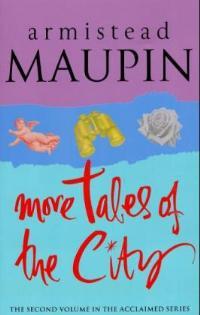
More Tales of the City (Tales of the City, #2) by Armistead Maupin

More Tales of the City (Tales of the City, #2) by Armistead Maupin

“For all her trials, she loved it here in San Francisco, and she loved her makeshift family at Mrs. Madrigal’s comfy old apartment house on Barbary Lane.” pg 11, ebook

All of the characters whom readers loved from the first book (Tales of the City) are back and mixing things up in San Francisco. This soap opera-ish fictional series remains as fast-paced in its second installation as it was from the start.

Photo by Aleksey Kuprikov on Pexels.com

Mary Ann is still working for Halcyon Communications, which is under new leadership, and has to face a new set of challenges. That’s not even mentioning the dark memories she’s trying to forget about a certain former boyfriend, or two.

Michael Tolliver, called Mouse by his friends, is still on the look out for love after a disastrous semi-relationship in the last book.

Mona Ramsey, the free spirit, is about to uncover another major secret about her past. She can add it all of the other ones she’s picked up…

“And she was- she believed- the only one who knew Mrs. Madrigal’s secret. That knowledge, moreover, formed a mystical bond between the two women, an unspoken sisterhood that fed Mona’s soul on the bleakest of days.” pg 18

Photo by Daria Shevtsova on Pexels.com

There’s a pregnancy, romantic cruise, conspiracy, secret club and more in this installment. A must-read for any fan of the series.

“I want it too badly, Mary Ann. Any idiot can see that. When you want it too badly, no one wants you. No one is attracted to that… desperation.” pg 129

One criticism I had for this book, the same I had for the last one, is in the highly unlikely coincidences contained in many of the plot twists. It seems to me that in a city the size of San Francisco, the dozen or so main characters would be more likely to run into other people than each other.

Photo by Daria Shevtsova on Pexels.com

But, like most works of fiction, I suppose it’s fine to suspend your disbelief on some points.

As for the rest of the book, I would describe it as compulsively readable. It’s almost like book candy, you can’t stop at just reading one. I certainly couldn’t.

Photo by Ylanite Koppens on Pexels.com

And, with that, it’s on to the next one…

Tales of the City by Armistead Maupin

Tales of the City by Armistead Maupin

Tales of the City is a snappy, humorous and heart-felt look at the intersecting lives of several people living in San Francisco in the 1970’s. As they struggle for love, money and happiness, they establish friendships and create a new kind of family- one of their choosing rather than one they were born into.

“Mary Ann Singleton was twenty-five years old when she saw San Francisco for the first time.” pg 9, ebook

Photo by picjumbo.com on Pexels.com

One of the main characters is Mary Ann from Ohio. She came on a vacation to San Francisco and decided to stay because she loved the people and the general vibe.

But her mid-western upbringing didn’t prepare her for the work and dating scene of San Francisco.

His smile was approaching a leer. Mary Ann chose not to deal with it. “She’s a little strange, but I think she means well.” pg 47

Photo by Lisa Fotios on Pexels.com

On a hunt for the perfect apartment, Mary Ann meets Mrs. Madrigal, the unconventional and slightly mysterious owner of a large place on Barbary Lane.

Once the other residents of the apartment are introduced, the story really takes off. The breakneck pace is probably due to the fact that Tales of the City was originally written as a serial with cliffhanger endings each week to bring readers back to the publication.

It works incredibly well in a novel format. The chapters are short and punchy. Although most of the tension of the story is created through the dialogue rather than action, it is gripping stuff.

In some ways, this book is rather like life. Everybody is mixing together, trying to find their own way and lifestyle that feels right to them.

From day to day, it doesn’t seem like much happens. But taken altogether, it encompasses the growing pains accumulated through weeks, months and years of a lifetime.

Photo by Elly Fairytale on Pexels.com

“No wonder you’re miserable. You sit around on your butt all day expecting life to be one great Hallmark card. … You’ve got to make things work for you, Mary Ann.” pg 111

Recommended for readers who enjoy their fiction with a big helping of soul-searching and humor, delivered at the speed of life.

This book has been made into a show at least twice now. Both versions can be viewed on Netflix.

Thanks for reading!

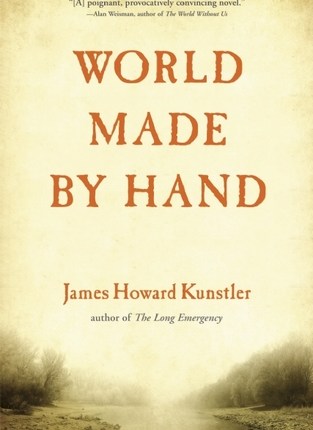
World Made by Hand by James Howard Kunstler

World Made by Hand by James Howard Kunstler

“It was chilling to reflect on how well the world used to work and how much we’d lost.” pg 12, ebook.

Photo by Davide Locatelli on Pexels.com

In World Made by Hand, civilization has fallen to pieces. There is no consistent electricity. The town of Union Grove has running water, but only because of a water system that relied more on elevation than anything else.

Worse, the justice system has fallen apart. There is little to no medical care facilities or supplies available. Television stations have ceased to broadcast. The radio sometimes broadcasts religious programming in the moments the electricity flickers on and then off.

“It’s not all bad now,” I said. “We’ve lost our world.” “Only the part that the machines lived in.” Jane Ann patted my thigh, but said no more and got up to leave.” pg 25, ebook

Photo by Pixabay on Pexels.com

A slow-paced dystopian novel that savors the end of life as we know it might not have been the best book for me to read right now. In the midst of a global pandemic and unfounded fears that life may never go back to the way it was, this wasn’t as much an escape as an additional cork-popper to my ever-present anxiety.

The characters lack depth, but I found myself caring for them because they seemed so real.

They want food, shelter and safety for their loved ones, even though all of those things have become difficult to find.

“By the time he passed away, it was obvious there would be no return to ‘normality.’ The economy wouldn’t be coming back. Globalism was over. The politicians and generals were failing to pull together at the center.” pg 29, ebook.

There are very few moments of action in here. I can see the slow pace being frustrating to some readers.

“The afternoon weather resolved into an uncomfortable drizzle, driven by hot winds out of the south. I had an old ripstop nylon poncho from my collegiate camping days, but it had lost its waterproofing.” pg 126, ebook

Photo by Sam Willis on Pexels.com

But, to play the devil’s advocate, perhaps that would be the way the world would actually end. To quote T.S. Eliot: “Not with a bang, but with a whimper.”

Recommended for readers who enjoy dystopians like Station Eleven and who are brave enough to read this kind of thing with the current state of things.