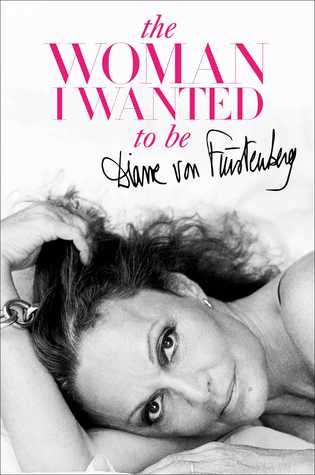
The Woman I Wanted to Be by Diane Von Furstenberg

The Woman I Wanted to Be by Diane Von Furstenberg
thewomaniwantedtobe

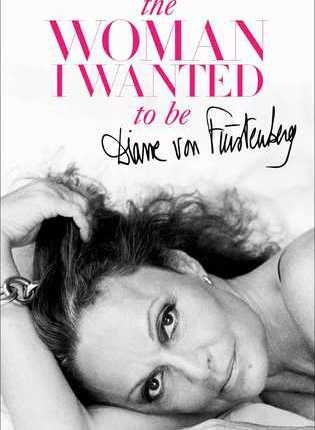
The Woman I Wanted to Be is the life story of the incomparable Diane Von Furstenberg.

She starts with her parents’ harrowing early life in war-torn Europe and continues through her own tumultuous love affairs and child-rearing years.

After a personal first half, the second half of her book is dedicated to how she entered and eventually became a living icon in the world of fashion.

I really enjoyed this book.

In an era where the media glorifies women who show off their bodies, cling to powerful men, and descend into drug addictions, Diane personifies the empowered woman who shows what she can do and build rather than living on how she looks or scandal.

That’s not to say that Diane hasn’t had a wild life, she has, but she owns it, has evolved from it and built it into an empire.

There are many moments in The Woman I Wanted to Be where Diane failed to be that woman. But instead of becoming mired in failure (she had to sell her business two separate times to avoid bankruptcy), she persevered to become a household name.

At another point, she gave up her identity and her business to spend time with a man who wanted her to be a blank slate. He ended up leaving her for someone else.

Photo by Karolina Grabowska on Pexels.com

Diane didn’t crawl into a hole and wilt then either. With grace and dignity, she re-entered life and the fashion world. Diane went on to experience an even greater level of success than she had before her exit.

Diane provides some great general advice for life such as: when bad things happen, they can actually be good things.

Also, never play the victim- take responsibility for your life.

Embrace your age, whatever it may be.
Photo by Pavel Danilyuk on Pexels.com

These philosophies have enabled Diane to rise above any obstacles that have appeared in her path. She is an excellent role model and it was such fun to read about her incredibly exciting and almost unbelievably successful life.

Readers who enjoyed Wild: From Lost to Found on the Pacific Crest Trail and She Got Up Off the Couch: And Other Heroic Acts from Mooreland, Indiana may enjoy this memoir.

It’s far more glamorous than either of those two selections, but the underlying themes of female empowerment and reaching for the life of your dreams despite all the odds, are the same.

I received a free copy of this book through Goodreads First Reads. FTC guidelines: check! Thanks for reading!

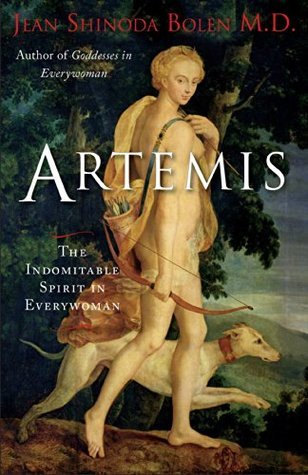
Artemis: The Indomitable Spirit in Everywoman by Jean Shinoda Bolen

Artemis: The Indomitable Spirit in Everywoman by Jean Shinoda Bolen
artemis

In Artemis, Jean Bolen discusses the importance of archetypes and mythological stories. She asserts that we don’t just enjoy the stories for their entertainment value- we respond to the psychological truths contained between the lines.

I’ve always enjoyed academic discussions of mythological tales. I never really knew why though until I read this book.

The meanings of mythology are so layered that our conscious minds may not even know that our subconscious minds are latching onto the veiled truths. We love them without realizing their importance.

Artemis: The Indomitable Spirit in Everywoman contains an intricate dissection of the tale of Atalanta, a mortal whose life paralleled the goddess, Artemis, in many ways.

I think I had been exposed to this tale in a classical mythology course in college, but the complex Jungian psychology that goes along with it wasn’t explained to this extent. Bolen’s explanation of the myth is masterful.

One archetype in particular that I enjoyed learning about was Selene/Endymion. Sometimes, in the frantic growth to adulthood, one can feel alone in their struggles and inner landscape.

Photo by luizclas on Pexels.com

I’ve known so many girls (myself included) who were living that pattern but they didn’t even know it. Bolen’s explanation of the motivations and the potential growth that can accompany this life pattern was enlightening as well as encouraging.

Bolen ties humanity together through shared experiences and mythologies. She makes the reader feel that, no matter what they have gone through, they are not and have never been alone. It’s a very empowering message.

My minor in classics covered much that was discussed in this book but the feminist lens that was applied to the mythologies was very unique and different from what I have learned in the past.

Photo by Taryn Elliott on Pexels.com

In addition to the myths, Bolen includes contemporary fictional heroines as well as real life figures who embody the archetypes. I liked that she traveled beyond the boundary of the tales to apply the energies to real life.

Young women who aspire to embody the vision of Artemis in all of her variations in their own life will find many examples to emulate within these pages.

I enjoyed this quite a lot. I haven’t read Bolen’s Goddesses in Everywoman but this book makes me want to dive into it.

I’d recommend this book to anyone who’s interested in Jungian psychology, mythology or the elevation of the human spirit.

I received a free copy of this book through Goodreads First Reads. FTC guidelines: check!

Thanks for reading!

The Lumberjanes, Vols. 2, 3 & 4 by Noelle Stevenson

The Lumberjanes, Vols. 2, 3 & 4 by Noelle Stevenson

Welcome to a special triple review at The Help Desk! Today, we’re looking at The Lumberjanes– a delightful series of graphic novels that is appropriate for ages 10 and up.

The Lumberjanes are a type of girl scout, but so much cooler.

Their camp is surrounded by menacing forest from which comes an abundance of magical monsters. With their courage, smarts and friendships, the Lumberjanes overcome all obstacles.

It is similar, in theme, to Gravity Falls and may greatly appeal to reluctant readers.

lumberjanes2

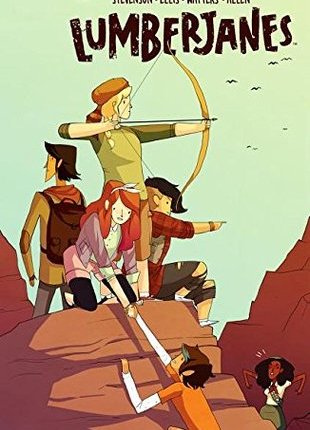
Lumberjanes, Vol. 2: Friendship to the Max

Is there anything a Lumberjane can’t do? I don’t think so.

From monsters to mysteries to zombified boy scouts, the Lumberjanessaga continues in this fun graphic novel.

Friendship to the max!

If only I could convince my reluctant reader to give it a try… I think she’d love it. Highly recommended for everyone.

lumberjanes3

Lumberjanes, Vol. 3: A Terrible Plan

This entry in the Lumberjanes series opens up with the classic setup of ghost stories being told around a campfire. The girls’ different personalities are highlighted in the stories they choose to tell.

Then, the camp has a free day where everyone can pick their own activity. Hijinks ensue.

Mal and Molly go on a picnic date in the woods and, in typical Lumberjane fashion, something totally unexpected happens.

“Molly, we are doomed. SO DOOMED. AN UNSCALABLE MOUNTAIN OF DOOMED.”

“Mal, come on. We’re gonna figure this out. It’s going to be fine…”

Are they doomed? Will April, Jo and Ripley be able to earn at least one badge before the day is up?

Read this book to find out!

Recommended for everyone.

lumberjanes4

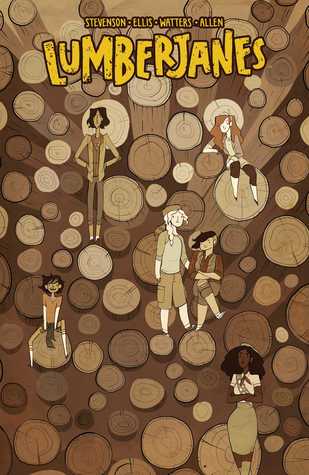
Lumberjanes, Vol. 4: Out of Time

Lumberjanes, Vol. 4 finally delivers a story line in which Jen gets a chance to shine. Yay, Jen!

We are also treated to a bit of background about Camp Lumberjane itself.

Also, the weather takes a turn as a winter blizzard appears out of nowhere… in the middle of summer.

Things are awfully weird around here. Good thing the Lumberjanes have each other.

Recommended for the adventurous reader and timid reader and everyone in-between.

Thanks for reading!

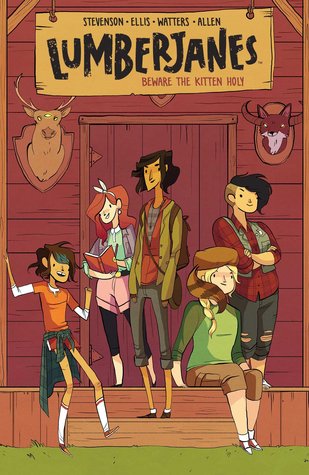
Lumberjanes, Vol. 1: Beware the Kitten Holy by by Noelle Stevenson, Grace Ellis, Shannon Watters, Brooke A. Allen

Lumberjanes, Vol. 1: Beware the Kitten Holy by by Noelle Stevenson, Grace Ellis, Shannon Watters, Brooke A. Allen
lumberjanes

The Lumberjanes is a group of girls, a mysterious forest, strange creatures, tunnels filled with living statues, river monsters and cookies!

I have high hopes that my reluctant reader child is going to love this if I can convince her to sit down and give it a try. One of her favorite television shows is Gravity Falls and this has a very similar vibe.

It is also a girl power book in that it showcases young women looking after and protecting themselves. A positive message, a fun story and cute graphics- I highly recommend it.

The highlights of this graphic novel are: the panel containing “the Kitten Holy” (Though she hasn’t read it yet, my child flipped through the book just to find it. Totally worth the “squee” she produced when she saw it.) and this joke, “Why are hipster yetis so odd? Because they can’t even.” pg 101. Hilarious.

Thank you to my friends for recommending this excellent graphic novel to me. You guys were right. It’s awesome.

And, thanks for reading!

The Dream Lover: A Novel of George Sand by Elizabeth Berg

The Dream Lover: A Novel of George Sand  by Elizabeth Berg
thedreamlover

The Dream Lover encompasses some of the best qualities that historical fiction has to offer. It transports you to the 1800’s France. It introduces you to an extraordinary person: Aurore Dupin, pen name, George Sand. Then, the reader gets to sit back and enjoy the wild ride that was her life. Talk about escapism.

For a woman in the 1800’s, George Sand had it going on. She left her husband, had a series of lovers- both male and female- became a famous author, involved herself in the political upheavals of her time… it is truly an incredible life.

Not everyone in her life accepted her for who she was: “I feel I have made a mistake, George, and that I do not love you after all. … The only thing you are passionate about is locking yourself up at night and writing your precious fiction, ignoring all that is before you here, which, if you would pay attention to it, would make your stories infinitely richer!” … It was as if I had been shot in the chest.” pg 242. But she wrote and loved anyway. Well done, Aurore, well done.

She rejected the role that society set out for her. “Tell me, George. Do you wish you’d been born a man?” … “In my youth, I wished that. … But now I find I don’t wish to be either man or woman. I wish to be myself. Why should men serve as judge and jury, deciding for us what can and cannot be done, what is our due? Why should they decide in advance of our deciding for ourselves what is best for us; why should they decide what IS us?” “But then you do wish to be a man!” “Perhaps I wish to be a woman with a man’s privileges.” pg 151. Amen.

I loved the drama in this novel as well as the romance. One would think that the sheer quantity of lovers that she had would have nullified any quality in the feelings, but Berg does a good job proving that this was otherwise. The passion that she exhibits in one, Sand seems to have shown in them all.

My only complaint about The Dream Lover is that it felt rushed because of the almost unbelievable amount of important events that peppered Sand’s life. I would have savored a 1000+ page book like Margaret George’s treatment of Cleopatra in The Memoirs of Cleopatra, but The Dream Lover appeals to the more casual reader.

Still, it would have been awesome. A bookworm can dream, can’t she?

If you enjoy Margaret George, you may like this book too for its sumptuous descriptions and tempestuous relationships. Also, you may want to pick up In the Company of the Courtesan or Marrying Mozart. Both are excellent historical fiction novels with similar themes to The Dream Lover.

I received a free advance reader’s copy of this book through Goodreads First Reads. FTC guidelines: check!

Thanks for reading!

Video guest post: Mary Edwards Walker by the History Guy

I have decided to partner up with another blogger to expand the content of The Help Desk.

I will continue to post the book reviews that The Help Desk is known for, but this blogging partnership will take some of the pressure off of my frantic reading schedule. It takes time to read and review books properly. With my new 40 hour a week job, I don’t have the time to devote to it as I used to.

The History Guy is a dear friend of mine who makes five minute videos about history.

His educational videos are well-researched and fun: a perfect fit for The Help Desk. If you’ve been following my blog, you’ll notice that I love quirky non-fiction. These are right up my alley.

I’ve learned a lot from this YouTuber and I hope that you do too.

My first pick from his lengthy catalog of videos is about Mary Edwards Walker, the only woman to receive the Medal of Honor. She was an abolitionist, surgeon and truly ahead of her time.

Without further ado, I present, “Five Minutes of History: Mary Edwards Walker,” by the History Guy.

And, as always, thanks for reading!

Unmentionable: The Victorian Lady’s Guide to Sex, Marriage, and Manners by Therese Oneill

Unmentionable: The Victorian Lady’s Guide to Sex, Marriage, and Manners by Therese Oneill
unmentionable

Unmentionable made me truly appreciate how good I have it compared to my female ancestors.

This clever little book examines the gross, disturbing, and, at times, hilarious “unmentionable” facets of a Victorian woman’s life and also, their powerlessness in society when compared to their male counterparts.

The women’s rights portion sounds grim, but Oneill’s writing keeps it light. I learned so much and was entertained too.

For example, I don’t consider modern cities to be very clean, but Oneill explains in her book, that they are shining examples of cleanliness compared to what came before: Some would argue that the nineteenth century was one of the filthiest times in all of Western history, particularly in any urban, developed area. … Ankle deep in filth, I said, but forgive me, I was inaccurate. You will wish the filth terminated at your ankles. Foulness is everywhere. Grime and rot cling to the very air, the buildings, the people; even the soap is made out of lard and poison.” pg 20, ebook.

All that dirt, but bathing was considered bad for your health and even, depending upon your religious upbringing, immoral! I’ve never read a historical fiction that describes the foul stench of the streets or the crowd upon it… now, I know better. Thanks Unmentionable!

Make up and other personal care products used to be either oily goop or filled with poisonous substances that could kill you or permanently wreck your face.

Photo by Rita Rebeca on Pexels.com

With this in mind, Oneill gives us a new take on the story of Jezebel: “She painted her face, and tired her head [fixed her hair], and looked out at a window.” “Some think this means Jezebel planned to seduce her way out of this problem; others think she was facing death with composure and dignity. At any rate, her eunuchs saw that they were on the wrong team and shoved her out the aforementioned window, and dogs ate her face. Which reinforces the assumption that her face was coated in sinfully delicious animal fat.” pgs 67-68, ebook.

Because women really had no other choice, being the ideal wife and mother was no laughing matter: “Your only job now that you are a nineteenth-century wife is to do everything within your power during every waking moment to make his life so sweet and full that he will literally dread the glory of Christ’s return, if only because it will mean parting from your secret strudel recipe and the unmatched craftsmanship of your trouser hemstitch.” pg 130, ebook.

So, unreasonable expectations of perfection abounded at home.

Photo by Pixabay on Pexels.com

Women, especially single, unmarried ones, weren’t supposed to go anywhere alone: “Etiquette for Ladies reminds us that no woman has any business being alone in a museum, a library, or any other such den of unwholesomeness. Wherever you are going, your behavior once you arrive should remain every bit as self-aware-but-pretending-not-to-be as when you were in transit.”pg 165, ebook.

The library is a “den of unwholesomeness”… ha!

But the worst of the era, in my opinion, was the medical community’s attitude towards women. At that time, we hadn’t figured out how the female body worked and didn’t connect the idea that people need intellectual stimulation and purpose for a life well lived.

That lead to the lumping of every female complaint under the title, “Hysteria”: “First I would like to tell you what hysteria actually was. Which is incredibly difficult. Because the only honest definition I can give you is “a misdiagnosis.” Epilepsy, diabetic shock, neural disorders, post-traumatic stress disorder, postpartum depression, and bipolar disorders do not necessarily cause similar symptoms, but they were all commonly diagnosed as hysteria.” pg 173, ebook. So, pretty much, everything then.

Photo by Vie Studio on Pexels.com

Oneill reminds the reader that many of the rights, and indoor plumbing, and personal care products that we enjoy today are because of the demands for a better life by women who lived during the Victorian era.

I am so very grateful and humbled for their contributions to society and the sufferings that they endured so that their children’s children’s children would have it better. Some further (non-humorous) reading: Spinster: Making a Life of One’s Own or Artemis: The Indomitable Spirit in Everywoman.

Thank you to Netgalley and Little, Brown and Company for a digital copy of this book & thanks for reading!

Women Who Read Are Dangerous by Stefan Bollmann, Foreword by Karen Joy Fowler

Women Who Read Are Dangerous by Stefan Bollmann, Foreword by Karen Joy Fowler
womenwhoread

Part art appreciation and part homage to the female reader, Women Who Read Are Dangerous is probably the the most aptly titled book that I’ve ever read.

In addition to the beautiful images (my favorites pages 73 & 89), this book educates the reader about the politics, historical trends, and gender inequality tied to reading. Who knew that simply picking up a book could be such a subversive act?

Women Who Read are Dangerous sums up years of strange thinking about women and books with a dose of humor that I appreciated.

Take these historical opinions for example: “Women are too literal-minded for reading. Women are too sentimental, too empathetic, too distractable for reading. Women are passive, practically somnolent, consumers of popular culture, never realizing how, with the very books they choose, they participate in their own subordination.” pg 16

Photo by Los Muertos Crew on Pexels.com

Or this: “The lack of all physical movement while reading, combined with the forcible alternation of imagination and emotion,” said the teacher Karl G. Bauer in 1791, would lead to “slackness, mucous congestion, flatulence, and constipation of the inner organs, which, as is well known, particularly in the female sex, actually affects the sexual parts”- so anyone who read a great deal and whose powers of imagination were stimulated by reading would also be inclined to masturbation, as indeed we can already observe in Baudouin’s painting. But such moralizing could not hold up the triumphal march of reading, including- and specifically- female reading.” pg 23

Can’t hold us back, right readers? I’m actually feeling pretty well for all the reading that I do.

Photo by cottonbro on Pexels.com

Reading is power, I’ve always known that: “With the ability to read, however, there developed new patterns of private behavior that were to threaten the legitimacy of both the Church and secular authorities on a permanent basis. Women who learned to read at that time were considered dangerous. For the woman who reads acquires a space to which she and no one else has access, and together with this she develops an independent sense of self-esteem; furthermore, she creates her own view of the world that does not necessarily correspond with that conveyed by tradition, or with that of men.” pg 26

An introvert’s paradise, the keys to your freedom, the way to stick it to the “man”… as if I needed more reasons to read.

I also liked this description of reading: “Reading is an act of friendly isolation. When we are reading, we make ourselves unapproachable in a tactful way.” pg 34 I never really considered it that way before, but it is a method in which you remove yourself from the world for a time, even from those sitting in the same room.

Photo by Karolina Grabowska on Pexels.com

Seems obvious, when I consider it, but I had never taken the time to do so.

Finally, I learned about how “silent reading” is a recent trend. Did you know?: “An illiterate today is not only someone who cannot read (or write), but also anyone who cannot understand a text unless he or she reads it aloud. Yet there must have been a time when the opposite was the case- when reading aloud was the norm, as silent reading is today. … Until well into the Middle Ages and in some cases well into modern times, reading consisted of both thinking and speaking, and was above all an act that took place not in separation from the outside world, but at its center, within the social group and under its surveillance.” pg 25

Ugh. “Under its surveillance”?

That brings to mind the quotation, “Let others praise ancient times; I am glad I was born in these.” -Ovid.

Highly recommended for art enthusiasts and anyone who loves to read, Women Who Read are Dangerous is a lot of fun and a walk on the wild side… if one believes in such things.

If you’re looking for more non-fiction information about reading, try “Wild Things! Acts of Mischief in Children’s Literature” by Betsy Bird. It doesn’t have the beautiful artwork of this book, but it does contain a lot of information about the history and, sometimes scandalous, back story of children’s books and authors.

A big thank you to the Goodreads First Reads Program for a finished copy of this book for review purposes.  And, thank you for reading!

Not That Kind of Girl: A Young Woman Tells You What She’s ‘Learned’ by Lena Dunham

Not That Kind of Girl: A Young Woman Tells You What She’s ‘Learned’ by Lena Dunham
notthatkind

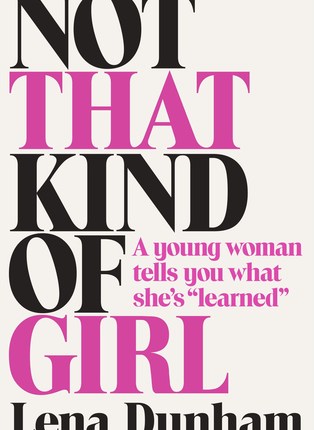
“Not that kind of Girl” is a non-fiction collection of essays by Lena Dunham.

In Not That Kind of Girl, Dunham has crafted a very raw and brave set of essays about growing up, her family, her success, her crushing anxiety, and what it’s like to be a woman in Hollywood.

Not That Kind of Girl and I got off to a rocky start.

I loved Dunham’s introduction but the next, seemingly endless, chapters, where she talks about her dysfunctional relationships, one after another, were awful.

She uses a stream-of-consciousness style writing so that, in the middle of telling one story, she puts in totally unrelated stuff.  Most of the time, it’s about another dude who she banged once or more, depends on the story. I was completely confused and not into it.

But then, once I was past that first part, the memoir picked up considerably.

So, if you can make it past the initial bit, I found the rest of Not That Kind of Girl to be well worth the read.

Here’s some parts I enjoyed:
For my husband, the DnD player, she’s talking about finding an eligible man on campus: “The pickings were slim, especially if, like me, you were over bisexuals. At least half the straight men on campus played Dungeons & Dragons, and another quarter eschewed footwear entirely.” pg 32 ebook. The horror! :p

How relationships end: “The end never comes when you think it will. It’s always ten steps past the worst moment, then a weird turn to the left.” pg 97 ebook. Kind of like the “Time Warp.”

I loved her reasons for writing. In this passage, she’s talking to a girl she admired, who had just asked Lena why she writes: “And in our work, we create a better or clearer universe,” I tell her breathlessly. “Or at least one that makes more sense.” pg 220 ebook.

Lena remembers a disturbing incident with a grade school teacher: “I was reminded again that there are so many things we need that can also hurt us: cars, knives, grown-ups. I was reminded how no one really listens to kids.” pg 267 ebook.

A true eccentric: “Isabel is a true eccentric- not the self-conscious kind who collects feathers and snow globes but the kind whose passions and predilections are so genuinely out of sync with the world at large that she herself becomes an object of fascination.” pg 282 ebook.

Finding her way in a “man’s world”: But the scariest thought of all is the one that pushed me to keep making contact well past the point that I became uncomfortable, to try and prove myself again and again. The reason I didn’t stop answering their calls, that I rushed to drink dates that were past my bedtime and had conversations that didn’t interest me and forced myself to sit at the table long after I’d grown uncomfortable. The thought I worked so vigilantly to ensure they would never entertain: She’s silly. She’s no threat.” pg 314 ebook.

I felt that passage, very deeply. There is the beauty of Dunham’s writing- she records her thoughts in such a way that the reader says to herself, “That’s me. I’ve been there. That’s all of us.” At least, I did.

If you enjoyed Not That Kind of Girl, you may want to read Spinster: Making a Life of One’s Own by Kate Bolick, Pigs Can’t Swim by Helen Peppe, or Furiously Happy: A Funny Book About Horrible Things by Jenny Lawson. All of those books take potentially uncomfortable topics and apply a honest and, sometimes amusing, lens to them.

Thanks for reading!