Peace Talks (The Dresden Files, #16) by Jim Butcher

Peace Talks (The Dresden Files, #16) by Jim Butcher

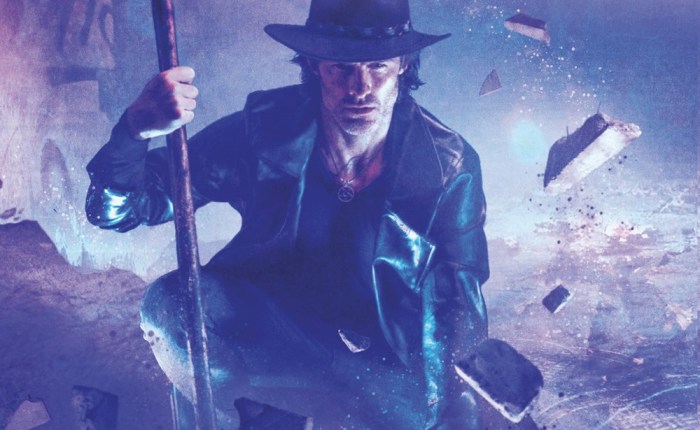
Harry Dresden’s life has become infinitely more complicated since the beginning of The Dresden Files. He constantly struggles to balance his responsibilities as a member of the Winter Court, the White Council, and familial concerns.

Not to mention his role as a warden of an island that protects the world from dangerous magical creatures.

“I slung the weighted vest over my shoulder and started trudging back to the car. I had that sinking feeling that things were about to get hectic again.” pg 8

Photo by Jess Vide on Pexels.com

He’s developed a little bit emotionally since his carefree days of “wizard for hire,” but, in other ways, his personality has remained exactly the same.

“…you can’t ignore things that are real just because they’re uncomfortable.” pg 4

The Dresden Files is a fun escape into a fantasy world of magic (one could call it ‘book candy’) but part of the problem with the series is that it has built to a major crescendo. What can one person really do against powers of the universe that are so strong that they can be described as “gods”?

“I think someone you don’t expect is going to stab you in the back, Hoss.” pg 30

Another issue is how often the “winter mantle” takes over Harry’s mind so that he’s constantly thinking about strutting his stuff in front of the opposite sex. I get that it’s a reoccurring problem for him, but it gets repetitive after the first half dozen incidents.

It doesn’t help that he hangs out with a literal queen of the succubus, but I digress. 🙂

Some of my Goodreads friends pointed out that the start of this book is somewhat ridiculous- hanging on the idea that the fairies always repay their debts though readers aren’t given the reason why a debt was needing to be repaid. I agree the setup could have been more carefully constructed.

Photo by Myicahel Tamburini on Pexels.com

That being said, I read the entire book in two days. (Book candy strikes again!) So there’s something very enjoyable about the whole thing even with the balance of power problems, repetitive sexual fantasies, and suspension of belief required to get in to it.

Highly recommended for readers who have enjoyed the previous books in the series or folks who like urban fantasy reads without too much complexity.

Thanks for reading!

The Song of Achilles by Madeline Miller

The Song of Achilles by Madeline Miller

Madeline Miller brings her incomparable talent for rewriting ancient myths for the modern audience to the tale of the Greek hero, Achilles, and his lover, Patroclus.

“For many years now, Achilles, I have urged companions on you and you have turned them away. Why this boy?” … “He is surprising.” pg 26, ebook

Photo by Bakr Magrabi on Pexels.com

Readers don’t have to be familiar with the mythology behind the story to enjoy it. In addition, Miller includes a helpful guide of figures from classical myth at the back of the book in case you are in need of a refresher course.

Here’s a brief summary: Helen, the most beautiful woman in the world, is kidnapped (or leaves of her own accord, it’s unclear) and taken to Troy. Warriors around the globe gather to fight on one side or another because of this inciting incident, and the gods do as well.

As told in The Illiad, it is a struggle between mortals, immortals, and those who stand inbetween those two- the demi-gods, children of both worlds.

Among this special group, there is the son of Thetis, a sea nymph, and Peleus, the king of a small Grecian country. His name is Achilles. There is a prophecy, a couple in fact, about Achilles and that plays a large part in the story that follows.

Photo by GEORGE DESIPRIS on Pexels.com

The part of the story that has not been told before, and that Miller illustrates with such brilliance, is the life of Patroclus, the man whose death is so central in the myth but who is rather ancillary to the other heroes in the original telling.

“This was more of the gods than I had ever seen in my life. He made it look beautiful, this sweating, hacking art of ours.” pg 32, ebook

Miller also brings attention to the shadowy figure of Thetis, Achilles’ mother. Her role in the story was marginalized as well, but in The Song of Achilles she comes to the forefront.

Like parents throughout history, she wants her son to succeed to the best of his ability. In this particular case, she thinks he should shed his mortality take his place among the gods.

To do so, he has to achieve godlike status on earth. Falling in love with a mortal does not fit into Thetis’ plan for Achilles’ future.

Photo by Hernan Pauccara on Pexels.com

“There is no law that gods must be fair, Achilles,” Chiron said. pg 55

I read Miller’s Circe prior to this story and so wasn’t surprised that I enjoyed this tale as much as I did. As I mentioned before, she excels at taking old themes and making them feel new again.

This cultural development is important for humanity, as I recently read in Antigone Rising: The Subversive Power of the Ancient Myths. There is power in the stories we tell and the manner in which we tell them. It helps to shape the future.

Highly recommended for readers who enjoy mythology or a simply well-told tale.

Thanks for reading!

Patriarch Reliance (I Shall Seal the Heavens, #1) by Er Gen

Patriarch Reliance (I Shall Seal the Heavens, #1) by Er Gen

Meng Hao, an ambitious yet ultimately unsuccessful scholar, is kidnapped by a magically powerful woman and catapulted into a world of “cultivators”, mortals who grow their spiritual power in a never ending quest to become immortal. It is a dangerous world and Meng decides that the only way to stay alive is to become as powerful as he possibly can, as quickly as he can.

Photo by carol wd on Pexels.com

Patriarch Reliance was my first foray into the written world of the fascinating genre known as “wuxia”. I say ‘written’ because I this past summer I watched a show of the same genre on Netflix and thought it might be interesting to read a book. I Shall Seal the Heavens was one of the highest rated wuxia series available that has been translated into English.

What is wuxia? The definition from Google is: “a genre of Chinese fiction or cinema featuring itinerant warriors of ancient China, often depicted as capable of superhuman feats of martial arts.”

Patriarch Reliance is an adventure fantasy that uses many components of traditional Chinese medicine in its magic system or spiritual cultivation. Traditional Chinese medicine was a subject I’d never studied until I found myself looking up the topic to understand how the magic works in this book. It seems quite complex to me, but perhaps this is because I’m a newcomer to it.

Photo by Pietro Jeng on Pexels.com

The cultivators use a dizzying array of magical items with different abilities from a rain of swords to flying fans that turn into rays of light to almost anything imaginable. They are gathered and ordered by ability into sects with different legacies and secret attacks. The higher ups among the different groups fight as viciously as the newbies- perhaps more so because they have their reputations to maintain.

Despite the huge array of items and abilities, this book does become repetitious after two dozen chapters or so as Meng goes from one life threatening situation to another.

A curious aspect of the story was its deviation from my own expectations of what someone of higher spiritual power should act like. When I think of someone ‘spiritual’, I picture people like Mother Theresa, Dalai Lama, and Buddha.

Photo by Alexandr Podvalny on Pexels.com

The cultivators in Patriarch Reliance are nothing like that. They are, for the most part, violent, careless of life, and power-hungry. And they have to be. Or the people studying and meditating beside them will kill them!

I’m not sure what to make of the whole thing except that I’m going to continue on to the next book in the series. Because, despite my bewilderment, it is compulsively readable.

Recommended for fantasy readers who enjoy forays into completely unfamiliar worlds.

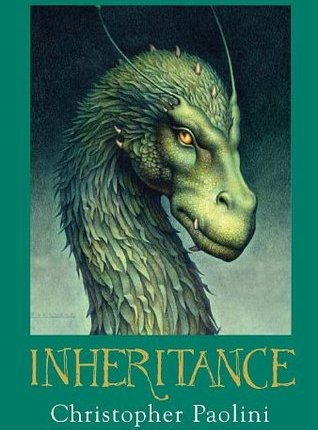
Inheritance (The Inheritance Cycle, #4) by Christopher Paolini

Inheritance (The Inheritance Cycle, #4) by Christopher Paolini

Christopher Paolini brings his fantasy series for young adults to an end with Inheritance, the fourth and final book in The Inheritance Cycle.

Eragon, Saphira, the Varden and their various allies including elves, dwarves and urgals, make their way to Uru-baen, the capital of the evil Galbatorix’s empire, in a thrilling set of battles that bring a conclusion to the struggle between the characters of this world.

Photo by Rene Asmussen on Pexels.com

If you’ve been following my reviews as I made my way through this series, you’ll note that this is the highest rating (four stars) I’ve given any of the books. I could tell that Paolini brought all of the skills that he learned in writing the first three books to this one.

The characters are well-developed as he’s had thousands of pages to make them that way. The battles are nail-bitingly awesome.

The fallout after the main confrontation is long enough to tie up loose ends, but not so long that I was tired of reading about the world.

And it is a fun world to visit. Paolini took his cues from the classics of fantasy to craft his own world so that it feels familiar in a comforting way to fans of fantasy fiction.

Photo by Lukas Rodriguez on Pexels.com

But that familiarity cuts both ways. Paolini doesn’t move far from the expected tropes in the creation of his story. There were a few large reveals in Inheritance that I wanted to be more imaginative than the twists that Paolini crafted.

That being said, I did enjoy this book more than all the others. Once I started the final hundred pages, I couldn’t put the book down.

I think this series could be a lot of fun for young readers. Despite its predictability, there is much to enjoy in The Inheritance Cycle. Older readers or the young at heart might want something that veers a little more off of the expected paths.

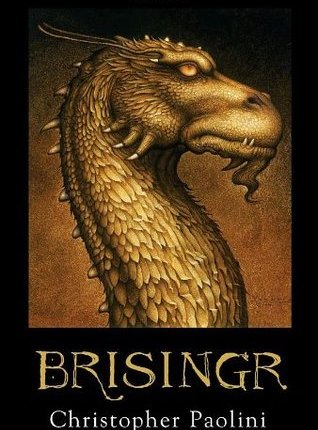
Brisingr (The Inheritance Cycle, #3) by Christopher Paolini

Brisingr (The Inheritance Cycle, #3) by Christopher Paolini

In Book 3 of The Inheritance Cycle, our hero Eragon and his numerous allies continue to inch their way towards the final confrontation with Galbatorix and his dragon, Shruikan.

Photo by Dapo Abideen on Pexels.com

Unlike the first two books in the series, I felt Paolini’s pacing was off. Everything is moving much too slowly. And then, when one of the leaders of the Varden sends Eragon off on a secret mission after the armies finally begin engaging each other, I actually groaned. 

Yes, I realize there’s more to this fantasy story than endless battles and sieges. But they’re the fun part!

I also realize that I’m not the intended audience for this series, crafted for young adults. But that’s never stopped me from reading a book that looks entertaining. And these targeted young adult readers deserve better plot development than the sudden appearance of ancient artifacts or obscure dragon anatomy that changes the entire course of the story in the final chapters of a 600+ page book.

Photo by Pixabay on Pexels.com

I think that is my main quibble with this series. It was written over such a long period of time that Paolini wasn’t able to build levels into his tale with foreshadowing. Important elements like Eragon’s mysterious parentage feel almost tacked on or added as after thoughts.

On the other hand, I do like the way Paolini has continued to develop the Rider/dragon relationship between Eragon and Saphira and her growing maturity as a character. And, despite my complaints with some story elements and pacing, I will continue on to the final book in the series.

I hope he does the ending justice.

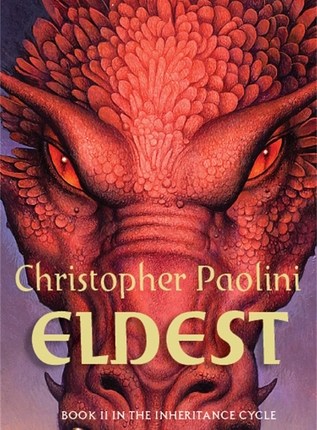
Eldest (The Inheritance Cycle, #2) by Christopher Paolini

Eldest (The Inheritance Cycle, #2) by Christopher Paolini

Eldest is an enjoyable follow up to Eragon, a fantasy tale about a young man, his dragon, and a desperate fight to save the world from an evil immortal.

The best part about this entry of The Inheritance Cycle is that portions of it follow Roran, Eragon’s non-magical cousin, as he struggles to keep his village alive during the fall out of Eragon’s actions from the previous book.

“As he walked, he continued to order his thoughts. After Garrow’s death, Roran had abandoned his job at Dempton’s mill in Therinsford and returned to Carvahall.” pg 37, ebook

Photo by Spencer Selover on Pexels.com

I’ve often wondered about the relatives and neighbors of the magical heroes that are featured in most fantasy tales. What happens to them while earth-shattering events are going on, rings are being melted, and orcs, or ‘urgals’ in this tale, plunder and pillage?

Eldest begins to tell that forgotten story through Roran’s eyes.

“After the last mournful note faded into silence, family members praised the feats and traits of those they had lost. Then the bodies were buried.” pg 111, ebook

Photo by sergio souza on Pexels.com

Christopher Paolini writes at a pace that engages younger readers but doesn’t leave adult readers, like myself, wanting more depth. He carefully constructs scenes and backstories for characters with enough context to make you care about what happens next.

“A tingle of awe and joy shuddered along Eragon’s spine. This was where he belonged, as a Rider. Of all the things in Alagaesia, he had been lucky enough to be joined with this. pg 132, ebook

A funny quibble I have with this book, like in the last one, is I don’t particularly like how Paolini writes the character of Eragon’s dragon, Saphira. He makes her out to be occasionally insecure or jealous, and I’ve always pictured dragons as wise, free and powerful spirits of nature. But those are my preconceived visions of what dragons should be like and I understand how not every reader will have my sort of view on the matter.

Photo by Lachlan Ross on Pexels.com

I also don’t like Paolini’s take on elves. In some ways, the elves in Eldest come off as pretentious and pompous jerks. I get that he was going for a type of removed, immortal elegance, but it didn’t quite work for me.

All that being said, I will be continuing on to the next book. Young adult fantasy readers will most likely enjoy this read too.

A Golden Fury by Samantha Cohoe

A Golden Fury by Samantha Cohoe

“Do you think I do not know why you wish to send me away? But I will not let you, not when we are near to making the White Elixir! I will not be erased from our achievement!”

Photo by Designdrunkard on Pexels.com

Thea has worked her entire life in her mother’s alchemist laboratory. Now, she’s in love with a former apprentice and ready to begin a laboratory of her own, but her mother is acting strangely. Could it be because her mother is near to the breakthrough of a lifetime or is she having a breakdown? Thea is going to find out.

This young adult, coming-of-age story weaves alchemy and romance in a slow paced foot race to a predictable ending.

The thing that I find so compelling about alchemy, which I felt the author didn’t use to its maximum effect, is the spiritual side of the practice. Perhaps, historically speaking, most concerned themselves with alchemy for its elusive promises of immortality and unending wealth. But it is the spiritual treasures of the practice that most interest me and that I feel have the most untapped storytelling potential.

Though there were a few spiritual elements in A Golden Fury, I wanted there to be much more.

Photo by Matheus Bertelli on Pexels.com

“The Philosopher’s Stone gave everything humankind wanted but did not believe we could have in this life. With such a reward, it was not hard to see how so many great minds had wrecked themselves in its pursuit.”

To be fair, I think the intended audience for this book is younger than I am. However, I believe even young adults can appreciate a story with a little more complexity than A Golden Fury dishes up, especially in the development of the main character, Thea, and the various antagonists.

Thank you to NetGalley and the publisher for a free digital copy of this book.

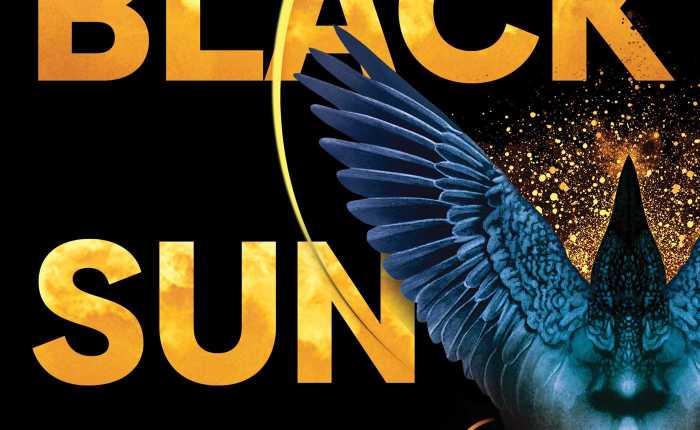
Black Sun (Between Earth and Sky, #1) by Rebecca Roanhorse

Black Sun (Between Earth and Sky, #1) by Rebecca Roanhorse

Black Sun is a fascinating fantasy novel that examines religion, ritual, prophecy, and how all of those variables affect civilization and the balance of power between groups within that civilization.

“Just like their great ancestor, I have swallowed the shadow of the sun. They call me Grandfather Crow sometimes, although I am not so old.”

Photo by Tom Swinnen on Pexels.com

Much has already been said about Rebecca Roanhorse’s characters in Black Sun, which are phenomenal, so I will only add to the discussion by saying how much I enjoyed the differences that she created between the various cultural groups of this fictional world. I also liked how she built the hierarchies within the cities, especially Tova.

“It is said that thousands of years ago our world was once populated with gods. They are our ancestors. But there was a great war, the God War, and many were killed. Those who were not killed in the war began to die anyway.”

This spring, I took a course from Oxford University about ritual and religion in prehistory and it not only changed the way I view the role of religion within the creation of civilization, it also changed my analysis of books that contain religious themes, like this one. Matters of faith and spirit aside, there are compelling reasons to believe that religion started as a method of maintaining power and control within groups in prehistory.

Photo by freestocks.org on Pexels.com

Roanhorse’s work shows these connections clearly. There’s hints of a bloody night filled with warriors who set out to exterminate a particularly warlike cult for, what they say is, the good of all the other groups. The priestly-class carefully constructs rituals and remembrances to not only mark the passing of time and powerful individuals but also to demonstrate their enduring power over the groups they claim to represent.

The mysterious figure, Serapio, is manipulated from birth to fulfill a role that no one tells him about because of a specific prophecy of the Carrion Crows. The Sun Priestess Naranpa has difficulties holding her office because of the poverty of her birth family will always make her an outsider among the more privileged classes who traditionally gave their sons and daughters to the priests.

There are more examples of power struggles throughout the story and I don’t want to ruin anyone’s enjoyment of discovering them. Those were a few that came readily to mind.

Photo by Pixabay on Pexels.com

So, in addition to being an immersive fantasy read, Black Sun is also semi-educational about the potential development of religion in prehistory.

All that being said, and as much as I loved the character and plot development, I didn’t like the ending. No spoilers here though.

Thank you to NetGalley and the publisher for a free advance reader copy of this book.

Or What You Will by Jo Walton

Or What You Will by Jo Walton

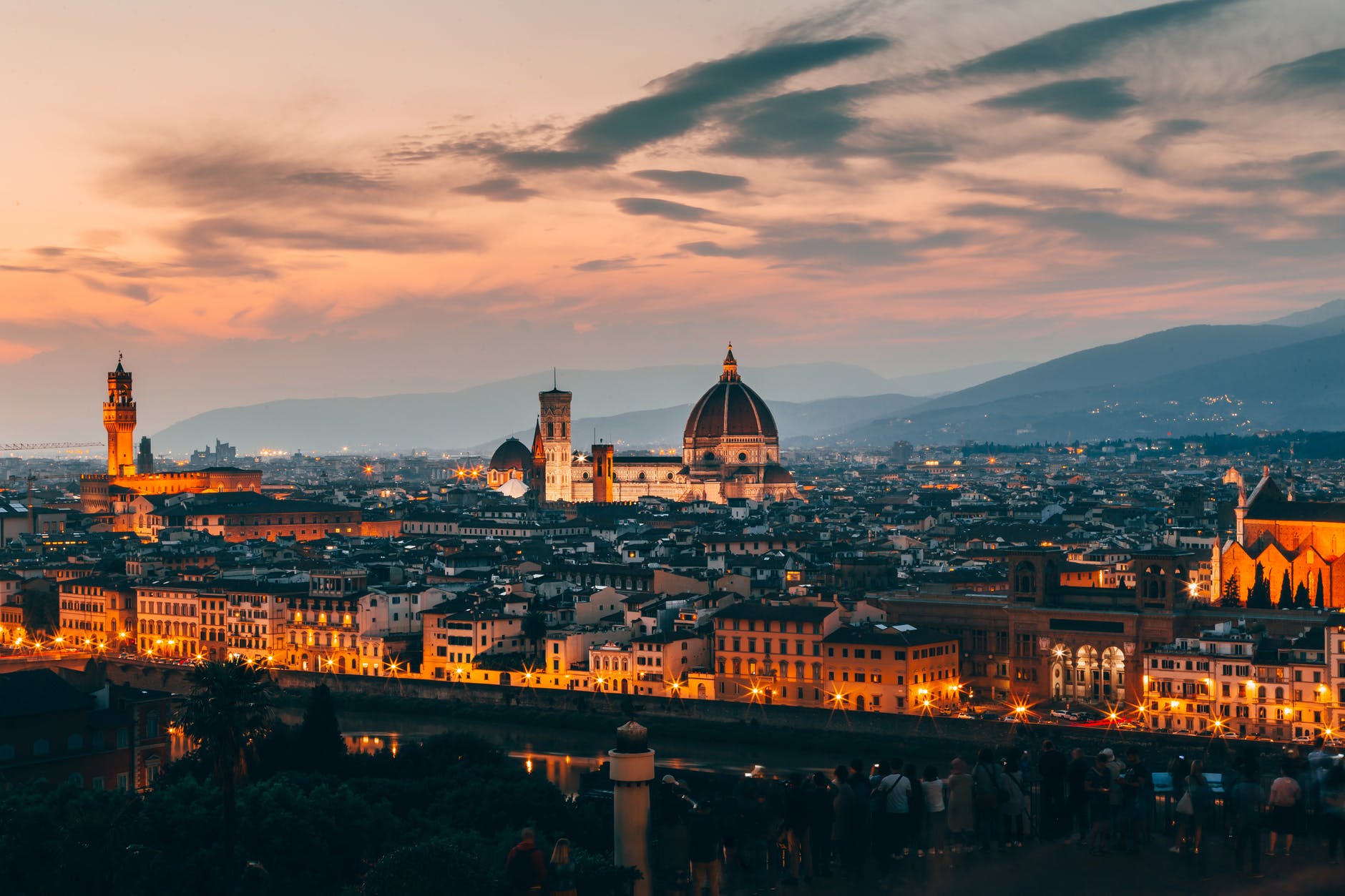
Or What You Will is a unique fantasy novel about a writer, one of her fictional characters, her real life, a final story she is writing, and her love affair with the city of Florence.

“I have been a character, and I have been a narrator, but now I don’t know what I am.” pg 8, ebook.

Photo by Tamara Velazquez on Pexels.com

Told from the point of view of a character inside another character’s mind and between flashbacks to real life and an on-going fictional story-within-the-story, Or What You Will sounds quite complex. But once I got into the flow of it, I enjoyed this quirky tale quite a lot.

“Readers remember you. So you’ll live on in the books. It’s the only form of immortality the real world has.” pg 53, ebook.

I loved learning about Sylvia (the fictional writer’s) life, loves, and writing process. Part of its charm is that this is a meta-filled book for readers who love the process of writing and the development of characters. It is also filled with surprising and entertaining tidbits of real history about Florence which appealed to the amateur historian in me.

Photo by Josh Hild on Pexels.com

There was plenty to enjoy in Or What You Will. My quibble with the book has to do with its ending.

After meticulously building an immersive world, or two, the author unceremoniously ends the story in a few paragraphs.

It was incredibly disappointing, especially when you consider the book is only 226 pages long (ebook). She had room to do more. In fact, I could have stayed in the world she created for twice as many pages.

That being said, the last few pages of the book made me cry. So, perhaps it was a satisfying ending in its way. I just wish it had been developed more fully.

Photo by Daria Shevtsova on Pexels.com

Other than the ending, this is a brilliant and totally unique story, unlike anything I’ve ever read. If you like Jo Walton’s other fantasies, you may want to give it a try.