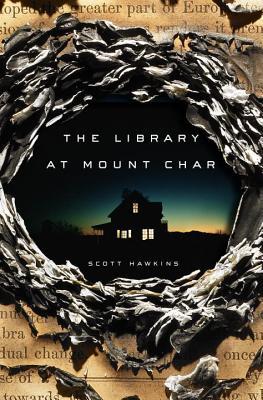
The Library at Mount Char by Scott Hawkins

The Library at Mount Char by Scott Hawkins

Review on Reread, August 2025: It has been ten years since I first read The Library at Mount Char (my original review may be read below this one). I think the book has held up incredibly well in the decade since its publication. Well done, Mr. Hawkins.

Rather than rehashing the plot, I’d like to take a moment to address a theme that I didn’t touch on my last review. If the spirit (or soul, if you will) of a person is truly immortal and said person, through magic or a technology so advanced that it appears as magic, does not die but instead lives on and on for 50 to 60 thousand years, what effect, if any, would this unnatural longevity of the body have on the spirit? What if the spirit retains all memories of this elongated life? How would that change their behavior in their every day interactions with other, non-immortal, beings?

My partner and I have discussed the potential devastating consequences of such a thing when considering the longevity of elves in Tolkien’s classic work The Lord of the Rings or the twisted upper class in the series Altered Carbon. The way I see it, the elves would probably start to lose the plot around year 150 or so and then it would be all downhill from there. Why? Imagine, if you will, the hurts, slights and every day micro-traumas that can cause such damage in a normal lifespan being extended over thousands or tens of thousands of years. How could someone possibly deal with such a thing and not lose their minds? My contention is that they can’t.

Yes, we are talking about magical beings with, I’m assuming, some sort of safety valve to the normal wear of time on the spirit. But what if there was no safety valve? What if, as time marched on and on for these beings, they became more and more removed from their elvishness (or in The Library of Mount Char and Altered Carbon, their humanity) and instead became aloof, immortal beings who would stop at nothing and have all of the resources in the universe to achieve their aims.

One might observe them abusing the beings around them because they no longer have the ability or desire to empathize with other flawed beings who are still existing in time. Or maybe they forget their reasons for wanting to change their world around them in the first place and become overly fixated on their own viewpoint to the detriment of all others.

Or maybe, just maybe, they can’t let go of what happened in the past and they make their current reality into a reoccurring nightmare of past traumas, perpetuating the cycle subconsciously into not only their future but everyone else’s too.

My point is, I believe physical death happens for a reason, perhaps a reason that we do not yet understand, but maybe it has something to do with the rehabilitation of the spirit that occupies the body more than the limitations of physical reality. As humanity develops more and more sophisticated methods for extending our lives (one thinks on a certain conversation two world leaders had recently about organ transplants), I think we should consider the potential spiritual cost of these strategies not only for those who are unable to afford such things but also for those who partake in them. What sorts of emotional baggage or past traumas are being dragged kicking and screaming into the future?

The Library at Mount Char could be read as a warning for the fantasy of the immortality of the body. At what point in a life that spans eternity does a person change from a person into something else? Does immortal life make one a god or simply a mortal who has outlived their own time?

I don’t know the answers to these questions. I invite you to give this book a read and let me know what you think. It really is worth the read and I highly recommend it.

Thanks for reading.

Original Review, May 2015: The Library at Mount Char is an urban fantasy/horror novel about Carolyn and her adopted “family” who are studying the seemingly endless knowledge of an immortal being that they call “Father”. The lessons that they learn are terrifying but powerful. After years of fear and torture at the hands of the Father and some of her siblings, Carolyn wants to break free from her living nightmare. She knows that she can’t trust anyone, but she also doesn’t know all of her Father’s secrets. How exactly does one escape from a god?

I think that this book is fantastic. The characters are more than human and divinely flawed, all of them. The plot proceeds at a breakneck pace, going from thrilling to apocalyptic so quickly that I couldn’t put this book down. Yes, I lost some sleep reading The Library at Mount Char. If you pick this up, I bet that you will too.

Sensitive readers, beware.  There is sexual violence/rape, physical abuse, mental abuse, and animal abuse in this book.  If any of those topics cause troubles for you, you may want to choose a different read.

The distinctive mix of godlike powers and very human, emotional, knee jerk reactions contained in this story reminded me of some of the darker Greek and Roman mythological story elements like the serial rapists (Zeus and about every other major god figure) and the unjust punishments of the innocents (Medusa, Actaeon, Laocoon, etc etc). Those mythologies were written to explain the unexplainable workings of nature, weather, time, and humanity itself. I think, if one makes The Library at Mount Char into a metaphor for reality, that in a modern way, it fills the same role as those more ancient stories. It gives a rhyme and reason to the mystery that is life. Pretty deep for a debut fantasy novel, yes?

Some of the twists I saw coming, but others, some of the big ones, I didn’t. It kind of reminded me of an M. Night Shyamalan film, except instead of one gasp worthy moment, there were maybe six of them. After each one, I’d sort of put the book down for a second and start to rethink the story from the new vantage point that the author had just provided. It’s really an amazing work for a first novel. Maybe Hawkins will give the world a series?? Please. I’d read it.

Thank you to the Goodreads First Reads program for an advance reader copy of this book.  And, thank you for reading!

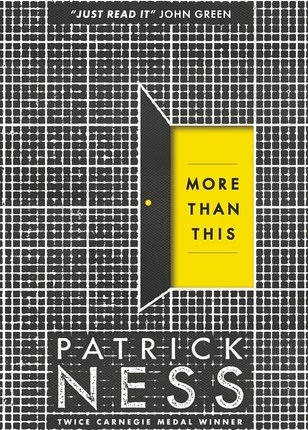
More Than This by Patrick Ness

More Than This by Patrick Ness

I picked up More Than This because I recently enjoyed A Monster Calls. This book, like Monster, is about a young man learning how to handle life’s major hurdles. That, though, is where their similarities end.  More than This opens with Seth drowning in the ocean and the story really begins when he opens his eyes after death…

Photo by Amber Janssens on Pexels.com

More Than This is darker than A Monster Calls in many ways. For readers who are concerned about the maturity level of themes in this book: there are some (short) scenes of physical abuse, non-graphic GLBT teen sex, teen suicide, brief moments of bullying, extremely brief nudity (both male and female), and a short masturbation bit. On the other hand, there’s a lot of empowering elements in here too. There’s a very strong, young, black female heroine, a plucky, brainy, Polish sidekick, and some really trippy depictions of reality itself. The GLBT relationship is healthy and non-abusive. The friendships that develop between the main characters are real and beautiful.

Depending on the young adult reading the book, I’d say 14+ might be a good age for this one.

I loved the ambiguity of Seth’s situation in the afterlife. No spoilers here, but that was my favorite part, the “what the heck is going on here” moments that Ness kept handing to me. Read it and you’ll see what I mean in mere pages.

Photo by Jonathan Andrew on Pexels.com

Patrick Ness is at his strongest when he’s writing his way around painful emotions, which there are piles of in this book. He’s at his lowest during the first part of More Than This because of the pacing. This starts out seriously slowly, but if you can make it through the first section, things pick up considerably afterwards.

Some of my favorite moments: “Is this a dream? he thinks, the words coming to him slowly, thickly, as if from a great distance. The last dream before death?” pg 13 ebook

“He looks out toward the darkened sitting room and wonders what he’s supposed to do here. Is there a goal? Something to solve? Or is he just supposed to stay here forever? Is that what hell is? Trapped forever, alone, in your worst memory? It makes a kind of sense.” pg 31 ebook

Seth’s relationship with his parents is pretty messed up, which is very sad, really: “His mother made a sign with her hands of sarcastic surrender, then stared firmly at the ceiling. His father turned to look at him, and Seth realized with a shock how rare it was for his father to look him straight in the eye. It was like having a statue suddenly ask you for directions. pg 97 ebook

Photo by Denise Duplinski on Pexels.com

My favorite character was Tomasz. He has wisdom far beyond his age:“Tomasz shrugs. “People ask for what they need in different ways. Sometimes by not even asking for it at all.” pg 149 ebook

The heroine: “People see stories everywhere,” Regine says. “That’s what my father used to say. We take random events and we put them together in a pattern so we can comfort ourselves with a story, no matter how much it obviously isn’t true.” She glances back at Seth. “We have to lie to ourselves to live. Otherwise, we’d go crazy.” pg 159 ebook. Very true.

One last passage, for my husband, who argues with people on the internet far too much and who came to mind here: “And that’s what the Internet age has done for us,” his mother says, sitting down. “Anything you don’t like is automatically disgusting and anyone who may like it themselves is an idiot. So much for a world full of different viewpoints, huh?” pg 319 ebook.

If you enjoyed More Than This, you may like A Monster Calls even more (I know I did) or try The Last One by Alexandra Oliva (a book written for adults, but a mature young adult would probably enjoy it too).  Thank you for reading!

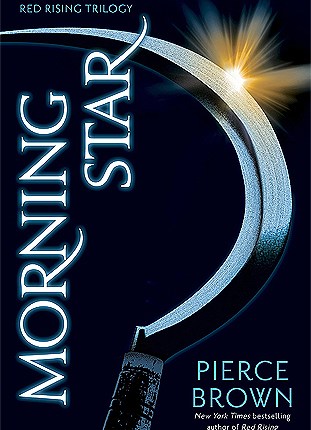
Morning Star by Pierce Brown

Morning Star by Pierce Brown

The Red Rising trilogy, of which Morning Star is the third book, is a gritty space opera in a futuristic universe.  Mankind has genetically engineered themselves into classes based on colors.  Each color has a specific function, which individuals can’t refuse to fulfill, in society.  The Golds are at the top and the Reds are at the bottom.  Everyone inbetween these two polarities suffers as well…

One word to describe this whole trilogy: INTENSE. It draws you in. It makes you keep reading when you should be going to sleep. It transports you to another world. My husband was laughing at me: sitting in my favorite chair, gasping in surprise or groaning in despair at the incredible turns in this story. I had to keep putting my hand over the page so that my eyes wouldn’t skip ahead and spoil it. Seriously. This book is that good. Its predecessors are also enjoyable, but this one absolutely brought the thunder. I loved it. Sci fi/fantasy fans, read them. Right now!

Brown waxes on a bit in Morning Star but I loved it. His style is reminiscent of Dan Simmons- meandering, bordering on repetitive, but I forgive him. It’s worth it. I’m going to share a couple of my favorite passages now, to give you a taste of the poetry of Brown’s story. No spoilers, I promise.

Darrow, throughout the course of the story, has become a severely damaged hero: “He wants pity. My pity was lost in the darkness. The heroes of Red songs have mercy, honor. They let men live, as I let the Jackal live, so they can remain untarnished by sin. Let the villain be the evil one. Let him wear black and try to stab me as I turn my back, so I can wheel about and kill him, giving satisfaction without guilt. But this is no song. This is war.” pg 35 That’s part of the larger question that Morning Star seeks to answer. Has Darrow’s spirit been crushed by the cruelty of the Golds? Read it and see.

Darrow describing desperation at living in a world that is not free, where your birth determines not only your place in society, but your ultimate destiny: “I feel like a prisoner who spent his whole life digging through the wall, only to break through and find he’s dug into another cell. Except there will always be another cell. And another. And another. These people are not living. They’re all just trying to postpone the end.” pg 71

Man’s insignificant place in nature: “Mars is over our heads, consuming and omnipotent. …I wonder… if the planet does not mind that we wound her surface or pillage her bounty, because she knows we silly warm things are not even a breath in her cosmic life. We have grown and spread, and will rage and die. And when all that remains of us is our steel monuments and plastic idols, her winds will whisper, her sands will shift, and she will spin on and on, forgetting about the bold, hairless apes who thought they deserved immortality.” pgs 145-146

One last passage, about love, because I am a romantic sap: “I was going to say something important. Something memorable. But I’ve forgotten it in her eyes. That gulf that divided us is still there, filled with questions and recrimination and guilt, but that’s only part of love, part of being human. Everything is cracked, everything is stained except the fragile moments that hang crystalline in time and make life worth living. pg 443

If you enjoyed Morning Star, you may want to try Gemsigns by Stephanie Saulter or The Lies of Locke Lamora by Scott Lynch.  Thanks for reading!

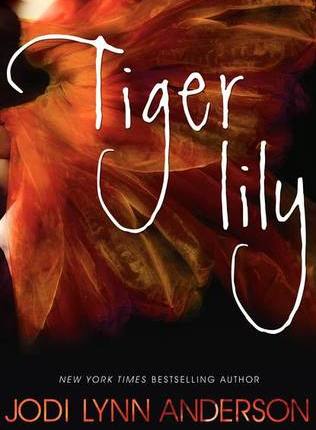
Tiger Lily by Jodi Lynn Anderson

Tiger Lily by Jodi Lynn Anderson

tigerlilyThis book is an absolutely magical re-telling of the story of Tiger Lily from Peter Pan. The narrator is the fairy, Tinker Bell.
I’ve always had a soft place in my heart for J. M.Barrie’s masterwork. Who among us hasn’t wanted to go to a place where you could remain young forever and never grow up?

Jodi Lynn Anderson writes that “never aging” magic of Neverland quite well: “Englanders had come to Neverland before. … The Englanders had the aging disease. As time went on they turned gray, and shrank, and, inexplicably, they died. It wasn’t that Neverlanders didn’t know anything about death, but not as a slow giving in, and certainly not an inevitability.” pg 13 (ebook)

Tiger Lily’s tribe may age, but how old they appear is contingent on something other than time. It’s curious and magical.

The lost boys come alive in this book with a wildness and unpredictability that I loved: “There was a joyfulness and- at the same time- a fragility about each of them. They were sloppy and uncared for and wildly alert and full of energy.” pg 61, ebook.

Despite their untamed natures, they are still children: “Straw beds had been separated haphazardly into different areas of the burrow, as if the boys hadn’t counted on wanting to live separately when they’d first built it, and only recently pushed themselves as far apart from each other as possible. Still, on one of the beds there was a worn home-sewn toy in the shape of a rabbit, and lying on a pillow, as if it had just been played with, a model of a ship.” pg 61, ebook.

Peter is the boy who has emotions but doesn’t understand them- perpetually young yet always on the verge of growing up.

He’s fiercely admired by his lost boys and, eventually, Tiger Lily: “Peter picked at his hangnail again. “Actually, I never get sad. It’s a waste of time, don’t you think?” Tiger Lily didn’t answer. She was impressed by the idea of deciding not to be sad. His words made him seem very strong. Impervious.” pg 67, ebook

Peter is still Peter in this tale. As far as girls go, he can be charming but also rude and aloof: “I think we could be good friends,” he said, falling into step with her. “It’s perfect because I wouldn’t fall in love with you, like I do with the mermaids. Girls always seem so exotic. But it would be okay with you, because you’re more like… you know. Not like a girl.” pg 77, ebook.

Tinker Bell was a sympathetic character in this book, rather than the spoiled, jealous creature that she is portrayed as in Peter Pan“A faerie heart is different from a human heart. Human hearts are elastic. They have room for all sorts of passions, and they can break and heal and love again and again. Faerie hearts are evolutionarily less sophisticated…. Our hearts are too small to love more than one person in a lifetime. … I tried to talk sense into my hard little heart. But it had landed on Peter, a creature two hundred times my size and barely aware of me, and there was no prying it loose.” pg 77-78, ebook.

Hook is extra creepy and villainous: “Neverland had called to him out of legends. A green place. A wild place. And most of all, a place where he’d never grow old. Most people in London hadn’t believed it existed, but some still insisted it did, and Hook had cast his lot with them. To get to the island, he’d begged, stolen, and eventually murdered.” pg 89-90, ebook.

And so is Mr. Smee. But, I’ll let Anderson tell you his story. She does a wonderful job of it.

The relationship between Tiger Lily, Peter, and Wendy makes a lot more sense in this story. It is less about any potential failings by the girls. The main source of conflict seems to be Peter’s emotional immaturity: “As you may have guessed already, Peter had a soul that was always telling itself lies. When he was frightened, his soul told itself, “I’m not frightened.” And when something mattered that he couldn’t control, Peter’s soul told itself, “It doesn’t matter.” pg 169, ebook.

The ending of this book was totally satisfying as well for all of the characters, even little Tinker Bell. I can’t say enough good things about it.

It’s easy to see why fairy tell retellings are so popular with books like Tiger Lily out there, waiting to be discovered.

Thanks for reading!

A Monster Calls by Patrick Ness

A Monster Calls by Patrick Ness

A Monsters Calls is a fantastic coming of age story. Conor’s mother is very sick. Since her illness, Conor has been treated differently at school and works hard at home, trying to keep everything running smoothly while she’s resting. He’s had a nightmare too- one that wakes him screaming almost every night. But then, one night, he dreams a different dream in which a monster formed from a yew tree comes to his home…

This book gave me goosebumps, it’s so good! I especially liked the monster’s tales.

Here’s the first time Conor meets the monster: “… here was a monster, clear as the clearest night, towering thirty or forty feet above him, breathing heavily in the night air. “It’s only a dream,” he said again. ‘But what is a dream, Conor O’Malley?’ the monster said, bending down so its face was close to Conor’s. ‘Who is to say that it is not everything ELSE that is the dream?'” pg 38 (ebook) Who’s to say?

“‘Here is what will happen, Conor O’Malley,’ the monster continued, ‘I will come to you again on further nights.’ Conor felt his stomach clench, like he was preparing for a blow. ‘And I will tell you three stories. Three tales from when I walked before.’ Conor blinked. Then blinked again. “You’re going to tell me STORIES?” ‘Indeed,’ the monster said. “Well-” Conor looked around in disbelief. “How is THAT a nightmare?” ‘Stories are the wildest things of all,’ the monster rumbled. ‘Stories chase and bite and hunt.'” pg 40-41 (ebook) Love, love, love! “Stories are the wildest things of all.” Yeah, they are.

I love the relationship that develops between Conor and the monster: “He (Conor) heard a strange rumbling, different from before, and it took him a minute to realize the monster was laughing. ‘You think I tell you stories to teach you lessons?’ the monster said. ‘You think I have come walking out of time and earth itself to teach you a lesson in niceness?’ It laughed louder and louder again, until the ground was shaking and it felt like the sky itself might tumble down.” pg 70 (ebook)

One more small passage that I had to include, not because it’s particularly important to the story but because it’s so very true: “Conor stared out the window… “How long are you here for?” he asked. He’d been afraid to ask before now. His father let out a long breath, the kind of breath that said bad news was coming. “Just a few days, I’m afraid.” Conor turned to him. “That’s all?” “Americans don’t get much holiday.” pg 103 (ebook) Mic drop!

This is a young adult book, but if you’re looking for more excellent fairy tales (like the monster’s stories) you may want to pick up In the Night Garden (The Orphan’s Tales, #1) by Catherynne Valente or, for another amazing coming of age story with fairy tale elements, try The Ocean at the End of the Lane by Neil Gaiman.

Thanks for reading!

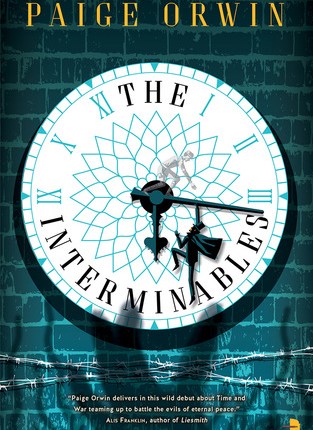
The Interminables by Paige Orwen

The Interminables by Paige Orwen

Interminable adjective. 1. Incapable of being terminated; unending  2. Monotonously or annoying protracted or continued; unceasing; incessant  3.  Having no limits.  (dictionary.com Unabridged.  Retrieved May 22, 2016 from dictionary.com website http://www.dictionary.com/browse/interminable)

The Interminables takes place in a world where magic is real and so are nightmares.  Prior to the events in this tale, an immortal being attacked all the cities on Earth and essentially destroyed civilization as we know it.  She was killed but for an extreme, unspecified magical cost.  Now, the scars left by this insane immortal dot the world and leak magic like radiation, producing strange items and twisted, dangerous creatures.  The Hour Thief, Edmund, and his best friend, an archtypical ghost of World War I named Istvan, struggle to bring order and heal those injured by the remains of this struggle.  Behind the scenes, an even greater evil begins to stir…

The Interminables is a type of science fiction/fantasy that I love.  It doesn’t dwell too much on the how’s of the situation, but jumps head first to the what’s, who’s, and why’s of the story.  And, this is an incredibly ambitious world in the sense that not only are the characters dealing with untamed and uncontrollable magic, but also the dimensions of alternate worlds have collided and merged with our own.  So, there are beings and powers in this place that are far beyond anything that exists in the real world.  It’s an exciting premise and the reader can almost feel the storytelling potential exploding from the very first page.

The Hour Thief is not only immortal, capable of teleportation, and able to move with super human speed through time- he’s also a librarian! : “…the Hour Thief was finally returning to real field duty, after fourteen months missing and then years of sticking to nothing more than librarian work and his usual mysterious excursions by night.”  My favorite kind of super hero.

Who is the Hour Thief? :  “He was, for all intents and purposes, a conman who dealt in stolen moments.  The hours that slipped away when no one was watching.  Lives, plain and simple.  He’d been thirty-five for seventy years and he could say that only because none of the time he’d lived since 1954 was originally his.”

I loved how Orwin described two beings, who are essentially immortal, dealing with technology. : “Edmund… fished the device responsible out of his other jacket pocket.  It was roughly the same size and shape as a pack of cards and combined the services of a clock, a calculator, a telephone, a radio, a camera, a film projector, a phonograph, a library, a dedicated staff of field researchers, an electric facsimile of the Delphic oracle, and a flashlight, but it was easier to call it a telephone.” When put that way, our devices really do seem to be magical.

Istvan, sends a text message, and it comes out more like a telegraph: “Istvan fiddled with the phone a moment longer… “I’ve sent a message to the Magister, I think, but I’m not certain it went through.”… Edmund glanced at it.  Recovered, it said, on our way presently stop.”

My favorite moment in the whole book, an interchange between Edmund and Istvan :  Edmund set the ritual knife down.  “Are we always this interesting?”  Istvan knelt and retrieved his own blade, wiping it on the hem of his uniform before handing it to him.  He was a doctor.  It would be all right.  “Oh yes.”

In the acknowledgments, Orwin says, “The original project grew out of a desire to preserve some of the characters developed by myself and my friends in the MMORPG City of Heroes…”  I also played that game!  The ability to customize and create your hero was so much fun, but the game itself became repetitive very quickly.  Orwin did such a great job taking a one dimensional idea and giving it a time piece, wings, and a limitless world to explore.  The Interminables is a lot of fun and not interminable to read, at all.

If you’re looking for read alikes, I’d recommend Triumff: Her Majesty’s Hero by Dan Abnett, The League of Extraordinary Gentlemen by Alan Moore (graphic novel), or Miss Peregrine’s Home for Peculiar Children by Ransom Riggs (young adult title).

Expected publication date: July 5, 2016.  A big thank you to NetGalley & Angry Robot Publishing for the opportunity to read and review a digital copy of this book.  And, thank you, for reading!

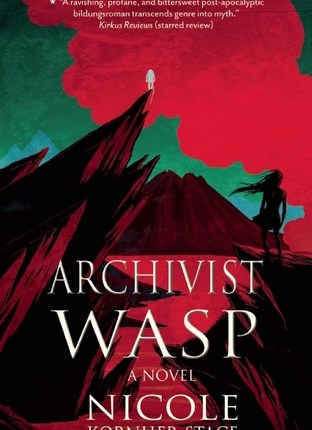
Archivist Wasp by Nicole Kornher-Stace

Archivist Wasp by Nicole Kornher-Stace

Overall, I enjoyed Kornher-Stace’s tale about a girl with claw marks on her face who traps and studies ghosts because she’s a priestess of a goddess who lives in the stars. I felt like Archivist Wasp was a combination of The Last Apprentice/Wardstone Chronicles by Joseph Delaney and What Dreams May Come by Richard Matheson. There’s also some dystopian and survival elements to it. There’s a few moments of rough language in here and some quick, brutal violence, but nothing worse than what a young adult would read in The Hunger Games.

Kornher-Stace throws the reader into an alien world with zero explanation or background info and it’s a lot of fun to pick out the story from the details. Take this passage describing a ritualistic painting in Wasp’s home:“The bones of the painting were nails, hammered straight into the wall to pick out the stars of Catchkeep’s constellation. And around them She had been outlined in thick black paint, all teeth and legs, Her back curved like a rainbow, caught in mid-leap over a shadowy abyss. … Catchkeep Herself was black and red. Stepping close to Her you could make out the outlines of handprints, darker where they overlapped. Wasp’s first day as Archivist, they’d rushed her here before the blood of the fallen Archivist could dry on her palms, and to the painting she had added the shape of her hand, which was the shape of her predecessor’s death.” pgs 14-15 ebook. Dark, eerie, awesome.

Wasp feels trapped in her role as priestess and lacks the confidence in herself to do anything else. Her personal development and stepping into her power is one of the main arcs of this story: “…beneath all her talk, she knew that what she was about to try would fail, as everything else she tried had failed, and then her life would go on as it had always done, pacing out the length of its leash, smashing into empty air at either end like a bird against a window. Take the knife out of the doorframe. Sweep the dust from the little house. Restock its jars with the useless dead.” pg 67 ebook. She’s a very strong, and believable, female main character. Think Buffy the Vampire Slayer… but with ghosts.

Kornher-Stace’s description of the afterlife was just like what is portrayed in What Dreams May Come or Otherwhere by Kurt Leland, the deceased shape their surroundings with the energy from their thoughts and emotions. In the ghost’s world, Wasp sees demon-like dogs that attack her again and again: “Still don’t believe the hunt is real?” Wasp shouted. She was having trouble modulating her voice. Her teeth were chattering too hard. She had never been so tired. “We bring our own monsters with us,” said the ghost. “It looks like these are yours.” pg 123 ebook. Goosebumps!

I liked the author’s description of what a ghost is: “You’re a ghost. You need answers. You need closure. You need them like the living need air to breathe. You think it’s just you, but from what I’ve seen, most of us die without getting either. And maybe that’s all a ghost is, in the end. Regret, grown legs, gone walking.” pg 155, ebook.

My favorite parts of the book are Kornher-Stace’s varied descriptions of the worlds through which Wasp travels with the ghosts. They are beautiful, desolate, bizarre, and, sometimes, scary:“They tromped through the snowfield for ages. They passed things that, to Wasp’s eye, might have been waypoints. A wind-shredded orange plastic tent. A cave hung with icicles that were mottled gray with ash. A distant huddle of dark birds circling and alighting on an unseen mass. A tiny pond, perfectly round, frozen into a mirror upon which no snow settled. The metal skeleton of something that had fallen from the sky and smashed there, its nose plowed deep into the earth. They walked on.” pg 172, ebook.

If you enjoyed Archivist Wasp and are looking for young adult read-alikes, you may want to try Fray by Joss Whedon (a graphic novel) or Revenge of the Witch (The Last Apprentice/Wardstone Chronicles, #1) by Joseph Delaney. If you’re looking for an adult read-alike, try The Library at Mount Char by Scott Hawking.

Thanks for reading!

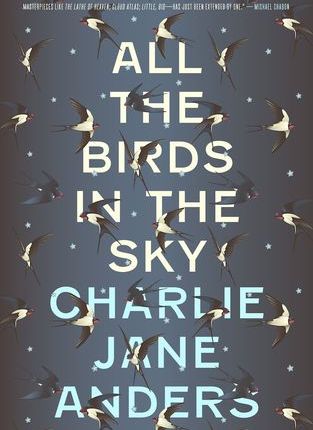
All the Birds in the Sky by Charlie Jane Anders

All the Birds in the Sky by Charlie Jane Anders

All the Birds in the Sky is about science vs nature, the end of the world, and love- in no particular order. Laurence and Patricia have two of the roughest childhoods that I’ve read so far this year. Their parents are duds, their school administrators are awful, and their peers are bullies and sadists. Somehow, despite these tragic beginnings, Laurence and Patricia manage to rise above and become something more, something extraordinary. And, together, they just might manage to save the world.

My favorite part of this book was the beginning- the development of the characters and the introduction to the extraordinary world of Laurence and Patricia. In this world, animals can talk! Here’s the “Parliament of Birds”:“Various other birds piped up, saying, “Point of order!” and a fidgety crow was listing important areas of Parliamentary procedure. One of them was so insistent that the eagle was forced to yield the branch to the Honorable Gentleman from Wide Oak- who then forgot what he was going to say.” pg 19 Politicians are politicians, no matter their species.

I loved Laurence’s internal dialogue: “Hey, Larry Fairy,” Brad Chomner said at school, “think fast.” Which was one of those phrases that never made sense to Laurence: People who told you to “think fast” were always those who thought much more slowly than you did. And they only said it when they were about to do something to contribute to the collective mental inertia.” pg 23

I also connected with Patricia. She’s imperfect, ruminative, and totally relatable: “Patricia felt jittery about throwing her first ever dinner party, because part of her clung to the fantasy of being someone who gathered cool people around her. A doyenne, someone who held witty salons. She cleaned the apartment for hours, made a playlist, and baked bread and bundt cake. … Patricia’s bread filled the marigold kitchenette with a yeasty warmth, and she took a deep breath. She was a grown-up. She had this.” pg 165 I’ve said that exact thing to myself when I’m stressed or trying to do something outside of my comfort zone. “I’m a grown-up. I have this.” Wish I was better at convincing myself of the truth of it. 🙂

Laurence contemplating reality: “I wonder how many other things in our world are just the shadows of things in other places,” Laurence said, forming the thought as he spoke. “I mean, we always suspected that gravity was so weak in our world because most of it was in another dimension. But what else? Light? Time? Some of our emotions? I mean, the longer I live, the more I feel like the stuff I see and feel is like a tracing of the outline of the real stuff that’s beyond our perceptions.” pg 186 I feel like that sometimes too.

Anders writes some very touching passages about love and being in love:“… Laurence watched her the whole way back up the block, wondering if she would look back at him over her shoulder, or turn to wave one last time. She didn’t. His heart skidded like a dirt bike on black ice as he watched her disappear. pg 213 You can really feel the emotions sliding around his chest, can’t you? I can.

I did not like some of Anders transitions in All the Birds in the Sky, particularly the jarring leap of time between the childhoods and then adulthoods of Laurence and Patricia. I also thought that Anders relied on synchronicity a bit too much to bring the two main characters together and keep the story rolling. But, life is strange and full of unexplainable moments. And, to be fair, I’m complaining about synchronicity in a world where magic and time travel are real and animals can talk. Maybe I need to check my own perception of reality…

If you enjoyed this book, maybe you should try The Many Selves of Katherine North by Emma Geen or A Monster Calls by Patrick Ness.

Thanks for reading!

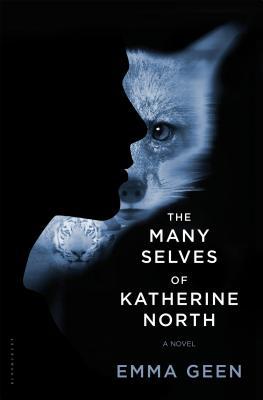
The Many Selves of Katherine North by Emma Geen

The Many Selves of Katherine North by Emma Geen

katherinenorthIn The Many Selves of Katherine North by Emma Geen, humanity has harnessed the power of consciousness and mechanized the ability to place that consciousness in different bodies at will.

Katherine is a teenager who works for a large research company. She’s the longest lasting “phenomenaut” (person who’s consciousness is put into the body of an animal) because she seems to be special.

The process of consciousness transfer seems to stop working when the brain ages and loses its plasticity. Despite her age, Katherine’s brain seems to be fine.

But then, one day, Katherine sees something strange when she’s out of her body… and perhaps she’s not as well as she imagined.

The Many Selves of Katherine North asks some pretty powerful questions like: What is consciousness? How does our physical body change how we perceive the world? What is reality?

I think that this story has the potential to open up a dialogue about these questions between readers who may not have considered them before. In that way, this is a very powerful book.

I did not like how the story flips back and forth between the present and the past. I think Geen was using the shifting timeline to build the mystery, but, because of the nature of Katherine’s many consciousness experiences, it made things rather confusing.

This is a complicated book. At times, maybe too complicated.

The richness and variety of Katherine’s experiences drives a wedge between her reality and the rest of humanity’s reality.

The reader really sees difference in this moment, when Katherine is preparing to go into work: “Later, I lie in bed quivering… because it’s only hours until I’m out of here. Here- not just a room but skin. How can other people call this their totality? There is so much more.” pg 19

Katherine captures the impossibility of explaining out-of-body experiences very succinctly here: “Because how do you cram the lived experience on to a page? The words available to me were never enough. Something would always slip the sentences. Human language developed around human bodies, it never quite fits other ways of being. pg 66

I loved all of the chapters when Katherine was in the body of an animal. In this one, she was a snake: “Old scents have imprinted upon the world like spoor into soft mud, the past blundering prey. I wonder if this is one reason many animals have a poor memory compared to humans. What’s the use in remembering when the world does it for you? pg 146 Fascinating.

Emma Geen included a disclaimer at the back of her book and it contained some of my favorite lines: “…what if there are other valid ways of knowing? What is the world is not one, but multitude, with as many ways of being as there are beings? What if literature were the opportunity to glimpse such refractions, thrown by the world as though from a diamond?” pgs 349-350 Loved that.

If you enjoyed The Many Selves of Katherine North, you may want to pick up The Night Circus by Erin Morgenstern or Mythago Wood by Robert Holdstock for more glimpses of worlds hidden within worlds.

Big thanks to Goodreads First Reads program, NetGalley, and Bloomsbury USA for providing me with an advance reading copy of this novel.

Thanks for reading!