The Golem and the Jinni by Helene Wecker

The Golem and the Jinni by Helene Wecker

golemandjinniThis is the story of a golem and a jinni, how they discover who they are, their strengths, their weaknesses, and how, even though they’re composed of completely different elements, they may just be the best friend for each other in a human world where they will never truly belong.

As I was reading The Golem and the Jinni, enjoying their adventures and waiting to see how they would discover their origins, I didn’t consider for a moment the idea that the tale could be a metaphor for something else.

When I read the Q&A with the author at the end of the book, I was really kicking myself. Of course, it made total sense as a metaphor for cultural differences. And, when I thought about it that way, I liked the story even more.

On the other hand, this tale can be completely enjoyed and interpreted as a historical fiction/fairytale and, if you’re not in the mood to think any deeper than that, it doesn’t matter, because it’s still awesome. So, it’s a win/win book for the deep thinkers and the no-thinkers.

The Golem and the Jinni is not a fast read. Wecker really builds the characters and gives the back story for everybody who comes across the page.

At first I was like, “Do we really need to know the ice cream guy’s life story?” and I was getting frustrated with the pacing of it. But, as her characters came together and their lives began to intertwine, I began to appreciate the true artistry of the novel.

It is like an orchestral fugue in which the instruments play their themes one by one at the beginning, which is beautiful, but when the tones combine, it lifts the piece to a whole other place. That is The Golem and the Jinni. Give it the time and space to build the characters and you will be blown away by the ending. At least, I was.

Wecker has a talent for creating multi-layered characters. Though the golem is only a few hours old, the author manages to instill in her a childlike curiosity mixed with the timelessness of a magical creature.

In this passage, the golem is seeing the Statue of Liberty for the first time: “The deck was crowded with people, and at first the Golem didn’t see what they were waving at. But then, there she was: a gray-green woman standing in the middle of the water, holding a tablet and bearing aloft a torch. Her gaze was unblinking, and she stood so still: was it another golem? … And those on deck were waving and shouting at her with jubilation, crying even as they smiled. This, too, the Golem thought, was a constructed woman. Whatever she meant to the others, she was loved and respected for it. For the first time… the Golem felt something like hope. pg 17 ebook.

She also describes scenes just beautifully. In this passage, the Jinni sees New York harbor: “The Jinni leaned against the railing, transfixed by the view. He was a creature of the desert, and never in his life had he come so close to this much water. It lapped at the stone below his feet, reaching now higher, now lower. Muted colors floated on its surface, and afternoon sunlight reflecting in the ever-changing dips of the waves. Still it was hard to believe that this was not some expert illusion, intended to befuddle him. At any moment he expected the city and water to dissolve, to be replaced by the familiar steppes and plateaus of the Syrian Desert, his home for close to two hundred years.” pg 23 ebook

I loved the little, let’s call them “wisdom nuggets,” that Wecker sprinkled throughout the story. Like: “A man might desire something for a moment, while a larger part of him rejects it. You’ll need to learn to judge people by their actions, not their thoughts.” pg 40 ebook. Or: “Men need no reason to cause mischief, only an excuse!” pg 172 ebook.

I also connected with this passage where the Jinni is thinking about the power of names: “To him the new name suggested that the changes he’d undergone were so drastic, so pervasive, that he was no longer the same being at all. He tried not to dwell on such dark thoughts, and instead concentrated on speaking politely, and maintaining his story- but every so often, as he listened to the chatter of yet more visitors, he spoke his true name to himself in the back of his mind, and took comfort in the sound.” pg 68 ebook.

I recommend The Golem and the Jinni for folks who enjoy historical fiction blended with fantasy, folks who love deep characters, and for anyone who loves to read beautiful prose. This book has all of that.

Thanks for reading!

Railsea by China Miéville

Railsea by China Miéville

“This is the story of a bloodstained boy.” That’s the first line of this strange and fantastical tale of giant creatures that “swim” in the earth’s soil and the brave and flawed “molers” who chase them for profit and life purpose. Miéville has created a dystopian world covered in railway ties with skies poisoned by chemicals and filled with monstrous, alien creatures who feast on those who get too close. But, there may just be something beyond the rails, if the characters in this story are determined and lucky enough to see their way through to the end of the world… Though based off of the tale of Moby Dick, Railsea is an engaging adventure and coming of age story that reads like nothing else I’ve ever experienced. Miéville has blended together steampunk, dytopian, and fantasy elements to create something completely different.

Sham is a boy on the cusp of manhood who can’t quite figure out what he wants to do with his adulthood: “Sham felt sure there was something he fervently wanted to do & to which he was excellently suited. Which made the more frustrating that he could not say what it was. Too vague about his interests for further study; too cautious in company, perhaps a little bruised by less-than-stellar school days, to thrive in sales or service; too young & sluggish to excel at heavy work: Sham’s tryings-out of various candidate activities left him het up.” pg 36, ebook. Anyone who has ever been lost about what path to follow in life will be able to empathize with Sham.

Miéville’s story, like Moby Dick has layers of meaning built into it: “Edging such places is the railseaside, called the littoral zone. Those are the shorelands. Port towns, from where transport, freight & hunting trains set out. Where lighthouses light ways past rubbish reefs breaking earth. “Give me the inland or give me the open rails,” say both the railsailor & the landlubber, “only spare me the littoral-minded.” pg 51 ebook. Clever, no? A warning, if you don’t enjoy reads where the author makes up words to tell the story, you may want to skip Railsea. There’s a bunch of creative adjectives and nouns mixed up in this one.

The religions of this world were a fascinating too. I wish Miéville had explored them more: “He muttered in his head to That Apt Ohm, the great rotund boss-god, one of the few deities worshipped across the railsea, whatever the peculiarities of local pantheons. Bollons was ecumenical, granted church-licences to any deities whose worshippers could pay the fees. But the disrespectful worship of That Apt Ohm was taken more seriously there, pursued with more verve, than at most stops on the railsea. Sham had no idea quite what, if anything, he believed, but there seemed little harm in a quick silent word with one of the few gods whose name he remembered.” pg 100, ebook.

Part of the homage to Moby Dick, finding a captain’s “philosophy”: “How many of these philosophies were out there? Not every captain of the Stereggeye Lands had one, but a fair proportion grew into a close antipathy-cum-connection with one particular animal, which they came to realise or decide-to decidalise-embodied meanings, potentialities, ways of looking at the world. At a certain point, & it was hard to be exact but you knew it when you saw it, the usual cunning thinking about professional prey switched onto a new rail & became something else- a faithfulness to an animal that was now a world-view.” pg 130 ebook. What’s your white mole?

I enjoyed Railsea but I can see how this writer might not be for everyone. He uses fragmented sentences and ampersands (&) to move the story along. The chapters are incredibly short which also kept the pace rolling but it could also be viewed as making the novel choppy. Sometimes, Miéville breaks through the fourth wall and addresses the reader directly. I thought that device was charming, conjuring up images in my mind of storytellers sitting in front of the fire or at a pub. But, again, this may not work for everyone.

Some read-alikes for Railsea: Chaos Walking series by Patrick Ness or Under the Empyrean Sky by Chuck Wendig.  Thanks for reading!

Princeless, Volume 4: Be Yourself by Jeremy Whitley

Princeless, Volume 4: Be Yourself by Jeremy Whitley

Dear readers, there are some spoilers in this review, but they’re necessary for a thorough discussion of the comic.  Please, if you haven’t read this one yet, go pick it up from your local library and then come back to this review.  Thank you 🙂

The Princeless series continues to deliver strong female characters, beautiful (child appropriate) artwork, and storylines with meaning. Each time Adrienne and Bedelia venture out to rescue one of Adrienne’s sisters, a facet of relationships is dissected and examined. This volume dealt with abusive relationships and gender roles in government.

Now, it’s not that cut and dry on the surface- the story itself is really fun and engaging. Adrienne and Bedelia have to survive a cannibalistic tribe of goblins in a monster infested swamp in order to reach Angoisse’s tower. On the way, they befriend unlikely allies and encounter a plant-like terror.

While this is going on, Adrienne’s brother, Devin, refuses to embrace traditional gender roles and activities, which continues to infuriate his tyrannical father. Their relationship illustrates the eternal struggle between parent and child. Parents think they know better and push their child in the direction they believe they should go, while children want to follow their natural inclinations. In the push-pull dynamic, somehow everything works out fine, but with more bad feelings on either side than there need to be.

The abusive relationship portion is tactfully presented in the interactions between Angoisse and Raphael. Sometimes people act a certain way because they want something out of you, other than your company. Kids get it. But in an era of Twilight idealization, I think the presentation of a “vampire” who acts out of self-interest rather than undying love is an important topic to discuss.

Teen relationships are just as thorny and prone to abuse as adult relationships and, because they are some of the first experiences that teens have, they have the potential to color the rest of that person’s lifetime and set the stage for the relationships to come.

Angoisse is a victim of Raphael but also her own beliefs. She’s always thought that she needed a man to complete her and she was going to do whatever it took to keep that relationship intact, even to the point of giving up her humanity or betraying her own family.

It didn’t take a very smart predator to see that she could be manipulated through her feelings. Sadly, such people actually exist. Thank you, Princeless for opening a door to the discussion of how to remain true to yourself in relationships and a powerful example of how to leave the ones that have soured.

The story is not too complex and adult readers may find it rather simplistic (unless you dig deeper into the underlying meaning), but it’s perfect for the 8 to 12 year olds. This comic will appeal to reluctant readers of either gender. I highly recommend it.

Thank you for reading!

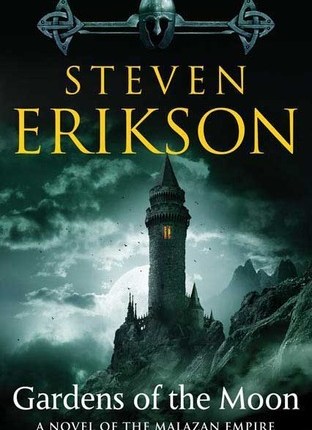
Gardens of the Moon by Steven Erikson

Gardens of the Moon by Steven Erikson

Second read-through August 2021: I have a few thoughts to add on my second read-through of Gardens of the Moon. Unlike my first foray into Malazan, I came out of this reading with a better appreciation of the female characters of the story.

Instead of being focused on what the characters were not, I looked at what the characters were. Powerful leaders, most of them, who imposed their will on the world around them through violence. It is an unexpected role for women, but still feels somewhat one dimensional. I wish some of the characters were more fleshed out, but I have the feeling that this development will happen before the end of the series.

Also, this go-round, I had a better grasp on the complexities of Gardens of the Moon and was prepared to be dropped into the middle of the action. Steven Erikson doesn’t hold the reader’s hand. He pushes her through the door into another world. Some readers hate/love this strategy. I fall mainly on the side of hate, but if it’s a good story, I’ll put up with it.

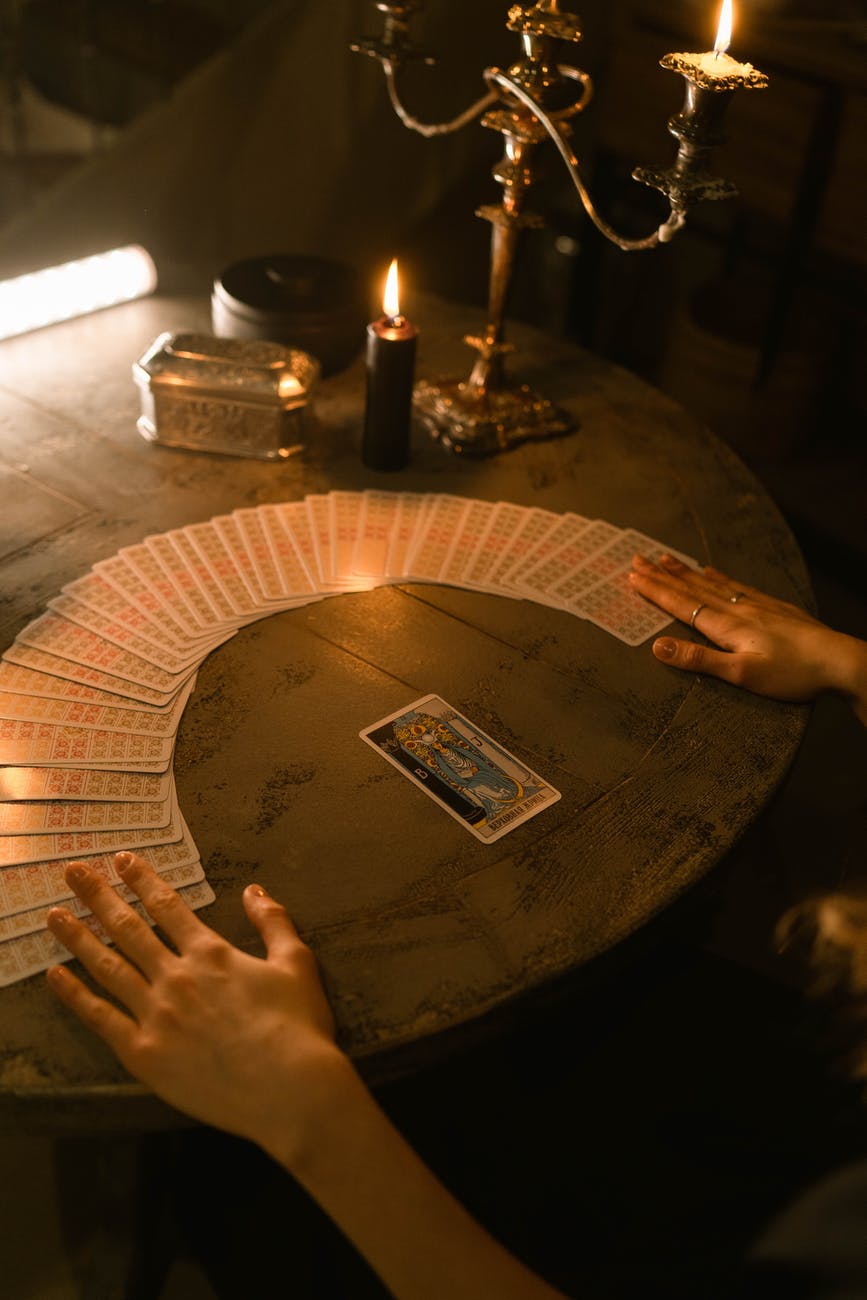
My favorite part is still the new tarot card deck that Erikson created.

Unlike last time, I’m going to keep pushing forward with this series. On to the next book!

Photo by ArtHouse Studio on Pexels.com

Review from first read-through June 2016: Gardens of the Moon is an extraordinarily complex fantasy. The over-arching story: the Malazan Empire (a militaristic conglomeration of nations) is invading everywhere and trashing cities as it goes. The Empress of Malazan, her High Fist Dujek (like a top general), Adjunct Lorn (a magic-hating fixer), Whiskeyjack and the Bridgeburners (like the A-team for Malazan, they go in and cause chaos before the main army arrives), Tattersail (a Malazan mage), Ganoes Paran (a soldier), and more are on the side of the Empire.

There’s about a dozen other main characters that I won’t list here for brevity’s sake.

One of the many heroes of this tale is Paran. The story begins with Paran as a child, gazing down from the walls of his city, towards destruction being wreaked by Malazan mages. He dreams of being a warrior and tells this dream to the aged soldier with him.

Their conversation: “Every decision you make can change the world. The best life is the one the gods don’t notice. You want to live free, boy, live quietly.” “I want to be a soldier. A hero.” “You’ll grow out of it.” pg 5

Photo by Mikhail Nilov on Pexels.com

And so the story begins. Paran gets his desire, of course, but so much more than he bargained for… kind of like the reader who picks up this book.

At first, I thought that the story was going to go like The Game of Thrones. We were going to have a bunch of different characters all fighting for the same thing. I was so wrong. The only similarities between the two tales are that 1. they’re fantasies, 2. they have a bunch of characters, and 3. there is a power struggle, but otherwise, they’re very different.

Gardens of the Moon contains direct interventions between gods and humanity as well as magical creatures from the past and other realms of existence.

As for the magic system, the magically-inclined in this story take their power from different dimensions called “warrens“. There are half a dozen different ones, with further warrens hinted at as the story progresses.

Photo by Filipe Delgado on Pexels.com

Taken as a whole- it is a many layered cake of fantasy awesomeness. I was overwhelmed by it all at times.

Perhaps because of the sheer scope of the story, the characterizations suffered. The author could only build so much detail into each person.

For example, Erikson tried to make Paran more than just a simple hero, but it didn’t always work: “When he thought of himself, of that young noble-born man with the overblown faith in honesty and integrity, the vision that came to him now was of something cold, hard, and dark. It hid in the deepest shadows of his mind, and it watched. No contemplation, no judgment, just icy, clinical observation.” pg 110

I was unimpressed with the role of the females in this story. With as many characters that we had, I thought we’d have at least one or two amazing, strong, female heroes. I know that fantasies are not known for their gender equality but in a world with magic, gods, and other surprising things, I would count a strong female character as one of the greatest miracles of all.

Erikson’s world building was so complete that he even created a new set of Tarot cards, just for his world. It’s one of my favorite parts of the story.

Photo by Anastasia Shuraeva on Pexels.com

Here’s a passage that I really liked: “Those whom the gods choose, ’tis said, they first separate from other mortals- by treachery, by stripping from you your spirit’s lifeblood. The gods will take all your loved ones, one by one, to their death. And, as you harden, as you become what they seek, the gods smile and nod. Each company you shun brings you closer to them. ‘Tis the shaping of a tool, son, the prod and pull, and the final succour they offer you is to end your loneliness- the very isolation they helped you create.” Never get noticed, boy. pg 510 Bleak, but beautiful.

Or this part, the explanation of the story’s title, which is so brief, if you blink, you’ll miss it: (On the moon) The Lord of the Deep waters living there is named Grallin. He tends vast, beautiful underwater gardens. Grallin will come down to us, one day, to our world. And he’ll gather his chosen and take them to his world. And we’ll live in those gardens, warmed by the deep fires, and our children will swim like dolphins, and we’ll be happy since there won’t be anymore wars, and no empires, and no swords and shields.” pg 531-532

That’s the dream of all of the characters in this story- to live in peace. But, because of the Malazan Empire, they can’t.

Recommended for true fans of fantasy. There’s so much to sink your teeth into that, unless you really love the genre, you’ll probably just put it aside for simpler fare.

Thanks for reading!

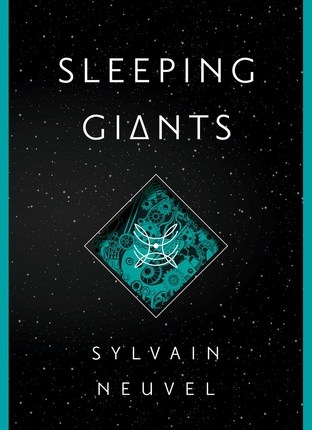
Sleeping Giants by Sylvain Neuvel

Sleeping Giants by Sylvain Neuvel

In Sleeping Giants, a large, metal object shaped like a gigantic hand is found in South Dakota. It glows with its own light and scientists have no idea what it is made of or what it can do. And so, the mystery and adventure begins.

Photo by Mayur Rawte on Pexels.com

I enjoyed the story a lot but not how it was written. Neuvel tells Sleeping Giants through a series of “case files” or question and answer sessions between the main characters and a mysterious, all-powerful figure who is manipulating the scenario from behind the scenes.

This method of storytelling seemed especially ridiculous during some of the action scenes, when Neuvel had the characters talking to each other on the phone, describing what was happening to them as it occurred.

But, otherwise, the Q & A setup gave readers a behind-the-scenes look at what was going on in the character’s minds and allowed for a lot of personality development.

I wish that Neuvel had switched back and forth between traditional storytelling and the “case file” thing, so that he could both tell the story and have the in-depth character portions. Maybe he could do something like that in the next book.

I was nervous that Sleeping Giants was going to be more science fiction than fantasy, but it wasn’t. There are only a few mind-boggling moments when the scientists are trying to figure out mathematics with a base of 8 rather than a base of 10.

Mostly, The Sleeping Giants asks the questions: what would happen to humanity if something very strange and not of our civilization was discovered on earth? What would that mean for world politics? And how, on an individual level, would everyone involved handle it?

Photo by Pixabay on Pexels.com

Kara Resnik, a pilot, was my favorite character in this story. She’s impulsive, passionate, and honest.

In this passage, she’s talking about the possibility of leaving the project before it’s completed: What would I do anyway? Go about my business as if nothing ever happened? I couldn’t even talk about it to anyone. This is gonna sound incredibly selfish, but I’d get bored to death unless someone started World War III or something.” pg 54

The moral dilemma for the scientists involved in the project is interesting.

In this passage, lead scientist Rose Franklin talks about the fact that the technology discovered could be used for good or ill, depending on who controls it and how that makes her complicit in their actions, because she’s the one figuring out how it works: “What I’ve been trying so hard to deny is that I’m loving every minute of it. … I’m a scientist, and this is what I breathe for. If I had learn to live with that, I might be able to sleep again.” pg 167

Photo by Pixabay on Pexels.com

If you enjoyed Sleeping Giants, you may want to pick up The Many Selves of Katherine North by Emma Geen (in which, advanced technology raises moral questions) or The Interminables by Paige Orwen (in a dystopian world, humanity tries to save itself from inter-dimensional creatures, but maybe some solutions aren’t worth the cost).

Big thanks to the Goodreads First Reads Program for a free copy of this book. And, thank you for reading!

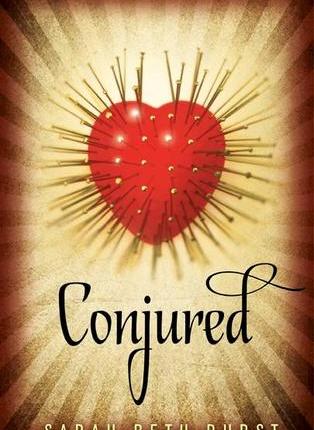
Conjured by Sarah Beth Durst

Conjured by Sarah Beth Durst

Eve can’t remember who she is or where she’s from, but there are government agents with her, protecting her. They say that her mind holds the key to solving the case(s) of a serial killer, but she can’t even remember her own parents. How is she going to help save others when she can’t even recall what happened last week? And, why is she able to make birds fly out of wallpaper? That’s not normal… is it?

Conjured is a fluffy, young adult fantasy that tip-toes around the horror genre but, mainly, remains safely in the real world of amnesia and teenage angst. This book suffers from a glacial pacing but the mystery part of the story really took me by surprise. As I mentioned, the horror elements in this story are minimal but there are some brief and not terribly graphic descriptions of blood, mental anguish, bondage, imprisonment, physical violence, and creepy circus folk.

My favorite parts of this book happened during Eve’s blackout moments or visions. They read like scary fairy tales: “It always begins with ‘once upon a time,’ my dear. That is how it is, even if ‘once upon a time’ is now.” Gnarled hands separate the strands of my hair and wind them around knuckles. “A witch…for of course there was a witch. There always is, isn’t there? She had stars in her eyes and dust in her hair. She heard the sounds of the forest when she moved and the ocean when she spoke.” pg 14 ebook. The visions set the tone of this story. They’re like nightmares for Eve- profoundly disturbing, but not real. Or are they?

I loved that Eve took a job as a library assistant. The craziest things happen at the library but it was also a place of safety for her when she couldn’t remember anything else: “Libraries… they’re the places with stories,” Eve said. Closing her eyes, she tried to summon up a memory of a library. Shelves of books. Sunlight falling across a table. She saw spiral stairs. It could have been a real place, or Malcolm could have shown her a picture at some point. It felt like a real place.”pg 17, ebook

The extraordinarily slow unfolding of Eve’s background was frustrating:“You can’t do any magic here. There is no magic in this world- that’s why this place is safe for you.” She held her face still. Another hint about her past. He had told her so much in those few sentences, more than he’d ever told her before. There is no magic in this world, she thought. I’m from another world? pg 21, ebook. I don’t know… you tell me!

The teenage love story in Conjured is cute and very John Green-esque:“Because when I’m with you, I feel whole,” he said. “Because with you, life doesn’t feel brutish and short. It feels beautiful… and short.” pg 176 ebook.

So, if you can tolerate an extremely slow reveal, pick up Conjured. Some read-alikes: The Night Circus by Erin Morgenstern (circus themes, slow story) or Archivist Wasp by Nicole Kornher-Stace (a girl is asked by a ghost to help him find someone he’s lost).

Thanks for reading!

Shutter by Courtney Alameda

Shutter by Courtney Alameda

shutterMicheline Helsing is the last of the line of Van Helsings, of monster slaying fame. In this version of the tale, Micheline slays ghosts and otherworldly beings by capturing their visages on film, thereby taking away their power and banishing back to the realms where they belong.
One night, Micheline and her team has a mission go awry and now, because of a curse, they are going to die. Unless, they can find the ghost that caused the sickness, rid the world of it, and save themselves. The clock is ticking…

Shutter was a Brom Stoker award nominee for Best First Novel. That’s what drew me to this creepy tale.

Horror isn’t my usual genre and the scary parts of this tale really scared the heck out of me. If horror is your thing, this one might not be scary enough. Reading is such a personal experience, you know? It’s hard to predict.

Alameda was at her best during the truly terrifying moments, which, in my opinion, were the undead creatures and anything scenario involving a mirror. Everybody has mirrors in their homes. What if, hypothetically, these were portals into other worlds and *things* could come crawling out of them into this one- eeeeeek!

I didn’t enjoy the so-so character building, teen angst or abusive relationship with the father. That could be a potential trigger too.

Micheline is the type of teen heroine that I met in the Divergent trilogy and wasn’t impressed with then: not trusting anyone in authority with her problems even though they could potentially help her, throwing herself into life threatening situations without proper planning and, therefore, putting her friends in danger too, and pining for the lantern-jawed guy with the ridiculously pumped up fighting skills.

If it wasn’t for the insanely entertaining parts with the ghosts, mirrors, strong friendships with her team and tragic back story, this would be a two-star book instead of a four. But, I believe that its positive attributes outweighed the negatives. Again, reading is such a personal trip. You may disagree. And that’s ok.

For a debut book, Shutter is really very good. I read the last couple chapters of this in a rush because I was terrified for the well-being of the main characters.

If you love young adult horror tales, you should give this one a read. Some read-alikes: Jackaby or 13 Days of Midnight. Shutter is scarier than either of those, but they have similar themes.

Thanks for reading!

Magonia by Maria Dahvana Headley

Magonia by Maria Dahvana Headley

magoniaAza Ray Boyle can’t breathe. It seems like she has always been sick- inexplicably short of breath and weak.

This continuous illness has made her always feel different from the people around her. But, perhaps, there are stranger and more exotic reasons why she is different. Ones that Aza can’t even imagine…

Jason is Aza’s dearest friend. They are so close that they almost speak their own language.

He realizes there is more to Aza than meets the eye. How will Jason handle it when he discovers the shocking truth?

This young adult fantasy is weird, but I enjoyed it.

That’s probably because I read a lot of weird, non-fiction. The story of Magonia, a world in the sky above the every day world which we know, has shown up in some of those books.

One of those books, Passport to Magonia: On UFOs, Folklore, and Parallel Worlds, captured my imagination.

That book recounts an incident where a bunch of villagers were holding church service and they heard a crash outside. They went to investigate the noise and discovered what appeared to be a ship anchor attached to the roof of their church. It was connected to, this just blows my mind, a ship in the sky. This supposedly happened in 1211 AD.

The astonishing thing about Passport to Magonia is it has pages and pages of stories like that, eyewitness accounts of bizarre ships, people, and incidents concerning people from the sky. And they all actually happened, reportedly.

I remember thinking that an author needed to get her hands on these stories and turn it into something fantastic. Maria Dahvana Headley used a different source material than the book that I read, but does a good job bringing a mysterious blip in history to life.

She has the ability to interweave actual events with fantasy fiction story lines so that the two begin to blur in the reader’s mind.

I read Headley’s first book Queen of Kings years ago and I remember being struck by its originality.

Headley took Cleopatra’s life and turned it into a vampire story. It sounds sort of silly described that way, (oh, ANOTHER vampire story) but it is actually rather fun.

I had read Margaret George’s The Memoirs of Cleopatra shortly before Queen of Kings so I had a pretty good idea of the actual story of the Egyptian queen.

Back to this book, Magonia isn’t going to appeal to everyone.

I was, at first, rather turned off by the uber-intellectual back and forth conversations of the main characters- Jason and Aza.

I think, since the mega success of John Green’s The Fault in Our Stars, authors make their teenage protagonists so brainy and well-spoken, it is just unbelievable.

I mean, it’s been awhile, but I remember high school. My peers and I were lucky if we could string two cogent sentences together, let alone present verbal dissertations on the meaning of pi.

Anyway, once I was able to look past their flowery repartee, I got really into the story.

Headley paints a magical and dangerous world.

If you enjoyed Magonia, you may also enjoy The Mermaid’s Sister or Under the Empyrean Sky. Both are young adult novels and take place in fantasy worlds that are so close to the world we know, but different in surprising ways.

Check out my review of Aerie, the sequel to this book.

Thanks for reading!

The Red Queen by Christina Henry

The Red Queen by Christina Henry

redqueenThe second book in The Chronicles of Alice is scheduled to be published on July 12th.

Though it lacked the grittiness and extreme horror of Alice, Red Queen is a fantastic second effort by Henry. We’re reintroduced to Alice and Hatcher as they escape the City and make their way into the wilderness, on a hunt for Hatcher’s long lost daughter, Jenny. Magic, danger, and monsters wait on the path ahead, but those things are nothing compared to what Alice and Hatcher bring with them in their own damaged and twisted minds.

Cheshire, one of my favorite characters, gives a quick summary of the first book in the beginning of this one, in case you didn’t get a chance to read it:“Hatcher and Alice escaped from the hospital, and traveled through the Old City in search of their pasts and in search of a monster called the Jabberwocky who made the streets run with blood and corpses.” The girl shuddered. “I know about him… What about Alice? Did she have a happy ending?” “I don’t know,” Cheshire said.”

Henry weaves enough of the classic tale into her story so that you know that it is a retelling, but still manages to introduce enough original elements in to make it feel entirely new. Like the toll that magic takes on the people who wield it, something that Carroll never addresses: “Maybe power corrupts them,” Alice said. It was a frightening thought, one that made her suddenly reluctant to try any magic at all. She’d spent years under the influence of drugs that made her think she was insane. She was only just learning who Alice was, what it was like to be her own self. She would rather use no magic at all than become some one unrecognizable.”

The world that Hatcher and Alice inhabit feels like the real world in that, there are no guarantees of happily ever after for the main characters. It’s reminiscent of George R.R. Martin in that, Henry makes you feel truly concerned that either Alice or Hatcher are going to be struck down at any moment. But, Henry actually manages to tell a story in 300 or so pages, something that Martin can’t do. Not that I’m bitter or anything… : “The world gobbles us and chews us and swallows us,” Hatcher said, in that uncanny way she had of reading her thoughts. “I think happy endings must be accidents.” “But we hope for them all the same,” Alice said.” I do too.

Alice really comes into her own in this story. She’s brave, but fragile- a damaged hero but resilient. If you’re looking for a strong female protagonist, you’ll find one in this book: “Alice thought, my magic doesn’t seem to be good for much at all. And there is no one who can help me learn, for all the Magicians I have met have been mad or cruel or both. I was mad once too, but it doesn’t seem to have taken properly. I didn’t come out of the hospital with any powerful powers.” Or did she?

This passage summed up the book for me: “This is really all very strange,” Alice murmured. “One of the strangest things I’ve seen, and I have seen lots that is strange. More than my fair share, as a matter of fact.”

Highly recommended for adult readers who enjoy dark fairy tales, magic, and transformation through suffering. I’ve really become a fan of Henry and I can’t wait to see where she takes this story next. If you enjoyed this tale, you may want to try The Library at Mount Char by Scott Hawkins or The Circle by Mats Strandberg.

Thank you to NetGalley and Ace Publishing for a free digital ARC of this book. And, thank you for reading!