The Creator’s Code: The Six Essential Skills of Extraordinary Entrepreneurs

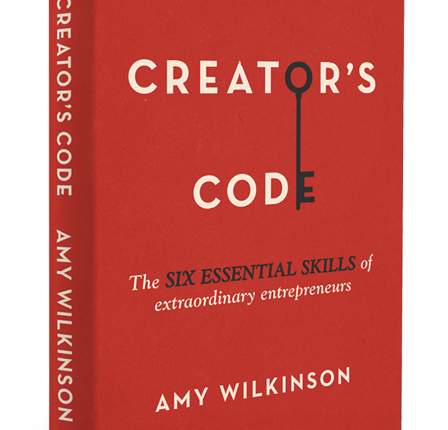
The Creator’s Code: The Six Essential Skills of Extraordinary Entrepreneurs

For The Creator’s Code, Amy Wilkinson interviewed over 200 wildly successful entrepreneurs and narrowed down the skills that they used to create their businesses to an “essential” six.

These essentials are the keys to the “creator’s code,” she writes.

Photo by Canva Studio on Pexels.com

My favorite chapter from The Creator’s Code is Chapter 5: Network Minds- Solve Problems Collectively. We’ve recently instituted some collaborative projects where I work and I’m excited to see this creative skill in action.

Also, I enjoyed the portion of the book where Wilkerson explored businesses trying to integrate computer games into the work day in order to encourage co-workers to help each other as well as to instill a sense of play into the creation process.

Photo by Garrett johnson on Pexels.com

I wish that my library management system could be tweaked to do something like that. Imagine how fun that would be! Playing computer games in order to boost productivity.

In some ways, this book reminded me of Napoleon Hill‘s Think and Grow Rich. He also interviewed hundreds of wealthy people to understand their mind set. However, unlike the New Age, positive thinking slant of Hill’s work, Wilkinson relies on scientific studies as well as real world results.

Of the two approaches, I personally favor Napoleon Hill’s, but readers of a more scientific mind-set might enjoy this book more.

Photo by Pixabay on Pexels.com

While we’re on the subject of read-alikes, I also read [book:How to Fly a Horse: The Secret History of Creation, Invention, and Discovery|20342540] by Kevin Ashton and it shared some of the stories from The Creator’s Code.

It felt slightly repetitive because of this. Otherwise, I may have given The Creator’s Code five stars instead of four. It felt like I was covering the same material. Despite this bookish deja vu, The Creator’s Code is very well researched.

Photo by Pixabay on Pexels.com

So, if you’ve already read the other book, don’t be hesitant to pick this one up too. It was just not ground-breaking reading for me- my reviewer’s bias, I suppose.

There are some differences between the two works: How to Fly a Horse focuses on the history of the creative process and uses that knowledge to encourage the average Joe to be creative today.

The Creator’s Code has distilled the essential nature of creation and lists guidelines that can be used for success in business, art, science, whatever.

Though both encourage creation, Wilkinson gives actionable steps to take at the individual level whereas Ashton focuses more on the big picture.

If you enjoyed The Creator’s Code, I highly recommend How to Fly a Horse by Kevin Ashton and Think and Grow Rich by Napoleon Hill. Both of these works share the themes of success in business through creativity exploration.

I received a free copy of this book through Goodreads First Reads. FTC guidelines: check! And thank you for reading!

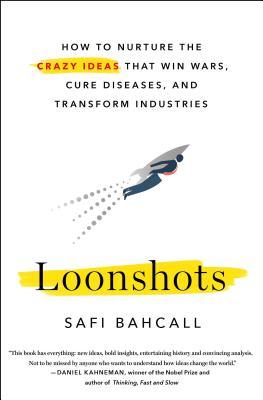
Loonshots: How to Nurture the Crazy Ideas That Win Wars, Cure Diseases, and Transform Industries by Safi Bahcall

Loonshots: How to Nurture the Crazy Ideas That Win Wars, Cure Diseases, and Transform Industries by Safi Bahcall

“New frontiers of the mind are before us, and if they are pioneered with the same vision, boldness, and drive with which we have waged this war we can create fuller and more fruitful employment and a fuller and more fruitful life.” — Franklin Delano Rooseveltpg 257

Safi Bahcall has applied a physics-based approach to understanding innovations and creativity in group settings. Through the careful study of a bunch of historical examples, he has discovered ways leaders can structure their businesses to best encourage the growth of “loonshots.”

Photo by Pixabay on Pexels.com

The author has defined a “loonshot” as “a neglected project, widely dismissed, its champion written off as unhinged.” It is through these, Bahcall believes, that world-changing ideas are produced that can be applied from arenas as diverse as business to war.

“The twisted paths leading to great discoveries are the rule rather than the exception. And so are their revisionist histories: victors don’t just write history; they rewrite history.” pg 56

He suggests these breakthroughs are generally created by large groups of people, rather than solitary geniuses. And he thinks that “applying the science of phase transitions to the behavior of teams, companies, or any group with a mission provides practical rules for nurturing loonshots faster and better.”pg 2

Photo by Andrea Piacquadio on Pexels.com

For example: By examining Theodore Vail and the way he structured AT&T’s “fundamental research” department to Vannevar Bush’s non-military leadership for the Office for Scientific Research and Development for the military, Bahcall has come to some actionable conclusions.

He believes that, in a business, you need to separate the creative-types in the innovation departments from what he called the “soldiers” or people who run the rest of the business. Both are absolutely imperative to the success of the business, but if the two are working too closely together, “loonshots” can be strangled in their infancy.

The same risk of failure is faced by leaders who try to micromanage “loonshots”. Trust your people to do what they do best, whether that’s development or running the business, so that you don’t drive a business into the ground because you’re too attached to your own pet project.

Photo by Pixabay on Pexels.com

Bahcall reminds us that structure is important but culture is as well. He makes a biological comparison to drive the point home: “Both genes and lifestyle matter. And so with teams and groups: both structure and culture matter. The aim of this book is not to replace the idea that certain patterns of behavior are helpful (celebrating victories, for example) and others are less so (screaming), but to complement it.” pg 227

I can’t say I completely understand what a “phase transition” is but Bahcall’s storytelling manner of imparting information is easy to understand. His writing is reminiscent, in some ways, of The Black Swan: The Impact of the Highly Improbable but with more emphasis on structure and culture instead of probability.

Readers who enjoyed one book, may like the other. Recommended for readers seeking more information about how to help businesses succeed, innovate and thrive.

Thanks for reading!

Purple Cow: Transform Your Business by Being Remarkable by Seth Godin

Purple Cow: Transform Your Business by Being Remarkable by Seth Godin

The world has changed. There are far more choices, but there is less and less time to sort them out.” pg 13

Seth Godin, prolific author of business blogs and books, shares his insights about why a product must be remarkable to cut through the noise and get an audience’s attention. He opines that this remarkable “Purple Cow” quality is the only way a business can succeed in the modern world, as the old methods of mass marketing through expensive television ads is going the way of the dodo.

Photo by Jan Koetsier on Pexels.com

“Something remarkable is worth talking about. Worth noticing. Exceptional. New. Interesting. It’s a Purple Cow. Boring stuff is invisible. It’s a brown cow.” pg 3

The trouble with this remarkable stuff is that there is no clear method to create it. It is a “I’ll-know-it-when-I-see-it” type situation. For businesses looking to up their Purple Cow-factor, there are very few directions in this book, other than, it’s important to be a purple cow. I could see that unclear quality being frustrating for some readers.

“The old rule was this: Create safe, ordinary products and combine them with great marketing. The new rule is: Create remarkable products that the right people seek out.” pg 21

The “right people” being the influencers or the early adoptors of whatever type of product it is that you’re selling. Marketing to the niche, rather than mass marketing to the crowd, is, according to Godin, the best strategy for the new world of marketing.

Photo by Mike Chai on Pexels.com

Take Goodreads, for example. Publishers want to get their advance reader copies into the hands of those who talk to their friends about what they’re reading and are passionate about books, the readers who exhibit “otaku”. Godin defines “otaku”: “Otaku describes something that’s more than a hobby but a little less than an obsession.” pg 94

The obsessed, passionate readers talk about what they’re reading to the extent that they start an “ideavirus”, which Godin talks about in another book. In this way, Godin says, you build momentum for whatever remarkable product you’re selling. They can’t help but talk about it because of its fascinating qualities. As this movement builds, the books end up on readers’ favorite shelves, eventually becomes a Reader’s Choice pick, and then the book sells itself.

The products that aim for the largest audience are bland and have had their remarkable edges filed off. And, that’s bad, according to Godin.

“The system is pretty simple: Go for the edges. Challenge yourself and your team to describe what those edges are (not that you’d actually go there), and then test which edge is most likely to deliver the marketing and financial results you seek.” pg 101

Photo by Christina Morillo on Pexels.com

There are definitely dated portions of this book and, as I said, it is nebulous. To get meaning out of it, readers need to distill the underlying ideas and apply them to your unique business. But, I still learned things.

The reason I read Godin is he encourages readers to think differently. He gets my creative circuits firing. I like that.

Recommended for readers who may need a creative jump-start for whatever remarkable product they’re creating. This book isn’t a road map, but it could be a compass.

Thanks for reading!