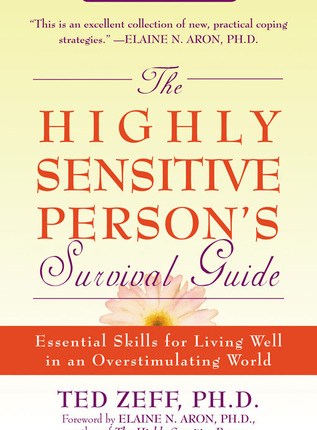
The Highly Sensitive Person’s Survival Guide: Essential Skills for Living Well in an Overstimulating World by Ted Zeff

The Highly Sensitive Person’s Survival Guide: Essential Skills for Living Well in an Overstimulating World by Ted Zeff

“Approximately 15 to 20 percent of the population have trouble screening out stimuli and can be easily overwhelmed by noise, crowds, and time pressure.” pg 10, ebook

Ted Zeff, a self professed highly sensitive person or HSP, shares coping mechanisms he’s cultivated throughout his life-long struggle with the unique way he responds to every day life. Topics range from improving work environments, personal relationships with non-highly sensitive people, getting a good night’s sleep and more.

While you can’t live your life totally removed from the world’s jolts, you can create an environment that minimizes stimuli. If you can anchor yourself to a ship of tranquility, you won’t be tossed about by the waves of stimulation.” pg 22

Photo by Anna Shvets on Pexels.com

I am a highly sensitive person too. Most of the tips and habits Zeff suggests in this book are common sense and were not all that helpful to me. The material also becomes somewhat repetitive as the book goes on. But, if you’ve just discovered this about yourself, I could see this book being eye-opening.

“Since our aggressive society values non-HSP behavior, HSPs must learn to create boundaries and speak up. Unfortunately, many HSPs are shy and feel embarrassed to state what they want.” pg 63

Something I did learn about in this book is the highly sensitive person issue of “time pressure”. I know deadlines and meet up times stress me out, but I didn’t realize that was fairly typical of highly sensitive people.
Photo by David Bartus on Pexels.com

“Combined with your high sense of responsibility, functioning under time constraints can be one of the most difficult aspects of being a highly sensitive person. In this section you will learn specific techniques to successfully deal with the daily pressures of our fast-paced modern society.” pg 32

If you only have time to read one book about highly sensitive people, the author himself recommends The Highly Sensitive Person: How to Thrive When the World Overwhelms You multiple times throughout this text. You may want to pick that one up and give this a pass.

Thanks for reading!

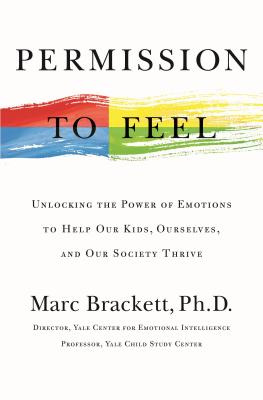
Permission to Feel: Unlocking the Power of Emotions to Help Our Kids, Ourselves, and Our Society Thrive by Marc Brackett

Permission to Feel: Unlocking the Power of Emotions to Help Our Kids, Ourselves, and Our Society Thrive by Marc Brackett

“And when we can’t recognize, understand, or put into words what we feel, it’s impossible for us to do anything about it: to master our feelings — not to deny them but to accept them all, even embrace them — and learn to make our emotions work for us, not against us.” pg 2

Marc Brackett, Ph.D., is the director of the Yale Center for Emotional Intelligence. In this book, Permission to Feel, he has given the world a new set of tools to learn more about ourselves through our emotions, to facilitate communication, and to teach the next generation how to do the same.

Photo by Andrea Piacquadio on Pexels.com

I really appreciated this book as I am someone who has trouble sharing emotions.

I am probably like this because, as Brackett explains, we learn our communication styles from our parents. My mother had a lot of kids and, though I know she cares, never had much time for one-on-one interaction.

My father is so introverted he barely speaks to his family. I have spent entire car rides with my dad while sitting in absolute silence, which sounds like it could be desperately uncomfortable, but with him it’s not. That’s just the way he is.

And what I have become. It can take time to coax anything like an intimate conversation out of me and few have ever bothered to try.

But I want to be better at sharing what’s going on in my inner world. This book has shown me a way I can move towards making that happen.

Photo by August de Richelieu on Pexels.com

“Feelings are a form of information. They’re like news reports from inside our psyches, sending messages about what’s going on inside the unique person that is each of us in response to whatever internal or external events we’re experiencing. We need to access that information and then figure out what it’s telling us.”

Brackett first outlines why emotions are important as they affect everything from “where we direction our attention” to decision making, relationships, creativity and our physical health.

He then explains how to become “emotion scientists,” which he says are more desirable than “emotion judges.” The scientist listens and seeks clues to tease out what is going on in order to help. The judge does the same, but then, rather than helping, he strangles any potential improvement by putting the smack down on what they discover.

“We all want our lives, and the lives of the people we love, to be free of hardship and troubling events. We can never make that happen. We all want our lives to be filled with healthy relationships, compassion, and a sense of purpose. That we can make happen.” pg 21

Photo by Daria Shevtsova on Pexels.com

Then, he gives the tool kit he has spent years honing in workshops and studies, and shares how to apply it in various areas of your life.

I could see this book being useful to parents, educators, leaders or people like me. I knew I had room for improvement in accessing my emotions, but no idea how to go about it. Now, I know.

Thank you to the publisher for a free advance reader copy of this book. The short quotations I cited in my review may change or be omitted in the final print copy. Permission to Feel should be published in early September 2019.

Thanks for reading!