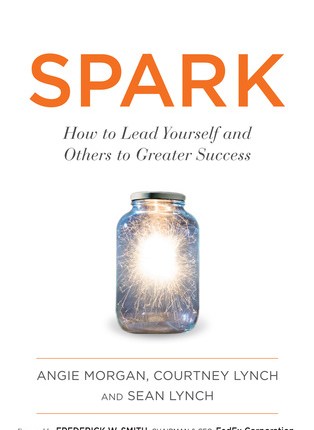
Spark is a manual to help an individual or a business develop leadership skills. The important attributes are outlined in each chapter with highlighted stories provided by the authors’ own life experiences. The salient points of the different topics are simply and clearly listed at the end of each chapter as well as further resources.
“Our society values leadership — craves it, for that matter. Yet we don’t teach it in formal education.” pg 9, ebook.

The title itself “Spark” refers to those who know they carry the seeds of greatness within themselves and are willing to learn how to make those seeds bloom. As the authors are quick to point out, there are a lot of misconceptions about leadership.
One of them is that people are born leaders and only certain people can lead. They say, and I believe this too, that anyone can become anything they set their minds too. This book helps provide the necessary skills to make that process simpler.
“No one else can make or anoint you a leader. The only way to become a Spark is to make yourself into one.” pg 24, ebook
I thought it was an interesting that these skills are taught to our military personnel but are not stressed as much in the private sector. The main reason the authors started their leadership business was because they noticed leadership was required in business but no one was teaching it. I suppose that’s true, but I’d never considered it before because I had assumed that leaders were born that way.
“… invest the time in seeking to uncover your values, and you’ll be led to discover any misalignment between your expectations of yourself and your actions. The next step is having an honest conversation with yourself so that you not only understand where, when, and why you’ve compromised your values in the past but also recognize the changes you need to make to lead more consistently with your intentions.” pg 42, ebook

I think some of the suggestions in Spark might discomfort those who haven’t taken the time to look and evaluate their own character. Or accept responsibility for reoccurring issues in their experience.
“Overwhelmingly, we all seem to agree that we live in a pass-the-buck culture. Pointing to others as the reason for a problem is a typical response.” pg 69, ebook.
And, taking responsibility for a problem gives you the power to change it. Because, at the end of the day, you can’t control somebody else’s actions — despite how much we may want to.
The chapters I, personally, liked the most were about how to “build your confidence” and “demonstrate consistency”. The information in that section felt the most relatable because it deals with the humanity of leaders. We all fail sometimes or experience self doubt. What matters is how you handle that and continue onwards.

Which brings me to my last thought about this book, as I mentioned earlier, the authors insist leaders make themselves. If you want to learn these skills, you can. If you want to make change in your organization, you can. What you can’t do is force other people to become leaders if they don’t want to be.
I think the power in becoming a leader or a “spark” is the example you hold up to others who have the same aspirations. As for the rest, I suppose they can provide the background against which your brilliance shines.
Thanks for reading!
- The Ballad of a Small Player: a Metaphysical Movie Review
- Otherwhere: A Field Guide to Nonphysical Reality for the Out-Of-Body Traveler by Kurt Leland
- Psychic Dreamwalking: Explorations at the Edge of Self by Michelle Belanger
- Archetypes on the Tree of Life: The Tarot as Pathwork by Madonna Compton
- The Goddess and the Shaman: The Art & Science of Magical Healing by J.A. Kent
 The Help Desk Book Blog