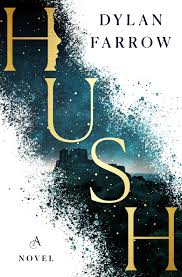
Hush (Hush, #1) by Dylan Farrow

Hush (Hush, #1) by Dylan Farrow

In the world of Hush, ink, the suspected origin of a deadly plague, has been declared the enemy of humankind and outlawed. The keepers of the law, High House and its magical soldiers called bards, roam the world, rooting out those who break the law and rewarding those who bend to their will.

“Our history shows that vigilance and caution are tantamount to survival. Burn the ink from the page. Turn away from forbidden words, toxic tales, and deadly symbols. Cleanse the country of this malignant blight. Join us.”

Photo by Dids on Pexels.com

Shae lost her brother to the mysterious plague early in her life and her family has been outcast from her small village since. When tragedy once again darkens her family’s doorstep, what will Shae do not only to seek justice for her brother but, potentially, the whole world?

The premise of Hush had some interesting ideas, but this debut, young adult novel suffers from wooden characters and predictable plot twists.

“The Bards arrive today.” The Bards. Suddenly I feel as though the house has been encased in ice. The town elders say there’s power in words- that certain phrases can change the world around you.”
Photo by Polina Zimmerman on Pexels.com

Weakness in the character development aside, Shae is a strong protagonist who struggles to create her own reality which differs quite markedly from the reality that her small town has imagined for her. Teens might connect with her more strongly than I did, which is to say, not at all.

I’m not sure what it was. Maybe I’m suffering from YA dystopian reading burnout?

Instead of appreciating Shae for her flaws which include falling in love too quickly, trusting everybody and pushing all her friends away the moment she could really use their help, I found myself annoyed with her.

“I spent countless nights lying awake, staring at the austere wooden beams of the ceiling, trying to figure out if I was mad or cursed- or both.”

Photo by Joshua on Pexels.com

Be smarter, I thought. The odds are stacked against you, and you need to pay attention, not fall for the first stranger you meet who has a dreamy pair of eyes.

But as I said, I’m definitely not the intended audience for the book.

Here’s the author, Dylan Farrow, talking about Hush:

Thank you to NetGalley and the publisher for an advance reader copy. And thank you for reading!

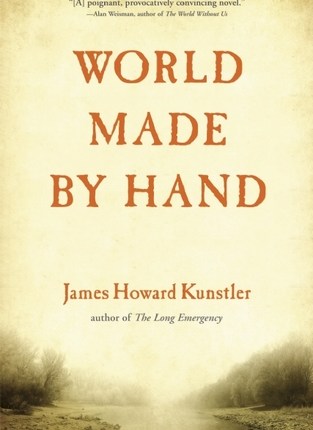
World Made by Hand by James Howard Kunstler

World Made by Hand by James Howard Kunstler

“It was chilling to reflect on how well the world used to work and how much we’d lost.” pg 12, ebook.

Photo by Davide Locatelli on Pexels.com

In World Made by Hand, civilization has fallen to pieces. There is no consistent electricity. The town of Union Grove has running water, but only because of a water system that relied more on elevation than anything else.

Worse, the justice system has fallen apart. There is little to no medical care facilities or supplies available. Television stations have ceased to broadcast. The radio sometimes broadcasts religious programming in the moments the electricity flickers on and then off.

“It’s not all bad now,” I said. “We’ve lost our world.” “Only the part that the machines lived in.” Jane Ann patted my thigh, but said no more and got up to leave.” pg 25, ebook

Photo by Pixabay on Pexels.com

A slow-paced dystopian novel that savors the end of life as we know it might not have been the best book for me to read right now. In the midst of a global pandemic and unfounded fears that life may never go back to the way it was, this wasn’t as much an escape as an additional cork-popper to my ever-present anxiety.

The characters lack depth, but I found myself caring for them because they seemed so real.

They want food, shelter and safety for their loved ones, even though all of those things have become difficult to find.

“By the time he passed away, it was obvious there would be no return to ‘normality.’ The economy wouldn’t be coming back. Globalism was over. The politicians and generals were failing to pull together at the center.” pg 29, ebook.

There are very few moments of action in here. I can see the slow pace being frustrating to some readers.

“The afternoon weather resolved into an uncomfortable drizzle, driven by hot winds out of the south. I had an old ripstop nylon poncho from my collegiate camping days, but it had lost its waterproofing.” pg 126, ebook

Photo by Sam Willis on Pexels.com

But, to play the devil’s advocate, perhaps that would be the way the world would actually end. To quote T.S. Eliot: “Not with a bang, but with a whimper.”

Recommended for readers who enjoy dystopians like Station Eleven and who are brave enough to read this kind of thing with the current state of things.

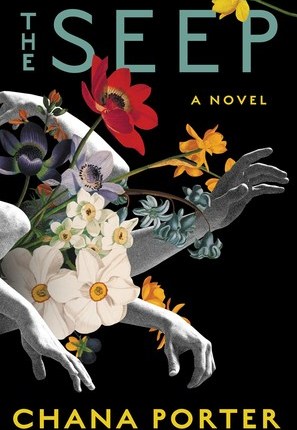
The Seep by Chana Porter

The Seep by Chana Porter

Warning: minor spoilers ahead that are listed in the book’s description on Goodreads. Do not read this review if you don’t want to know anything about the book’s plot before beginning it.

“They would soon realize that The Seep had already infiltrated their city’s water supply. They were already compromised, already bodily hosts to their new alien friends. It was through that connection they could hear one another’s thoughts, feel the same emotions, overlaid with the all-consuming adage that Everything Will Be All Right, No Matter What.” pg 10, ebook

The Seep by Chana Porter asks many questions like: what would humanity and society look like if thoughts could actually create reality, if physical material was permeated with the spiritual, if enlightenment was only a sip or two of alien-filled water away?

Photo by Arnie Watkins on Pexels.com

How would people live, work and raise their children? What would relationships look like? And how would it feel to adults who grew up with a whole other version of reality only to spend the last half of their lives in a world, that to them, feels turned upside-down?

Would they embrace it, fight against it or choose another as-yet unknown path?

Trina, a trans-woman from the time before alien technology, when humanity changed genders with surgery and hormone therapy, is in a happy and fulfilling marriage with her wife, Deeba, until the day when Deeba decides she wants to become a child and live her life again. She asks Trina to be her mother in this second life, still sharing her reality but in an entirely different way than as a lover. This desire is something that is within the realm of the possible now thanks to the alien invasion called, “The Seep”.

Trina does not take this revelation well.

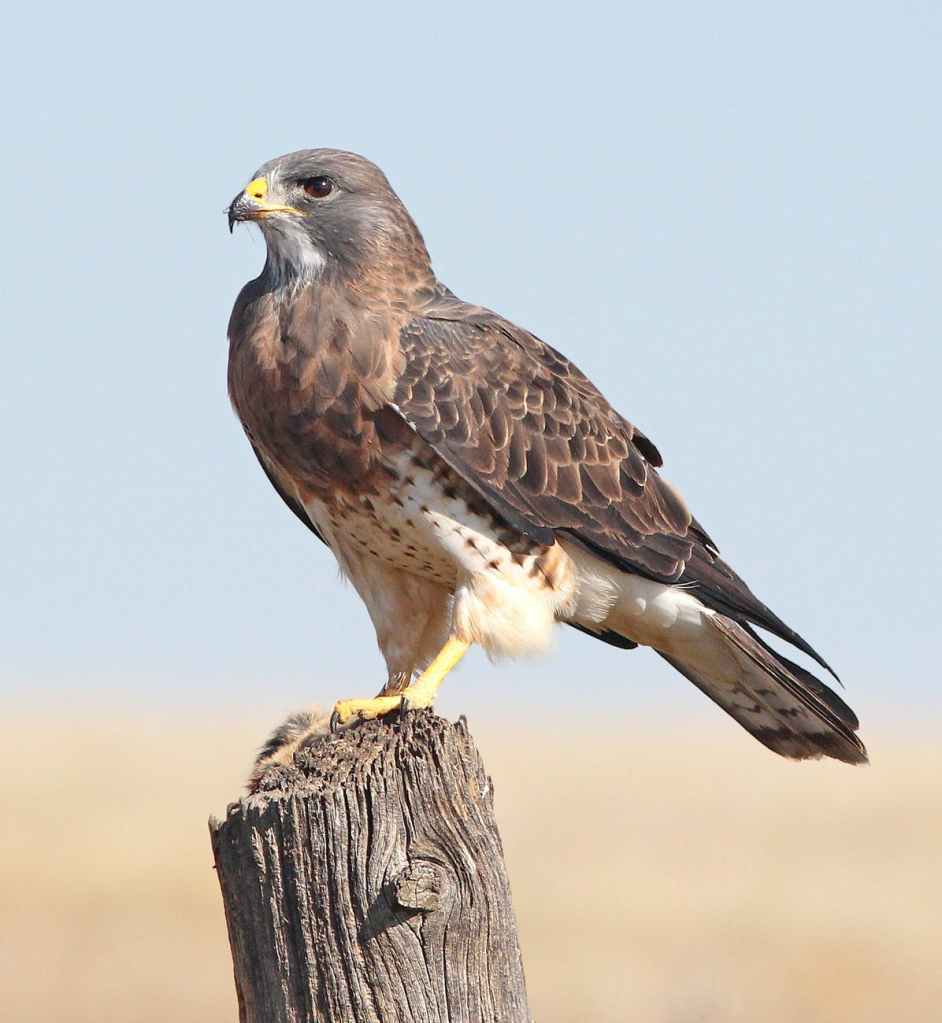
“It felt akin to coming home one day to find that your wife had become a hawk, with dusty talons and a great golden eye. Your hawk-wife can’t live with you anymore. She wants to live in the sky and eat smaller birds, not drink coffee and read the newspaper in bed with you.” pg 26, ebook

Photo by Flickr on Pexels.com

The majority of this book reveals how Trina adjusts to her new reality.

“The main message I have for you today is that we don’t yet know what to call ourselves, as both human beings and symbionts of The Seep.” pg 46, ebook

I think this book does a good job, like other science fiction novels, of holding up a mirror to reality and saying, what if. It also makes a great metaphor for how older generations might feel out of touch with the generations who come after them.

Prior to the alien invasion, Trina was on the leading edge of society in both her self actualization and lifestyle. After, she feels abandoned in a landscape that no longer makes sense and unloved by the people in her life she valued the most.

There’s a palpable sense of isolation and ever-increasing paranoia in this story. If the aliens exist on a level of conscious thought, they know what you want before you even voice it. It’s disturbing, but with technology increasing the pace of life and guessing consumers’ wants and needs before they even know, how far off the mark are we from that sort of interaction, really.

Highly recommended for readers who enjoy short science fiction that makes you think.

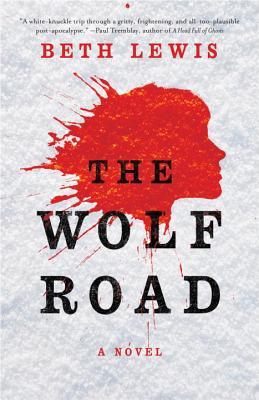
The Wolf Road by Beth Lewis

The Wolf Road by Beth Lewis

Elka grew up in a world where nuclear bombs fell from the sky and poisoned the earth, and the weather can turn deadly in a heartbeat. In this apocalyptic landscape, she found a home in the wilderness with a man she called, “Trapper,” and he was like a father to her. Turns out, there was a dark side to the person who fed and sheltered Elka. Now, Elka has to find her real parents who went north years before. And she has to hurry, because if Trapper finds her first, something terrible will happen.

“Trapper was my family even though I didn’t know a sure thing about him, but I figured quick I didn’t know much more ’bout my parents and they was kin. Trapper was the kind a’ family you choose for yourself, the kind that gets closer’n blood.” pg 21

Photo by Valiphotos on Pexels.com

The title of the book speaks to Elka’s disdain for taking the regular road through the wilderness — in her world, that’s where the predators find you. It’s also a metaphor for living the life you want to live, not the one that others expect for you.

“I don’t much like roads. Roads is some other man’s path that people follow no question. All my life I lived by rules of the forest and rules of myself. One a’ them rules is don’t go trusting another man’s path.” pg 85

Elka, instead, forges her own road through the trees and, as she goes, chooses a new family including a beautiful young woman with a background as mysterious as Elka’s own and a lone wolf who appears one day out of the blue. But she doesn’t trust her own choices because she made such a terrible one by relying on the monster she called Trapper.

Photo by Pixabay on Pexels.com

“He bolted up, stood tall and kinglike, towering above me. Felt like I’d lost a piece of me in that moment, like that wolf had stolen something and I had to stick with him always to make sure I’d get it back.” pg 73

Written in first-person narrative style, The Wolf Road is a dystopian coming-of-age story with some elements of horror and mystery. I found the opening to be a bit slow, but was swept up in the plot as the story progressed and Elka remembered certain details she had forgotten from her unique childhood.

Recommended for readers who like the thrills and chills of dystopian worlds.

Thanks for reading!

The Three-Body Problem by Liu Cixin

The Three-Body Problem by Liu Cixin

The Three-Body Problem is an inventive science fiction read that suffers, in my opinion, from some translation issues. None of the characters feel quite right. Their dialogue seemed wooden and stilted. And, perhaps this was just my Western mind, I never really understood some of their motivations.

“She could no longer feel grief. She was now like a Geiger counter that had been subjected to too much radiation, no longer capable of giving any reaction, noiselessly displaying a reading of zero.” pg 22

Photo by Pixabay on Pexels.com

My quibbles with the characters aside, some of the concepts in this book were utterly fascinating.

There’s a mysterious government installation, video game with a deeper, hidden meaning, unexplained deaths, numbers appearing out of thin air, and, my favorite part, an in-depth imagining of what unfolding a proton in different dimensions might look like. For fans of the genre, I can see why the The Three-Body Problem would be appealing.

“All the evidence points to a single conclusion: Physics has never existed, and will never exist. I know what I’m doing is irresponsible. But I have no choice.” pg 61

Photo by Sourav Mishra on Pexels.com

In the library copy I read, some of the major cultural issues needed to understand the text are included in footnotes. It helped, but it made me wish I could read this in its original form.

“Everything that’s happening is coordinated by someone behind the scenes with one goal: to completely ruin scientific research.” pg 135

I particularly liked Liu Cixin’s descriptions of the landscapes contained in the video game of the story. The desolate vistas and civilization-ending weather were fascinating to explore.

The idea that there was a world where the law of physics didn’t apply was also mind-bending. Cixin has created a place where suns swirl through the sky in no discernible pattern and pendulums don’t swing in the expected pattern. In a world like that, anything could happen. And it does.

Photo by Pixabay on Pexels.com

“Even if God were here, it wouldn’t do any good. The entire human race has reached the point where no one is listening to their prayers.” pg 205

Recommended with reservations for fans of science fiction. There’s much to enjoy in this read, especially if you favor the “science” part of the genre.

For readers who enjoy book to screen adaptations, this novel has already been made into a film. It is also slated to become a television series.

Thanks for reading!

Last Ones Left Alive by Sarah Davis-Goff

Last Ones Left Alive by Sarah Davis-Goff

Last Ones Left Alive brings the zombie-genre to Ireland. Orpen, the daughter of Muireann and Maeve, spends her life training, running, and learning to throw knives. The end has come and humanity has, for the most part, been wiped out by zombie-like creatures called “skrake.”

“I’m to put away the stories about the monsters that are not real and to hear about the others. They’ve got worse as I got older; heroes are caught, turned, burned, throttled, they die of hunger and cold. Children same as me.” pg 33

Photo by tom balabaud on Pexels.com

Orpen lives a sheltered existence on an island. But she dreams of going to the mainland, once-Ireland, and finding the fabled “Phoenix City,” which she learned about through flyers rotting in abandoned buildings. Phoenix City is touted as a paradise with women warriors protecting the walls and weak from the encroaching skrake.

Orpen’s mother and Maeve have drilled rules into her head since the day she turned seven. Some of these rules are: Don’t go near tall buildings. Count your ‘Just-in-Cases’. and Beware people.

“Beware people. I can’t stay on my own, though, I can’t. If they’re men, I will run.” pg 71

Photo by Ricardo Esquivel on Pexels.com

But is life worth living without the interaction of other people? Orpen doesn’t think so. She dreams of the day she’ll leave the island… and wanders the land with the skrake.

I enjoyed Last Ones Left Alive but it felt like more of an homage to Ireland than a truly scary horror novel. Much of the gore and scares felt done as readers have been exposed to them all before in such series as The Walking Dead, Book One or Saga, Vol. 1.

The narration is related in two parallel lines with the past woven among the present by alternating chapter. It’s not my favorite way to read a story, but I can see how it could appeal to some readers.

The female characters in this broken world are unapologetically strong. Readers looking for books with self-reliant female characters may really enjoy this read. It may also be a great pick for a book club to pick apart and discuss.

Photo by Khoa Vu00f5 on Pexels.com

Personally, I wanted more details about the dangers this world had to offer rather than focusing on Orpen’s journey, which is the main part of the story. There’s something to be said for unknown horrors… true. But when you peer deeply into the darkness, there’s the feeling that it looks back into you. 

That’s what I felt was missing in this excellent debut novel by Sarah Davis-Goff. I wanted more looking into the shadows.

Thank you to the publisher for an advance reader copy of this book. The short quotations I cited in this review may vary in the final printed version, which I believe is available today (August 27, 2019).

Thanks for reading!

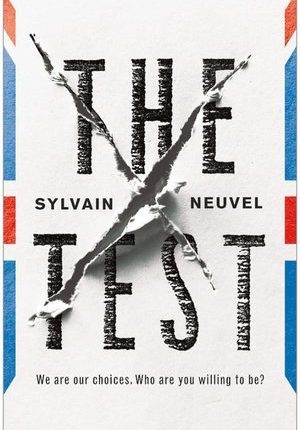
The Test by Sylvain Neuvel

The Test by Sylvain Neuvel

The Test is a science fiction short story detailing a sinister new type of citizenship test and a possible dark future humanity could face.

“I am the only one taking the test. Only men. Only between the ages of sixteen and forty-five. She said it was unfair. I told her it was a blessing. I do not care what their motivations are; it is a simple matter of probabilities.” pg 12

Photo by Startup Stock Photos on Pexels.com

Idir Jalil was a dentist in Teheran. He wants to immigrate with his wife and children to the United Kingdom. But first, he has to pass the test.

“Guns and impunity. This is why we’re here.” pg 21

As technology advances, one can’t help but wonder what sorts of new programs are going to be created. Passports with radio frequency identification chips already exist. Will we soon start putting computer chips in ourselves?

And with all of these changes, how do we hold on to our essential humanity? The test Idir receives has significant consequences for him.

Beyond the question of technology, Sylvain Neuvel also tackles how immigration procedures have a dehumanizing effect. When you’re reducing people to statistics and probabilities, you dismiss everything else that makes someone a person.

Photo by Darren Patterson on Pexels.com

Countries around the world continue to struggle with immigration issues. I wish there were easy answers. Aren’t we all citizens of this planet?

Thanks for reading!

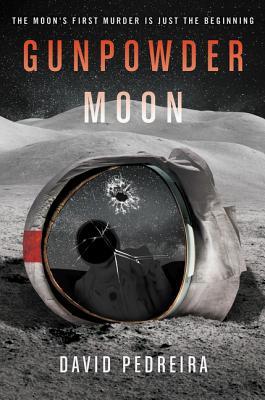
Gunpowder Moon by David Pedreira

Gunpowder Moon by David Pedreira

In a dystopian world where the once powerful countries are now scrambling for fuel, the helium3-rich fields of the moon are a godsend. But when an American miner turns up dead, it may become the new front in a war, not just for control of the Earth, but also the galaxy.

“Cold enveloped him. He opened his eyes in Moon shadow and had to blink to make sure they weren’t closed.” pg 5

Photo by Alex Andrews on Pexels.com

This is a story that could have been a thriller, but it gets bogged down in the technical aspects of life on the moon. I imagine the science is sound, but, unlike “The Martian”, I felt like it slowed the action down to a crawl rather than speeding it along.

The characters were problematic. There are half a dozen of them and I couldn’t seem to connect with any.

“Dechert wondered for the hundredth time if the people back home had any clue what it was like to live on the Moon.” pg 15

The mystery wasn’t all that mysterious and is tied up in one paragraph towards the end. I was disappointed. I like my mysteries with more twists and turns, an unexpected bump or two.

Photo by Pixabay on Pexels.com

“I’m going to catch a quick two hours,” he said. “Wake me up if something bad happens.” pg 29.

A nap was starting to sound pretty good to me too.

I read David Pedreira’s bio and it seems he’s a journalist, or was. I could tell from his writing. The sections read sort of like mini-news stories. Lede, information, kicker, repeat. Not that there’s anything wrong with that format, but I wish the story had been shaken up somewhat.

Oh well. On to the next book! Thanks for reading.

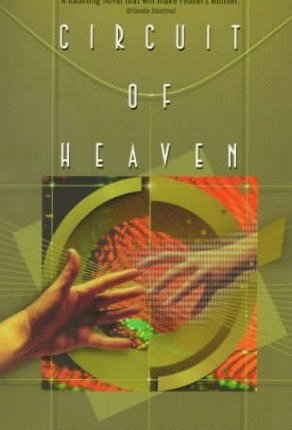
Circuit of Heaven by Dennis Danvers

Circuit of Heaven by Dennis Danvers

“Is not God in the height of heaven? And behold the height of the stars, how high they are. And thou sayest, How doth God know? Can he judge through the dark cloud? Thick clouds are a covering to him, that he seeth not; and he walketh in the circuit of heaven.”pg 14

Photo by Burst on Pexels.com

Humanity has created a computer program that can contain a person’s soul within its code. The programmers have made a new world — one without disease, violence or hunger, where those who leave their bodies behind and enter it, can live forever.

Prior to this breakthrough, programmers learned how to implant portions of people’s personalities into biological bodies, to work as laborers and earn money for the ultimate project of building the new paradise. They called these creations, “constructs”.

Not everyone, including some leftover constructs, have chosen to take advantage of this “heaven” and entered the program. Religious fundamentalists and those who have other objections to entering have remained behind. However, society has broken down without the leaders, who entered the program along with billions of other souls. Food is hard to come by and wild packs of dogs roam the streets.

Nemo, for reasons he can’t totally explain even to himself, has chosen not to enter the program (commonly called ‘the Bin’) to be with his parents. But on a recent visit, he meets a beautiful woman and his life will never be the same.

Photo by Pixabay on Pexels.com

Justine is a recent arrival to the Bin. But her memories are confused and she can’t remember where she has been for the past few weeks. Is it a programming error or indicative of a bigger problem with the Bin itself?

There were scare stories about people going into the Bin and breaking up like a virtual in a thunderstorm, that there were flaws in the crystalline structure of the Bin, and you could find yourself in nightmarish worlds that made no sense, completely alone.” pgs 12-13

I enjoyed the science fiction portions of this story and contemplating the power that humanity could one day potentially wield over life and death. With computers advancing the way they are, it’s not too hard to imagine that someone someday will figure out how to code a personality or soul. And that raises a whole host of other questions, doesn’t it.

What about the psychological effects of everything you could ever want being available at the touch of a button? What does it mean when a mother can program herself to look younger than her children? And what about children in a world without death? Should babies be uploaded immediately into the Bin or programmed from pure code without ever having existed in the real world?

Photo by Lisa Fotios on Pexels.com

The dilemmas go on and on. Beyond considering the hypothetical moral questions, I had a few problems with this book.

The characterizations were weak. A few of the major plot twists were clear well before they happened. But there was one, a big one, that I didn’t expect and it was pretty messed up. Then, the characters just seemed to get over it and move on. They had a few conversations and that was that. To be honest, it took me awhile longer. (No spoilers, but if you read this one, I’m certain you’ll know exactly what I’m talking about.)

Then the ending, when it came, was too rushed, which was rather a shame. So, that’s why I gave this a middling review. The premise was fantastic. Then it devolved into a so-so science fiction.

Thanks for reading!