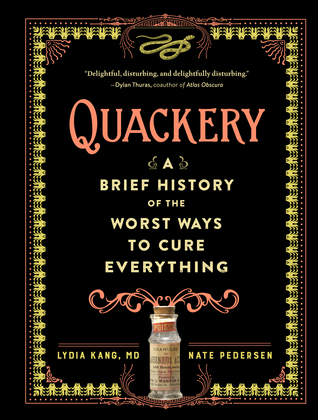
Quackery taught me that people have been desperately seeking cures for ailments, real and perceived, for ages. Sometimes that search takes them into disgusting or deadly treatments peddled by others who are taking advantage of that desperation for their own gain.
These human vultures have been called “quacks,” among other things.

“But quackery isn’t always about pure deception. Though the term is usually defined as the practice and promotion of intentionally fraudulent medical treatments, it also includes situations when people are touting what they truly believe works.” pg 1
Unfortunately, even those selling the “remedies” with the best of intentions still managed to kill people.
There seemed to be no end to the creative ways we’ve poisoned each other with various metals or concocted deadly and addicting brews in the name of health. We’ve burnt and blistered suffering unfortunates, taken pieces of their skull out to let the evil spirits out of their brains, or ground up human bone and ingested it.
The most disturbing chapter of this book, and there were some serious contenders, was the part about the development of anesthesia.

“Several chapters in the annals of anesthesia were written by some hard-partying, borderline sociopathic characters. So the next time you blissfully awaken from a surgery, remember to thank the child-stranglers, sponge-huffers, and ether frolickers of the past.”
Yeah, there have been some awful things done to both animals and people in the name of medicinal research.
The most amusing anecdote in Quackery goes to a section about creative uses of tobacco.

“You know the phrase ‘blowing smoke up your ass’? Well, you can disgust your next blind date with the true life medical origin of that phrase. Because literally blowing smoke up someone’s ass was a sanctioned resuscitation method in the eighteenth century.”
And now you know.
Recommended for readers with a strong stomach who are interested in strange and forgotten medical history.
My book club read this for our June pick but I missed the meeting. I expect an extraordinary conversation was had by all because this book is full of fascinating and disturbing topics of all sorts.
Thanks for reading!
- The Ballad of a Small Player: a Metaphysical Movie Review
- Otherwhere: A Field Guide to Nonphysical Reality for the Out-Of-Body Traveler by Kurt Leland
- Psychic Dreamwalking: Explorations at the Edge of Self by Michelle Belanger
- Archetypes on the Tree of Life: The Tarot as Pathwork by Madonna Compton
- The Goddess and the Shaman: The Art & Science of Magical Healing by J.A. Kent



 The Help Desk Book Blog