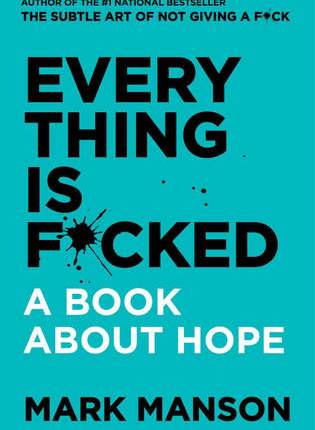
Everything is F*cked: A Book About Hope by Mark Manson

Everything is F*cked: A Book About Hope by Mark Manson

This creatively titled self-help book, Everything is F*cked, presents psychology, philosophy and the author’s view of reality.

In a series of essays, Mark Manson discusses a variety of topics including the differences between the “thinking brain” and “feeling brain.” He uses Isaac Newton’s laws to create a parallel universe’s version of emotional laws and completes a fairly scathing dissection of religion.

Throughout the various topics, he circles back to the idea of hope and how it can potentially create more problems than it solves.
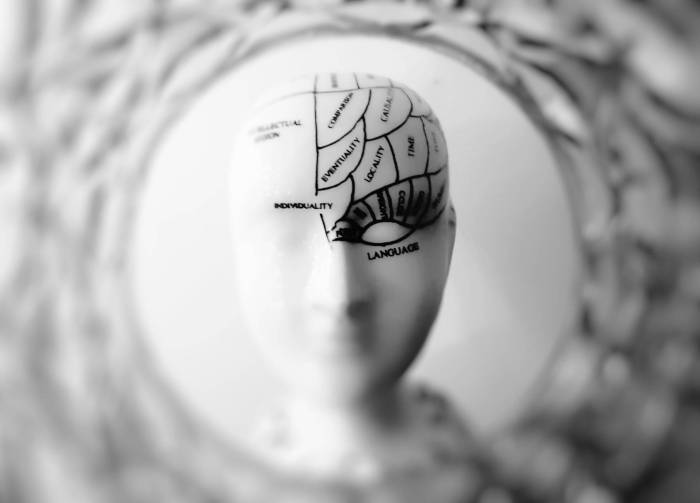
Photo by meo on Pexels.com

Why did Manson write a book about hope?

“This book is my little source of hope. It gives me purpose; it gives me meaning. And the narrative that I’ve constructed around hope is that I believe this book might help some people, that it might make both my life and the world a little bit better.” pg 15

I did not read Manson’s other incredibly popular title, The Subtle Art of Not Giving a F*ck: A Counterintuitive Approach to Living a Good Life, so I went into this one not knowing what to expect. I found Manson to be particularly adept at breaking down complex topics into simple, easy-to-understand analogies.

For example, here’s his take on the psychological cause of a underlying feeling of unworthiness: “This feeling of unworthiness is usually the result of some bad sh*t happening to us at some point. We suffer through some terrible stuff, and our Feeling Brain decides that we deserved those bad experiences. Therefore, it sets out, despite the Thinking Brain’s better knowledge, to repeat and re-experience that suffering.” pg 46

Photo by Pixabay on Pexels.com

And here’s the analogy he crafts around his explanation of unworthiness: “Put another way, the problem isn’t that we don’t know how not to get punched in the face. The problem is that, at some point, likely a long time ago, we got punched in the face, and instead of punching back, we decided we deserved it.” pg 46

His writing is simple and succinct, which could be incredibly useful for readers who are looking for more information about the self help topics presented. I didn’t particularly care for Manson’s overall style, but that’s a personal preference rather than a commentary on the value of what he’s discussing.

“The stories of our future define our hopes. And our ability to step into those narratives and live them, to make them reality, is what gives our lives meaning.” pg 70

Photo by Engin Akyurt on Pexels.com

I think this author may be similar to Sarah Knight and her series of self help books about The Life-Changing Magic of Not Giving a F**k. Readers either love or hate those, I fell somewhere in between.

My favorite part of this was when Manson dived into some Buddhist philosophy in the chapter, “Pain is the Universal Constant.” He discusses the teaching of suffering being similar to a person struck by arrows. The first arrow brings physical pain and the second brings the emotional pain, which can be far worse and last longer than the physical pain because of the narratives we weave around it.

Through meditation, the second arrow, emotional pain, can be diminished or perhaps eliminated.

“That while pain is inevitable, suffering is always a choice. That there is always a separation between what we experience and how we interpret that experience. That there’s always a gap between what our Feeling Brain feels and what our Thinking Brain thinks. And in that gap, you can find the power to bear anything.” pg 186

Photo by Aleksandar Pasaric on Pexels.com

Recommended for readers who aren’t offended by strong language and have the ability to hold the book they’re reading in that gap in their minds — between the thoughts and the emotions, in the space of pure being.

I’ll meet you there. 🙂

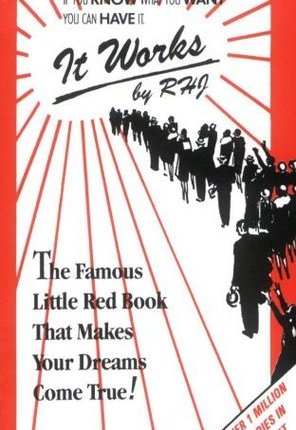
It Works: The Famous Little Red Book That Makes Your Dreams Come True! by RHJ

It Works: The Famous Little Red Book That Makes Your Dreams Come True! by RHJ

It Works by RHJ is a short book, pamphlet really, on the Law of Attraction. I was fortunate enough to pick up the deluxe version that not only had the text of the original work, but also a PDF of the way it appeared in its first printing.

A short chapter was also included that discussed the nearly-anonymous author.

Photo by Nilina on Pexels.com

I’ve read a lot of New Age/New Thought material, but I focused on this one because a certain loved one of mine is struggling. I won’t mention him by name because he says that I talk about him too much in my reviews, but suffice to say, I see him every day. Over a year and a half ago, he was laid off from a job that he enjoyed, had worked at for more than a decade, and he hasn’t found anything else yet to occupy his time. Part of the trouble, I think, is that he doesn’t know what he wants in a new occupation. It Works addresses that directly.

The mechanics of it are simple. Make a list of what you want, think about it every day, don’t tell anybody that you’re doing it. The assumption is that there is a force beyond our comprehension that responds to our thoughts and directs our lives based on what we choose to turn our thoughts towards.

Photo by Suzy Hazelwood on Pexels.com

The Abraham Hicks materials cover this in depth, but It Works was published in 1926, long before Abraham and The Secret burst into popular consciousness. This was, in fact, one of the first published books of its kind and even influenced the writings of that titan of new age thought, Napolean Hill.

To get what you want is no more mysterious or uncertain than the radio waves all around you. Tune in correctly and you get a perfect result…” pg 14.

“(Write down exactly what you want and the date you want it.) This may seem very foolish at first, but you can never realize your desires if you do not know positively and in detail what you want and when you want it. If you cannot decide this, you are not in earnest. You must be definite, and when you are, results will be surprising and almost unbelievable.” pg 20.

Photo by Kaboompics .com on Pexels.com

So, let’s cut to the chase. Does it really work?

The jury is still out. I made my list. 🙂 I guess we’ll see.

Recommended for fans of Abraham Hicks, Napoleon Hill and Pam Grout.

Thanks for reading!

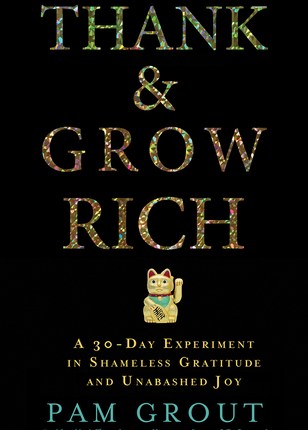
Thank & Grow Rich: A 30-Day Experiment in Shameless Gratitude and Unabashed Joy by Pam Grout

Thank & Grow Rich: A 30-Day Experiment in Shameless Gratitude and Unabashed Joy by Pam Grout

There is a disclaimer written in the description of this book on Goodreads that states it is not for everyone, but it was awesome in my opinion. I am going to admit that I am incredibly biased.

Photo by cottonbro on Pexels.com

I absolutely adored Pam’s other books on New Age thought and had some unbelievable experiences with the experiments recommended in them: E-Squared: Nine Do-It-Yourself Energy Experiments That Prove Your Thoughts Create Your Reality and E-Cubed: Nine More Energy Experiments That Prove Manifesting Magic and Miracles Is Your Full-Time Gig.

However, I couldn’t convince my public library to buy them because, I was told, they are “too fringe”.

Perhaps this book, which focuses on adopting an attitude of gratitude to improve your life, will be mainstream enough to make the cut.

Pam addresses the metaphorical elephant contained in her title early in the book: “No offense to Napoleon Hill, the author of the self help classic on which my title riffs, but the real power is in not thinking. If you want to override your brain’s unfortunate habit of leafing through your past and creating a present hologram to match, forget thinking. And start thanking.” Loc 108, ebook.

I read Think and Grow Rich last year and I could see how other people have beef with the classic. Napoleon Hill focuses on money, making connections, and doing the internal work to shoot yourself into the stratosphere of life success.

There’s very little in there about feeling your way to the same place.

Photo by fauxels on Pexels.com

Pam takes a different approach: “I should get this out on the table right now. This book won’t do a thing for your 401(k) or help you secure the McMansion you pasted onto your vision board. It’s not about getting rich in the traditional sense. … There’s nothing wrong with financial capital, but let me be very clear. It’s incapable of bringing any measure of real happiness.” Locs 324-337 ebook.

She gets to the heart of why seekers chase anything- because we believe that it will bring happiness. Pam suggests getting happy and then the success will come.

And, how does she say that we should “get happy”? By being thankful for what we already have.

“Be astonished by useless things. It’s easy to be thankful for the obvious- healthy kids, public libraries, strong marriages. But in this game we’re going to take it a step further. We’re going to build our gratitude muscle by also appreciating the insignificant and impractical…” Loc 856 ebook.

I had to include that passage for the library mention. Yay libraries!

Photo by Janko Ferlic on Pexels.com

Pam backs up her claims with scientific studies such as: “According to Richard Wiseman, psychology professor at the University of Hertfordshire in England and creator of Luck School, people who think they’re lucky actually are. After eight years of studying hundreds of self-identified exceptionally lucky and exceptionally unlucky people, he concluded that getting good breaks has nothing to do with karma or kismet and everything to do with how we see ourselves.” Loc 991 ebook.

I would like to state for the record that I am one of the luckiest people that I know. 🙂

She also includes a bunch of information from happiness researchers: “When it comes to success, research shows that while IQ, education, and training play cameo roles, the starring role, the headliner on the success stage, is “Do you have a vision? Do you believe it’s possible?” Shawn Achor, author of The Happiness Advantage: The Seven Principles of Positive Psychology That Fuel Success and Performance at Work… claims that predicting success using any other factor (say, your IQ or number of degrees) is about as effective as flipping a coin. What is effective, Achor and Frederickson and other happiness researchers have proven, is creating a happy brain that anticipates accomplishment, that knows success is just a matter of time.” Loc 1876 ebook.

I know that I have a pretty open mind when it comes to these types of books, but my thought is, what’s the harm in it? If it works for you, great! You’ve just discovered a new tool to use for living the best life for you.

If it doesn’t work, no harm done. At the very least, you would know for yourself.

Photo by Belle Co on Pexels.com

I recommend this book for readers of the Abraham Hicks materials because there are quite a few similarities in the philosophies contained within.

Some additional read-alikes for seekers like me who can’t get enough information about the law of attraction: The Power of the Heart: Finding Your True Purpose in Life, Happiness: A Guide to Developing Life’s Most Important Skill, or Dr. Quantum Presents: Meet the Real Creator–You!.

The opinions contained within this review are entirely my own. Thank you to NetGalley and Hay House for a free advance reader’s copy of this book for review purposes!  And, thank you for reading.