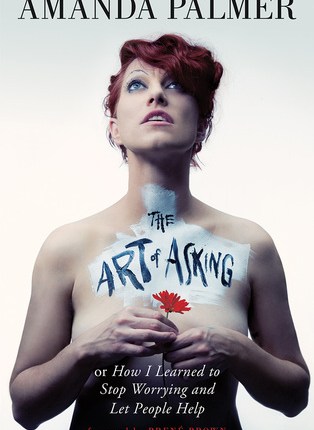
The Art of Asking; or, How I Learned to Stop Worrying and Let People Help by Amanda Palmer

The Art of Asking; or, How I Learned to Stop Worrying and Let People Help by Amanda Palmer

Amanda Palmer is an extremely talented artist who has done it all- from performing in a punk rock band to posing as a statue on the streets.

I can see why readers are passionate about this book and the author. She just didn’t strike a spark for me.

Photo by Jeffrey Czum on Pexels.com

Memoirs can drag on and become self-indulgent and ridiculous. I feel like that was a problem with The Art of Asking.

The tipping point for me was when she formed The Dresden Dolls with her friend and said (I’m quoting from memory here since I was listening to the audiobook): “I finally had the strongly emoting band I’d always dreamed of” or something like that.

I realized, I was strongly emoting on this book, but not in a good way.

I understand her internal struggles in forming a relationship with Neil Gaiman must have been difficult for her, but her “should I date him, he’s older and richer and more famous than me” just came off as silly and very first-world problems.

I get that she loves her fans, her art, her lifestyle- but it just come together to make a read that I enjoyed.

My apologies to her fans. If it helps, my favorite parts of the audiobook were the songs she put between some of the tracks. Those were actually pretty awesome.

Photo by Inga Seliverstova on Pexels.com

And the over-arching theme of The Art of Asking was good too.

Society isn’t comfortable with asking. We don’t know how to do it, don’t feel comfortable with it and it prevents people from making the art that they were born to make.

You can get that part of this book by watching Palmer’s TED talk. Maybe you should do that instead of reading this.

Here ’tis: 

https://www.ted.com/talks/amanda_palmer_the_art_of_asking

Thanks for reading.

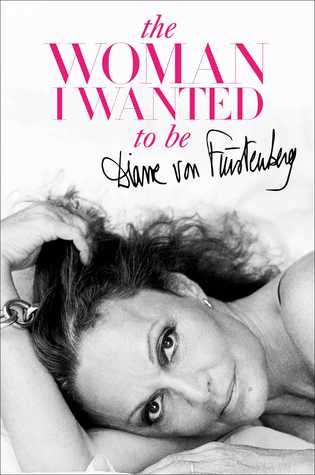
The Woman I Wanted to Be by Diane Von Furstenberg

The Woman I Wanted to Be by Diane Von Furstenberg
thewomaniwantedtobe

The Woman I Wanted to Be is the life story of the incomparable Diane Von Furstenberg.

She starts with her parents’ harrowing early life in war-torn Europe and continues through her own tumultuous love affairs and child-rearing years.

After a personal first half, the second half of her book is dedicated to how she entered and eventually became a living icon in the world of fashion.

I really enjoyed this book.

In an era where the media glorifies women who show off their bodies, cling to powerful men, and descend into drug addictions, Diane personifies the empowered woman who shows what she can do and build rather than living on how she looks or scandal.

That’s not to say that Diane hasn’t had a wild life, she has, but she owns it, has evolved from it and built it into an empire.

There are many moments in The Woman I Wanted to Be where Diane failed to be that woman. But instead of becoming mired in failure (she had to sell her business two separate times to avoid bankruptcy), she persevered to become a household name.

At another point, she gave up her identity and her business to spend time with a man who wanted her to be a blank slate. He ended up leaving her for someone else.

Photo by Karolina Grabowska on Pexels.com

Diane didn’t crawl into a hole and wilt then either. With grace and dignity, she re-entered life and the fashion world. Diane went on to experience an even greater level of success than she had before her exit.

Diane provides some great general advice for life such as: when bad things happen, they can actually be good things.

Also, never play the victim- take responsibility for your life.

Embrace your age, whatever it may be.

Photo by Pavel Danilyuk on Pexels.com

These philosophies have enabled Diane to rise above any obstacles that have appeared in her path. She is an excellent role model and it was such fun to read about her incredibly exciting and almost unbelievably successful life.

Readers who enjoyed Wild: From Lost to Found on the Pacific Crest Trail and She Got Up Off the Couch: And Other Heroic Acts from Mooreland, Indiana may enjoy this memoir.

It’s far more glamorous than either of those two selections, but the underlying themes of female empowerment and reaching for the life of your dreams despite all the odds, are the same.

I received a free copy of this book through Goodreads First Reads. FTC guidelines: check! Thanks for reading!

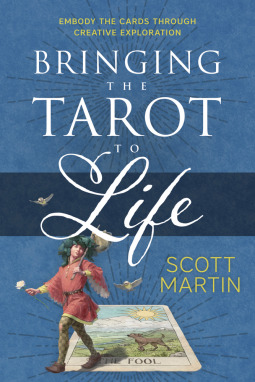
Bringing the Tarot to Life: Embody the Cards Through Creative Exploration by Scott Martin

Bringing the Tarot to Life: Embody the Cards Through Creative Exploration  by Scott Martin
bringingthetarot

Bringing the Tarot to Life is a unique tarot manual that invites the reader to use her own imagination in assimilating and interpreting the cards. I’ve never read anything quite like it.

Scott Martin was an actor and theater teacher for many years. “It struck me that just as an actor delves into his character, so a student of the tarot can explore the archetypes that are represented in the seventy-eight cards in the tarot. He can develop his intuitive abilities by participating in the written and performance exercises an actor uses to hone his talent and to create his role in a play.” loc 112-128, ebook.

He based the first two sections of the book on that idea and created a series of theater-inspired games and exploratory exercises to be played in groups or alone.

The last portion of the book consists of Martin’s interpretations of the cards. I found that section to be the least interesting, but there could be descriptions in those pages that others may not have heard. So, don’t let me deter you.

There was also some trivia included for tarot enthusiasts. Something that I didn’t know was that before Paul Foster Case helped to form The Golden Dawn, he was in theater.

Paul Foster Case became interested in tarot in 1900 when someone asked him where he thought playing cards came from. … Prior to that, he was actively involved in the theater. He was the musical director on a showboat and later worked in musical theater and vaudeville.” loc 128, ebook. But old man river, he just keeps rolling along…

Photo by Mikhail Nilov on Pexels.com

I agreed with Martin’s thoughts on improving your intuition: “How does one develop his intuition? One obvious answer is to expose the mind to more creative and imaginative ways to thinking and looking at the world. Creativity and intuition are inextricably linked.” loc 164. Indeed.

My favorite of the exercises presented in this book is “I Am What I Do” loc 231, ebook. It encourages readers to assign jobs to the different cards.

“Many people in life, as well as characters in plays, define themselves to a great extent in terms of what they do. … the possibilities are virtually limitless: The Ten of Pentacles- a family counselor. The Five of Swords- a crooked hedge fund manager. The Knight of Cups- a poet.” loc 231.

I thought that was hilarious. And, I was looking at the cards in ways that I never had before. Talk about ‘Bringing the Tarot to Life’!

Recommended for beginners or advanced practitioners of tarot cards. Every reader will most likely find an exercise or two to their liking because of the huge variety Martin offers.

Thank you to NetGalley and Llewellyn publishing for a free digital advance reader’s copy of this book. Reminder: the brief quotations that I cited in this review may change slightly in the final published version.

And, thanks for reading!

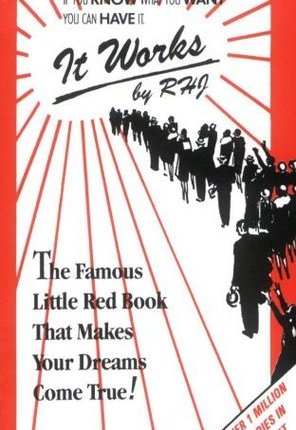
It Works: The Famous Little Red Book That Makes Your Dreams Come True! by RHJ

It Works: The Famous Little Red Book That Makes Your Dreams Come True! by RHJ

It Works by RHJ is a short book, pamphlet really, on the Law of Attraction. I was fortunate enough to pick up the deluxe version that not only had the text of the original work, but also a PDF of the way it appeared in its first printing.

A short chapter was also included that discussed the nearly-anonymous author.

Photo by Nilina on Pexels.com

I’ve read a lot of New Age/New Thought material, but I focused on this one because a certain loved one of mine is struggling. I won’t mention him by name because he says that I talk about him too much in my reviews, but suffice to say, I see him every day. Over a year and a half ago, he was laid off from a job that he enjoyed, had worked at for more than a decade, and he hasn’t found anything else yet to occupy his time. Part of the trouble, I think, is that he doesn’t know what he wants in a new occupation. It Works addresses that directly.

The mechanics of it are simple. Make a list of what you want, think about it every day, don’t tell anybody that you’re doing it. The assumption is that there is a force beyond our comprehension that responds to our thoughts and directs our lives based on what we choose to turn our thoughts towards.

Photo by Suzy Hazelwood on Pexels.com

The Abraham Hicks materials cover this in depth, but It Works was published in 1926, long before Abraham and The Secret burst into popular consciousness. This was, in fact, one of the first published books of its kind and even influenced the writings of that titan of new age thought, Napolean Hill.

To get what you want is no more mysterious or uncertain than the radio waves all around you. Tune in correctly and you get a perfect result…” pg 14.

“(Write down exactly what you want and the date you want it.) This may seem very foolish at first, but you can never realize your desires if you do not know positively and in detail what you want and when you want it. If you cannot decide this, you are not in earnest. You must be definite, and when you are, results will be surprising and almost unbelievable.” pg 20.

Photo by Kaboompics .com on Pexels.com

So, let’s cut to the chase. Does it really work?

The jury is still out. I made my list. 🙂 I guess we’ll see.

Recommended for fans of Abraham Hicks, Napoleon Hill and Pam Grout.

Thanks for reading!

Unmistakable: Why Only is Better than Best by Srinivas Rao

Unmistakable: Why Only is Better than Best by Srinivas Rao
unmistakable

A call-to-action for artists and business people of all types to create the work that only they can create which makes them irreplaceable and also Unmistakable.

“When you’re the only person who could have created a work of art, the competition and standard metrics by which things are measured become irrelevant because nothing can replace you. The factors that distinguish you are so personal that nobody can replicate them.” pg 2.

That makes sense to me. You’re essentially writing the book so no one can tell you how it’s supposed to go.

The theory of becoming Unmistakable is fairly simple but the journey to that place is not. There are no maps to this realm because it is different for everyone and the paths to that place vary as widely as the talents that people bring with them.

As Srinivas reminds us: “Unmistakable work is a process of self-discovery. We start our ride not knowing what it is that makes us unmistakable, and a thread reveals itself through the creation of a body of work. Dots connect, patterns emerge, and our unmistakable gift is revealed. Time is the critical ingredient required for this to take place, hence the role of longevity and commitment in the quest to become unmistakable.” pgs 56-57

So, you can’t give up. Create and fail and try again. That is as hard and as easy as it is.

“…creating unmistakable work might be one of the hardest things to do: you have to look into the depths of who you are, explore what matters to you, and infuse that into every element of your work until it can’t possibly be mistaken for something anybody could have done but you.” pg 68.

The messages contained within Unmistakable become repetitive after a few chapters, but Srinivas threads some of the stories and artists from his podcast to break up the material as well as his personal testimony.

Unmistakable encourages creation even in areas that you may have no prior experience: “Lack of formal instruction might keep us from attempting some sort of creative pursuit or starting anything in which we don’t have experience. … When we lack experience, we also have the advantage of lacking preconceived notions of what’s possible.” pg 113.

And, you don’t know what you’re capable of until you get started. So, what are we waiting for!

As Srinivas writes from an interview with Seth Godin: “The enemy of creativity is fear; that seems pretty clear. The enemy of fear is creativity; that doesn’t seem that obvious.” The antidote to our fear is to put our heads down, do our work, and make something each day.”pg 189.

Let’s all become Unmistakable.

Some further reading: Creativity: The Perfect Crime, Do the Work, and How to Fly a Horse: The Secret History of Creation, Invention, and Discovery.

Thanks for reading!

Following Your Path by Alexandra Collins Dickerman

Following Your Path by Alexandra Collins Dickerman

Following Your Path is about using tarot cards and meditation in order to communicate with your psyche. I was particularly excited about this book because that’s the method that I use for my own meditations and writings. This book is a treasure trove of mythological symbolism and fairy tales. I enjoyed much of it. But, I felt as if Alexandra guides the reader almost too well.

She breaks down the cards into their various pieces and encourages reflection on each piece of the Tarot artwork in a sort of automatic writing process (write down the first thing that comes to mind when you look at “blank”).

I felt like she was depriving the reader of the richer experience of pathwalking into the cards themselves.

If I were to write a manual, perhaps someday, I would leave the meditations themselves as completely open ended with plenty of blank pages for writing. So, more like: “Here is the card. Walk through it as if it is a doorway. What do you see?”

It may be difficult to believe, but the mind fills the space with “something”. The endless writing prompts for the small details really aren’t needed. But, I could see this book being very useful for true beginners who are unsure of the way or don’t yet trust or know their own inner worlds.

Another small criticism, Alexandra has the reader starting their journey into the major Trumps (the minor cards aren’t even presented) and she starts her study with the Fool rather than the Universe. But, I suppose it doesn’t really matter the order in which you explore the cards. The fact that you’re doing it at all is what is important.

I loved this explanation of the psyche in the introduction by Jean Houston: “The psyche is not unlike an archaeological dig in which different civilizations, stories, and interpretations may be revealed at each level. Unlike the field archaeologist, however, we have living access to the cultures and knowings of the various strata within ourselves and therefore can learn on site how to tap our hidden dimensions for the benefit of our existential lives. It is also possible, with the help of those primordial patterns of meaning and relationship known as archetypes, to build sustaining bridges to, and networks among, these strata, thereby encouraging an ongoing communication and exchange of content- a kind of commerce of the psyche.” introduction, pg vii

There are quotations scattered throughout the text that I found very enlightening, such as: “Myth is the secret opening through which the inexhaustible energies of the cosmos pour into human cultural manifestation. Religions, philosophies, arts, the social forms of primitive and historic man, prime discoveries in science and technology, the very dreams that blister sleep, boil up from the basic, magic ring of myth.” -Joseph Campbell, pg 17 Makes you want to start meditating right now!

This book is extremely positive and affirming. I liked that in addition to the meditation prompts, Alexandra provides further exercises and questions to help heal and creatively examine the mind. She says: “It is only when we learn to evaluate ourselves in terms of our own inner values that we can exist in a positive emotional state, aware of the continual opportunities for growth and for feelings of satisfaction.” pg 138

She also provides hope for those who may be going through the darkness of depression or despair:“Often when we find ourselves in a state of stupor, hopelessness, pain, loneliness, depression, and even madness, we may be on the verge of great vision and inspiration. Our condition of desperation is often only a stopping place on the road to greater self-development. By looking inward, we can find a way past destruction, to salvation and to a new life.” pg 244 So, if you’re going through hell, keep going.

If you enjoyed this book, you may want to look at The Creative Tarot: A Modern Guide to an Inspired Life by Jessa Crispin. If you want numerous examples of tarot card pathwalkings, take a look at my book, The Light Congress: thelightcongress.com

Happy meditating and thanks for reading!