Very Good Lives: The Fringe Benefits of Failure and the Importance of Imagination by J.K. Rowling

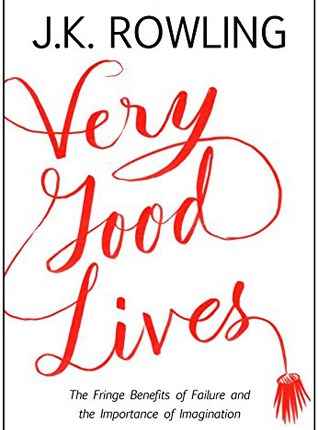
Very Good Lives: The Fringe Benefits of Failure and the Importance of Imagination by J.K. Rowling

“It is impossible to live without failing at something, unless you live so cautiously that you might as well not have lived at all – in which case, you fail by default.”

J.K. Rowling gave the commencement speech at Harvard in 2008 and the result was a mini-masterpiece about life, the power of imagination, and failure.

Photo by Joe Digital & Co on Pexels.com

Though we all know now what a mammoth success she would go on to be, at one time, she was experiencing failure and poverty.

“Now, I am not going to stand here and tell you that failure is fun. That period of my life was a dark one, and I had no idea that there was going to be what the press has since represented as a kind of fairy tale resolution.”

I’ve had my own handful of rock bottom moments and, she’s right, it is no fun. But I too have found resilience and creativity that emerged from that darkness. It’s strange, when you’re pushed to your limits, you suddenly discover that there’s more to yourself than you ever realized.

“One of the many things I learned at the end of that Classics corridor down which I ventured at the age of 18, in search of something I could not then define, was this, written by the Greek author Plutarch: What we achieve inwardly will change outer reality.”

Photo by Pavan Maruvada on Pexels.com

Like Rowling, I studied the Classics because something about it spoke to me. When I told my dad that I was adding that course of study to my degree, he laughed and said, “Well, at least it will look impressive on your resume.” Even though I knew he was right in that there were very few jobs where I could use it, having a background in the Classics has taught me a lot about modern life.

I learned that people in antiquity, though they lacked the technology and lifestyle we enjoy today, still had the intensity of emotions and civilizations struggles that persist in the modern era. There were those who had and those who had not. There were crimes of passion, acts of kindness, politicians both corrupt and extraordinary.

Struggle, stress and failure is not something mankind invented when we produced the first smart phone. Classics gives you a long view on humanity and how far, or not far, we’ve come since.

We do not need magic to change the world, we carry all the power we need inside ourselves already: we have the power to imagine better.

Photo by josue Verdejo on Pexels.com

Brilliant. I recommend this small book as a graduation gift or for anyone who is having a bad day. It can act as a reminder that anyone can succeed at whatever their heart tells them is their path, despite any evidence to the contrary. And don’t be afraid of failure. Everyone will experience it at one time or another, but what matters most is what you chose to do next.

Thanks for reading!

The Accidental Masterpiece: On the Art of Life and Vice Versa by Michael Kimmelman

The Accidental Masterpiece: On the Art of Life and Vice Versa by Michael Kimmelman

Michael Kimmelman, art critic for the New York Times, gives art trivia and philosophic insights in The Accidental Masterpiece.

… I have come to feel that everything, even the most ordinary daily affair, is enriched by the lessons that can be gleaned from art: that beauty is often where you don’t expect to find it; that it is something we may discover and also invent, then reinvent, for ourselves; that the most important things in the world are never as simple as they seem but that the world is also richer when it declines to abide by comforting formulas.” pg 5

Photo by Anthony on Pexels.com

Though, at times, I felt as if he was getting too deep into the art “appreciation” portions, I learned a great deal about not just unconventional forms of art, but how art can be found in your every day life. It is all a matter of adjusting how you view reality.

There were some historical tidbits I particularly enjoyed. For example, did you know that when Kodak film was invented and made the art of photography available to the general public, that some professional photographers believed the medium was doomed?

“The placing in the hands of the general public a means of making pictures with but little labor and requiring less knowledge has of necessity been followed by the production of millions of photographs,” wrote Alfred Stieglitz in 1899. “It is due to this fatal facility that photography as a picture-making medium has fallen into disrepute.” pg 32

Photo by Flora Westbrook on Pexels.com

Wonder what Stieglitz would have made of Instagram.

Or this other bit of trivia, which seemed particularly apropos with the news reporting today that so many people are climbing Mount Everest that they’ve become a danger to themselves and others: humankind didn’t always find mountains beautiful or worthy of appreciation. The Romans hated the mountains — they were difficult to maneuver armies across and also enemies had a nasty habit of popping out of them. (Think Hannibal.)

Here’s a young Thomas Hobbes’ view of mountains:

“Behind a ruin’d mountain does appear
Swelling into two parts, which turgent are
As when we bend our bodies to the ground,
The buttocks amply sticking out are found.”
 pg 55

Hilarious. And now we highly value mountain views and the sublime feeling of ascending a mountain’s peak.

“The evolution of the whole modern worldview, including the notion of beauty, you might even say, is exemplified by the evolution of our feelings toward mountains.” pg 56

Photo by eberhard grossgasteiger on Pexels.com

I also enjoyed Kimmelman’s thoughts on the art of collecting objects, every day and otherwise. I live with someone who has serious collecting tendencies — notably a large military hat collection. It made me appreciate my husband even more when I found out there are people in the world who collect things like light bulbs to the extent where they’ve set up light bulb-themed museums. In their own homes.

We’ve agreed (so far) to keep the collection in one room. So, comparably, I’m doing pretty well. 🙂

Recommended for readers who enjoy non-fiction reads about art, philosophy and a curious mix of the two.

Powers of Two: Finding the Essence of Innovation in Creative Pairs by Joshua Wolf Shenk

Powers of Two: Finding the Essence of Innovation in Creative Pairs by Joshua Wolf Shenk

Joshua Wolf Shenk examines creatives pairs throughout history in an effort to see why and how they work, and also why they end.

“The dyad is also the most fluid and flexible of relationships. Two people can basically make their own society on the go. When even one more person is added to the mix, the situation becomes more stable, but this stability may stifle creativity, as roles and power positions harden.” Introduction, pg xxii

Photo by Gratisography on Pexels.com

Shenk believes pairs move through six stages: Meeting, confluence, dialetics, distance, the infinite game and interruption. The stages show the development of the relationship, assumption of roles and eventual fall out of creative pairings.

“This book is written in the faith, underscored by experience, that more is possible — more intimacy, more creativity, more knowledge about this primary truth: that we make our best work, and live our best lives, by charging into the vast space between ourselves and others.” Introduction, pg xxv

I picked up this book because I’m involved in a creative partnership with my spouse (The History Guy, YouTube channel) and I was curious to see how other pairings have worked in the past. It was interesting to see how similarly we function when compared to other creative partners. I mean, everyone is different, but there are patterns that can be observed if you look closely.

“The irony is that, while our eyes naturally follow the star, a pair’s center of gravity is often with the one we see less.” pg 66

Photo by Victoria Borodinova on Pexels.com

Shenk’s chapters were interesting not only in their obscure history about some of the most famous partners in history, but also their implications for people who are looking to share their creative endeavors, and lives, with others.

“High-functioning couples commonly say that one key to a good relationship is giving each other plenty of space. But a big reason there are so many dysfunctional couples, romantic and creative, is that it’s hard for a lot of us to know what that really means or what it would look like in our lives.” pg 128

What works, what doesn’t work, and why?

“Creativity has become a broad, vague term, a kind of stand-in for universal good, even a synonym for happiness (or, as innovation, for profits). But making new, beautiful, useful things is as much about discord as it is about union.” pg 21

Photo by Tim Samuel on Pexels.com

The path isn’t always smooth, but good partners shore each other up. They may be strong where the other is weak. They challenge each other to be better than they ever would have been by themselves.

“Highly creative people have high standards and distinct sensibilities; they see the world in an unusual way (or they wouldn’t be able to make something new out of the materials of that world). Their partners must be a match — and the discovery of a shared sensibility is itself often an impetus to share work.” pg 31

I learned a lot about the Beatles, scientists, dancers, artists, screen writers, authors and more in Powers of Two. This is a book about creativity, yes, but it also looks at relationships themselves. It takes apart power dynamics, personal satisfaction and creative instincts. It is more of a rumination on creative pairs than a scientific thesis.

Recommended for readers who enjoy quirky non-fiction books. You’ll probably learn something new if you pick this one up. I did.

Thanks for reading!

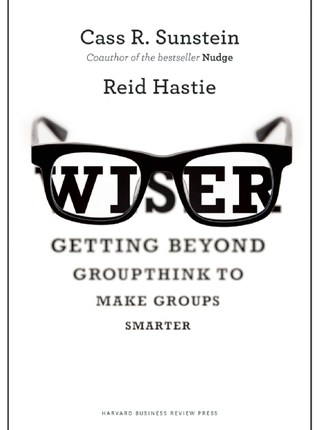
Wiser: Getting Beyond Groupthink to Make Groups Smarter by Cass R. Sunstein

Wiser: Getting Beyond Groupthink to Make Groups Smarter by Cass R. Sunstein

Authors Cass Sunstein and Reid Hastie examine many of the problems that beset groups and how to best address them for optimal group performance.

Written in a style that is more academic than approachable, Wiser uses the findings of multiple researchers to come to its conclusions. This book may be useful to managers who are desiring to set up a group at their own place of employment and want to start on the best foot.

“Do groups usually correct individual mistakes? Our simple answer is that they do not. … We also ask a second question: Can groups correct individual mistakes? Our simple answer is that they can. We aim to explain how.” pg 2

Photo by Canva Studio on Pexels.com

I picked this book up because, frankly, I wanted to know why anybody would utilize groups in a work setting. Every one that I have ever sat on has been either a disaster or inefficient. I was hoping Wiser would help me see the appeal that group-thinking seems to have for some.

And it did. But it also opened up my eyes to the myriad reasons why my experiences had been so bad. I had just assumed groups didn’t work. As it turns out, things are more complicated than that.

“The basic lesson is that people pay a lot of attention to what other group members say and do — and that they do not end up converging on the truth. In fact, they often ignore their own beliefs and say that they believe what other people believe.” pg 28

There can also be problems with authority figures in a group setting: “If the group contains one or more people who are known to be authorities or who otherwise command a lot of respect, then other group members are likely to silence themselves out of deference to the perceived or real authority.” pg 35.

I’ve seen that happen multiple times. The whole purpose of the group is thrown off. It has often frustrated me, leading me to think we may as well have saved our meeting time and had the boss issue a directive.

Photo by Andrea Piacquadio on Pexels.com

Groups also have to keep in mind the idea of “cascades” or ideas taking a hold early in the process and then taking over the rest of the group’s time: “For their part, many groups end up with a feeling of inevitability, thinking that they were bound to converge on what ultimately became their shared view. Beware of that feeling too, because it is often an illusion. The group’s conclusion might well be an accident of who spoke first…” pg 60

Groups can polarize themselves, driving their members to extremes they wouldn’t otherwise reach without members that think like them. To combat this, leaders should make sure groups are diverse.

In a perfect world, groups are equivalent to their best members, aggregate all of the information each individual brings to the table, utilizes experts properly and creates an almost mystical “synergy” where, as the authors say, “the whole is more than the sum of its parts.”

Photo by fauxels on Pexels.com

The trick is getting the group to work like that. As I said, I’ve never seen it. This book brings me hope that perhaps one day I will.

The failures of groups often have disastrous consequences — not just for group members, but for all those who are affected by those failures. The good news is that decades of empirical work, alongside recent innovations, offer a toolbox of practical safeguards, correctives, and enhancements. With a few identifiable steps, groups can get a lot wiser.” pg 214

Thanks for reading!

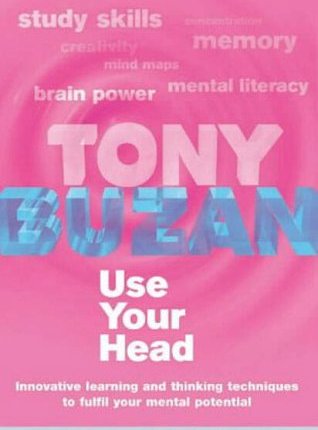
Use Your Head by Tony Buzan

Use Your Head by Tony Buzan

In “Use Your Head,” Tony Buzan teaches the reader strategies to utilize the infinite powers of your mind.

“I call it the ‘operations manual’ for your brain. It is designed to help you nurture your ‘super-biocomputer’ and unleash the natural and extraordinary range of mental skills that you possess.pg xii

Photo by Maria Orlova on Pexels.com

I’ve read a lot of non-fiction books about what the potentials of the mind and positive thinking are. This book gives more than just information about what could be, it shares tools for expanding your creative skills and organizing what goes in and comes out of our mind.

“No man yet exists or has existed who has even approached using his full brain. We accept no limitations on the power of the brain — it is limitless.” pg 24

Buzan shares the keys for maximizing your memory — imagination and association. By combining images with simple rhymes, he’s created a surprisingly easy way to remember lists and, potentially, large sections of information.

Photo by Pixabay on Pexels.com

I was intrigued by his method of organizing information and study materials with the use of “mind maps.” Basically, you start with a topic and draw branches coming out from this main theme, that relate to the information in some way. Continue to branch out, using colors and shapes to stimulate your brain while drawing conscious connections between the ideas on the paper.

It’s a fun little creative exercise, but also it helps you see associations you may not have considered before.

Personally, I do mounds of research on an almost daily basis and it helps to have a tool to organize the facts I come across. The mind map may be the most helpful tool in this book.

There’s a lot of self help advice in these pages too. It’s mainly common sense, but I found almost all of it useful as reminders of what is possible. For example, Buzan suggests considering your perspective before starting any program of study or problem solving.

Photo by Andrea Piacquadio on Pexels.com

“On average, people assume that there are theoretically infinite insoluble problems and only a relatively minor number of solutions. The fact is, every problem has a solution and there are no insoluble problems for a human brain that is properly trained, activated and aware of its creative functions.” pg 82

After a bit of research on the author, it seems Buzan is quite popular in Great Britain and has been for some time. Perhaps it’s time for the U.S. to jump on this train too.

Thanks for reading!

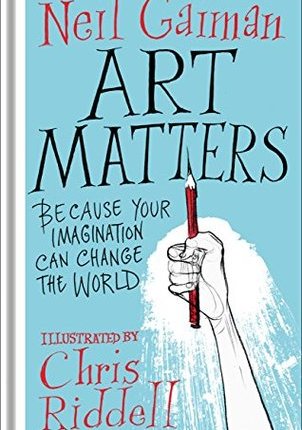
Art Matters: Because Your Imagination Can Change the World by Neil Gaiman, Illustrated by Chris Riddell

Art Matters: Because Your Imagination Can Change the World by Neil Gaiman, Illustrated by Chris Riddell

Neil Gaiman and Chris Riddell have created a manifesto for readers, librarians and content creators. This little book celebrates everything having to do with reading, freedom of information and ideas, and how to start creating the life of your dreams, even if you don’t know where to start.

It was compiled from Gaiman’s prolific back catalog of speeches, poems and various other writings about creativity.

“The world always seems brighter when you’ve just made something that wasn’t there before.”

Photo by Matt Hardy on Pexels.com

I feel like this should be required reading — especially the parts about how to respond to intellectual disagreements. I think Gaiman penned these words after the bombing at Charlie Hebdo, and they still ring true.

“I believe I have the right to think and say the wrong things. I believe your remedy for that should be to argue with me or to ignore me. And that I should have the same remedy for the wrong things that I believe you think.”

And, of course, I was partial to all of the praise directed towards librarians and libraries, having been a librarian once myself. Sometimes people ask me if I ever think libraries will be closed because “they’re just a building with books” or “they’re a waste of taxpayer money”.

This is how I wished I had replied: “Libraries are about freedom. Freedom to read, freedom of ideas, freedom of communication. They are about education, about entertainment, about making safe spaces and about access to information.” How could that ever possibly go out of style?

Photo by Zichuan Han on Pexels.com

Gaiman also gives attention to the bookworms of the world. We make it a better place through our reading and daydreaming and daydreaming about reading. Also, our epic library patronage is a good thing.

“We have an obligation to read for pleasure. If others see us reading, we show that reading is a good thing. We have an obligation to support libraries, to protest the closure of libraries. If you do not value libraries you are silencing the voices of the past and you are damaging the future.”

Gaiman shares a bit about how he became the universally beloved author he is today. Step one, you’ve just got to get started.

“If you have an idea of what you want to make, what you were put here to do, then just go and do that and that’s much harder than it sounds and, sometimes in the end, so much easier than you might imagine.”

He confesses that he lied on early resumes to get his foot in the door. But, after his later success, he went back and worked at all of the places he had claimed before. That way, he didn’t see himself as lying but as “chronologically challenged.” I loved that he took the time to make things right.

Gaiman also has some interesting views about no-start dreamers. He says the saddest thing to him are friends that say they’re too committed to follow their dreams. There’s bills to pay, mortgages and families to support and they can’t take the dive to do whatever it is they’ve always dreamed of doing.

Photo by Karolina Grabowska on Pexels.com

He said he dodged that particular roadblock by skipping a well-paying job or two early in his career, so that he didn’t get too comfortable doing something other than writing. I thought that was an interesting strategy. Creating is about having the courage to just do it, no matter what and not stopping until you’re doing it.

“Somebody on the internet thinks what you do is stupid or evil or it’s all been done before? Make good art.”

The good news is there are more platforms than ever before to get your creations in front of the people who will care about them.

“The gatekeepers are leaving their gates. You can be as creative as you need to be to get your work seen. YouTube and the web (and whatever comes after YouTube and the web) can give you more people watching than television ever did. The old rules are crumbling and nobody knows what the new rules are. So make up your own rules.”

My own life right now points to the truth of that. I left a guaranteed paycheck and employer provided health care to write for my husband’s YouTube channel. We’re not only succeeding but we’re having a lot of fun doing it.

Thank you, Gaiman and Riddell for this beautiful book. I hope it encourages creators everywhere to take the leap.

Thanks for reading!

inGenius: A Crash Course on Creativity by Tina Seelig

inGenius: A Crash Course on Creativity by Tina Seelig

As my mentor pointed out to me a couple years ago, creativity is one of the most important skills to master and develop throughout your career. No matter what you’re doing, in your professional or personal life, creativity provides the answers and greases your wheels to whatever goal you desire.

inGenius is Tina Seelig’s offering to those interested in learning about creativity. She is a professor at Stanford University and these chapters are like talking points from her class.

Photo by Tima Miroshnichenko on Pexels.com

Granted, some of these tips seem like common sense. But if that’s the case, then why aren’t we all creative geniuses who have solved all of our problems? In my mind, there’s plenty still to be learned from the topic or, if you’ve already heard it, reiterating the important points.

What is that saying… your thoughts become actions, become habits, become your life? Or some such. Well, it’s true.

“With enhanced creativity, instead of problems you see potential, instead of obstacles you see opportunities, and instead of challenges you see a chance to create breakthrough solutions.” pg 4

Photo by Allan Mas on Pexels.com

It’s more than a positive mind-set, it’s a way of viewing your reality. And, as Seelig points out in this book, your attitude at any given moment affects your creativity. You have to view any problem as solvable — you just haven’t found the solution yet.

Seelig says anyone can be creative: “There is a concrete set of methods and environmental factors that can be used to enhance your imagination, and by optimizing these variables your creativity naturally increases.” pg 9

I figure it’s a bit like exercise. Flex those creative muscles on a regular basis and they’ll get stronger.

Photo by nappy on Pexels.com

Seelig brought my attention to the fact that our environment affects our creativity. She cites studies with the way classrooms are set up and how those changed the results of experiments. I had no idea.

She also reminded me that one does not have to re-invent the wheel to be creative: “Building upon existing ideas and inventions is another way to foster innovation.” pg 41

inGenius offers readers a clear path to creativity. Recommended for anybody who wants to up their creative game.

Thanks for reading!

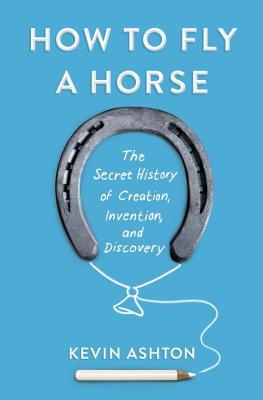
How to Fly a Horse: The Secret History of Creation, Invention, and Discovery by Kevin Ashton

How to Fly a Horse: The Secret History of Creation, Invention, and Discovery by Kevin Ashton

How to Fly a Horse takes many of the myths that I believed about creativity or the creative process and methodically takes them apart. Any perceived blocks are revealed for the fallacies that they are.

It is one of those great non-fiction books that educates the reader while simultaneously encouraging her to improve herself.

From the creation of a South Park episode to Coca-Cola, Kevin Ashton covers all sorts of ways the average person can, does, and should contribute to mankind through her own, innate creativity.

My biggest take-aways from this are Ashton’s descriptions and appropriateness of creativity (or lack of) within organizations. He writes about humanity’s need for the new while simultaneously pushing against it.

Here’s a quote about organizations that could be applied to any work place: “Organizations are made of rituals- millions of small, moments-long transactions between individuals within groups- and it is these rituals that determine how much an organization creates.” pg 225

Photo by Marc Mueller on Pexels.com

Be aware of these rituals and harness them to be more creative.

And, on humanity’s propensity to reject innovation, Ashton explains this is not unusual but is actually the normal response to expect when introducing new ideas into your work environment.

Don’t be discouraged; be prepared. Create anyway.

Photo by Pixabay on Pexels.com

I liked that he encouraged creation while also illuminating the many pitfalls, both internal and external, that one may encounter along the creative path.

Folks who enjoy How to Fly a Horse may also like Leonardo’s Brain: Understanding da Vinci’s Creative Genius or any of Malcolm Gladwell’s books. If you’re looking for another book about how to be more productive or creative in the workplace, I suggest Linchpin: Are You Indispensable?.

I received a free copy of this book through Goodreads First Reads. FTC guidelines: check!

Thanks for reading.

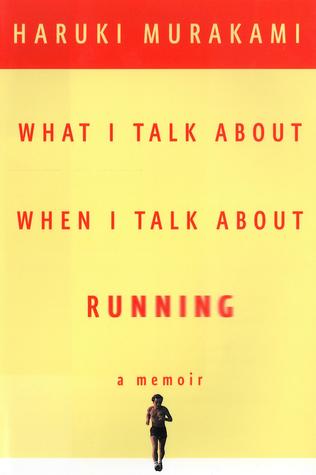
What I Talk About When I Talk About Running by Haruki Murakami, Philip Gabriel (Translator)

What I Talk About When I Talk About Running by Haruki Murakami, Philip Gabriel (Translator)
whatitalkabout

In What I Talk About When I Talk About Running, Haruki Murakami doesn’t try to convince others that we should all become long distance runners/triathletes like him. He does talk about why he took up running, how it has helped him with his creativity and why he will continue to run as long as he feels the need to do so.

I’ve never read a book by Murakami, other than this one. But, the interesting way in which he views the world makes me think that I’d probably enjoy his stuff.

I listened to this, rather short, audiobook on my daily commute. Murakami shares a lot of intimate details about his life that fans of his writing may really enjoy.

Before he took up running, Murakami said he was overweight and smoked around 60 cigarettes a day. 60 per day!

He wasn’t just looking for a way to become fit. He wanted a exercise where he was left alone with his thoughts and challenged to focus for long periods of time.

Murakami says that, when he writes a novel, it is a matter of focus and endurance. He finds it difficult to “drill down through the rock of the mind to hit veins of creativity.” (Quoting from memory, please forgive the inaccuracies.)

Photo by Pixabay on Pexels.com

The focus that runners use to finish a long race is similar, he believes, to the focus needed to write page after page until the end of a novel. I think that type of mental ability is something that could be used in any creative endeavor, not just writing. For Murakami, writing is how he makes his art.

I liked that, even though Murakami loves running and extols its virtues, he says that he never tells other people that they should take it up. He thinks that our life paths reveal themselves to us in a unique way that only we know.

He runs because he loves it. If you love it too, run. If you don’t, do what you love- walk, skip, jump, swim, whatever.

I can get behind that philosophy. Do what makes you happy because that happiness is a clue to what you were born to do.

Recommended for writers, runners, Murakami’s fans and anyone who enjoys memoirs. What I Talk About When I Talk About Running made me wish that I loved running more. Because I don’t.

Thanks for reading!