The Art of True Healing: The Unlimited Power of Prayer and Visualization by Israel Regardie, Marc Allen (Editor)

The Art of True Healing: The Unlimited Power of Prayer and Visualization by Israel Regardie, Marc Allen (Editor)

Israel Regardie is a little-known thought leader of western occultism. In this book, “The Art of Healing,” Dr. Regardie explains a few meditation techniques in a way that anyone from beginners to advanced practitioners can understand.

I remember reading somewhere (not this book) about Dr. Regardie’s internship with Aleister Crowley and how he realized Crowley wasn’t teaching him anything beyond the superficial when it came to occult matters.

Photo by Luis del Ru00edo on Pexels.com

He ended up breaking away and being one of the leaders of a new approach to occultism-
which brings me back to this book.

The meditation techniques will feel quite familiar to anyone who has practiced chakra meditations or color visualizations on the body.

“By these means, the healing force is distributed to every part of the body. No single atom or cell in any organ or limb is omitted from the influence of its healing, regenerative power.”

Photo by PhotoMIX Company on Pexels.com

The curious part of this book is that Dr. Regardie uses five centers of energy down the center of the body instead of the more standard seven of eastern occultism.

Of course, as Dr. Regardie states, these exercises are in no way a substitution for competent medical care or therapy when necessary – but they are a wonderful addition to it, for they are able to aid the healing process in a great many mysterious, profound, and positive ways. intro

I’m not entirely sure why he does this though I am familiar with the Middle Pillar exercise (which is what the technique is called). Perhaps he’s basing the whole practice off of a teaching Crowley created for his occult studies.

Dr. Israel Regardie and the Middle Pillar exercise.

Whatever the reason, I think it is a noteworthy and definite change from other meditations I’ve practiced.

Highly recommended for readers looking for new meditation techniques and who are interested in western occultism. Another book you may want to pick up if you are into these topics is High Magick: A Guide to the Spiritual Practices That Saved My Life on Death Row.

Damien Echols‘s style of writing reminds me of Dr. Regardie in both its refreshing simplicity and honest assessment of the Great Work.

Thanks for reading!

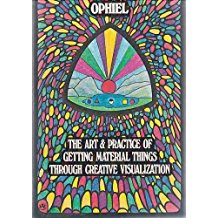
Art and Practice of Getting Material Things Through Creative Visualization by Ophiel

Art and Practice of Getting Material Things Through Creative Visualization by Ophiel

Originally published in 1967, the Art and Practice of Getting Material Things Through Creative Visualization arrived nearly three decades before The Secret.

With more of an occult than a New Age twist, the one-name author, Ophiel, talks readers through what is essentially the Law of Attraction, but he never calls it that.

Photo by Egor Kamelev on Pexels.com

Ophiel tends to write portions of the book that he thinks are most important in all caps. LIKE THIS. It can be annoying.

Another interesting quirk, Ophiel talks about him/herself in the third person, at all times.

In this passage, he’s talking about why he wrote this book, and you get to see the author’s style in action: “Ophiel’s defect consists of not being about to accept self-styled prophets’ sayings, and teachings, without raising the following awkward question- and making the following embarrassing test. The question is IS WHAT THEY SAY TRUE? and the test is DOES WHAT THEY SAY WORK, AND PRODUCE RESULTS? And if what they SAY DOES NOT WORK THEN IT IS NOT TRUE, and into the garbage can with it!!” pg iii

Ophiel claims that creative visualization techniques don’t always work for a variety of reasons. He gives the reader exercises and suggestions for improving their results.

“In Creative Visualization work all the planes involved in our cosmic existence are used, the Etheric, the Lower Astral, The Higher Astral, the Mental Plane, and the Causal Plane, AND ALL THESE PLANES HAVE DEFINITE RULES AND LAWS FROM WHICH THEY WILL NOT DEVIATE ONE IOTA.” pg 5.

Again, with the capitalization.

Photo by stein egil liland on Pexels.com

He also has interesting ideas about reasons why beginners fail out of the gate.

He cites something called “the sphere of availability”: “The new student then proceeds to visualize for LARGE THINGS. BIG THINGS. VALUABLE THINGS. Things that are far beyond his ability- not to visualize-imagine-desire, BUT FAR BEYOND HIS PRESENT ABILITY TO DEMONSTRATE-VISUALIZE.” pg 31.

Ophiel uses different words, but essentially he says, start small, celebrate the small victories and increase your “sphere of availability” in that manner. He also gives practices to improve your visualization skills.

Honestly, if asked to recommend a teacher for creative visualization, I’d say skip Ophiel and read Abraham Hicks. They’re a lot more fun.

Thanks for reading!

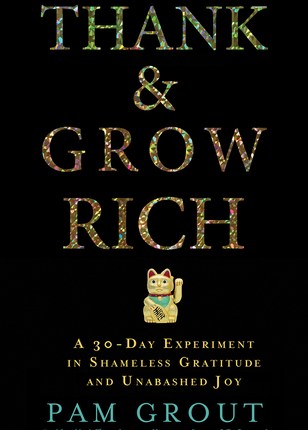
Thank & Grow Rich: A 30-Day Experiment in Shameless Gratitude and Unabashed Joy by Pam Grout

Thank & Grow Rich: A 30-Day Experiment in Shameless Gratitude and Unabashed Joy by Pam Grout

There is a disclaimer written in the description of this book on Goodreads that states it is not for everyone, but it was awesome in my opinion. I am going to admit that I am incredibly biased.

Photo by cottonbro on Pexels.com

I absolutely adored Pam’s other books on New Age thought and had some unbelievable experiences with the experiments recommended in them: E-Squared: Nine Do-It-Yourself Energy Experiments That Prove Your Thoughts Create Your Reality and E-Cubed: Nine More Energy Experiments That Prove Manifesting Magic and Miracles Is Your Full-Time Gig.

However, I couldn’t convince my public library to buy them because, I was told, they are “too fringe”.

Perhaps this book, which focuses on adopting an attitude of gratitude to improve your life, will be mainstream enough to make the cut.

Pam addresses the metaphorical elephant contained in her title early in the book: “No offense to Napoleon Hill, the author of the self help classic on which my title riffs, but the real power is in not thinking. If you want to override your brain’s unfortunate habit of leafing through your past and creating a present hologram to match, forget thinking. And start thanking.” Loc 108, ebook.

I read Think and Grow Rich last year and I could see how other people have beef with the classic. Napoleon Hill focuses on money, making connections, and doing the internal work to shoot yourself into the stratosphere of life success.

There’s very little in there about feeling your way to the same place.

Photo by fauxels on Pexels.com

Pam takes a different approach: “I should get this out on the table right now. This book won’t do a thing for your 401(k) or help you secure the McMansion you pasted onto your vision board. It’s not about getting rich in the traditional sense. … There’s nothing wrong with financial capital, but let me be very clear. It’s incapable of bringing any measure of real happiness.” Locs 324-337 ebook.

She gets to the heart of why seekers chase anything- because we believe that it will bring happiness. Pam suggests getting happy and then the success will come.

And, how does she say that we should “get happy”? By being thankful for what we already have.

“Be astonished by useless things. It’s easy to be thankful for the obvious- healthy kids, public libraries, strong marriages. But in this game we’re going to take it a step further. We’re going to build our gratitude muscle by also appreciating the insignificant and impractical…” Loc 856 ebook.

I had to include that passage for the library mention. Yay libraries!

Photo by Janko Ferlic on Pexels.com

Pam backs up her claims with scientific studies such as: “According to Richard Wiseman, psychology professor at the University of Hertfordshire in England and creator of Luck School, people who think they’re lucky actually are. After eight years of studying hundreds of self-identified exceptionally lucky and exceptionally unlucky people, he concluded that getting good breaks has nothing to do with karma or kismet and everything to do with how we see ourselves.” Loc 991 ebook.

I would like to state for the record that I am one of the luckiest people that I know. 🙂

She also includes a bunch of information from happiness researchers: “When it comes to success, research shows that while IQ, education, and training play cameo roles, the starring role, the headliner on the success stage, is “Do you have a vision? Do you believe it’s possible?” Shawn Achor, author of The Happiness Advantage: The Seven Principles of Positive Psychology That Fuel Success and Performance at Work… claims that predicting success using any other factor (say, your IQ or number of degrees) is about as effective as flipping a coin. What is effective, Achor and Frederickson and other happiness researchers have proven, is creating a happy brain that anticipates accomplishment, that knows success is just a matter of time.” Loc 1876 ebook.

I know that I have a pretty open mind when it comes to these types of books, but my thought is, what’s the harm in it? If it works for you, great! You’ve just discovered a new tool to use for living the best life for you.

If it doesn’t work, no harm done. At the very least, you would know for yourself.

Photo by Belle Co on Pexels.com

I recommend this book for readers of the Abraham Hicks materials because there are quite a few similarities in the philosophies contained within.

Some additional read-alikes for seekers like me who can’t get enough information about the law of attraction: The Power of the Heart: Finding Your True Purpose in Life, Happiness: A Guide to Developing Life’s Most Important Skill, or Dr. Quantum Presents: Meet the Real Creator–You!.

The opinions contained within this review are entirely my own. Thank you to NetGalley and Hay House for a free advance reader’s copy of this book for review purposes!  And, thank you for reading.

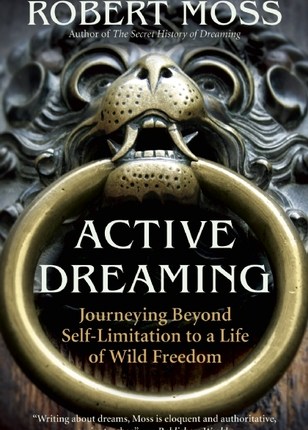
Active Dreaming: Journeying Beyond Self-Limitation to a Life of Wild Freedom by Robert Moss

Active Dreaming: Journeying Beyond Self-Limitation to a Life of Wild Freedom by Robert Moss

Active Dreaming is more than just another book about lucid dreaming or dream interpretation. Moss takes the Aboriginal practices of his native Australia and develops a living practice wherein one treats the world, whether waking or sleeping, like an lucid dream.

Moss invites the readers to fully live their lives and to “wake up” through drumming circles, sharing and interpretation of dreams, choosing your names and how you define yourself, practicing mindful creativity, noticing synchronicities, journaling, storytelling, creative visualization (and more).

Photo by Sabel Blanco on Pexels.com

Some of the concepts in this book were a bit far out there- things like shared dreams or visions in which, theoretically, you invite another person into your dreamspace to help you address whatever is going on for you or instructions on how to start Dream Groups.

Active Dreaming is a call to action, but in so many directions that it is difficult to really know where to start. I think I’m going to cherry pick a few of Moss’s techniques and see how I do.

Robert Moss’s definition of Active Dreaming: “This approach includes paying attention to night dreams, but it is not only, or even essentially, about what happens at night. It is a method for conscious living. When you become an active dreamer, you’ll notice that the world speaks to you in a different way.” pg xii introduction

Photo by GEORGE DESIPRIS on Pexels.com

Here are some of the benefits of practicing Active Dreaming: “The journey opens gateways for soul recovery and the release of life blockages. It introduces and strengthens connections with the animal guardians and brings their vitality, tracking skills, and healing energies richly alive in the body. It encourages spontaneous art and creativity and offers rich personal mythology, which is healing in itself. Properly conducted, the journey raises a tremendous amount of life force and channels the movement of that energy into harmonious, unrestricted flow.” pg 98

And finally, a passage that really resonated with me: “You must know your story and tell your story and have your story received. … Learn to do that, and you can survive the worst nightmares of history and bring heart and healing to others…” pg 134

Tell your story. I can do that.

Photo by cottonbro on Pexels.com

This review has really only touched the tip of the iceberg that is Active Dreaming. Read this book if you want to adjust the lens with which you perceive reality or if you just want to read a book that is completely different from anything else that you’ve ever read.

Robert Moss is not for everyone, but, if you can set aside any preconceived notions about what this book should be, I think that you’ll find at least some chapters that will speak to you.

If you’re looking for more spiritual books like this, look no further than another of Moss’s titles: The Boy Who Died and Came Back: Adventures of a Dream Archaeologist in the Multiverse

Thanks for reading!