Powers of Two: Finding the Essence of Innovation in Creative Pairs by Joshua Wolf Shenk

Powers of Two: Finding the Essence of Innovation in Creative Pairs by Joshua Wolf Shenk

Joshua Wolf Shenk examines creatives pairs throughout history in an effort to see why and how they work, and also why they end.

“The dyad is also the most fluid and flexible of relationships. Two people can basically make their own society on the go. When even one more person is added to the mix, the situation becomes more stable, but this stability may stifle creativity, as roles and power positions harden.” Introduction, pg xxii

Photo by Gratisography on Pexels.com

Shenk believes pairs move through six stages: Meeting, confluence, dialetics, distance, the infinite game and interruption. The stages show the development of the relationship, assumption of roles and eventual fall out of creative pairings.

“This book is written in the faith, underscored by experience, that more is possible — more intimacy, more creativity, more knowledge about this primary truth: that we make our best work, and live our best lives, by charging into the vast space between ourselves and others.” Introduction, pg xxv

I picked up this book because I’m involved in a creative partnership with my spouse (The History Guy, YouTube channel) and I was curious to see how other pairings have worked in the past. It was interesting to see how similarly we function when compared to other creative partners. I mean, everyone is different, but there are patterns that can be observed if you look closely.

“The irony is that, while our eyes naturally follow the star, a pair’s center of gravity is often with the one we see less.” pg 66

Photo by Victoria Borodinova on Pexels.com

Shenk’s chapters were interesting not only in their obscure history about some of the most famous partners in history, but also their implications for people who are looking to share their creative endeavors, and lives, with others.

“High-functioning couples commonly say that one key to a good relationship is giving each other plenty of space. But a big reason there are so many dysfunctional couples, romantic and creative, is that it’s hard for a lot of us to know what that really means or what it would look like in our lives.” pg 128

What works, what doesn’t work, and why?

“Creativity has become a broad, vague term, a kind of stand-in for universal good, even a synonym for happiness (or, as innovation, for profits). But making new, beautiful, useful things is as much about discord as it is about union.” pg 21
Photo by Tim Samuel on Pexels.com

The path isn’t always smooth, but good partners shore each other up. They may be strong where the other is weak. They challenge each other to be better than they ever would have been by themselves.

“Highly creative people have high standards and distinct sensibilities; they see the world in an unusual way (or they wouldn’t be able to make something new out of the materials of that world). Their partners must be a match — and the discovery of a shared sensibility is itself often an impetus to share work.” pg 31

I learned a lot about the Beatles, scientists, dancers, artists, screen writers, authors and more in Powers of Two. This is a book about creativity, yes, but it also looks at relationships themselves. It takes apart power dynamics, personal satisfaction and creative instincts. It is more of a rumination on creative pairs than a scientific thesis.

Recommended for readers who enjoy quirky non-fiction books. You’ll probably learn something new if you pick this one up. I did.

Thanks for reading!

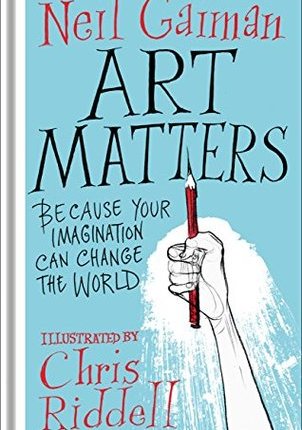
Art Matters: Because Your Imagination Can Change the World by Neil Gaiman, Illustrated by Chris Riddell

Art Matters: Because Your Imagination Can Change the World by Neil Gaiman, Illustrated by Chris Riddell

Neil Gaiman and Chris Riddell have created a manifesto for readers, librarians and content creators. This little book celebrates everything having to do with reading, freedom of information and ideas, and how to start creating the life of your dreams, even if you don’t know where to start.

It was compiled from Gaiman’s prolific back catalog of speeches, poems and various other writings about creativity.

“The world always seems brighter when you’ve just made something that wasn’t there before.”

Photo by Matt Hardy on Pexels.com

I feel like this should be required reading — especially the parts about how to respond to intellectual disagreements. I think Gaiman penned these words after the bombing at Charlie Hebdo, and they still ring true.

“I believe I have the right to think and say the wrong things. I believe your remedy for that should be to argue with me or to ignore me. And that I should have the same remedy for the wrong things that I believe you think.”

And, of course, I was partial to all of the praise directed towards librarians and libraries, having been a librarian once myself. Sometimes people ask me if I ever think libraries will be closed because “they’re just a building with books” or “they’re a waste of taxpayer money”.

This is how I wished I had replied: “Libraries are about freedom. Freedom to read, freedom of ideas, freedom of communication. They are about education, about entertainment, about making safe spaces and about access to information.” How could that ever possibly go out of style?

Photo by Zichuan Han on Pexels.com

Gaiman also gives attention to the bookworms of the world. We make it a better place through our reading and daydreaming and daydreaming about reading. Also, our epic library patronage is a good thing.

“We have an obligation to read for pleasure. If others see us reading, we show that reading is a good thing. We have an obligation to support libraries, to protest the closure of libraries. If you do not value libraries you are silencing the voices of the past and you are damaging the future.”

Gaiman shares a bit about how he became the universally beloved author he is today. Step one, you’ve just got to get started.

“If you have an idea of what you want to make, what you were put here to do, then just go and do that and that’s much harder than it sounds and, sometimes in the end, so much easier than you might imagine.”

He confesses that he lied on early resumes to get his foot in the door. But, after his later success, he went back and worked at all of the places he had claimed before. That way, he didn’t see himself as lying but as “chronologically challenged.” I loved that he took the time to make things right.

Gaiman also has some interesting views about no-start dreamers. He says the saddest thing to him are friends that say they’re too committed to follow their dreams. There’s bills to pay, mortgages and families to support and they can’t take the dive to do whatever it is they’ve always dreamed of doing.

Photo by Karolina Grabowska on Pexels.com

He said he dodged that particular roadblock by skipping a well-paying job or two early in his career, so that he didn’t get too comfortable doing something other than writing. I thought that was an interesting strategy. Creating is about having the courage to just do it, no matter what and not stopping until you’re doing it.

“Somebody on the internet thinks what you do is stupid or evil or it’s all been done before? Make good art.”

The good news is there are more platforms than ever before to get your creations in front of the people who will care about them.

“The gatekeepers are leaving their gates. You can be as creative as you need to be to get your work seen. YouTube and the web (and whatever comes after YouTube and the web) can give you more people watching than television ever did. The old rules are crumbling and nobody knows what the new rules are. So make up your own rules.”

My own life right now points to the truth of that. I left a guaranteed paycheck and employer provided health care to write for my husband’s YouTube channel. We’re not only succeeding but we’re having a lot of fun doing it.

Thank you, Gaiman and Riddell for this beautiful book. I hope it encourages creators everywhere to take the leap.

Thanks for reading!

inGenius: A Crash Course on Creativity by Tina Seelig

inGenius: A Crash Course on Creativity by Tina Seelig

As my mentor pointed out to me a couple years ago, creativity is one of the most important skills to master and develop throughout your career. No matter what you’re doing, in your professional or personal life, creativity provides the answers and greases your wheels to whatever goal you desire.

inGenius is Tina Seelig’s offering to those interested in learning about creativity. She is a professor at Stanford University and these chapters are like talking points from her class.

Photo by Tima Miroshnichenko on Pexels.com

Granted, some of these tips seem like common sense. But if that’s the case, then why aren’t we all creative geniuses who have solved all of our problems? In my mind, there’s plenty still to be learned from the topic or, if you’ve already heard it, reiterating the important points.

What is that saying… your thoughts become actions, become habits, become your life? Or some such. Well, it’s true.

“With enhanced creativity, instead of problems you see potential, instead of obstacles you see opportunities, and instead of challenges you see a chance to create breakthrough solutions.” pg 4

Photo by Allan Mas on Pexels.com

It’s more than a positive mind-set, it’s a way of viewing your reality. And, as Seelig points out in this book, your attitude at any given moment affects your creativity. You have to view any problem as solvable — you just haven’t found the solution yet.

Seelig says anyone can be creative: “There is a concrete set of methods and environmental factors that can be used to enhance your imagination, and by optimizing these variables your creativity naturally increases.” pg 9

I figure it’s a bit like exercise. Flex those creative muscles on a regular basis and they’ll get stronger.

Photo by nappy on Pexels.com

Seelig brought my attention to the fact that our environment affects our creativity. She cites studies with the way classrooms are set up and how those changed the results of experiments. I had no idea.

She also reminded me that one does not have to re-invent the wheel to be creative: “Building upon existing ideas and inventions is another way to foster innovation.” pg 41

inGenius offers readers a clear path to creativity. Recommended for anybody who wants to up their creative game.

Thanks for reading!

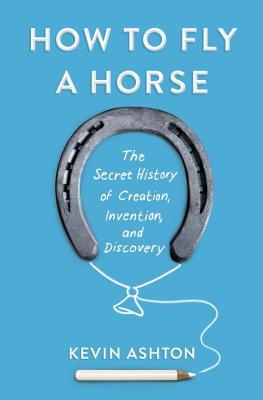
How to Fly a Horse: The Secret History of Creation, Invention, and Discovery by Kevin Ashton

How to Fly a Horse: The Secret History of Creation, Invention, and Discovery by Kevin Ashton

How to Fly a Horse takes many of the myths that I believed about creativity or the creative process and methodically takes them apart. Any perceived blocks are revealed for the fallacies that they are.

It is one of those great non-fiction books that educates the reader while simultaneously encouraging her to improve herself.

From the creation of a South Park episode to Coca-Cola, Kevin Ashton covers all sorts of ways the average person can, does, and should contribute to mankind through her own, innate creativity.

My biggest take-aways from this are Ashton’s descriptions and appropriateness of creativity (or lack of) within organizations. He writes about humanity’s need for the new while simultaneously pushing against it.

Here’s a quote about organizations that could be applied to any work place: “Organizations are made of rituals- millions of small, moments-long transactions between individuals within groups- and it is these rituals that determine how much an organization creates.” pg 225

Photo by Marc Mueller on Pexels.com

Be aware of these rituals and harness them to be more creative.

And, on humanity’s propensity to reject innovation, Ashton explains this is not unusual but is actually the normal response to expect when introducing new ideas into your work environment.

Don’t be discouraged; be prepared. Create anyway.

Photo by Pixabay on Pexels.com

I liked that he encouraged creation while also illuminating the many pitfalls, both internal and external, that one may encounter along the creative path.

Folks who enjoy How to Fly a Horse may also like Leonardo’s Brain: Understanding da Vinci’s Creative Genius or any of Malcolm Gladwell’s books. If you’re looking for another book about how to be more productive or creative in the workplace, I suggest Linchpin: Are You Indispensable?.

I received a free copy of this book through Goodreads First Reads. FTC guidelines: check!

Thanks for reading.

Creativity: The Perfect Crime by Philippe Petit

Creativity: The Perfect Crime by Philippe Petit

In Creativity, Philippe invites the reader into his mind and attempts to dissect his creative process. For this to make any sense, you sort of have to let go of reality as you know it and step into his pipe dream world for the duration of the read.

Sometimes I was able to do this and followed his twisting train of thought to some fascinating conclusions, but other times I couldn’t. So, if you pick this one up, prepare yourself. It’s not for everyone.

I marked a couple of his ideas that resonated with me:“If you are an artist, you want to create a giant wall around yourself and, inside that wall, to follow your honesty and your intuition. What the audience will see is a man or woman who is a prisoner of his or her passion, and that is the most inspiring performance in the world.” pg 16 “To be a prisoner of passion”- I’ve never heard an artist described that way before.

Photo by ShonEjai on Pexels.com

In pages 20 to 26, Philippe essentially describes his brainstorming process as a paper version of Pinterest (my comparison, not his). He takes all of these words and pictures and files them according to some associations that his mind makes, then reassembles the results into art… somehow.

Read these pages if you want to explore how difficult it is for a creative type to write down his process in a manner that makes sense to anyone other than him or herself. It’s interesting but baffling.

“Another theory of mine: turning in circles and getting lost is important! You find yourself when you get lost.” pg 28 I embrace that theory as well.

“Go to school if you want to learn. Go to life if you want to feel.” pg 85 Loved that.

“Use your creative paranoia to be on the lookout for negativity; observe with a positive spirit: “What a beautiful disaster!” uttered the French architect Le Corbusier when he visited Manhattan for the first time.” pg 100

Photo by Trev Adams on Pexels.com

“Even if you are not a performer, even if you don’t have an act, do not think that you have nothing to rehearse! The art of living makes a performing artist out of you.” pg 122 We are all creators, painting our lives in wide strokes around us, even those of us who can’t draw a stick figure or walk on a rope between skyscrapers.

“Look in the mirror of fear and focus beyond it. What appears in the background is your path, awaiting.” pg 149 Something to keep in mind when life’s anxieties and impossibilities assail you.

Creativity: The Perfect Crime is one of a kind but if you liked it, I’d recommend reading PostSecret: Extraordinary Confessions from Ordinary Lives by Frank Warren (hundreds of people around the country decorate plain postcards with a secret that they’ve never revealed to another person- it shows the heights and depths of creativity and artistic catharsis) or How to Fly a Horse: The Secret History of Creation, Invention, and Discovery by Kevin Ashton (a more logical than emotional book about the creative process, how it works, and how everybody can create).

thewalkfilm

Speaking of Philippe Petit, did anybody else watch The Walk with Joseph Gordon-Levitt which was about his famous tight rope walk between the Twin Towers? 

If you read this book first, it makes so much more sense.

Thanks for reading!

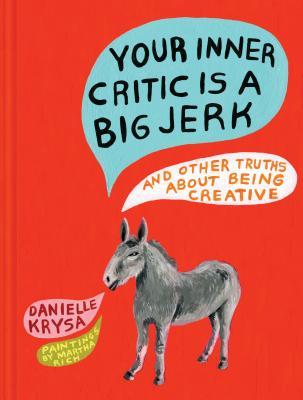
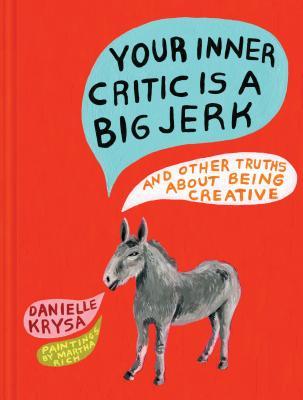
Your Inner Critic Is a Big Jerk: And Other Truths About Being Creative by Danielle Krysa

Your Inner Critic Is a Big Jerk: And Other Truths About Being Creative by Danielle Krysa
yourinnercritic

A quirky little book about how to inspire your own creativity and how to use your inner negative voice to its best advantage. Martha Rich’s art elevates what is actually rather simple text, but, on a more positive note, it is a quick read for those who may be short on time.

I couldn’t help but draw similarities between this book and Unmistakable: Why Only Is Better Than Best, which I read last week. Your Inner Critic is a Big Jerk deals with the sensitive parts of the creative process and breaking through your fears about how your art will be received.

Unmistakable is more about why you need to create the art that only you can create and how a bunch of different artists have managed to do just that. But, if you’re looking to jump start your creativity this year, pick up both of these because they actually complement each other fairly well.

One of my take-aways from Your Inner Critic is that it is never too late to start doing what you do: “Far too often, people tell me, “I wish I hadn’t given up on art [or dancing, acting, writing, music], but it’s too late now.” What! Why? I don’t believe that for a second. Many amazingly talented people didn’t hit their stride until their thirties, forties, or later.” pg 20

And Krysa goes on to list such luminaries as van Gogh, Money, and Julia Child. Can you believe that!

Even if you didn’t go to school to learn whatever art you feel compelled to create, you are still an artist. I’ve been pricked by that negative inner whisper once or twice and it was cathartic to learn that I’m not alone in that struggle and to finally put it to rest: “If you want to learn something new, go learn something new. Set yourself up to get this new skill in whichever way suits you best. You are what you know, regardless of when and where you did the learning.” pg 45

Some further reading: Unmistakable: Why Only Is Better Than Best or Creativity: The Perfect Crime

Thanks for reading!

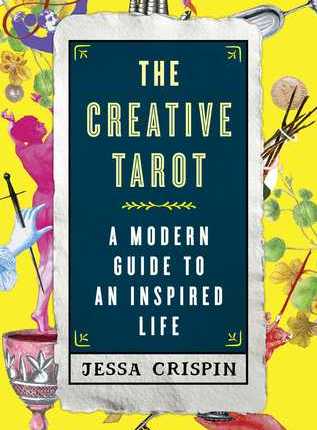
The Creative Tarot: A Modern Guide to an Inspired Life by Jessa Crispin

The Creative Tarot: A Modern Guide to an Inspired Life by Jessa Crispin

The Creative Tarot: A Modern Guide to an Inspired Life is an excellent tarot card reading manual for beginners to the more experienced card reader.

I loved that Crispin gives novel, art, and film suggestions for each card so that the reader can immerse herself in the “feel” or “mood” of them. That was a lovely touch and different from any other book on tarot cards that I’ve read.

Photo by Anna Tarazevich on Pexels.com

Mainly, the books that I’ve picked up have been about tarot card theory and how the cards tie in to the Tree of Life. It’s a complex system and can only be talked about in metaphors.

Imagine my relief to read a book about just the cards themselves and not an arcane “theory of everything.”

A.E. Waite was the co-creator of the Rider-Waite Tarot. He had some interesting thoughts about the tarot card reading qabalists, many of whom wrote books like the ones I’ve mentioned above.

A.E. Waite’s beliefs, which Crispin includes in the chapter entitled, A History of the Tarot, were: “Waite believed that the magical systems (tarot) of the Golden Dawn and other systems were not about imposing your will on a situation… or about telling the future… He believed they were for elevating the soul and for bringing what is unconscious conscious.” pg 7.

Photo by Jonathan Petersson on Pexels.com

I believe that too. But, if you can’t explain the system in a way that makes sense, then what’s the point of writing a beginner’s manual. There can be no “elevation of the soul” if the beginners can’t understand the first thing about reading tarot cards.

Thankfully, Crispin’s interpretations are simple and clear. This is a book that will see some use, not become another expensive paperweight.

I liked Crispin’s description of Temperance: “Temperance is an easily misunderstood card, as it has become associated mostly with abstention. Not drinking, not participating, denying yourself something. But that breaks away from the origins of the card, which traditionally portrays a hermaphrodite blending two cups of water- one hot and one cold- to create something in the middle between these two extremes.” pgs 76-77

Photo by Aleksandar Pasaric on Pexels.com

Temperance is about finding the middle way, not skirting along the edges from one extreme to another. Kind of ruins the idea of a “temperance movement,” doesn’t it.

I also liked this blurb about the Tower: “Remember that scene in Louisa May Alcott’s Little Women, where Amy throws Jo’s stories into the fire? That’s the feeling of the Tower: the realization that all is lost, and you will have to start over from the beginning.” pg 83

Yes, I’m a bookworm. Yes, Little Women is one of my favorite books. I think Crispin nailed the card’s description with that scene.

Photo by Pixabay on Pexels.com

I thought this description of The Moon was brilliant: “The Moon rules our dreams, and that’s a good way to think about this card. They don’t make sense on a logical level, but on a personal level, on an emotional level, they do. The location in a dream will shift without warning; dead people will walk beside the living; your mother will show up, say something nonsensical while wearing a jellyfish on her head, and then stab you in the heart. And you wake up and think, “Oh, of course, this is about that incident that happened when I was five.”

My dreams are just like that. In fact, I had that exact dream last night. 🙂

The tone in The Creative Tarot is very friendly and conversational, as if you asked your best friend to teach you a little bit about her favorite hobby- tarot cards. Highly recommended for artists, dreamers, and aspiring tarot card readers.

Its only weakness, in my opinion, is that I wanted more… more stories, more examples. I understand that we’re dealing with 50 plus cards and they can’t all receive extremely detailed treatment, otherwise we’d get the George R.R. Martin version of Tarot card books, but a girl can dream.

Jessa Crispin has modernized a system that seems to want to stay inaccessible to the beginner. I wish more of the books about the tarot were like this one.

Thanks for reading!