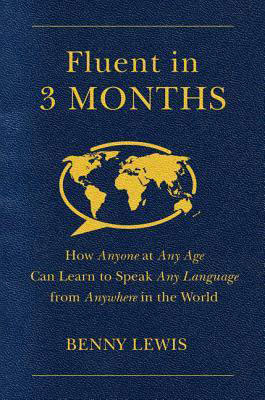
Fluent in 3 Months: How Anyone at Any Age Can Learn to Speak Any Language from Anywhere in the World by Benny Lewis

Fluent in 3 Months: How Anyone at Any Age Can Learn to Speak Any Language from Anywhere in the World by Benny Lewis

Fluent in 3 Months is a self help guide for anyone who aspires to speak more than one language.

Though it’s mainly filled with common sense ideas, I liked how the author, Benny Lewis, put it all together.

Lewis begins by sharing his own life experience with readers- that he felt he failed in his early attempts to learn another language through the traditional method of high school class. He also details how he spent six months in Spain with the idea that he’d absorb language like a sponge but then didn’t learn any Spanish.
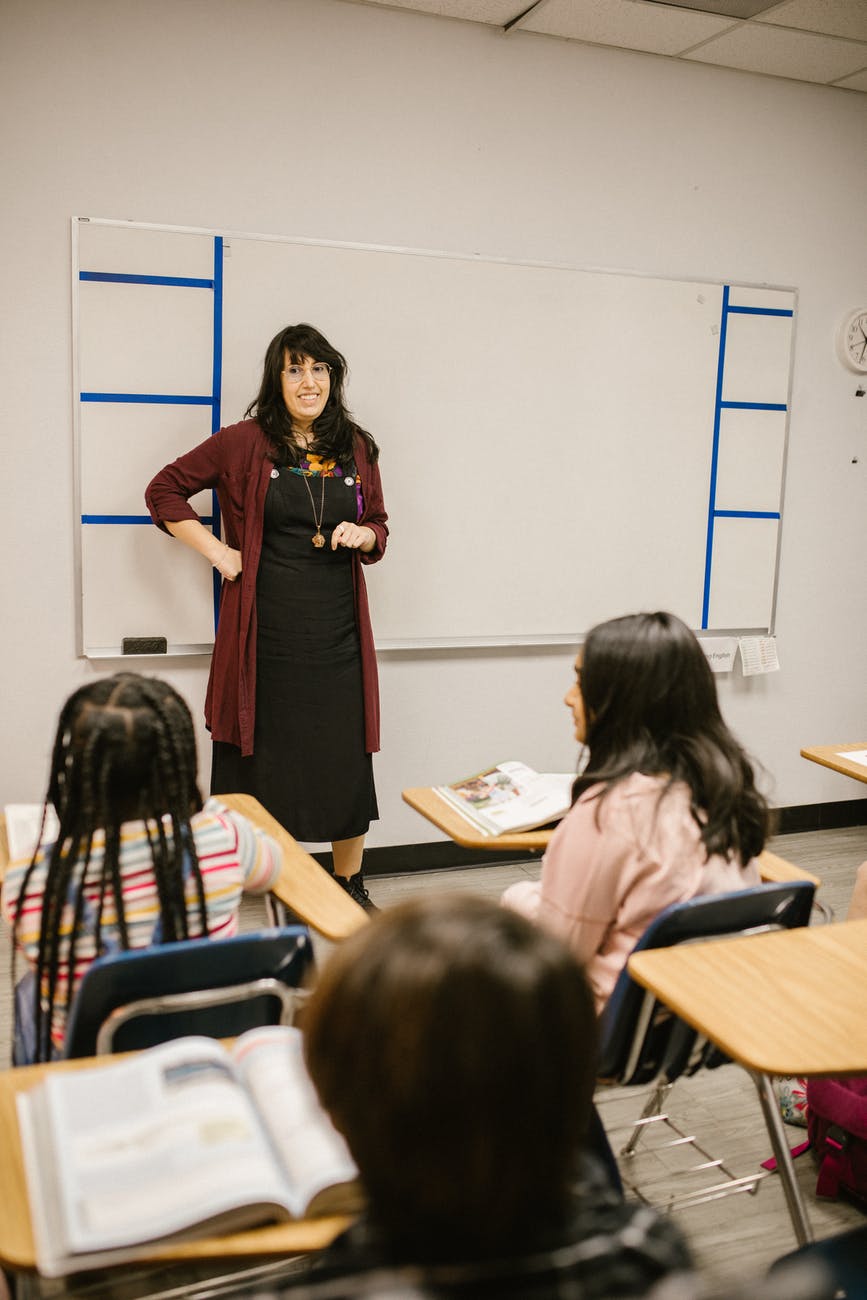
Photo by RODNAE Productions on Pexels.com

The reasons why he feels like he was unsuccessful, because he was lacking the passion to learn and also didn’t speak the language to native speakers, are his main suggestions for language learning in this book.

“When it comes to language learning, there is no room for doubt: you decide your own success.” pg 24

Beyond those two main tips, Lewis shares shortcuts for learning tons of vocabulary quickly (visualization methods) and practicing immersion without going to the actual country. The latter, as he points out, has been made much easier since technology has brought distant countries into the comfort of your own home.

Through Skype calls or internet programs or even Netflix, language learners can interact with and immerse themselves in their target language.

Photo by Anna Nekrashevich on Pexels.com

“You must speak the language with other human beings.” pg 87

The task facing language learners has now become putting in the work to do so rather than traveling the distance for the opportunity.

I think Lewis is on to something with his insistence on speaking your target language from the start.

“As a result of speaking the language right away, students start to acquire the language rather than learn it as they would other academic subjects.” pg 6

I have a friend who’s niece majored in Spanish. But when they visited Spain together, she lacked the confidence to speak it when ordering dinner.

Photo by Adrianna Calvo on Pexels.com

If, from the first stages, learners were able to clear that initial hurdle, day-to-day use, and the successive ones of perfectionism or uncertainty, I agree that the whole language learning process would flow more easily.

Because, as Lewis points out, language is meant for communication with others. We’re rather missing the point if we acquire skills on paper that can’t be put to real life use.

Highly recommended for language learners of any age.

And thanks for reading!

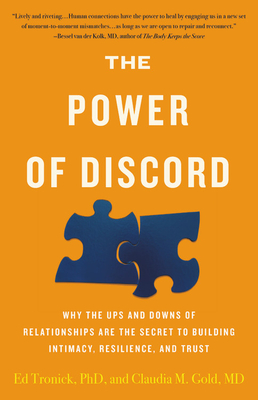
The Power of Discord: Why the Ups and Downs of Relationships Are the Secret to Building Intimacy, Resilience, and Trust by Ed Tronick, Claudia M. Gold

The Power of Discord: Why the Ups and Downs of Relationships Are the Secret to Building Intimacy, Resilience, and Trust by Ed Tronick, Claudia M. Gold

The Power of Discord is a study of human connection and disconnection. The authors, Ed Tronick and Claudia Gold, demonstrate through scientific and therapeutic studies that by working through conflict and the messiness of every day life, our relationships can be stronger than ever before.

Our earliest relationships have a profound affect on the way we interact with others as adults. It is almost scary how fast infants develop the responses that they carry with them into adulthood. In Tronick’s groundbreaking study called the “still-face” experiment, his findings helped researchers discover how infants communicate with their mothers.

Photo by Anna Shvets on Pexels.com

In the experiment, a mother and child are interacting, playing as usual. Then, the mother turns away a moment and when she turns back, her face is still and empty of emotion.

The curious thing about the infants’ reaction to their caregiver presenting them with a face devoid of emotion is that researchers could already see how the relationship between the two was developing. Infants in a healthy relationship kept trying to get a reaction out of the other person until their caregiver “went back to normal.” Infants in a “dysfunctional” relationship, or who were for whatever reason were less connected with their parent, shut down and practiced coping or self soothing mechanisms rather than trying to draw the caregiver out.

Prior to this experiment, it was assumed that infants had little to no communication ability whatsoever.

“When confronted with a stressful situation, (infants) could apply a style of interaction drawn from the everyday exchanges with their caregivers. While they did not yet have the capacity for language or conscious thought, they were able to draw on their countless moment-to-moment interactions to cope with the stress of caregivers’ unfamiliar behavior.”

Photo by Pixabay on Pexels.com

I worried, as I read the study, that the children would somehow be scarred by it. Some of the reactions the researchers described were very intense and painful for everyone involved. But the authors assured readers the level of stress in the experiment wasn’t something beyond what the children would encounter in their daily lives. Still, it seemed rather unfair to them. It wasn’t like researchers could explain what was going on.

Beyond the initial interactions that form the manner in which people craft their relationship styles, Tronick and Gold delve into further issues that may affect how you connect with others like: the pernicious effects of perfectionism and addiction to technology, feeling safe around others, taking responsibility for your connection style, and, the part I liked the most, the surprising way discord makes relationships stronger.

“… it is not simply what happened when we were young that screws us up now. Along the way to growing up and into our adult lives, we continue to create new ways of being screwed up. Only when we have accumulated a whole new set of interactions, when we work through the inevitable moments of disconnection to again find connection, will we grow and change.”

Photo by Josh Willink on Pexels.com

Though we learn how to form connections before we even have language, researchers have found that connection styles can be relearned, relationships can be repaired and are repaired, every day, little by little. In countless “mismatch and repair” moments, we teach ourselves that there is nothing broken that can’t be restored. It builds confidence in the relationship and trust in ourselves and each other – the building blocks of intimacy.

Highly recommended for readers looking to engage in some introspection about their own attachment style or for those who are curious about how relationships are formed and maintained.

Thank you to NetGalley and the publisher for a free advance reader copy of this book.

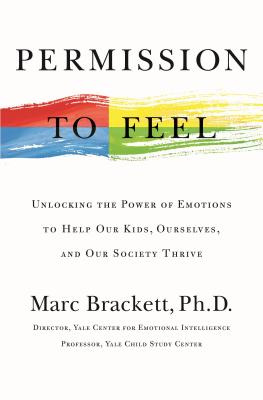
Permission to Feel: Unlocking the Power of Emotions to Help Our Kids, Ourselves, and Our Society Thrive by Marc Brackett

Permission to Feel: Unlocking the Power of Emotions to Help Our Kids, Ourselves, and Our Society Thrive by Marc Brackett

“And when we can’t recognize, understand, or put into words what we feel, it’s impossible for us to do anything about it: to master our feelings — not to deny them but to accept them all, even embrace them — and learn to make our emotions work for us, not against us.” pg 2

Marc Brackett, Ph.D., is the director of the Yale Center for Emotional Intelligence. In this book, Permission to Feel, he has given the world a new set of tools to learn more about ourselves through our emotions, to facilitate communication, and to teach the next generation how to do the same.

Photo by Andrea Piacquadio on Pexels.com

I really appreciated this book as I am someone who has trouble sharing emotions.

I am probably like this because, as Brackett explains, we learn our communication styles from our parents. My mother had a lot of kids and, though I know she cares, never had much time for one-on-one interaction.

My father is so introverted he barely speaks to his family. I have spent entire car rides with my dad while sitting in absolute silence, which sounds like it could be desperately uncomfortable, but with him it’s not. That’s just the way he is.

And what I have become. It can take time to coax anything like an intimate conversation out of me and few have ever bothered to try.

But I want to be better at sharing what’s going on in my inner world. This book has shown me a way I can move towards making that happen.

Photo by August de Richelieu on Pexels.com

“Feelings are a form of information. They’re like news reports from inside our psyches, sending messages about what’s going on inside the unique person that is each of us in response to whatever internal or external events we’re experiencing. We need to access that information and then figure out what it’s telling us.”

Brackett first outlines why emotions are important as they affect everything from “where we direction our attention” to decision making, relationships, creativity and our physical health.

He then explains how to become “emotion scientists,” which he says are more desirable than “emotion judges.” The scientist listens and seeks clues to tease out what is going on in order to help. The judge does the same, but then, rather than helping, he strangles any potential improvement by putting the smack down on what they discover.

“We all want our lives, and the lives of the people we love, to be free of hardship and troubling events. We can never make that happen. We all want our lives to be filled with healthy relationships, compassion, and a sense of purpose. That we can make happen.” pg 21

Photo by Daria Shevtsova on Pexels.com

Then, he gives the tool kit he has spent years honing in workshops and studies, and shares how to apply it in various areas of your life.

I could see this book being useful to parents, educators, leaders or people like me. I knew I had room for improvement in accessing my emotions, but no idea how to go about it. Now, I know.

Thank you to the publisher for a free advance reader copy of this book. The short quotations I cited in my review may change or be omitted in the final print copy. Permission to Feel should be published in early September 2019.

Thanks for reading!

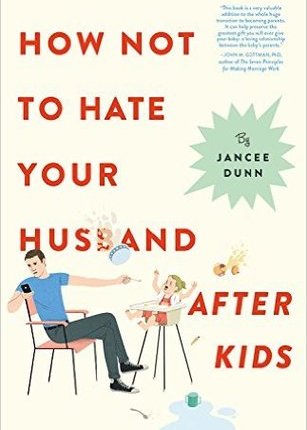
How Not to Hate Your Husband After Kids by Jancee Dunn

How Not to Hate Your Husband After Kids  by Jancee Dunn

This book gave me so many “ah-ha” moments that after a hundred pages I started to feel like an idiot. Why did I assume that so many of these little “life after baby” marital frustrations had only ever happened to me?

How Not to Hate Your Husband After Kids made me feel like I was part of a larger group called ‘mothers who try to do it all and feel secretly guilty that they can’t and wonder how everybody else does it.’ What a relief to know it wasn’t just me.

Photo by Andreas Wohlfahrt on Pexels.com

Dunn weaves her personal stories in with interviews from experts in fields as diverse as couples’ counseling to organizational gurus on a quest to save her sanity and her marriage from the hole that it had fallen into post-baby.

She is largely successful and gives plenty of tips that readers can incorporate immediately into their lives.

But, I was bothered by the, what I interpreted as, straight-up manipulation of her husband. Yes, Dunn is simply following expert advice, but reading about her self-satisfied crowing as she changes some of his more irritating behaviors felt disrespectful.

I mean, husband Tom is going to read this book.

I would feel devastated if my spouse wrote those sorts of things about me for millions of people to read and dissect. Granted, he was clued in that things were being recorded in a tell-all book, but still.

Photo by Public Domain Pictures on Pexels.com

“When I was six months pregnant with my daughter, I had lunch with a group of friends, all of whom were eager to pass along their hard-won scraps of parental wisdom. … ” … get ready to hate your husband,” said my friend Lauren. … Wrong, I told her calmly… But my friend Lauren was right.” locs 115-140 ebook.

We joke about how babies change lives but it’s not really funny, is it. It is a legit problem that marital happiness decreases because of less sleep, less money, less time, less sex… no need to go on.

Dunn begins her efforts to change her situation when she realizes that she’s reached a breaking point.

“Our daughter is now six, and Tom and I still have endless, draining fights. Why do I have the world’s tiniest fuse when it comes to the division of childcare and household labor? I am baffled that things have turned out this way.” loc 158.

In cringe-inducing honesty, Dunn admits to being verbally abusive to her spouse. My stomach actually churned when I read the sorts of things that she’d call him during fights.

Photo by cottonbro on Pexels.com

That part of the memoir made me very glad that she decided she didn’t want to live like that because I know that I wouldn’t have wanted that either.

I learned a lot about “maternal gatekeeping,” a pernicious practice where a mother discourages fathers from interacting with their children because of an internal belief that she knows better how to do EVERYTHING. And also, I learned about the importance of blocking time on weekends for personal rejuvenation and rest.

“And must we be compulsively busy every second of the day, briskly doing something “useful”? Nonstop activity can be addictive, but it’s a mistake, warns the University of Houston’s Brene Brown, a mom of two.” loc 1697.

Word. Everybody needs to chill out, calm down and unwind.

We also need to appreciate each other more.

At the end of the day and on the other side of all of the experts, Dunn comes to a dozen important realizations. One of which, appreciation, seems to be the magic bullet for most of her formerly-insurmountable marriage woes. It isn’t a new message but it is one that is worth repeating.

Photo by Magda Ehlers on Pexels.com

Recommended for parents of all ages, How Not to Hate Your Husband After Kids contains wisdom for just about every troublesome situation that one may find themselves in after children. Let’s hope the book can live up to its title.

Thank you to NetGalley and Little, Brown and Company for a free digital copy of this book. And thank you for reading!