DPS Only! by Xiao Tong Kong

DPS Only! by Xiao Tong Kong

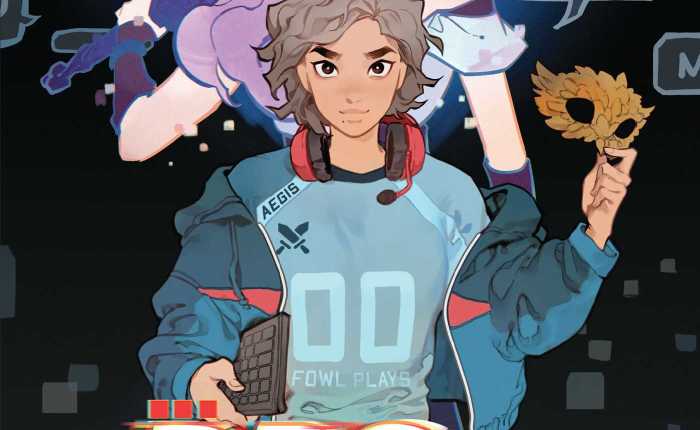
Vicky lives with her brother, Vergil, who is a renowned e-sports player of the game “Xenith Orion.” Though Vicky loves to play video games too, she is too shy and self deprecating to tell him.

When an opportunity arises for Vicky to join an e-sports team of her own, she takes it, and uses a mask to conceal her identity. But she knows, it is only a matter of time until her secret comes out.

What will she do then?

I very much enjoyed this coming-of-age graphic novel. Readers get to see Vicky really coming into her own in the video game scene, while handling her personal relationships, particularly the one with her brother.

Photo by Florenz Mendoza on Pexels.com

This story touched on the potential sexism of e-sports. So few young women play, and when they do, they can draw all sorts of negative or toxic attention. Vicky avoids some of this with her costume, but other parts of it she can’t escape- like when one of the members of her brother’s team presses her for her phone number, though she doesn’t want to give it.

Or the negative comments arising from spectators to the tournament which are specifically directed to a female member of another team who isn’t hiding her gender behind a mask.

I experienced this type of thing first-hand in some of my gaming days. I was big into EverQuest in the early 2000’s. Luckily for me, that was before head-set communication during gaming was a thing, so, even though I played female avatars, most of the people I gamed with just assumed I was a guy.

Photo by Matilda Wormwood on Pexels.com

It was easy for me to hide. I never felt like I had to, like Vicky, but looking back on it all now, it saved me from negative attention for years.

News articles about e-sports have reported women comprise about half of casual gamers but only a handful of professional gamers. Here’s hoping more young women find the courage to follow their dreams!

The video game portions of this book were the most difficult to follow. It cut quickly from one character to the next with little explanation of what is going on except the kill.

Other than that, I thought this book was well done.

Highly recommended for reluctant readers, fans of video games, and readers who enjoy graphic novels.

Thanks for reading!

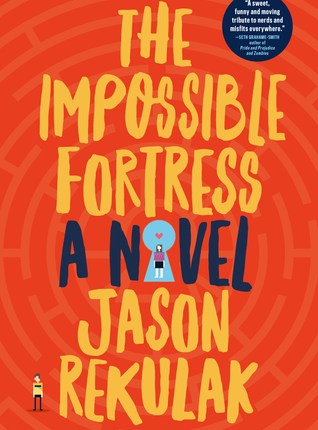
The Impossible Fortress by Jason Rekulak

The Impossible Fortress by Jason Rekulak

A cute coming-of-age novel about a boy, a computer, a Playboy magazine and first love.

Billy and his awkward friends are in love with Vanna White, the girl-next-door who flips the letters on Wheel of Fortune. When some pictures of Vanna appear in Playboy, they know they have to get that magazine, at any cost.

One problem, none of them are even close to eighteen years old.

This was the moment of truth- the moment I’d rehearsed with Alf and Clark again and again. They’d coached me to keep my pitch exactly the same- to speak the words like I used them all the time: “Just some Tic Tacs,” I said, “And a Playboy.” pg 29

Photo by Athena on Pexels.com

Part of this story is enjoying the humor and innocence of the boys in an era before the internet. The other part of this story, the one that occupied my book club, was reminiscing about technology and early computers.

We spent most of the time at book club talking about what our first computers were, who knew coding, and what were our favorite early games.

“If I was serious about Planet Will Software, I couldn’t work on a Commodore 64 much longer. Newer computers offered more memory and better graphics, and C64s would be obsolete in another year or two. I needed to upgrade to the latest technology, and the contest was my best chance to do it.” pg 43

Photo by Soumil Kumar on Pexels.com

That part of the evening seemed to entertain the older members of our book club more than me. It’s not that I didn’t have an early computer, I did, I was more interested in the coming-of-age part of this story and the heist-type scenarios the boys go through to get their dirty magazine.

I also enjoyed Billy’s struggles to understand Mary and the cute dynamic between them. I liked learning about his loyalty to his friends and his dreams for future computer programming greatness.

“I’m going to make video games,” I said. “I’m going to start my own company, and I’ll only hire cool people.” pg 81

Photo by Barik5ive on Pexels.com

If I ever start my own company, in whatever business sector that it may be (not computer programming), I’ll only hire cool people too.

Recommended for book clubs or if you just want a sweet, light read by the pool, The Impossible Fortress just may fit the bill.

Thanks for reading!

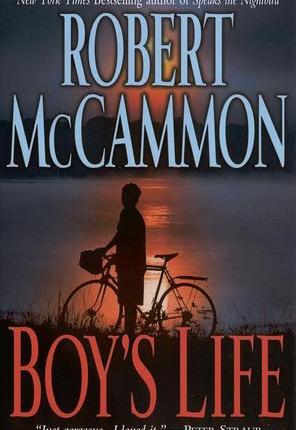
Boy’s Life by Robert McCammon

Boy’s Life by Robert McCammon

Boy’s Life is about Cory Mackenson, the southern town of Zephyr and the magic of every day life.

We had a monster in the river, and a secret in the lake. We had a ghost that haunted the road behind the wheel of a black dragster with flames on the hood. We had a Gabriel and a Lucifer, and a rebel that rose from the dead. We had an alien invader, a boy with a perfect arm, and we had a dinosaur loose on Merchants Street. It was a magic place.” pg 10, ebook.

Photo by Swapnil Sharma on Pexels.com

The story begins with a death and a mystery.

“On that morning before the sun, as I sat eating my breakfast with my dad and mom in our house on Hilltop Street, the year was 1964. There were great changes in the winds of earth, things of which I was unaware.” pg 15.

After witnessing something terrible sinking into the lake, Cory sets about discovering what or who put it there.

The trauma is almost too much for Cory’s father to bear.

“Whoever did it had to be a local. Had to be. … It might be somebody who sits on our pew at church. Somebody we buy groceries or clothes from. Somebody we’ve known all our lives… or thought we knew. That scares me like I’ve never been scared before.” pg 35, ebook.

Photo by Kirill Belotserkovsky on Pexels.com

But this book is about more than just the central mystery. It is also about the community of Zephyr and the relationships between the people who live there.

There is a racial divide in the town. When the river overflows its banks, the white and black communities come together to prevent disaster.

“There is something about nature out of control that touches a primal terror. We are used to believing that we’re the masters of our domain, and that God has given us this earth to rule over. … The truth is more fearsome: we are as frail as young trees in tornadoes, and our beloved homes are one flood away from driftwood.” pg 97, ebook.

Boy’s Life also examines coming-of-age issues like bullies, over-bearing parents, and accepting the realities of old age and death.

“But I’ll tell you a secret, Cory. Want to hear it?” I nodded. “No one,” Mrs. Neville whispered, “ever grows up. … They may look grown-up but it’s a disguise. It’s just the clay of time. Men and women are still children deep in their hearts.” pg 221, ebook.

Photo by Skitterphoto on Pexels.com

I loved this book. It is a far-reaching tale made for winter nights, to be read with a hot drink in your hand and a warm blanket on your lap.

It vaguely reminded me of The Help because of its southern location, the racial issues and some of the mystery elements. But really, Boy’s Life stands on its own.

Recommended for readers who enjoy historical fiction with a touch of magic and mystery.

The Given World by Marian Palaia

The Given World by Marian Palaia

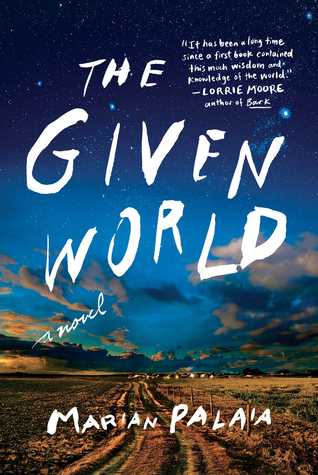
thegivenworldThe Given World gave me a headache. Why is it that when “serious” fiction “examines” life that it only focuses on the bad stuff?
Riley is a young girl in Montana who worships her brother. He’s drafted and shipped off to war in Vietnam. It breaks her heart and she systematically begin to ruin her life, because she can’t get past it. She eventually leaves home, gets lost in worlds of drugs, domestic violence, and alcoholics on the California coast. Everyone she meets is as dysfunctional as she is or on their way to dysfunction. Personal opinion here: if society was only composed of people like that, it would have fallen apart a long time ago.

Riley is a character that I tried to like but just couldn’t. She always made the worst decisions and if there was a way to improve her situation, she didn’t choose it. It was like she had blinders on to the possible goodness in life and jumped enthusiastically into the darkness. She turns her back on her family, blames everyone else in life for her problems, and consistently isolates herself from anyone who could possibly lend comfort or stability. In this passage, she’s talking about her father: “The way they smoke, so casually oblivious, reminds me of my father- on the porch, maybe, or out in the yard at night, looking up at the sky, for weather, but it’s not as if he could miss the stars. I hear my name in his voice: “Riley…” Never loud or angry, just gentle reminders: try to grow up with some degree of intentionality and grace; try to believe the world is more benevolent than not. I wonder if he knows I did hear him.” pg 10, ebook. Riley, I don’t think you did.

I did grow to feel sorry for Riley. She didn’t ask for her family to be ripped apart by war. I guess, after experiencing that sort of emotional turmoil at an early age, that it might be almost impossible to put your life on track to begin with. “She reminded him of a deer who knew you weren’t out to shoot it. Like she’d let you get just so close, and then bolt to the edge of the clearing; the forest nearly impenetrable behind her where she knew you couldn’t easily follow.pg 40, ebook. But, I just couldn’t get over the fact that she didn’t use her intimate knowledge of pain to help other people.

Riley’s mother was a hot mess too, but she managed to raise two children fairly successfully. I was surprised that Riley didn’t use her as a role model, even for a moment. In this passage, Riley’s mother writes her a letter, trying to connect with her wayward child: “And lost as you already are these days, or as I think you must be, you still probably understand, maybe better than most, that kids don’t necessarily hold you steady. Even if they do, somehow, hold you in place.” pg 97, ebook.

Rather than continue on in this vein, I will end this review with acknowledging that The Given World was not for me. But, if you enjoy reading coming of age stories with multiple flawed characters and plenty of bad decisions, you may want to pick this one up. Some trigger warnings for sensitive readers: domestic abuse, racially motivated violence, and drug use.

Thanks for reading!

Paper Towns by John Green

Paper Towns by John Green

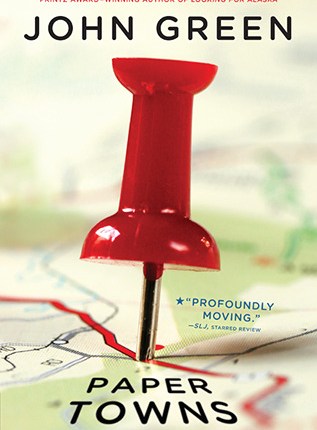
Warning: this is a book you either love or hate.  Consider yourself warned.

I fell more on the “hate” side of this equation but, surprisingly, enjoyed the film. This young adult, coming-of-age tale has elements of mystery to it.

Quentin has always loved Margo. One night, she wakes him up and they go on a wild tear about town, righting perceived wrongs and causing all sorts of hijinks.

Photo by David Besh on Pexels.com

The next day, Margo has disappeared. Their night out left all sorts of clues to where she went. Q decides to find her.

My negative reaction to Paper Towns surprised me because I loved John Green‘s The Fault in Our Stars so much.

Right off the bat, the reader is thrown into Margo and Quentin’s lives and we’re exposed to some of their worst traits rather than their best. Usually, people behave their best when you first get to know them and then, as they become comfortable with you, they let some of their more questionable sides out.

Photo by Alfonso Escalante on Pexels.com

The whole “rolling around the neighborhood at night and causing mayhem” takes place right at the start of Paper Towns. It isn’t fun because we don’t really know these characters yet.

It’s easier to forgive adolescent hijinks when you know and love the people who are doing them, but we’ve got almost zero time to form a connection before they’re breaking laws.

I think I would have given up on Paper Towns if I hadn’t watched John Green’s TedTalks video on the topic. If you haven’t seen it yet, here it is:https://youtu.be/NgDGlcxYrhQ

Quick summary of Green’s video: The basic idea behind a paper town (a made up town on a map) was copyright protection. The coolest part is that the mapmakers took something that wasn’t real and made it real because they presented it that way for so long.

I know that John Green can write amazing, sympathetic characters. He chose not to in this book and I’ve been rolling it around my brain, wondering why.

I think that Green wrote the characters in this story like a paper town.

At first, he presents the main characters as over-the-top clichés of what teenagers could be. The reader isn’t necessarily meant to bond with them at this point, they’re not real, they’re just “people on paper.”

Photo by Helena Lopes on Pexels.com

Then, through the second part of the book, let’s call it the “clue finding” part, Green slowly reveals more and more of the real parts of their characters just as Quentin finds more and more clues to where Margo has gone.

Through their hopes and dreams, relationships, daily struggles and hopes, they’re becoming more real.

Finally, in the last third of the book, as we join the characters on their mad rush to find Margo, they’ve become real. Real enough to have some close life-threatening moments on the road. Though they started out fake, Green built enough substance for the characters so that they have heft and dimension.

That’s my theory on why Green wrote such awful characters: he meant to. But, I still never liked any of them very much, even after they became “real.”

Photo by Buro Millennial on Pexels.com

I liked Green’s prologue: “The way I figure it, everyone gets a miracle. Like, I will probably never be struck by lightning, or win a Nobel Prize, or become the dictator of a small nation in the Pacific Islands, or contract terminal ear cancer, or spontaneously combust. … My miracle was this: out of all the houses in all the subdivisions in all of Florida, I ended up living next door to Margo Roth Spiegelman.” pg 15 ebook.

“Margo always loved mysteries. And in everything that came afterward, I could never stop thinking that maybe she loved mysteries so much that she became one.” pg 23 (ebook)

And that was the high point in this book for me. It was all downhill afterwards.

Here’s the passage that helped develop my theory about Green writing paper characters in Paper Towns: “… she looks like Margo Roth Spiegelman, this girl I have known since I was two- this girl who was an idea that I loved. And it is only now, when she closes her notebook and places it inside a backpack next to her and then stands up and walks toward us, that I realize that the idea is not only wrong but dangerous. What a treacherous thing it is to believe that a person is more than a person.” pg 406 (ebook)

Photo by Mihis Alex on Pexels.com

In conclusion, if you haven’t read any of John Green’s books, please don’t start with this one.

I highly recommend A Fault in Our Stars. It will break your heart. This one was not so good.

The film adaptation of Paper Towns was surprisingly ok. Borrow it from the library and let me know what you think.

I’m off to be more than a paper character in my own life- thanks for reading!