Maestros by Steve Skroce (Writer/Illustrator), Dave Stewart (Colorist), Fonografiks (Letterer)

Maestros by Steve Skroce (Writer/Illustrator), Dave Stewart (Colorist), Fonografiks (Letterer)

When the Maestros and his entire extended family are killed in an inter-dimensional fight, the only part of the Wizard King’s bloodline remains with a young man named Will who was banished to Earth with his mother, Margaret.

Now as Will takes the throne, his enemies, and his father’s enemies, are on the move. Will he be able to retain power or, in these uncertain times, his life? We shall see.

The artwork of this series is amazing. From the colors to the style, each page has eye-catching illustrations. Well done, Steve Skroce!

This graphic novel is rated Mature and it is easy to see why. There’s nudity, graphic violence, and some depictions of torture. So, librarians, please categorize it correctly.

Despite its mature, and occasionally disturbing, elements, I enjoyed the story in this comic quite a lot. It is a fantasy-laden coming-of-age tale that asks the question: does absolute power corrupt absolutely?

Highly recommended for mature comic book readers. Thanks for reading!

BRZRKR, Volume 1 by Keanu Reeves, Matt Kindt

BRZRKR, Volume 1 by Keanu Reeves, Matt Kindt

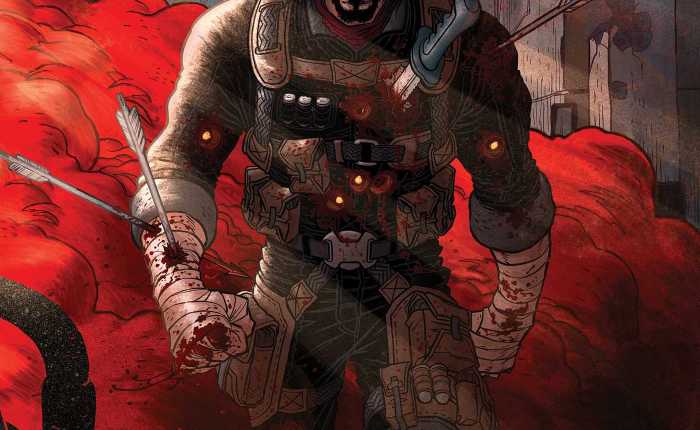
An absolute blood-fest of a book, BRZRKR introduces readers to an ancient warrior who can’t die and who is driven to kill by an internal impulse he’s had since birth.

Honestly, for a first book from actor Keanu Reeves, this wasn’t too bad.

If you can get past the gratuitous violence, it has some great themes- the hero’s birth and crossing the threshold of manhood, the death of the parents or guardians, the eternal war of the uncivilized portion of the psyche and the civilized part.

As a first book in a series, it introduces the main character very well. The method it uses is war and the panels are drenched in red. After a couple pages, I just started skimming for the words because the art was starting to gross me out.

I am most likely not the intended audience for this book, but that didn’t stop me from jumping into it. I’ve never let a little thing like not being the intended audience hold me back.

Recommended for adults only. In fact, the library I borrowed this book from has a Rated-R sticker on the spine to warn readers of its contents. They nailed that. Way to go, librarians!

Promethea, Vol. 2 by Alan Moore

Promethea, Vol. 2 by Alan Moore

Promethea, Volume 2 was an incredibly disappointing follow-up to a promising comic series.

The reader continues to follow the efforts of Sophie, a student who has learned to channel the spirit of a being of enlightenment named Promethea, while battling demons and other nebulous, bad guys.

Photo by Francesco Ungaro on Pexels.com

We have yet to learn more about the villains of the story, except in brief asides, or Sophie’s allies, some sort of technological heroes.

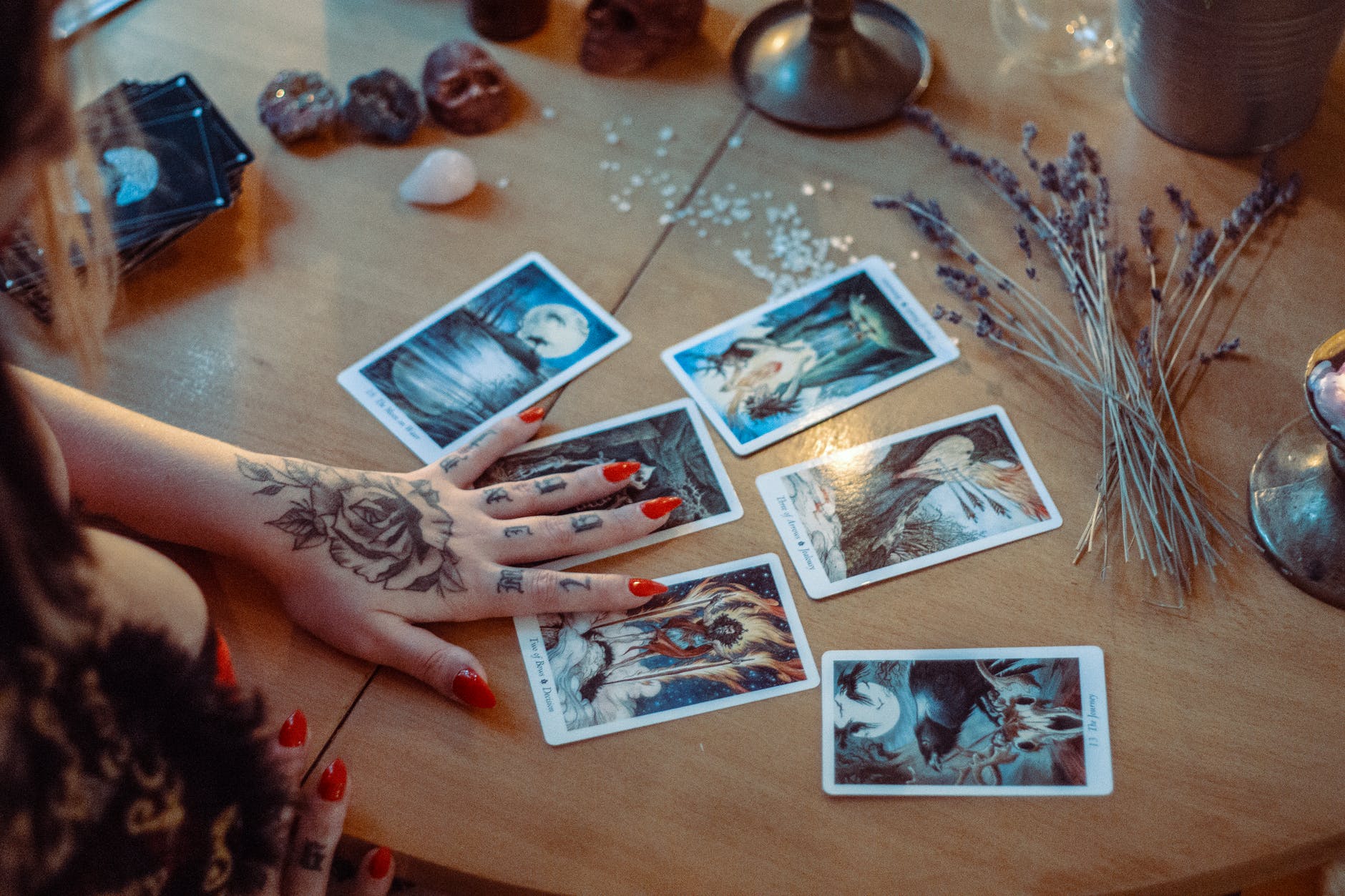
This entry is bogged down with a lengthy metaphysical poem about the progression of tarot cards and an unexpected tantric sex primer.

Photo by Alina Vilchenko on Pexels.com

My quibbles with the tarot card piece is it is far too simplistic but also too long. Each card can be interpreted a number of different ways, and not just applied to principles of civilization. It is also a metaphor for the soul’s journey, which Alan Moore touches on, but, I feel, never truly explains.

Also, by presenting the whole thing through rhyme, I couldn’t help but draw comparisons to Dr. Seuss. I get what Moore was going for, but it didn’t work for me.

Meanwhile, I couldn’t help but wonder if the lead character in this story was a guy if we would have been subjected to the tantric stuff at all.

Photo by Roy Reyna on Pexels.com

I believe the earthly can be spiritual and the spiritual can be earthly. I think “kundalini rising” is just the lightning flash of inspiration in reverse. But a male hero being pressured into trading his body for secret knowledge? I don’t see it happening.

I liked the first entry of Promethea. I thought it was ground-breaking in the way it depicted a strong female character on a spiritual journey.

This second book simply isn’t of the same quality. Perhaps the series will redeem itself in the next entry. One can only hope.

Animosity, Vol. 1: The Wake by Marguerite Bennett

Animosity, Vol. 1: The Wake by Marguerite Bennett

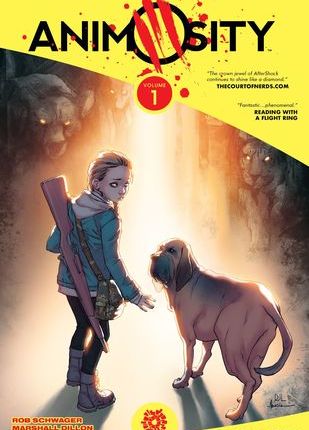
One day, animals obtained self awareness and the ability to speak. The world will never be the same.

They started thinking. They started talking. They started taking revenge.

There’s something profoundly disturbing when reading about animals embodying the worst of the human emotions. They’re angry, afraid, vengeful. Part of what draws humanity to the animals is that they’re not like that. They live in the moment. They operate from instinct. And the love they give is uncomplicated… the hate too.

Photo by Dominika Roseclay on Pexels.com

In Animosity, this paradigm is flipped on its head. Now animals can plan. They’re organized. They can make assumptions and mistakes.

When the animals changed, some pressing issues arose beyond the obvious problem of everybody hurting each other in the first panic and fear-filled moments following the change. How will the world feed itself? How will reproduction be controlled? Humanity had trouble providing for all even when not dealing with the quintillions of other lives on the planet.

And the love one dog has for his human can perhaps have some darkness in it that she doesn’t expect. There’s still loyalty. He’ll fight to protect her. But there’s some question to how much he’ll protect the rest of her family…

Photo by 42 North on Pexels.com

Animosity is a surprisingly deep graphic novel that makes the reader question the role of animals in our lives and how the world could be a very different place if everyone, literally all life, acted like humanity. And how that might be an awful development.

Here’s my review of another book that is set in the dystopian world of AnimosityAnimosity: Evolution, Vol. 1: Lex Animata by Marguerite Bennett

And thanks for reading!

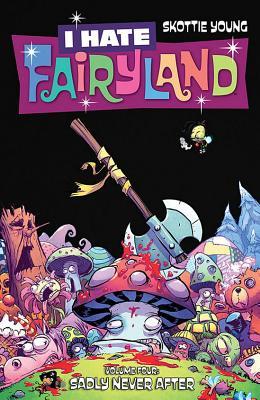
I Hate Fairyland, Vol. 4: Sadly Never After by Skottie Young

I Hate Fairyland, Vol. 4: Sadly Never After by Skottie Young

Sometime in July, when I wasn’t paying attention, Skottie Young announced this installment of the I Hate Fairyland series would be the final one. Imagine my surprise when I got to the last page of what was obviously the end of one of my favorite comic series. It was bittersweet.

Young brings the series to a close with Gertie trying one more time to get home. The last book ended on a cliffhanger with a surprise twist. He addresses that directly in the first pages of this installment.

“Yeah, that’s why I’m completely unimpressed. Feels like a cheap stunt to end a story with a ‘clever’ cliffhanger, if you ask me.”

Photo by Egor Kamelev on Pexels.com

Characters from the previous books all make an appearance, plus a few new ones. All-in-all, I enjoyed it.

The genius of this series is the idea that fairyland is one, built for children, and two, should have an expiration date. Gertrude, a foul-mouthed homicidal maniac in the form of a perpetually small child, is what would happen if someone was forced to endure endless disappointments in a futile effort to go home again. And was given a pointy-edged sword with little to no consequences for her actions.

All quests have ends though they may not be in the form the person going on the quest expected. I was pleased to see that Young didn’t drag out this series beyond its own expiration date. Because he could have. Honestly, the beautiful world he created could have gone on and on if he had chosen (or had the time) to do so. But he embraced one of the lessons in the story and ended it in a timely and, I felt, dignified manner.

Photo by PhotoMIX Company on Pexels.com

Recommended for adults who are looking for a different coming-of-age story in graphic novel format. Not appropriate for the younger set.

Here is my review for a previous entry in the series:

I Hate Fairyland, Vol. 3: Good Girl (I Hate Fairyland #3) by Skottie Young

Thanks for reading!

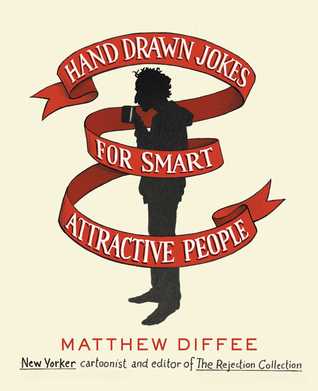
Hand Drawn Jokes for Smart Attractive People by Matthew Diffee

Hand Drawn Jokes for Smart Attractive People by Matthew Diffee
handdrawnjokes

Sadly, the best part of this book is its inspired title: Hand Drawn Jokes for Smart Attractive People.

The rest is either clever, but not funny, or offensive depending on the page.

It’s a shame really- the artwork itself is great and it’s clear that Diffee is a talented cartoonist. I just didn’t connect with much of the work.

Out of all of it, my favorite cartoon was on page 188- Moses: The Teen Years where a young adult version of Moses is depicted staring into a mirror, carefully parting his long hair with a comb. The worst was the entirety of Chapter Eight: For Smart Attractive Indians and Eskimos and really soured this whole book for me.

Pick up at your own risk, I can’t really recommend it. Some graphic novels that I DO recommend: Penguins with People Problems or Shakespeare’s Guide to Parenting.

Thanks for reading!

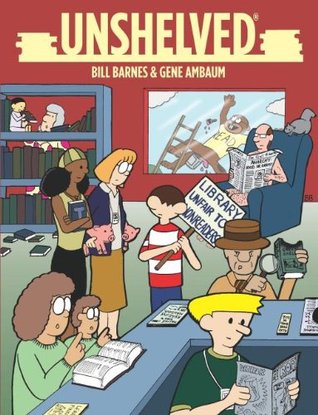
Unshelved Vol. 1 by Bill Barnes and Gene Ambaum

Unshelved Vol. 1 by Bill Barnes and Gene Ambaum

I enjoyed Unshelved, a comic about a public library, its librarians, and the ridiculousness that goes on when the library is open.  But, sometimes the cartoon hit too close to home. I’ve been treated and spoken to like Dewey at the information desk, tons of times. So, librarians beware. Some of these are almost too true to be funny. On the other hand, I like my job, so I’ve never responded like Dewey. It’s cathartic, reading his sarcastic responses to ridiculous questions and situations.

My library has this book classified as young adult and I feel that it is an appropriate categorization.  There’s nothing in here that I would find objectionable for a younger teen to read but some of the interpersonal problems may go over the head of a 12 year old.

Favorite character: Buddy the Book Beaver! Of course.

Favorite cartoons: The one where Merv writes a brochure to get more teens to come to the library pg 33 (My department is responsible for the young adult room, so I really appreciated the humor).

When the patron asks Dewey if he has any pens when he’s standing next to a pile of pens (Happens to me all the time). bottom of pg 41

And finally, when Dewey starts dispensing Eastern philosophy to the library patrons: “Search without searching. Look for nothing and find everything. Read the book but don’t look at the words.” top of pg 103. That’s probably me in about thirty years.

If you enjoyed Unshelved, you may want to pick up Rex Libris, Volume I: I, Librarian (Rex Libris, #1-5) by James Turner (another librarian themed comic) or The Black Belt Librarian: Real-World Safety & Security by Warren Graham (non-fiction book on how to deal with difficult patrons or security risks at the library).  Thank you for reading!