“So then, there seems little reason why I should not undertake my motoring trip to the West Country.” pg 20, ebook
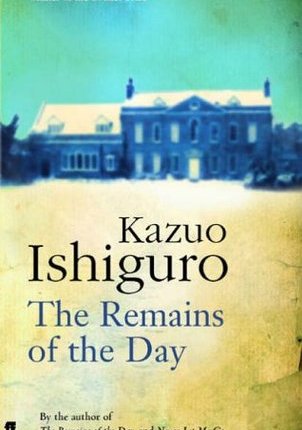
The Remains of the Day is mainly told through the memories of a butler named Stevens of Darlington Hall as he takes a short vacation to visit an old friend.
“It is sometimes said that butlers only truly exist in England.” pg 44, ebook
Throughout the story, Stevens again and again demonstrates his inability to connect with or show his emotions. But he believes this to be a positive attribute, something that he calls, “dignity.”
He gives all that he has to his position as a butler of Darlington Hall. And I was hoping his striving was worth it. In the end, the reader gets to decide if his was a life worth living or not.
Kazou Ishiguro received the Nobel Prize for this book and it is very well written. I was impressed by how Ishiguro tells the story and finds a way to connect the reader with this character who can be very unlikeable at times.
Despite some of his more infuriating attributes, I found myself cheering for Stevens anyway.
I did not like the ending of this book, which I won’t spoil for anyone. It reminded me of The Buried Giant, another well written book by Kazou Ishiguro with an ending I didn’t connect with.
This story is easier to experience than describe. If you read it, please let me know what you think about it.
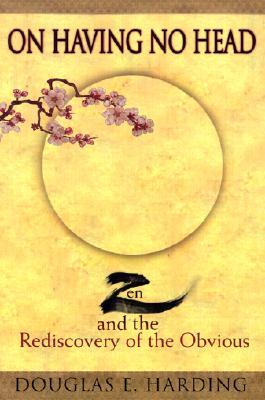
Douglas Harding had a strange experience when he was a young man. As he was hiking in the Himalayas, Harding had a moment he would later describe as of “no thought”, and where he perceived his body as having no head. In addition, he had a vision of his body as a house with a single window, but inside the house, there was nothing looking out at the world.
That nothingness is where Harding envisioned his consciousness resides.
Trippy, I thought. If that had happened to me, I might have been pretty freaked out.
Not necessarily so for Harding, who described the experience as incredibly peaceful and enlightening. When he came back from this experience, he applied his insight to various Eastern schools of philosophy, notably Zen.
The result is this book- a discussion of not only what happened to him, but an examination of consciousness itself. Where does consciousness reside? Where is the ‘me’ of our constant thoughts and emotions?
It’s somewhat of a winding path to get there, but Harding eventually points to the idea that consciousness is space in which reality is perceived.
When I first hopped into this book, I thought, how ridiculous. We all have heads attached to our necks. We can see them and feel them. Not only that, we can see and feel the heads of other people if we really wanted to.
Harding takes this idea of ‘seeing’ and ‘touch,’ and questions what it is that people actually perceive. Yes, he says, you can see your head in a mirror. But that is a reflection of your head and not the head itself.
Everybody says these constructs are the thing itself. However, as Harding points out, they’re not really, are they? If you look down your own face, you can usually ‘see’ your nose as a series of splotches and shapes. Is that your nose though, or just splotches?
And he goes on from there.
By the end of the book, I was nodding my head a little and felt like I could understand something of what he was saying. But now that I’m trying to write a portion of it down, it just sounds like nonsense.
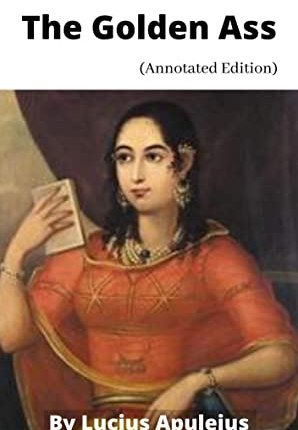
Lucian longs to experience real magic. When he discovers it, an unfortunate misstep turns him into the title character. In the shape of an ass, Lucian suffers through a series of misadventures.
I wonder when Apuleius was writing The Golden Ass, if he ever imagined this particular novel would be the only one written in Latin to have made it through his time to ours in its entirety.
Perhaps that’s an unfair question, because how could a writer imagine something like that?
But if he could have somehow foreseen it, I think that he would have written something different than this rambling, depressing, occasionally obscene adventure. Or maybe not. Maybe it summoned up his society nicely.
Hypothetical ramblings aside, it didn’t make for an enjoyable reading experience.
A very large consideration for readers of The Golden Ass is the quality of the translation and how that may affect your enjoyment of the book. A friend and I read this book in tandem and this particular problem became clear quite quickly.
My edition, borrowed from the library, is a reprint of a translation by William Adlington in “Oxenford, September 1566,” and comes complete with the spelling and idiosyncrasies of his era.
“You perhappes (sic) that are of an obstinate minde (sic) and grosse (sic) eares (sic), mocke (sic) and contemme (sic) those things which are reported for truth, know you not that it is accounted untrue by the depraved opinion of men, which either is rarely seene (sic), seldome (sic) heard, or passeth the capacitie (sic) of mans reason, which if it be more narrowly scanned, you shall not onely (sic) finde (sic) it evident and plaine (sic), but also very easy to be brought to passe.” pgs 14-15, ebook
I found many passages “passeth the capacitie of” my reason because the nearly five hundred years between Adlington’s translation and this made so much of it nearly unintelligible.
My friend read a modern translation by Penguin Publishing and reported a more positive reading experience. If given a choice between the two, please do pick the more modern version.
“Verily shee (sic) is a Magitian (sic), which hath power to rule the heavens, to bringe (sic) downe (sic) the sky, to beare (sic) up the earth, to turne (sic) the waters into hills and the hills into running waters, to lift up the terrestrial spirits into the aire (sic), and to pull the gods out of the heavens, to extinguish the planets, and to lighten the deepe (sic) darknesse (sic) of hell.” pg 19, ebook
Translation problems aside, I found the bulk of the story to be repetitive and, on the main, depressing. Things get worse and worse for our hero.
Yes, there is some measure of relief when we reach the end of our story and explore the mysteries of a cult whose rituals have been forgotten to history. But between the beatings and, as I mentioned, various obscene interludes, the end couldn’t come fast enough. Poor Lucian, “poore” William Adlington, and poor me!
The version I read of The Golden Ass, I recommend only for English majors, classicists or religious scholars. The appeal for modern readers just isn’t there.
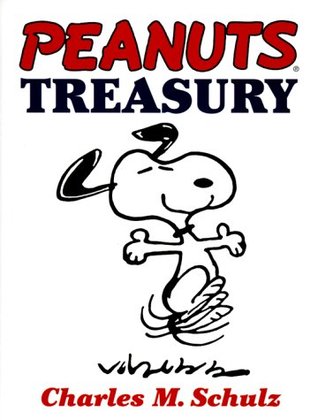
Some works of fiction, after enchanting countless readers, become classics, a touchstone of culture for generations. I would submit “Peanuts”, created by Charles Schulz, as one of these classics.
The existential struggles of the boy named Charlie Brown, the adventures (real and imagined) of his beagle, Snoopy, and the rest of the Peanuts gang, seem timeless.
Charlie Brown wants to fly his kite, but it is always getting “eaten” by the “kite-eating tree.” He pitches for a baseball team that never wins. He tries to kick a football, but it is always removed at the last moment.
I first read Peanuts in dusty paperback books kept in the spare bedroom at my grandparents’ house. Through lazy Sunday afternoons or the occasional sleepover, I learned the names of all the Peanut characters and their defining traits.
My favorite was Schroeder, the virtuoso on his tiny piano. I even had a watch with piano keys on the plastic band and Schroeder on the watch face, pounding out his music as the second hands ticked by. I loved that watch so much – I wore through the plastic wristband, replaced it, and wore through it a second time.
When I read Peanuts Treasury, it transported me back to a time when my biggest concern was finishing my homework before the end of the weekend and to a sense of comfort that family members who loved me were just in the next room. It was a nice escape from the current reality, where my biggest concerns seem so impossibly out-of-my-hands and loved ones are all in their separate spaces.
Recommended for readers who are looking to spend a few hours away from this world and in the life of a boy who never succeeds and never ever gives up.
“Throughout the inhabited world, in all times and under every circumstance, myths of man have flourished; and they have been the living inspiration of whatever else may have appeared out of the activities of the human body and mind.” pg 1
Joseph Campbell presents his, now classic, thesis of comparative mythology and psychology. By examining different myths from all around the world, he outlines the hero’s journey. The journey has many different steps and elements to it, but beneath it all, Campbell believes, through all the many stories, the journey is one.
“Furthermore, we have not even to risk the adventure alone; for the heroes of all time have gone before us; the labyrinth is thoroughly known; we have only to follow the thread of the hero-path.” pg 18
I think in different circumstances I may have enjoyed this book very much. The topic, comparative mythology, is one I find particularly fascinating. I also like to see how humankind incorporates the mythical not just in our stories, but in the way we set up our societies.
“… every failure to cope with a life situation must be laid, in the end, to a restriction of consciousness. Wars and temper tantrums are the makeshifts of ignorance; regrets are illuminations come too late.” pg 101
But honestly, I had trouble focusing because of certain current events. Campbell presents the different myths in pieces organized by his heroic stages rather than in one flowing story. Between the trouble focusing and the bouncing around from myth to myth, this was a difficult read for me. Perhaps I’ll try this book again in the future, when my life doesn’t feel so off-kilter.
I think it has plenty of treasures to be discovered for spiritual seekers of every kind. It also demonstrates that though we look different and live very different lifestyles, at our soul level, there are many similarities to humanity. We find these similarities mirrored through our stories, our life stages, how we live and how we dream.
“Those who know, not only that the Everlasting lives in them but that what they, and all things, really are is the Everlasting, dwell in the groves of the wish-fulfilling trees, drink the brew of immortality, and listen everywhere to the unheard music of eternal concord. These are the immortals.” pg 142
I sincerely hope you all live and dream sweetly, immortals, wherever on the hero’s journey you may be: sheltering-in-place or braving the world, and that I will live and dream sweetly, too.
** spoiler alert ** Please be aware: major spoilers ahead if you have not read the book or watched the film. Consider yourself warned.
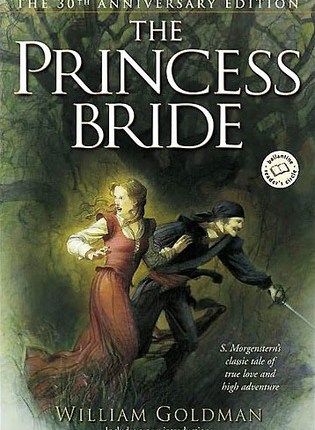
A new classic tale about a woman named Buttercup, the man she loves named Westley, a giant who loves to rhyme named Fezzik and Inigo, a Spanish swordsman out for revenge.
Of course, like many, I’ve seen the film The Princess Bride about a bajillion times, but I’d never read the book. It was time to rectify that error. Because the book is always better than the movie, right?
“I love you,” Buttercup said. “I know this must come as something of a surprise, since all I’ve ever done is scorn you and degrade you and taunt you, but I have loved you for several hours now, and every second, more.” pg 59, ebook.
But not this time, friends. I know, I was shocked too.
That’s not to say the book isn’t charming, because it is. There’s all of the characters you love and they deliver the classic lines from the film, plus you get the backstory and additional humorous injections from William Goldman. Goldman created a story within a story — he acts as if he’s simply editing a book by S. Morgenstern and has created an entire history around this idea.
He’s so convincing, in fact, that I immediately googled Goldman to make sure I hadn’t missed something.
My favorite part of the book was exploring Prince Humperdinck’s “Zoo of Death”, which we only get to see in passing in the movie.
“The fifth level was empty. The Prince constructed it in the hopes of someday finding something worthy, something as dangerous and fierce and powerful as he was. Unlikely. Still, he was an eternal optimist, so he kept the great cage of the fifth level always in readiness.” pg 68, ebook.
Honestly, some of the scenes in the book go on a bit too long. The part where Westley challenges Prince Humperdinck “to the pain” instead of “to the death” comes off as creepy in the book, whereas, I felt, in the film it was kind of awesome. I’m not entirely certain what the difference is, except his speech is more to the point in the film.
“It means that I leave you to live in anguish, in humiliation, in freakish misery until you can stand it no more; so there you have it, pig, there you know, you miserable vomitous mass, and I say this now, and live or die, it’s up to you: Drop your sword!” pg 225
Those are all just quibbles compared to the ending, which was the most shocking point of all.
Ok, as we all know, in the movie, it ends with a kiss and they all live happily ever after.
In the book, not so! Here are the last lines in the “official story” not counting a few more comments by Goldman:
However, this was before Inigo’s wound reopened, and Westley relapsed again, and Fezzik took the wrong turn, and Buttercup’s horse threw a shoe. And the night behind them was filled with the crescendoing sound of pursuit… pg 228, ebook.
That’s it. I nearly fell out of my chair when I read it. Here’s what our author said about it a few paragraphs later:
“I’m not trying to make this a downer, understand. I mean, I really do think that love is the best thing in the world, except for cough drops. But I also have to say, for the umpty-umpth time, that life isn’t fair. It’s just fairer than death, that’s all.”
It’s such an unsatisfying ending. I can see why they changed the film because I don’t think audiences would have stood for it, which probably says more about film-going audiences than readers, but still. Don’t readers deserve a happy ending too?
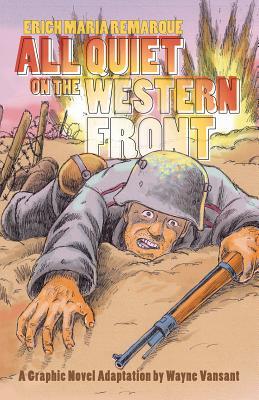
This is a graphic novel remake of the classic All Quiet on the Western Front and it packs as much punch as the original.
Paul Bäumer and his classmates are encouraged to join the German army in WWI by an enthusiastic professor. What they find is not the heroic battlefields of the classical texts they’ve studied, but one nightmare after another.
“We plunge again into the horror, powerless, madly savage, and raging; we will kill, for they are still our mortal enemies, their rifles and bombs are aimed against us, and if we don’t destroy them they will destroy us.” pg 68
As his friends slowly die and he takes an uncomfortable leave home, Paul comes to realize that there will be no end to this war for him.
“He fell in October 1918, on a day that was so quiet and still on the whole front, that the army report confined itself to the single sentence: All quiet on the western front.” pg 170
This book is an interpretation of war that was banned and burned in Erich Maria Remarque’s home country of Germany. To go to war, it seems that the world has to sanitize it and completely demonize the other side, otherwise, we would never do it.
All Quiet on the Western Front refuses to look away from the humanity on both sides of the conflict. It is tough to read, and kicks you in the feels. But, in my mind, that’s what makes it so great.
Though it is fictional, it is the story of a generation of young men who were shipped off to war and never came home again. And, if by some miracle they did, they’re forever haunted by the sound of a train car because it reminded them of the sound of falling bombs. When they picked up a book that they used to love, it didn’t ignite their souls in the same way, because they’d seen the worst that life can offer. War kills more than the ones who end up dead on the battlefield.
This graphic novel version of All Quiet on the Western Front should appeal to reluctant readers. Though it is about a very serious and triggering topic, the artwork is done tastefully. I read the original All Quiet on the Western Front as a seventh grader, age 13. I think this book would be appropriate for children of that age and up.
I received a free advance reader copy of this book from the publisher. This quotations I cited in this review may vary in the final printed version.
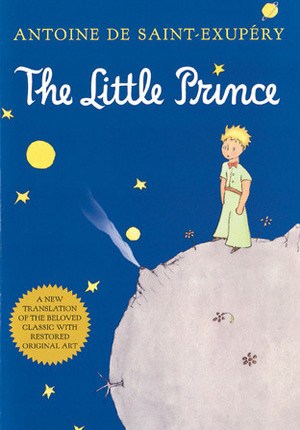
Similar to The Alchemist, The Little Prince is a metaphorical tale that people seem to love or not.
“In the face of an overpowering mystery, you don’t dare disobey. Absurd as it seemed, a thousand miles from all inhabited regions and in danger of death, I took a scrap of paper and a pen out of my pocket.” pg 4
A pilot crashes in the desert and discovers a child wandering around who claims to be from another planet. His planet is so small that the prince can see multiple sunsets by simply moving his chair. And there’s a rose with four thorns that the prince loves. But he left this planet because of a disagreement with the rose. After a series of adventures where he meets dysfunctional adults on other planets, sees that his rose isn’t the only rose in the universe and learns about love from a fox, the prince decides he wants to go back home.
How he’s going to do that is not really clear.
So that’s the literal story.
The allegorical part has to do with how differently children perceive life than adults, what love is or means and how growing up, change or death affects love… among other things.
Here is my secret. It’s quite simple: One sees clearly only with the heart. Anything essential is invisible to the eyes.” pg 63
I felt like there were layers to this story that I haven’t grasped yet. I suppose this could also be about a man contemplating his inner child. Then again, I suppose this story could be about a lot of things.
This was the first time I’ve ever read it and, to my amusement, when I checked it out from the library, my 12-year-old said she has already read it. I asked her what she thought of it and she just shrugged her shoulders. I liked it more than a simple shoulder shrug, but, in conclusion, I think there was stuff I was missing.
It’s the last day of 2017! As usual, this year I’ve enjoyed an eclectic mix of fiction and non-fiction.
I had a lot less time to read this year because of my full-time job, but I surprised myself with how many I was able to get through.
I’d like to take a moment to say thank you to all of my friends here on WordPress and Goodreads. Reading and reviewing wouldn’t be nearly as fun without all of you.
And without further ado, here’s my end-of-the-year book recommendations:
Most Depressing but Worth It: Night by Elie Wiesel (non-fiction) or Year of Wonders by Geraldine Brooks (fiction).
Book about books: Bizarre Books by Russell Ash, Brian Lake.
Classic I Should Have Read Before but Hadn’t: Animal Farm by George Orwell and Fahrenheit 451 by Ray Bradbury (read a bunch of classics this year, these were my top two).













 The Help Desk Book Blog