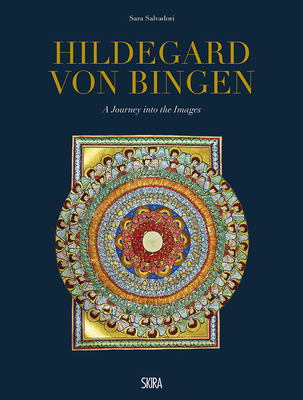
“What I do not see I do not know,” an elderly Hildegard wrote to the Cistercian monk Guibert of Gembloux, describing the visions from which she gained her knowledge of the cosmic, human and divine dimension, from childhood until the end of her life.” From the preface.
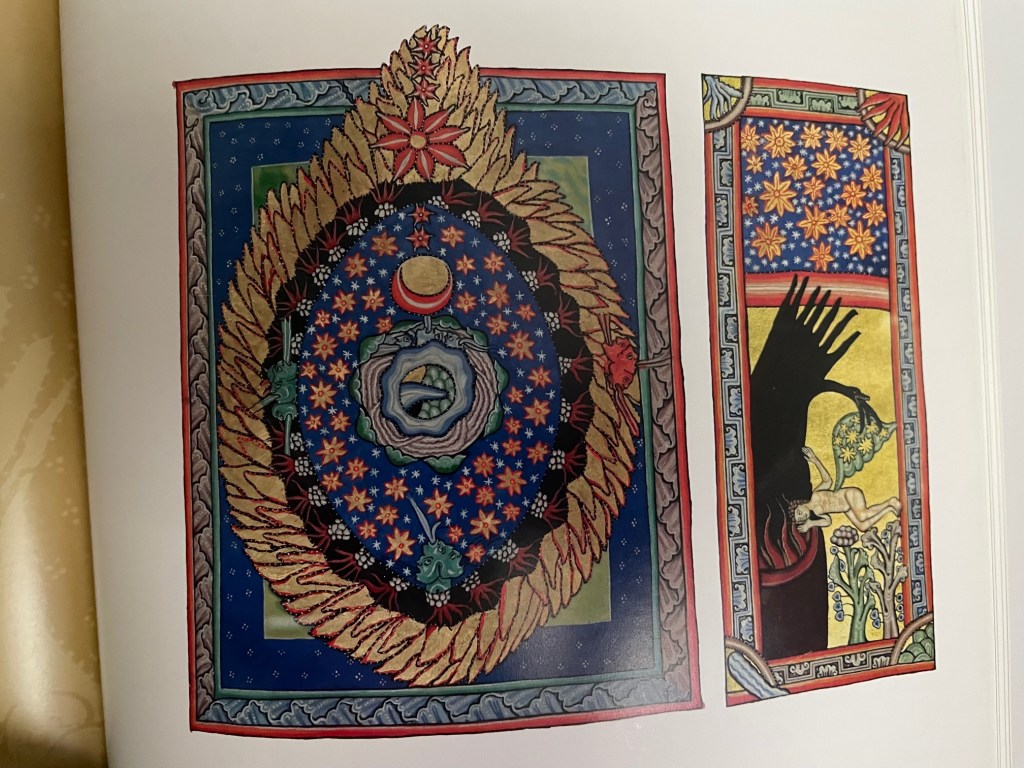
Hildegard von Bingen, born 1098-died 1179, was a female mystic of the Christian tradition. She had extraordinary visions, which she recorded, and in her later years, she shared with others.
“The ‘Sybil of the Rhine‘ appears to us in the 21st century as a real woman who developed the many aspects of her femininity: worldly and joyous, learned and visionary, profoundly human yet open to the divine, inclined to dance, friendship and leadership.” pg 6
But this is not all Hildegard accomplished. She also composed the music she heard in these visions. She traveled extensively at a time when travel was not a simple task in order to bring together communities of believers.
All in all, Hildegard was a pretty cool lady who experienced fairly trippy visions.
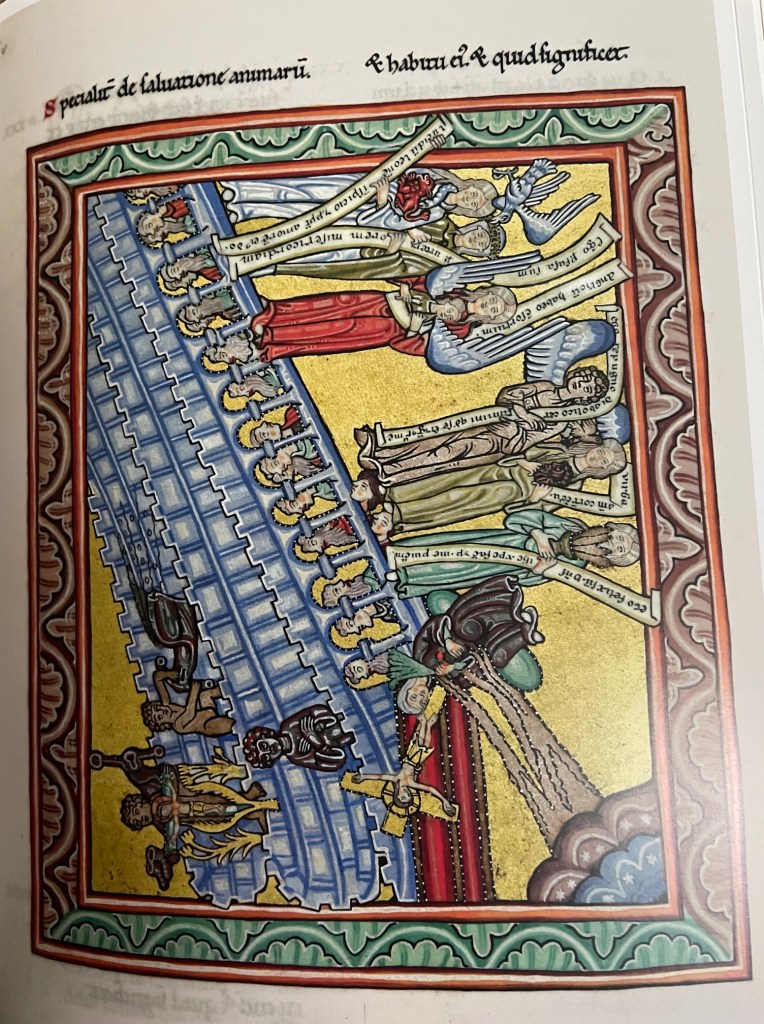
“Our historical human condition enables us to appreciate her fascinating, layered personality, which made her equally at home with plants and flowers, angelic powers and the virtues that courted them; and capable of dialoging with the powerful of the Earth both inside and outside the Church, without feeling in any way intimidated or inferior.” pg 7
The visions themselves are organized into sections. Hildegard gave each a title, summarized list of chapters, description, explanation and Biblical passages to go along with each. In a time when very few were literate, Hildegard’s illustrated visions were used as teaching tools, similar to medieval bestiaries. (Which I learned about here: Book of Beasts: The Bestiary in the Medieval World)
The colorful visions of Hildegard are meant to be experienced rather than enjoyed second-hand, so I won’t bore you with extensive descriptions about them. But I will share my impression of her work.
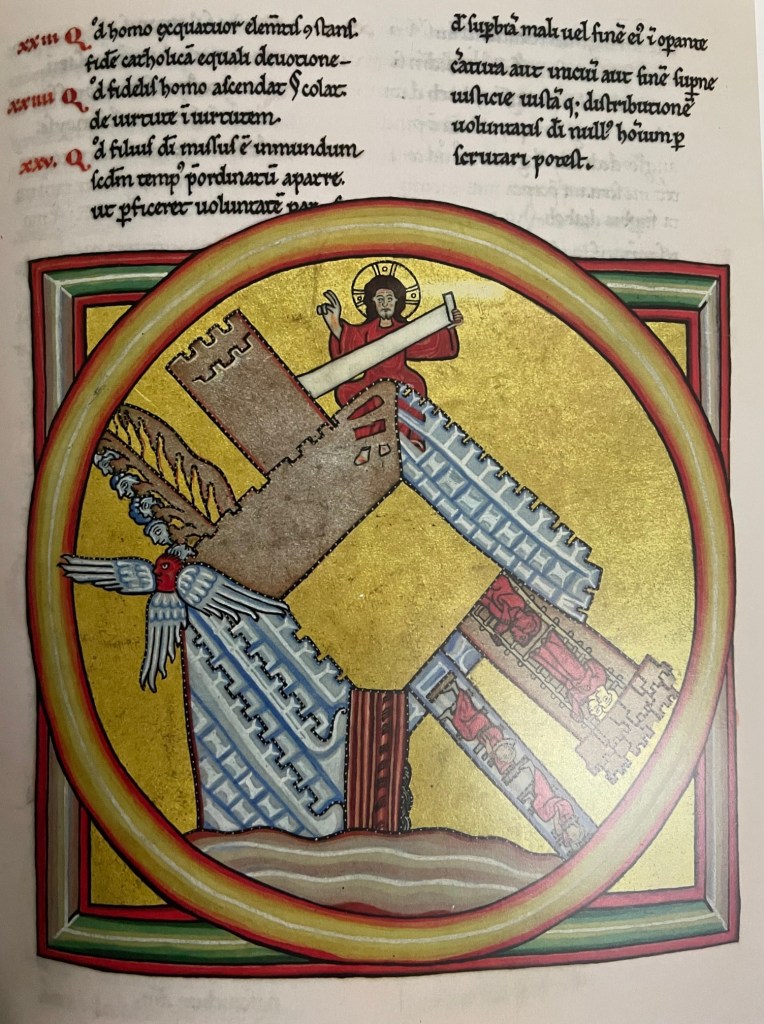
I found Hildegard to be transportive. I didn’t understand all of them, but the images speak to my subconscious mind through their beauty and repetitive patterns. “Look at the mystery of existence,” they seem to say.
I think its fascinating that Hildegard was a female mystic in a tradition where the divine feminine was relegated to a backseat role. (No offense meant to the tradition by the way, just an observation.) It makes me wonder where such mystics are today, if they exist.
And if they do, would we listen and learn from them like Hildegard? Or dismiss their experience as a brain malfunction and put them on medication.
Something to consider. Highly recommended for spiritual seekers.
Thanks for reading!
- The Ballad of a Small Player: a Metaphysical Movie Review
- Otherwhere: A Field Guide to Nonphysical Reality for the Out-Of-Body Traveler by Kurt Leland
- Psychic Dreamwalking: Explorations at the Edge of Self by Michelle Belanger
- Archetypes on the Tree of Life: The Tarot as Pathwork by Madonna Compton
- The Goddess and the Shaman: The Art & Science of Magical Healing by J.A. Kent



 The Help Desk Book Blog