The Only Girl in the World: A Memoir by Maude Julien

The Only Girl in the World: A Memoir by Maude Julien
onlygirl

The Only Girl in the World is an extraordinary memoir about madness, control and the survival of horrific childhood abuse.

Maude Julien’s father Louis chose his future wife and mother of his child, Jeannine, when she was only six and he was 34. He became Jeannine’s guardian by promising her family that he would provide her with a quality education.

Then: “Twenty-two years after he took possession of Jeannine, Louis Didier decided the time had come for her to bring his daughter into the world… Louis Didier liquidated his assets, bought a house near Cassel, between Lille and Dunkirk, and withdrew to live there… to devote himself entirely to carrying out the project he had devised back in 1936: to make his child a superhuman being. That child was me.” loc 73, ebook.

Unfortunately, to “make his child a superhuman” involved leaving her alone in a dark, rat-infested basement, sleeping in a room without heat, eating stale bread, practicing music for 12 or more hours a day and being entirely separated from any other children her age.

That’s where Maude got the title of this memoir: The Only Girl in the World

I have not read a childhood account this disturbing since A Child Called It by Dave Pelzer.

Maude’s father was unhinged. “My father is convinced that the mind can achieve anything. Absolutely anything: it can overcome every danger and conquer every obstacle. But to do this requires long, rigorous training away from the impurities of this dirty world.” loc 247, ebook.
Photo by Marcelo Jaboo on Pexels.com

He asks Maude to do things he cannot do like perform somersaults or swim in freezing water. He shows no affection to either his child or his wife.

Louis makes the females of the house wait on him as if he is an invalid. He makes his child hold a chamber pot each morning while he empties his bladder.

He’s a controlling monster.

Louis has strange beliefs about water and soap removing the body’s immunities so he insists that Maude only bathes once a week or less. And, when she is finally given the opportunity to bathe, she must use his dirty bathwater to “take strength from him.”

Photo by Sora Shimazaki on Pexels.com

And she can’t count on protection from her mother, who was groomed by Louis to do anything he asks of her. Jeannine actually blames Maude for Louis taking them to live in the middle of nowhere. It is very sad.

Maude’s only friends are her pets, whom her father abuses as much as he hurts Maude. “Can an animal teach a person about happiness? In the depth of my despair, I am fortunate to have this incredible source of joy.” loc 685, ebook.

Even worse, Maude is abused by the few adults Louis allows in their lives. (Trigger warnings for those who were sexually or physically abused as children.)

Though incredibly disturbing, The Only Girl in the World is ultimately a story of survival against all odds. The human spirit is incredibly resilient as Maude’s tale illustrates.

Photo by Pixabay on Pexels.com

Perhaps she is more superhuman than even she realizes. Highly recommended.

Thank you to NetGalley for a free digital copy of this book.

Thank you for reading!

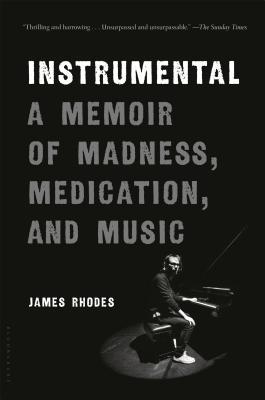
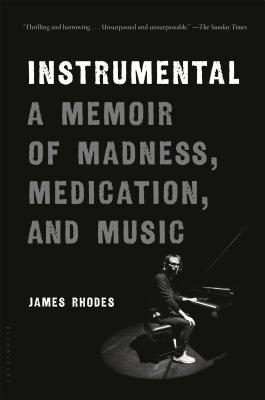
Instrumental: A Memoir of Madness, Medication, and Music by James Rhodes

Instrumental: A Memoir of Madness, Medication, and Music by James Rhodes
instrumental

This is a shocking memoir about the horrific sexual abuse that James suffered as a child and how music saved him. It is raw, ragged and real.

The author is frank about describing what happened, how his life fell apart, and how he was able to finally begin putting it back together.

Not a book for the faint of heart, Instrumental makes the reader wonder why we’re all here and what might the purpose of suffering serve in the grand scheme of things. I don’t pretend to know the answers to these questions, but James has given us a powerhouse of a book and a place to start.

I am also a classically trained pianist but you don’t have to be one to appreciate Instrumental: “… the unassailable fact is that music has, quite literally, saved my life and, I believe, the lives of countless others. It provides company when there is none, understanding where there is confusion, comfort where there is distress, and sheer, unpolluted energy where there is a hollow shell of brokenness and fatigue.” loc 51, ebook.

James gives a poignant warning to readers: “…this book is likely to trigger you hugely if you’ve experienced sexual abuse, self-harm, psychiatric institutionalisation, getting high or suicidal ideation.” loc 112. So, friends, be aware before you pick this one up.

James has a child with his first wife and he adores the boy, only asking him to do what makes him happy.

Though James thinks he’s a poor father, he’s offering the child more than some people are able to manage, even coming from a stable and emotionally healthy place: “I want him to know the secret of happiness. It is so simple that it seems to have eluded many people. The trick is to do whatever you want to do that makes you happy, as long as you’re not hurting those around you. Not to do what you think you should be doing. Nor what you think other people believe you should be doing. But simply to act in a way that brings you immense joy.” loc 986.

Photo by uncoveredlens on Pexels.com

How wise is that.

James introduces each chapter with a suggested classical music track to listen to as you read as well as some juicy tidbits about the musicians who wrote the pieces: “Beethoven… was clumsy, badly coordinated, couldn’t dance, cut himself while shaving. … Schubert, nicknamed ‘Little Mushroom’ on account of his being 5 foot nothing and violently ugly, was spectacularly unsuccessful with girls and, on one of the very rare occasions he did manage to score, he caught syphilis. … From Schumann (who died alone and miserable in a mental asylum) to Ravel (whose experiences driving trucks and ambulances in the First World War changed him forever), the great composers were basket-case geniuses…” locs 2040-2058, ebook.

He reminds us that these men we’ve set on a pedestal because of the art they produced were nothing but human with all of the failings that people have today. James makes classical music and musicians interesting to the average person. It’s a gift and one that the genre really needed to bring a new generation into the fold. This book really made me wish that I could see James Rhodes in concert. I think I would love it.

Recommended for the music enthusiast and survivors of childhood abuse, anxiety, addictions, and cutting. Some similar reads: I’m Just a Person, My Booky Wook, or Kasher in the Rye: The True Tale of a White Boy from Oakland Who Became a Drug Addict, Criminal, Mental Patient, and Then Turned 16.

Thank you to NetGalley and Bloomsbury USA for a free digital copy of this book. Thank you for reading.