I’m Just a Person by Tig Notaro

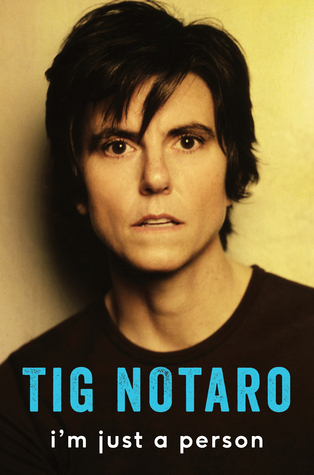
I’m Just a Person by Tig Notaro
imjustaperson

Tig Notaro is a survivor. Her dry humor shines through these pages as she tells her life story: multiple brushes with death, romantic relationships, and snapshots of her childhood, parents, and thought processes.

She shows us that she’s “just a person”, yes, but also how extraordinary an ordinary person can be when presented with nearly insurmountable difficulties like dropping out of school at an early age, having a biological father who was never present and a stepfather who was never available emotionally, a mother who was so immature that Tig practically raised herself, not to mention all of the health problems that came later.

I picked up this book because I was enamored of Tig’s stand-up routines. This book has their flavor but far more detail than her act- if you’ve enjoyed her comedy, you’ll probably like this too.

I loved reading about how Tig found her calling and her people: “I began to refer to the comedy scene as “the land of misfit toys.” It was comforting to be surrounded by people who didn’t fit into the confines of society, and it was the first time in my life that I wasn’t met with the boring conversation stopper: “Oh my God, you’re so weird.” pg 47

This part cracked me up- Tig’s discovered lumps in her breasts but she doesn’t think they’re anything to be concerned about. Her girlfriend disagreed: “Instead of making a doctor’s appointment, I spent the next couple months teasing Brooke by removing my shirt and saying, “Hey, wanna touch my cancer?” It was really fun to walk past her holding my chest and blurting out, “Ow! My cancer!” pg 109-110.

I thought that the chapter in which Tig talks about her biological father, Pat, was particularly well-written. She takes complex emotional pain and makes it into something beautiful: “He was obviously still in pain over the loss of my mother and the news of my health, but I knew that this grief could not kindle any real kind of familial bond between us. I guess I believed there was something inherently broken in Pat’s relationship with me and my brother. Maybe we had all missed some ambiguous window of time when we could have salvaged some hope for a real connection. I am certain, however, that we have the same feelings: I want everything to be okay for him and he wants everything to be okay for me.” pg 205

That is Tig’s strength- her ability to take the worst in life and wring not just humor but meaning out of it. Some similar reads: Sleepwalk With Me and Other Painfully True Stories, Shrinkage: Manhood, Marriage, and the Tumor That Tried to Kill Me, or A Girl Named Zippy.

Thanks for reading!

When Breath Becomes Air by Paul Kalanithi

When Breath Becomes Air by Paul Kalanithi
whenbreath

This is Paul Kalanithi’s life story. He relates how he got into neuroscience, his exhausting and life consuming training, his illness, and his eventual transition out of this world into the next.

At first, Paul didn’t even want to become a surgeon because his own father was one and he saw how hard it was to balance work and family: “When we did see him, late at night or on weekends, he was an amalgam of sweet affections and austere diktats, hugs and kisses mixed with stony pronouncements … He had reached some compromise in his mind that fatherhood could be distilled; short, concentrated (but sincere) bursts of high intensity could equal.. whatever it was that other fathers did. All I knew was, if that was the price of medicine, it was simply too high.” pgs 24-25, ebook.

But, even though he started out as an English major, Paul’s own interests led him towards the profession. He was passionate about medicine and making the best decisions for patients. He was interested in what makes life worth living and how the brain’s functions effect quality of life.

kalanithi.interior-ata-photo---suszi-lurie-mcfadden
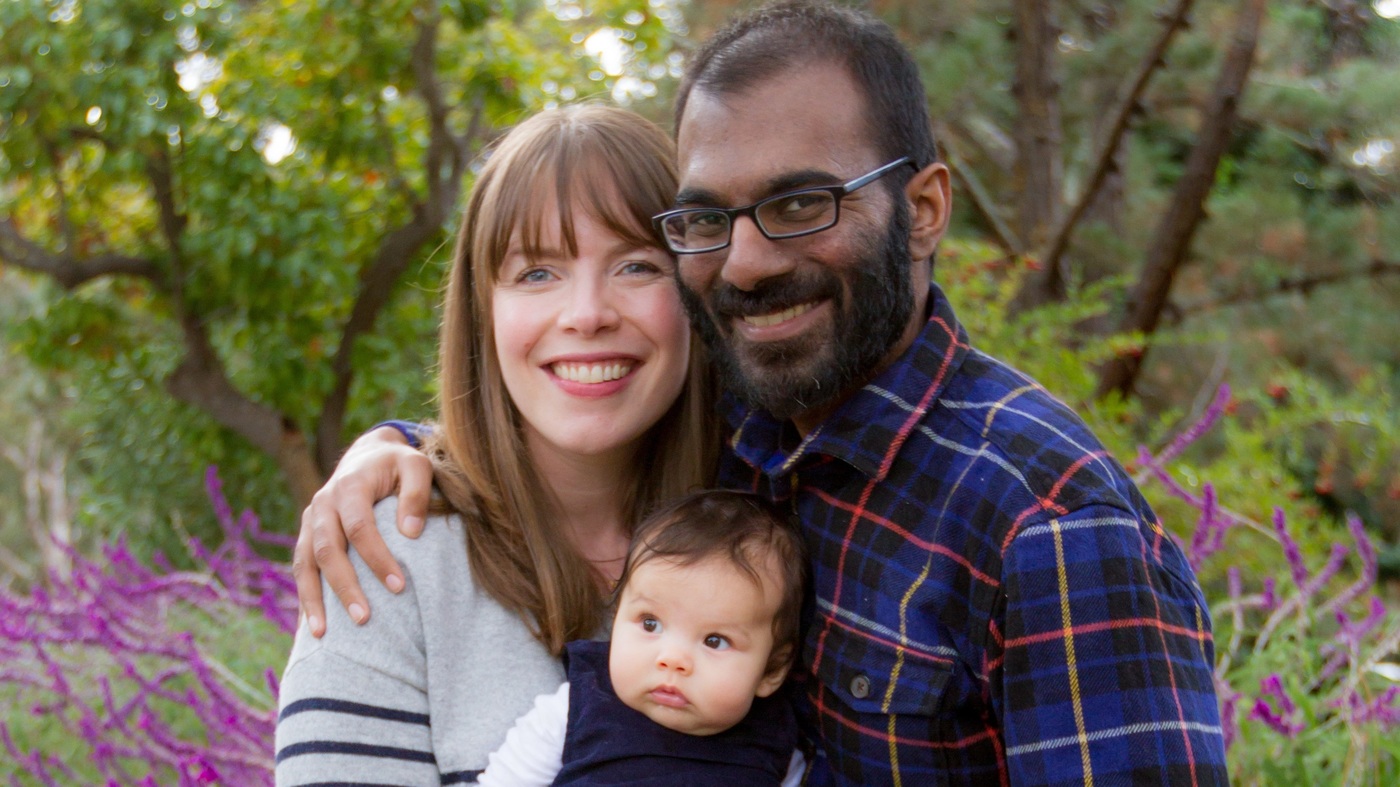
Dr. Lucy Kalanithi and Dr. Paul Kalanithi with their daughter, Elizabeth Acadia.

This is what he had to say after a sobering visit to a home for people who had suffered severe brain injuries as children: “Only later would I realize that our trip had added a new dimension to my understanding of the fact that brains give rise to our ability to form relationships and make life meaningful. Sometimes, they break.” pg 34

It was really difficult for me, personally, to read the parts of this memoir that dealt with Paul learning how to make life and death decisions for ailing patients. He talks in depth about taking people off of life support because they didn’t want their bodies to be kept alive while their brains were gone. I was reminded of how my grandfather, though he never suffered any debilitating brain injury, was kept alive through endless medicines and machines to reduce the water around his heart. He eventually refused to eat and refused a feeding tube, so he slowly withered away.. this from a man who lived for eating and described the joys of consuming a fresh peach in summer as one of his favorite memories. It was heartbreaking.

In this passage, one of Paul’s professors is talking about the same type of situation with his own grandma: “But “what was most evident,” he continued, “was the slow drawing away from life… By the time Bubbeh stopped praying, she had stopped virtually everything else as well.” pg 41 ebook. Eating was my grandpa’s form of prayer. So, you may want to avoid this memoir if you have any fresh grief that you’re dealing with, as this book brings it all bubbling to the surface.

kalanithi3

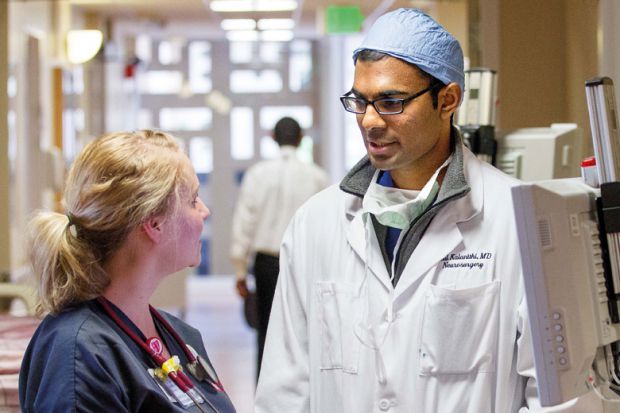
Photo from timeshighereducation.com

Paul studies so hard to become a doctor to learn the secrets of life and death. But, he begins to realize, that as a doctor, he’ll constantly deal with these moments but never truly understand them: “I began to suspect that being so close to the fiery light of such moments only blinded me to their nature, like trying to learn astronomy by staring directly at the sun. I was not yet with patients in their pivotal moments, I was merely at those pivotal moments.” pg 56

Then, he has his own illness and realizes that, even though he’s seen death and suffering, he really knew nothing about it: “It occurred to me that my relationship with statistics changed as soon as I became one.” pg 82. The rest of the book is so very sad, but one thing is clear, Paul Kalanithi finally found the moment when breath becomes air, what he had been searching for his whole life.

Neurosurgeons write really fine memoirs. At least, that’s been the case for nearly every one I’ve come across.

Some read alikes, if you’re interested: A Thousand Naked Strangers: A Paramedic’s Wild Ride to the Edge and Back by Kevin Hazzard (not a neurosurgeon, but Kevin talks about the burnout that comes in the medical community), Medicine, Miracles, and Manifestations: A Doctor’s Journey Through the Worlds of Divine Intervention, Near-death Experiences, and Universal Energy by John L. Turner (neurosurgeon), Into the Magic Shop: A Neurosurgeon’s Quest to Discover the Mysteries of the Brain and the Secrets of the Heart by James R. Doty (neurosurgeon), or Proof of Heaven: A Neurosurgeon’s Journey into the Afterlife by Eben Alexander.

Thanks for reading!