The Chinatown War: Chinese Los Angeles and the Massacre of 1871 by Scott Zesch

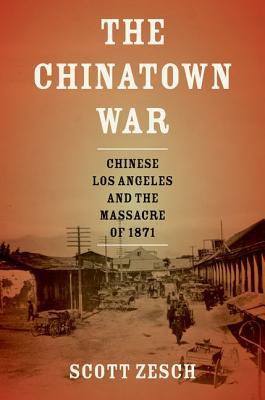
The Chinatown War: Chinese Los Angeles and the Massacre of 1871 by Scott Zesch

The Chinatown War is an outstanding examination of a little remembered event in Los Angeles history. One terrible night in 1871, racial tension boiled over in what was later labeled “the Chinese Massacre” and what the people of Los Angeles at the time called “Black Tuesday” or “the night of horrors”.

Scholars can’t even agree on how many people were murdered that night in October 1871. Scott Zesch, the author of The Chinatown War, believes it was around 18.

“Most Angelenos do not even know what happened that night, for the city’s fathers decided to put the incident behind them shortly after it occurred, and the victims were not people of consequence. They were ordinary immigrants whose American dream ended in a nightmare.” prologue

Photo by Roberto Nickson on Pexels.com

Public opinion was driven by resentment and distrust of Chinese immigrants. While often portrayed as a working class complaint over jobs, the hatred towards the Chinese was a thinly veiled racism against a people who were hated largely because their ways and culture were different.

“Contrary to popular belief, the earliest Chinese immigrants to America did not come to build the transcontinental railroad in the 1860s. Instead, it was the California Gold Rush of 1849 that brought the first large wave of Chinese to the West Coast.” pg 6

I learned so much from this book.

For example, Chinese immigrants in Los Angeles were often members of social groups called huiguan – commonly called “companies” in the newspapers of the time, although that translation is not exactly correct. Huiguan were social groups formed to help Chinese immigrants in their new lives in America. Members would sign up for the huiguan based on the location they immigrated from in China.

Also, though it is now one of the most populous cities in the U.S., in 1871 Los Angeles only had a population of around 6,000 people. Unfortunately, this massacre is one of the events that brought Los Angeles to the attention of the rest of the world.

“One of the city’s early historians, Charles Dwight Willard, characterized Los Angeles as ‘undoubtedly the toughest town of the entire nation’ during the 1850s and 1860s. He claimed that it had a larger percentage of miscreants than any other American city and, for its size, also had the highest number of fights, murders, and robberies.” pg 23

Photo by Pixabay on Pexels.com

Policing this rough and tumble western town wasn’t easy. This was compounded by the fact that the police department was too small.

Los Angeles’s early police department was too small, and was staffed by men too inexperienced or indifferent to their responsibilities, to be very effective in keeping order.” pg 53

The riot itself is difficult to read about, even now that nearly 150 years have passed since that night. Innocent people were dragged from their homes, brutalized and murdered.

“One eyewitness reported that the ‘stark, staring corpses hung ghastly in the moonlight,’ while ‘others, mutilated, torn and crushed, lay in our streets.'” pg 150

Not all of the citizens of Los Angeles participated in the massacre. Some tried to shame the mob into stopping or hid the terrified Chinese in their own homes to protect them.

“Baldwin quickly realized that the crowd’s sentiment was very much against him. As he said later, ‘I might as well have spoken to a cyclone.'” pg 145

Photo by Megan Markham on Pexels.com

A man named William H. Gray concealed several people in his home. In the years following the massacre, he received anonymous gifts in thanks for his actions that night.

Zesch examines the whole incident from the beginning to the trials following and how it affected (or didn’t) Los Angeles afterwards. His research and scholarship really is astonishing. He gives context and history not only of the city but also of the Chinese immigrant community at that time.

Highly recommended for anyone who wants to learn about an event in Los Angeles history that should never be forgotten.

Thanks for reading!

Here’s the History Guy episode I wrote about this event:

I’ll Be Gone in the Dark: One Woman’s Obsessive Search for the Golden State Killer by Michelle McNamara

I’ll Be Gone in the Dark: One Woman’s Obsessive Search for the Golden State Killer by Michelle McNamara

Michelle McNamara was obsessed with the subject of this book. She believed that by using modern technology, a rapist and killer could finally be brought to justice.

She created maps and chased leads. She ran a true crime blog and this was one of her topics.

It haunted her. Then, tragically, Michelle died before this masterwork could be completed.

Her fellow researchers put I’ll Be Gone in the Dark together from her notes. It is a chilling but thorough portrait of the perpetrator of a series of unsolved crimes.

Photo by Donald Tong on Pexels.com

It also includes some autobiographical chapters to explain Michelle’s obsession with the man she named, “The Golden State Killer,” but also why she loves writing.

She writes about why she couldn’t stop researching and examines her complicated relationship with her mother: “No one would have taken more joy from this book than my mother. And I probably wouldn’t have felt the freedom to write it until she was gone.” pg 41

It is an amazing book. And, I believe, it has enough details that, if someone who reads this book knew that guy, he will be brought to justice at last.

He pointed a knife at her and issued a chilling warning: “Make one move and you’ll be silent forever and I’ll be gone in the dark.” pg 61

Gillian Flynn writes a stellar introduction: “I’ve always thought the least appreciated aspect of a great true crime writer is humanity. Michelle McNamara had an uncanny ability to get into the minds of not just killers but the cops who hunted them, the victims they destroyed, and trail of grieving relatives left behind.”Introduction.

Photo by kat wilcox on Pexels.com

This killer, whoever he is, is terrifying not only for the carnage he left, but the meticulous way he planned and carried out the murders.

He was organized and unhinged, as compared to other murderers whose passion and disorganization are their downfall: “It’s a tiny minority of criminals, maybe 5 percent, who present the bigger challenge- the ones whose crimes reveal pre-planning and unremorseful rage.” pg 14

I read this book in one sitting. It is that compelling.

But I paid for it during the night. Each creak, any small sound in the house and my heart would leap into my throat.

“He’s here,” my over-active imagination declared. “This is the end.”

Photo by KoolShooters on Pexels.com

It made it all too easy to understand the terror the murderer inflicted on his victims and the community he plagued. Multiple states away and decades removed from the crimes and I was petrified as well.

Recommended for brave readers, fans of true crime and anyone who wants to help solve an unsolved mystery.

Thanks for reading!

UPDATE: About a month after I wrote this book review, a man was arrested under suspicion of being the ‘Golden State Killer’.

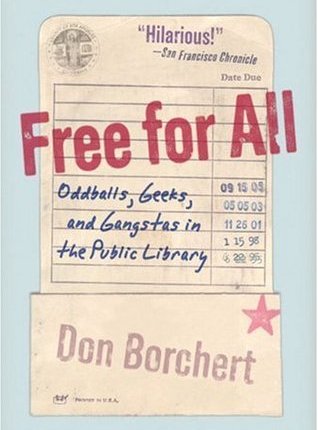
Free for All: Oddballs, Geeks, and Gangstas in the Public Library by Don Borchert

Free for All: Oddballs, Geeks, and Gangstas in the Public Library by Don Borchert

Free for All is an accurate depiction of life as a librarian in a public library.

Sometimes, the job is funny. Other times, it’s incredibly sad. If you’ve never worked in a library system, this book will reveal some of the secrets of a librarian’s day-to-day life.

Photo by Pixabay on Pexels.com

Before I worked at a public library, I thought it was a quiet, organized mecca for students and bookworms. Now, that I’ve spent some time on the librarian-side of the desk, I know better. My idea of a library was far too simple.

It is a study hall, archive, playroom, home for the homeless, kitchen, bank, movie theater, video game store, newspaper kiosk and so much more. I guess the appropriate question is: what doesn’t a library do?

And a public librarian is so much more than just a librarian. She is a counselor, a computer wizard, a curator of excellent and free entertainment.

She talks to the lonely, uplifts the lost and helps the public navigate the dangerous waters of the internet.

Librarians are my heroes.

Photo by Element5 Digital on Pexels.com

If I ever cease writing for a living, look for me at the library. Odds are, I’ll end up back there.

Perhaps some of the policies at Don Borchert’s library have changed, but at the time that he wrote this book, they charged 50 cents to put a hold in for a patron. This policy shocked me, as my library always offered that service for free.

Borchert cheerfully documents the difficulties with summer reading people vs the school year regulars. It’s a real problem.

If Borchert’s book is too edgy for you- he uses rough language and doesn’t hold back on some of his opinions- read Gina Sheridan’s I Work at a Public Library: A Collection of Crazy Stories from the Stacks.

Both are excellent and realistic non-fiction books about the trials, tribulations, and, sometimes, life-enhancing satisfaction of working at the library.

Thanks for reading!

Dying to Wake Up: A Doctor’s Voyage into the Afterlife and the Wisdom He Brought Back by Rajiv Parti

Dying to Wake Up: A Doctor’s Voyage into the Afterlife and the Wisdom He Brought Back by Rajiv Parti

Rajiv Parti was living a materialistic dream with the house, car, and beautiful wife to prove it. But, the many things in his life didn’t bring him comfort when he developed prostate cancer and a bunch of unfortunate side effects from the surgery to remove it.

Photo by PixaSquare on Pexels.com

Addicted to pain pills and disconnected from the people around him, Dr. Parti underwent emergency surgery and experienced something so incredible, that when he woke up, he completely changed his life, developed a new form of holistic health treatment, and gave up many of the possessions that were weighing him down.

This is the memoir about that experience and Dr. Parti shares it in the hopes that it will change the reader’s life or at least bring comfort to those who are struggling in their current life experience.

Like many of the other memoirs I’ve read by medical professionals, Dr. Parti talks about the completely scientific view he had of the soul, which is to say, if you couldn’t see it and measure it, then it doesn’t exist.

Also, working on the technological edge of medical breakthroughs in the treatment of various diseases, had given him an invincible feeling.

This experience blew that attitude away: “Feeling like a master of the universe is easy in the world of modern medicine. … Maybe it’s a sense of cheating death for others that gives us cardiac surgical teams the vague feeling that we can overcome our own death. Of course that isn’t true. … Reality popped that myth for me.” pg 10

Photo by Kevin Menajang on Pexels.com

In his near death experience, Dr. Parti not only encountered his father, but also a huge crowd of his ancestors.

They shared messages of forgiveness and love: “Love is the most important thing there is, my grandfather communicated to me. I am glad to let you know that simple truth while you can still make change in your earthly life.” pg 44

But his time on the other side wasn’t all light and love, Dr. Parti also had the (fairly rare) experience of seeing hell and the suffering souls within it.

This is entirely my opinion, but I think that the detached manner in which Dr. Parti was living his life brought forth a major wake-up call from the spirit world. He saw hell first and then heaven and, in a way, that could be a metaphor for his life experience.

Photo by Skitterphoto on Pexels.com

I don’t believe in “hell” myself other than the nightmare that people can create in their own minds and lives, but, I didn’t experience it like Dr. Parti did. This memoir does not focus on the hell portion of the narrative, but, with the rarity of that experience, it could have. That, in itself, says something.

When Dr. Parti “comes back”, he knows that he wants to start a new life and a new focus, but he doesn’t know how.

The information for developing a new type of medicine comes to him slowly during meditation: “What is (the new mode of healing) anyway?” “…It is how nonpharmacological treatments in combination with drugs can heal things like depression and addiction and other diseases. It’s about searching one’s own soul to fight back against the hollowness that pharmaceuticals alone or alcohol and illegal drugs create or don’t really fill.”pg 91.

He eventually develops meditations and lifestyle changes as well as a manifesto for treatment.

To me, the most fascinating part of this memoir was the communication between himself and the spirit world once he was back.

For readers who are unfamiliar with near death experiences, Dr. Parti provides a broad background with some of the major historical figures who went through it.

Like Jung: “(Carl) Jung’s NDE led to a split with Sigmund Freud, who believed that spiritual experiences were fantasies. Jung, however, considered spirituality an important part of our well-being saying that life has purpose beyond material goals and that our main task, the path we should all be on, is the one that leads to our own connection with the universe.” pg 124

Photo by Cliford Mervil on Pexels.com

Ultimately uplifting and empowering, Dying to Wake Up is another excellent entry into the literature about near death experiences.

Recommended for anyone who questions why we are here or what comes after. Some further reading: Into the Magic Shop: A Neurosurgeon’s Quest to Discover the Mysteries of the Brain and the Secrets of the Heart, Dying to Be Me: My Journey from Cancer, to Near Death, to True Healing, or Wisdom of Near-Death Experiences

Thanks for reading!