Purple Cow: Transform Your Business by Being Remarkable by Seth Godin

Purple Cow: Transform Your Business by Being Remarkable by Seth Godin

The world has changed. There are far more choices, but there is less and less time to sort them out.” pg 13

Seth Godin, prolific author of business blogs and books, shares his insights about why a product must be remarkable to cut through the noise and get an audience’s attention. He opines that this remarkable “Purple Cow” quality is the only way a business can succeed in the modern world, as the old methods of mass marketing through expensive television ads is going the way of the dodo.

Photo by Jan Koetsier on Pexels.com

“Something remarkable is worth talking about. Worth noticing. Exceptional. New. Interesting. It’s a Purple Cow. Boring stuff is invisible. It’s a brown cow.” pg 3

The trouble with this remarkable stuff is that there is no clear method to create it. It is a “I’ll-know-it-when-I-see-it” type situation. For businesses looking to up their Purple Cow-factor, there are very few directions in this book, other than, it’s important to be a purple cow. I could see that unclear quality being frustrating for some readers.

“The old rule was this: Create safe, ordinary products and combine them with great marketing. The new rule is: Create remarkable products that the right people seek out.” pg 21

The “right people” being the influencers or the early adoptors of whatever type of product it is that you’re selling. Marketing to the niche, rather than mass marketing to the crowd, is, according to Godin, the best strategy for the new world of marketing.

Photo by Mike Chai on Pexels.com

Take Goodreads, for example. Publishers want to get their advance reader copies into the hands of those who talk to their friends about what they’re reading and are passionate about books, the readers who exhibit “otaku”. Godin defines “otaku”: “Otaku describes something that’s more than a hobby but a little less than an obsession.” pg 94

The obsessed, passionate readers talk about what they’re reading to the extent that they start an “ideavirus”, which Godin talks about in another book. In this way, Godin says, you build momentum for whatever remarkable product you’re selling. They can’t help but talk about it because of its fascinating qualities. As this movement builds, the books end up on readers’ favorite shelves, eventually becomes a Reader’s Choice pick, and then the book sells itself.

The products that aim for the largest audience are bland and have had their remarkable edges filed off. And, that’s bad, according to Godin.

“The system is pretty simple: Go for the edges. Challenge yourself and your team to describe what those edges are (not that you’d actually go there), and then test which edge is most likely to deliver the marketing and financial results you seek.” pg 101

Photo by Christina Morillo on Pexels.com

There are definitely dated portions of this book and, as I said, it is nebulous. To get meaning out of it, readers need to distill the underlying ideas and apply them to your unique business. But, I still learned things.

The reason I read Godin is he encourages readers to think differently. He gets my creative circuits firing. I like that.

Recommended for readers who may need a creative jump-start for whatever remarkable product they’re creating. This book isn’t a road map, but it could be a compass.

Thanks for reading!

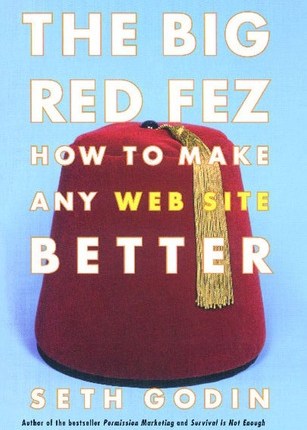
The Big Red Fez: How To Make Any Web Site Better by Seth Godin

The Big Red Fez: How To Make Any Web Site Better by Seth Godin

The premise of Seth Godin’s non-fiction book about how to improve business websites is this: imagine consumers as a monkey in a big red fez looking for a banana, i.e., whatever it is you’re selling or promoting. You want whatever the “banana” is to be as big and bright as possible because if the consumer can’t find it, like right now, they’re going to go somewhere else.

“Some people might object to the characterization of web surfers as monkeys. After all, they say, we’re smarter than that. No, actually, we’re not. We’re not smart because we’re busy, or we’re distracted, or we’ve never been to a particular site before and and we’re not mind readers.” pg 8

Photo by Junior Teixeira on Pexels.com

Yes, the specific information about how to lay out your website is outdated. (The examples he uses for newsletters are too.) But, if you take his general business advice and apply it in broad strokes to your blog or social media accounts, it is still incredibly useful.

For example, I don’t answer all of the messages my business account receives on its Facebook page because we get too many. I had a generic robot response set up that said something like “thank you for your interest, we can’t get back to you right now”. Godin pointed out that most websites lose an opportunity to further connect with the consumer by not utilizing the “thank you” portion of the interaction. The consumer has already reached out to you through a sale, or in this case, a message. Why not direct them back to other items or services your business sells when replying?

As I said, he was applying this idea to the sales portion of a website, but I started thinking about other potential applications and realized that I was missing a golden opportunity to share further information about our business.

I now use the automated message response to thank the person for contacting us AND providing the links to our YouTube page and Patreon account. I may have never come to the realization — that the person reaching out to the business wants more than just a thank you note — if Godin hadn’t pointed it out. Thanks Seth!

He also had some interesting ideas about what kinds of things to post on your website/social media accounts. Sometimes, he asserts, you just need to strike up a conversation.

“The biggest win you can create when you interact with a customer is actually not closing a sale. The biggest win is getting someone to tell ten friends, who then come do business with you.” pg 75

Photo by Negative Space on Pexels.com

Good business is about how valued you make the consumers feel. Make the interactions about them and their needs.

Don’t read this book if you’re actually interested in website design. I’m afraid you’ll be sorely disappointed.

Do read this book if you’re interested in general business principles that you can apply to your digital interactions. I’ve generated a half dozen different ideas on how to improve my online business presence, all thanks to The Big Red Fez.

Thanks for reading!

Get Up!: The Dire Health Consequences of Sitting and What We Can Do About It by James A. Levine

Get Up!: The Dire Health Consequences of Sitting and What We Can Do About It by James A. Levine

James Levine shares the disastrous consequences of a sedentary lifestyle and has created a clarion call for the modern world.

“When you first contemplate a book about the harm of sitting, you may view it as absurd. How can chairs possibly kill anyone? … However, this book summarizes 40 years of science — the work of scores of scientists and physicians from around the world. The scientific conclusion is clear: Humans are not designed to sit all day long, from a physiological, medical, creative or psychological perspective.” pg 4

Photo by Andrew Neel on Pexels.com

This book scared me. Levine provides study after study proving his hypothesis and the results are shocking.

“From birth through death there is a predictable, programmed timetable of movement. We transition from the frenetic nature of childhood, to the organized movement of adulthood, through the stillness of aging.” pg 13

But don’t worry. The body and mind are more flexible than people realize.

“Because the brain is constantly adapting, it takes about three weeks for brain change to occur. A chairaholic can become a walker in three weeks. But watch out! A walker who begins to sit can just as easily become a chairaholic.” pg 46

Photo by Daniel Reche on Pexels.com

There are concrete steps you can take to incorporate more movement into your life. The first step is to realize there’s a problem.

Next, look for ways to increase your “NEAT” energy. NEAT stands for “non exercise activity thermogenesis”. Basically, it means, make an effort to move more during your every day routine — cleaning the house, running after the kids, walking the dog, etc.

That seems to be a key for kicking the sitting problem to the curb. In Levine’s studies of urban life compared to agriculture living, that was the difference he noted between the two populations. People living the agriculture lifestyle move all the time. The urban lifestyle… not so much.

“The differences were so large that it staggered us — when you live in an urban setting, even if you are lean, you move half as much as people living in agricultural regions. The decline in calorie burn with urbanization could entirely explain the obesity epidemic worldwide.” pg 60

Photo by Maria Orlova on Pexels.com

Fear not, urban dwellers. There are solutions to upping your NEAT energy, even if you are required to be at a desk for the majority of the day. One of these, that I invested in the moment I finished reading this book, is the desk treadmill. Another option is the standing desk.

Both of these tools help you move while still getting your job done.

This book contains more helpful suggestions than simply buying new lifestyle equipment. For example, Levine also suggests a leisurely walk after every meal.

“If people sit after a meal, their blood sugar peaks like a mountain for about two hours. If, however, people take a 15-minute walk at 1 mph after a meal, the mountains become safe, gentle, rolling hills. With a 1-mph walk after a meal, blood sugar peaks are halved.” pg 68

Photo by Daria Shevtsova on Pexels.com

I think I can manage that.

The line that firmly established Levine’s hypothesis in my mind is: “If you see a saber-toothed tiger charging toward you, you don’t fire off an email, you get up and run!” pg 81

It’s that simple. Humans did not evolve to live the way that we’re living. I’m taking steps to change that now. Who’s with me?

Thanks for reading!

Stepping Up: How Taking Responsibility Changes Everything by John Izzo

Stepping Up: How Taking Responsibility Changes Everything by John Izzo

“You know people who accept responsibility — aren’t they great to be around?” vii, from the forward.

The focus of this book is a worthy one. The author, John Izzo, provides many real life examples of people stepping up and doing the right thing and how it has helped their lives and businesses.

Photo by Matthias Zomer on Pexels.com

Unfortunately, it just reads like one cliché after another and I had a difficult time connecting with it.

Stepping up is seeing a need and deciding YOU are the right person to do something about it.” pg x.

I do agree that all of our power lies in ourselves. Blame doesn’t fix problems. Waiting for someone else to do it doesn’t do the trick either.

“The consequence of having a seismic shift towards victim thinking means more of us feel that the future is not in our hands but in the hands of forces outside ourselves. And since internal locus of control is positively correlated with happiness, success and initiative while external locus of control is related to anxiety and depression, it’s pretty clear that most organizations and society as a whole would be better off if more of us believed we could change things.” pg 21

Photo by Aleksandar Pasaric on Pexels.com

What it comes down to is understanding that at the end of the day, the only person you can entirely control is yourself.

“Beginning where you are and doing what you can with your unique set of skills is critical.” pg 80

What are some of the methods Izzo suggests for “stepping up”? He counsels focusing on what matters, challenging your internal assumptions and find one thing, anything, that you can do immediately to address how you may have contributed to the problem.

“Think about this for a moment: everything that has EVER been accomplished began with someone taking a single step.” pg 71

It’s common sense stuff. Which is fine, but not exactly what I was expecting from this one. I suppose I’ll take responsibility for my internal assumptions about what I would learn from Stepping Up. It’s not YOU, book, it’s me.

“But here is the truth. There is a 100 percent guarantee that nothing will change if you don’t step up.” pg 33

Photo by Andrea Piacquadio on Pexels.com

What is my solution to this problem? On to the next book, my friends.

“Once you step up, somehow that act of taking initiative drives you to find the resources you need inside and outside yourself.” pg 119

To the library! 🙂

Thanks for reading!

Wiser: Getting Beyond Groupthink to Make Groups Smarter by Cass R. Sunstein

Wiser: Getting Beyond Groupthink to Make Groups Smarter by Cass R. Sunstein

Authors Cass Sunstein and Reid Hastie examine many of the problems that beset groups and how to best address them for optimal group performance.

Written in a style that is more academic than approachable, Wiser uses the findings of multiple researchers to come to its conclusions. This book may be useful to managers who are desiring to set up a group at their own place of employment and want to start on the best foot.

“Do groups usually correct individual mistakes? Our simple answer is that they do not. … We also ask a second question: Can groups correct individual mistakes? Our simple answer is that they can. We aim to explain how.” pg 2

Photo by Canva Studio on Pexels.com

I picked this book up because, frankly, I wanted to know why anybody would utilize groups in a work setting. Every one that I have ever sat on has been either a disaster or inefficient. I was hoping Wiser would help me see the appeal that group-thinking seems to have for some.

And it did. But it also opened up my eyes to the myriad reasons why my experiences had been so bad. I had just assumed groups didn’t work. As it turns out, things are more complicated than that.

“The basic lesson is that people pay a lot of attention to what other group members say and do — and that they do not end up converging on the truth. In fact, they often ignore their own beliefs and say that they believe what other people believe.” pg 28

There can also be problems with authority figures in a group setting: “If the group contains one or more people who are known to be authorities or who otherwise command a lot of respect, then other group members are likely to silence themselves out of deference to the perceived or real authority.” pg 35.

I’ve seen that happen multiple times. The whole purpose of the group is thrown off. It has often frustrated me, leading me to think we may as well have saved our meeting time and had the boss issue a directive.

Photo by Andrea Piacquadio on Pexels.com

Groups also have to keep in mind the idea of “cascades” or ideas taking a hold early in the process and then taking over the rest of the group’s time: “For their part, many groups end up with a feeling of inevitability, thinking that they were bound to converge on what ultimately became their shared view. Beware of that feeling too, because it is often an illusion. The group’s conclusion might well be an accident of who spoke first…” pg 60

Groups can polarize themselves, driving their members to extremes they wouldn’t otherwise reach without members that think like them. To combat this, leaders should make sure groups are diverse.

In a perfect world, groups are equivalent to their best members, aggregate all of the information each individual brings to the table, utilizes experts properly and creates an almost mystical “synergy” where, as the authors say, “the whole is more than the sum of its parts.”

Photo by fauxels on Pexels.com

The trick is getting the group to work like that. As I said, I’ve never seen it. This book brings me hope that perhaps one day I will.

The failures of groups often have disastrous consequences — not just for group members, but for all those who are affected by those failures. The good news is that decades of empirical work, alongside recent innovations, offer a toolbox of practical safeguards, correctives, and enhancements. With a few identifiable steps, groups can get a lot wiser.” pg 214

Thanks for reading!

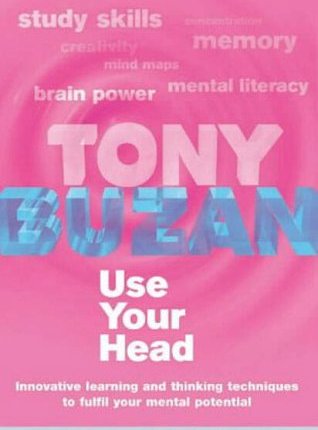
Use Your Head by Tony Buzan

Use Your Head by Tony Buzan

In “Use Your Head,” Tony Buzan teaches the reader strategies to utilize the infinite powers of your mind.

“I call it the ‘operations manual’ for your brain. It is designed to help you nurture your ‘super-biocomputer’ and unleash the natural and extraordinary range of mental skills that you possess.pg xii

Photo by Maria Orlova on Pexels.com

I’ve read a lot of non-fiction books about what the potentials of the mind and positive thinking are. This book gives more than just information about what could be, it shares tools for expanding your creative skills and organizing what goes in and comes out of our mind.

“No man yet exists or has existed who has even approached using his full brain. We accept no limitations on the power of the brain — it is limitless.” pg 24

Buzan shares the keys for maximizing your memory — imagination and association. By combining images with simple rhymes, he’s created a surprisingly easy way to remember lists and, potentially, large sections of information.

Photo by Pixabay on Pexels.com

I was intrigued by his method of organizing information and study materials with the use of “mind maps.” Basically, you start with a topic and draw branches coming out from this main theme, that relate to the information in some way. Continue to branch out, using colors and shapes to stimulate your brain while drawing conscious connections between the ideas on the paper.

It’s a fun little creative exercise, but also it helps you see associations you may not have considered before.

Personally, I do mounds of research on an almost daily basis and it helps to have a tool to organize the facts I come across. The mind map may be the most helpful tool in this book.

There’s a lot of self help advice in these pages too. It’s mainly common sense, but I found almost all of it useful as reminders of what is possible. For example, Buzan suggests considering your perspective before starting any program of study or problem solving.

Photo by Andrea Piacquadio on Pexels.com

“On average, people assume that there are theoretically infinite insoluble problems and only a relatively minor number of solutions. The fact is, every problem has a solution and there are no insoluble problems for a human brain that is properly trained, activated and aware of its creative functions.” pg 82

After a bit of research on the author, it seems Buzan is quite popular in Great Britain and has been for some time. Perhaps it’s time for the U.S. to jump on this train too.

Thanks for reading!

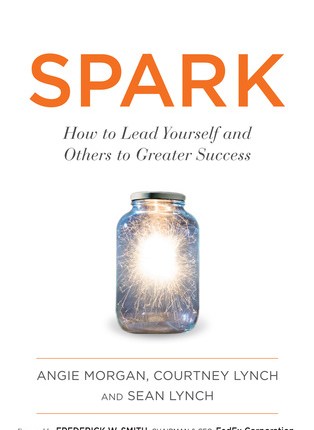
Spark: How to Lead Yourself and Others to Greater Success by Angie Morgan, Courtney Lynch, Sean Lynch

Spark: How to Lead Yourself and Others to Greater Success by Angie Morgan, Courtney Lynch, Sean Lynch

Spark is a manual to help an individual or a business develop leadership skills. The important attributes are outlined in each chapter with highlighted stories provided by the authors’ own life experiences. The salient points of the different topics are simply and clearly listed at the end of each chapter as well as further resources.

“Our society values leadership — craves it, for that matter. Yet we don’t teach it in formal education.” pg 9, ebook.

Photo by Sora Shimazaki on Pexels.com

The title itself “Spark” refers to those who know they carry the seeds of greatness within themselves and are willing to learn how to make those seeds bloom. As the authors are quick to point out, there are a lot of misconceptions about leadership.

One of them is that people are born leaders and only certain people can lead. They say, and I believe this too, that anyone can become anything they set their minds too. This book helps provide the necessary skills to make that process simpler.

“No one else can make or anoint you a leader. The only way to become a Spark is to make yourself into one.” pg 24, ebook

I thought it was an interesting that these skills are taught to our military personnel but are not stressed as much in the private sector. The main reason the authors started their leadership business was because they noticed leadership was required in business but no one was teaching it. I suppose that’s true, but I’d never considered it before because I had assumed that leaders were born that way.

“… invest the time in seeking to uncover your values, and you’ll be led to discover any misalignment between your expectations of yourself and your actions. The next step is having an honest conversation with yourself so that you not only understand where, when, and why you’ve compromised your values in the past but also recognize the changes you need to make to lead more consistently with your intentions.” pg 42, ebook

Photo by Cade Prior on Pexels.com

I think some of the suggestions in Spark might discomfort those who haven’t taken the time to look and evaluate their own character. Or accept responsibility for reoccurring issues in their experience.

“Overwhelmingly, we all seem to agree that we live in a pass-the-buck culture. Pointing to others as the reason for a problem is a typical response.” pg 69, ebook.

And, taking responsibility for a problem gives you the power to change it. Because, at the end of the day, you can’t control somebody else’s actions — despite how much we may want to.

The chapters I, personally, liked the most were about how to “build your confidence” and “demonstrate consistency”. The information in that section felt the most relatable because it deals with the humanity of leaders. We all fail sometimes or experience self doubt. What matters is how you handle that and continue onwards.

Photo by Ono Kosuki on Pexels.com

Which brings me to my last thought about this book, as I mentioned earlier, the authors insist leaders make themselves. If you want to learn these skills, you can. If you want to make change in your organization, you can. What you can’t do is force other people to become leaders if they don’t want to be.

I think the power in becoming a leader or a “spark” is the example you hold up to others who have the same aspirations. As for the rest, I suppose they can provide the background against which your brilliance shines.

Thanks for reading!

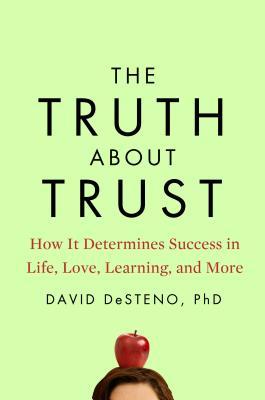
The Truth About Trust: How It Determines Success in Life, Love, Learning, and More by David DeSteno

The Truth About Trust: How It Determines Success in Life, Love, Learning, and More by David DeSteno

“Deciding to trust someone, more than almost any other decision we make, holds the keys to how resilient we, both as individuals and as a society, will be.” pg 241

Trust is one of the things that makes society work. We trust that our taxes will go towards making our society better. We trust we will be paid for the jobs we perform. We trust in contracts, news agencies and family members. Sometimes it seems this trust is misplaced. David DeSteno examines trust, what is it and how or why you decide to give someone all your trust or not.

Photo by Karolina Grabowska on Pexels.com

I held as true many of the fallacies that DeSteno deconstructs in The Truth About Trust. That was disturbing, in a way, but I also enjoyed it because I learned new ways to approach trust issues and even to define what trust is. Although it may seem like a simple concept, I realized that I didn’t know the basic definition of trust. I knew what it felt like, but not the mechanics behind it.

Tell me: what do you think trust is?

“There are two facets to trust: integrity and competence. Some of the best partners or teachers you may ever have had may not be the warmest people in the world, but they knew their stuff.” pg 33

DeSteno reminds readers that beyond examining a new business or potential romantic partner to determine their trustworthiness, you need to remember your own perceptions color your reality.

If you want to be able to trust as you should, take a moment before negotiating with someone new to allow any feelings from a previous event to dissipate. pg 60

Photo by fauxels on Pexels.com

I liked that DeSteno waded into the potentially thorny world of cyberspace and who or what to give your trust to in the technological age. It seems that is going to be the future — programs, applications and machines.

…the basic issue of whether to trust technology has in fact been around for thousands of years. What makes it feel new now, however, is that technology is beginning to encroach on what had until recently been a solely human domain — sociality. pg 183

DeSteno gave me plenty to think about including why I sometimes place great trust where it has not necessarily been earned. Recommended for readers who want to ask themselves the same types of questions.

If you enjoyed The Truth About Trust, I’d suggest also picking up Terms of Service: Social Media and the Price of Constant Connection (DeSteno deals with trust in cyberspace and the two books complement each other nicely) or The Happiness Advantage: The Seven Principles of Positive Psychology That Fuel Success and Performance at Work (which discusses the issue of trusting yourself to do the things that will benefit you most in the future and why we don’t always do those things).

Thanks for reading!

inGenius: A Crash Course on Creativity by Tina Seelig

inGenius: A Crash Course on Creativity by Tina Seelig

As my mentor pointed out to me a couple years ago, creativity is one of the most important skills to master and develop throughout your career. No matter what you’re doing, in your professional or personal life, creativity provides the answers and greases your wheels to whatever goal you desire.

inGenius is Tina Seelig’s offering to those interested in learning about creativity. She is a professor at Stanford University and these chapters are like talking points from her class.

Photo by Tima Miroshnichenko on Pexels.com

Granted, some of these tips seem like common sense. But if that’s the case, then why aren’t we all creative geniuses who have solved all of our problems? In my mind, there’s plenty still to be learned from the topic or, if you’ve already heard it, reiterating the important points.

What is that saying… your thoughts become actions, become habits, become your life? Or some such. Well, it’s true.

“With enhanced creativity, instead of problems you see potential, instead of obstacles you see opportunities, and instead of challenges you see a chance to create breakthrough solutions.” pg 4

Photo by Allan Mas on Pexels.com

It’s more than a positive mind-set, it’s a way of viewing your reality. And, as Seelig points out in this book, your attitude at any given moment affects your creativity. You have to view any problem as solvable — you just haven’t found the solution yet.

Seelig says anyone can be creative: “There is a concrete set of methods and environmental factors that can be used to enhance your imagination, and by optimizing these variables your creativity naturally increases.” pg 9

I figure it’s a bit like exercise. Flex those creative muscles on a regular basis and they’ll get stronger.

Photo by nappy on Pexels.com

Seelig brought my attention to the fact that our environment affects our creativity. She cites studies with the way classrooms are set up and how those changed the results of experiments. I had no idea.

She also reminded me that one does not have to re-invent the wheel to be creative: “Building upon existing ideas and inventions is another way to foster innovation.” pg 41

inGenius offers readers a clear path to creativity. Recommended for anybody who wants to up their creative game.

Thanks for reading!