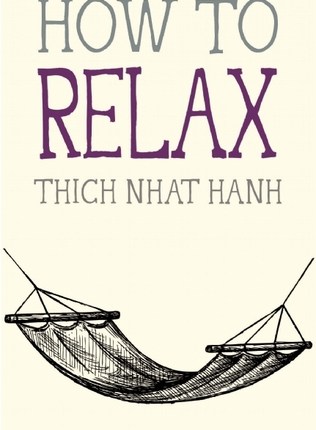
How to Relax by Thich Nhat Hanh

How to Relax by Thich Nhat Hanh

There are very few spiritual leaders who can communicate with the simplicity and succinctness of Thich Nhat Hanh.

As wise as the Dalai Lama is, I’ve only been able to really understand one of the books he’s written and I think that was because he had a co-author. It seems like he contemplates this stuff so much, you know, like it’s his job, that when he’s just trying to talk to a regular person about it, there’s a gap that can’t be crossed.

Photo by Mikhail Nilov on Pexels.com

That isn’t a problem in Thich’s Mindfulness Series.

Thich encourages the reader to find the quiet within. He says: “We already have calmness in us; we just need to know how to make it manifest.” pg 14, ebook.

How do we do this? Through focus, breathing, mindfulness, and relaxation.

One of Thich’s methods for connecting with inner peace that really resonated with me was that we should take “lazy days”: “A lazy day is a day for us to be without any scheduled activities. We just let the day unfold naturally, timelessly. … When we have unscheduled time, we tend to get bored, seek entertainment, or cast about for something to do. A lazy day is a chance to train ourselves not to be afraid of doing nothing. You might think that not doing anything is a waste of time. But that’s not true.” pg 32, ebook.

Not to brag, but I rather excel at “lazy days”.

Photo by Rachel Claire on Pexels.com

Anyone out there have a partner who snores? I do. Thich invites us to incorporate the snores into our relaxation practice.

“Sometimes you have to share a room with someone who snores. You may get irritated. But with mindfulness you can bring about compassion. You can lean on the sound of snoring in order to go to sleep. Listen and say that this brings you home to the here and now.” pg 42, ebook.

I think this could be a difficult exercise, but I’m willing to give it a try. 🙂

Ever tell yourself that relaxation/meditation is too hard? Thich addresses that concern too: “When you sit and watch television, you don’t make any effort. That’s why you can sit there for a long time. When you sit in meditation, if you struggle, you won’t be able to sit for very long. Please imitate the way you sit in your living room. Effortlessness is the key to success. pg 76 ebook.

If you can watch tv, you can meditate. It’s silly but it reminds me of that line from Dodgeball: “if you can dodge a wrench, you can dodge a ball”.

Highly recommended for anyone looking to introduce more relaxation into their lives and isn’t that everybody?

Some read alikes: Relax RX: A Self-Hypnosis Program for Health and Well-Being by Steven Gurgevich (very relaxing, all you have to do is listen), Guided Mindfulness Meditation by Jon Kabat-Zinn (simple and relaxing), or 10% Happier: How I Tamed the Voice in My Head, Reduced Stress Without Losing My Edge, and Found Self-Help That Actually Works by Dan Harris (a regular guy teaches himself to meditate- a light hearted memoir).

Thanks for reading!

Awakening from the Daydream: Reimagining the Buddha’s Wheel of Life by David Nichtern

Awakening from the Daydream: Reimagining the Buddha’s Wheel of Life by David Nichtern

Awakening from the Daydream: Reimagining the Buddha’s Wheel of Life is an accessible and modern reworking of the Buddhist Wheel of Life.

I took a course on Buddhism in college (seems like a million years ago now) and I remember being deeply affected by the Wheel of Life then- the original version.

For thousands of years, Buddhist practitioners have been studying the mind, how it perceives the world, and how it creates a perpetual cycle of suffering. The original Wheel captures this in extraordinary detail. David Nichtern’s re-imagining of it is brilliant.

Photo by carol wd on Pexels.com

I think that this could be very helpful for many people. It’s similar to artists updating and customizing Tarot decks. Sometimes, new images spark new ways of looking at situations and new solutions arise.

Nichtern is clearly an expert on this topic but he never ventures beyond the basics of the teaching into spaces that beginners can’t grasp. His philosophic writing is understandable and relatable. I appreciated that because not all Buddhists texts are simple reads- Stages of Meditation by the Dalai Lama comes to mind.

“Tradition says that the Buddha directed the creation of the original Wheel painting, which he commissioned as a gift to teach Dharma to an Indian king. When the king who received the painting contemplated it and fully understood its meaning, he attained enlightenment- he brought the suffering caused by unconscious habitual patterns to an end… The image of the Wheel survives not just because it sustains tradition, but because the message it conveys is powerful and timelessly relevant.”

Nichtern reminds us in this book that Buddha gave the painting to a king not a monk. This shows that we can live in the world and also transcend it. These teachings are for everyone.

Photo by RODNAE Productions on Pexels.com

Nichtern discusses the Buddhas contained in each part of the picture- in the suffering areas and outside of it: “There is also usually a Buddha standing outside of the Wheel, representing transcending the six realms altogether. Such people are said to be free from imprisonment in the six realms- free of karma- and only appear in the six realms in order to teach and liberate the beings within the realms out of compassion. Sometimes we are fortunate enough to meet people who remind us of this kind of possibility.” People, I would say, like Nichtern himself.

How to find opportunity in the midst of suffering: “The abject misery that we experience in the hell realm mindset offers us the opportunity to relate to the suffering of others… This isn’t to say that we simply forgive the harmful behavior of others. Instead, we can use our own intense experiences of hatred or depression to realize a deeper truth about all of us living beings in general: none of us are immune from this.” None of us.

Nichtern offers meditation practices for beginners or more experienced folks. Here is a snippet of his advice: “…it is good to help manage people’s expectations. Meditation can include boredom, irritation, discomfort, frustration, grasping, aggression, a discursive waterfall of thoughts and emotions coming and going, and perhaps occasionally a sense of peace and acceptance of things as they are. In a nutshell, it can and will include all the aspects of who we are and of what our lives are actually made.” He also offers concrete suggestions on how to find instructors.

I recommend Awakening from the Daydream for anyone interested in Buddhism, at all levels of knowledge, but this would probably be most helpful for beginners to intermediate practitioners.

Some books that cover similar topics that you may want to check out: You Are Here: Discovering the Magic of the Present Moment by Thích Nhất Hạnh, Happiness: A Guide to Developing Life’s Most Important Skill by Matthieu Ricardo, or The Buddha Walks into the Office: A Guide to Livelihood for a New Generation by Lodro Rinzler.

Thank you to NetGalley and Wisdom Publications for a free digital copy of this book and thank you for reading!