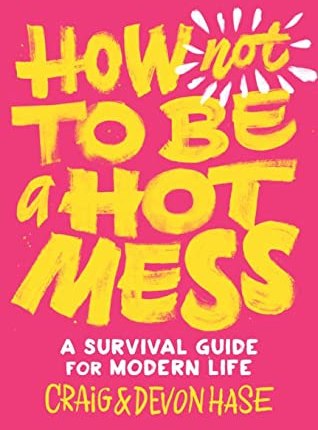
How Not to Be a Hot Mess: A Survival Guide for Modern Life by Craig Hase, Devon Hase

How Not to Be a Hot Mess: A Survival Guide for Modern Life by Craig Hase, Devon Hase

“(This book) draws on Buddhist advice because, believe it or not, Buddhism has been through it all before. It’s seen wars, plagues, oppression, and ten thousand terrible haircuts – and it has, along the way, developed dependable ways to stay steady in the roller coaster of family feuds, romantic vacillations, uncertain futures, and all the rest.” pg 9, ebook

How Not to be a Hot MessΒ was a timely read for me, though there was little in here that was “new”. Instead, it offers gentle reminders to meditate, tell the truth, be generous and take care of yourself – all things that help mitigate hot messiness in the day-to-day.
Photo by Marta Wave on Pexels.com

“So there are approximately one bajillion reasons why you should meditate. The top three reasons as I’ve just mentioned, are that you’ll be less stressed, more focused, and you might even stumble your way into slightly better humanhood.” pg 23, ebook

I used to meditate every day. But then, for whatever reason, I fell out of the habit. I’m going to be doing my best to bring it back because I think I was a calmer person and less reactive to things.

This book also reminded me about skillful speech.

“There are people out there- and I’ve met a lot of them now- who follow these guidelines of True, Kind, Timely, Helpful beautifully. And they all have some things in common: they have good friends, stable community connections, a sort of quiet confidence, and they kind of glow.” pg 53, ebook

I don’t tend to say a lot but I try to make what I say fit within those guidelines. This book reminded me of how important this can be. It’s like modern life makes me forget sometimes, in the mad crush and noise, what’s really important.

“You, too, can do this. It’s not just for fancy historical figures or people who write books and give TED talks and share wisdom from the mountaintops. You really can stay clear, say what’s true, give a little, make sex good, meditate occasionally, and be less of a jerk and more of a stable loving presence in your world. Right in the middle of everything.” pgs 84-85, ebook

Yes, I can do this. And so can you. Happy reading, friends.

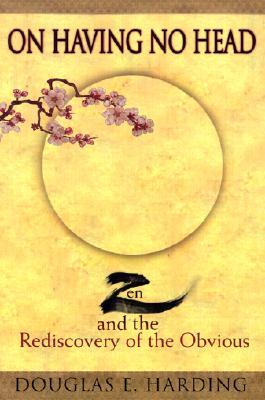
On Having No Head: Zen and the Rediscovery of the Obvious by Douglas E. Harding

On Having No Head: Zen and the Rediscovery of the Obvious by Douglas E. Harding

Douglas Harding had a strange experience when he was a young man. As he was hiking in the Himalayas, Harding had a moment he would later describe as of “no thought”, and where he perceived his body as having no head. In addition, he had a vision of his body as a house with a single window, but inside the house, there was nothing looking out at the world.

That nothingness is where Harding envisioned his consciousness resides.

Trippy, I thought. If that had happened to me, I might have been pretty freaked out.

Photo by Asep Syaeful Bahri on Pexels.com

Not necessarily so for Harding, who described the experience as incredibly peaceful and enlightening. When he came back from this experience, he applied his insight to various Eastern schools of philosophy, notably Zen.

The result is this book- a discussion of not only what happened to him, but an examination of consciousness itself. Where does consciousness reside? Where is the ‘me’ of our constant thoughts and emotions?

It’s somewhat of a winding path to get there, but Harding eventually points to the idea that consciousness is space in which reality is perceived.

When I first hopped into this book, I thought, how ridiculous. We all have heads attached to our necks. We can see them and feel them. Not only that, we can see and feel the heads of other people if we really wanted to.

Photo by Gabby K on Pexels.com

Harding takes this idea of ‘seeing’ and ‘touch,’ and questions what it is that people actually perceive. Yes, he says, you can see your head in a mirror. But that is a reflection of your head and not the head itself.

Everybody says these constructs are the thing itself. However, as Harding points out, they’re not really, are they? If you look down your own face, you can usually ‘see’ your nose as a series of splotches and shapes. Is that your nose though, or just splotches?

And he goes on from there.

By the end of the book, I was nodding my head a little and felt like I could understand something of what he was saying. But now that I’m trying to write a portion of it down, it just sounds like nonsense.

Photo by Olya Kobruseva on Pexels.com

Perhaps this is a book to be experienced rather than described. Rather, I might humbly suggest, like consciousness itself?

Recommended for spiritual seekers or anybody who enjoys pondering koans.

Thanks for reading!

The Buddhist on Death Row by David Sheff

The Buddhist on Death Row by David Sheff

David Sheff examines the life and spiritual transformation of Jarvis Jay Masters, a man who has spent years on death row and in solitary confinement for a crime he says he didn’t commit.

“Even if Masters was innocent, I didn’t know what to think about the claims that he was, as his supporters described him, an enlightened Buddhist practitioner who had changed and saved lives.”

Photo by Donald Tong on Pexels.com

It is a powerful non-fiction account not only because Masters is honest and open about how he came to be where he is today, but because the spiritual lessons he has discovered throughout his experience are applicable for all of us. You don’t have to be sitting in a literal prison to feel like you’re locked in a cell and can’t get out.

The mind and heart can create suffering wherever in the world you are.

“Set in a place of unremitting violence, insanity, confusion, and rage, Masters’s story traverses the haunted caverns and tributaries of loneliness, despair, trauma, and other suffering- terrain we all know too well- and arrives at healing, meaning, and wisdom.”

Photo by Caroline Martins on Pexels.com

I don’t think you need to be a practitioner of Buddhism to appreciate the wisdom in this book. Spiritual lessons like the knowledge that can be found in self awareness and how to obtain freedom from suffering can be helpful for all of us.

I enjoyed the book so much that I read it in only a few sittings.

The lama wrote that all people have been sentenced to death- in that way, Jarvis wasn’t unique. … “We all live in a prison, and we all hold the key,” Chagdud Tulku wrote.

Photo by Pixabay on Pexels.com

Highly recommended for spiritual seekers of all types.

Thank you to NetGalley and the publisher for a free digital copy of this book.

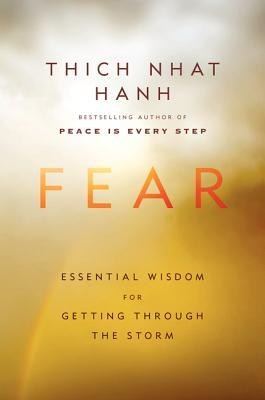
Fear: Essential Wisdom for Getting Through the Storm by Thich Nhat Hanh

Fear: Essential Wisdom for Getting Through the Storm by Thich Nhat Hanh

InΒ Fear: Essential Wisdom for Getting Through the Storm, Thich Nhat Hanh simply and succinctly illuminates the Buddhist path beyond fear into an existence of freedom and joy.

“Nobody can give you fearlessness. Even if the Buddha were sitting right here next to you, he couldn’t give it to you. You have to practice and realize it yourself.” pg 6

Photo by Aleksandar Pasaric on Pexels.com

This book is more than theory, parables and anecdotal stories. Hanh also includes various meditations to assist in the effort.

“When the Buddha was very old, just before he died, he said, ‘My dear friends, my dear disciples, don’t take refuge in anything outside of you. In every one of us there is a very safe island we can go to. … That is a place where you can take refuge whenever you feel fearful, uncertain or confused.'” pg 71

He dissects the various forms fear can take in our lives- from fear of death, grief, anxiety about the future to reconciling with painful emotions from the past.

Photo by David Bartus on Pexels.com

My main takeaway from the book was, to deal with any kind of fear, we need only to approach it with mindfulness and compassion for ourselves and the suffering of others.

“We don’t try to grab on to the pleasant sensation, and we don’t try to push it away. We just acknowledge its existence. When a painful feeling comes, we do the same thing. … A feeling is just a feeling. And you are much more than that feeling.” pg 135

Hanh reminds readers that we are more than the temporary thoughts and feelings that cause so much havoc on their way through our minds and hearts. Our true nature is something else.

My favorite metaphor that Hanh employs to remind readers of this true nature is his comparison of a life to a wave.

“The wave is always water; it doesn’t ‘come from’ water, and it doesn’t go anywhere. It is always water; coming and going are just mental constructions. … Birth and death, coming and going, are just concepts. When we are in touch with our no-birth, no-death nature, we have no fear.” pg 50

Photo by Emiliano Arano on Pexels.com

I appreciated the reminders and found a lot of comfort in these pages. I hope other readers find the same.

Recommended for readers who are interested in learning and utilizing Buddhist philosophy and techniques to overcome any fear or other unpleasant emotion that may be in their lives.

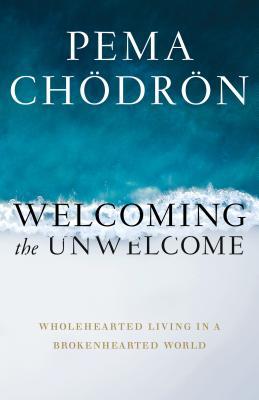
Welcoming the Unwelcome: Wholehearted Living in a Brokenhearted World by Pema ChΓΆdrΓΆn

Welcoming the Unwelcome: Wholehearted Living in a Brokenhearted World by Pema ChΓΆdrΓΆn

“We are at a time when old systems and ideas are being questioned and falling apart, and there is a great opportunity for something fresh to emerge. I have no idea what that will look like and no preconceptions about how things should turn out, but I do have a strong sense that the time we live in is a fertile ground for training in being open-minded and open-hearted.” pg 28

The incomparable Buddhist nun and teacher, Pema ChΓΆdrΓΆn, interprets the dharma and applies it in the various challenging circumstances of modern life. From polarization to living in the now, comfort zones and boredom, ChΓΆdrΓΆn challenges practitioners to question their deeply entrenched beliefs by applying new lenses of perception. Change within, she says, and you will see changes in the world.

Photo by icon0.com on Pexels.com

“Trungpa Rinpoche said that the way to arouse bodhichitta was to “begin with a broken heart.” Protecting ourselves from pain – our own and that of others – has never worked. Everybody wants to be free from their suffering, but the majority of us go about it in ways that only make things worse.” pg 4

Remembering this shared struggle to find relief from suffering is one of the many ways ChΓΆdrΓΆn breaks down the problematic mindset of us vs. them. She gives plenty of tips for remembering the sacred within oneself and everyone else. One of the simple ones that stuck with me was, when you see someone suffering, say to yourself, “just like me.”

Stuck in traffic but don’t want to be? Everyone around you is too. They’re just like you. Irritated by developments on the world stage? There are others who are just like you. Have a cold and just want to get some uninterrupted sleep? Think of the thousands out there who are just like you.

“… if we gradually increase our capacity to be present with our pain and the sufferings of the world, we will surprise ourselves with our growing sense of courage. In our practice of cultivating a broken heart, we can incrementally build the strength and skill to handle more and more.” pg 6

Photo by Pixabay on Pexels.com

What I like most about ChΓΆdrΓΆn’s books is that she isn’t afraid to talk about how she has stumbled with the various teachings in her own life. She takes a clear look at her foibles and, instead of hiding them where no one else can see them, she uses her failings to propel herself and others forward.

For example, ChΓΆdrΓΆn relates how, when she first became the director of an abbey in Nova Scotia, she thought the kitchen was a disaster. She put all of these rules in place to organize and clean the kitchen, yet it was never good enough. She confesses going down to the kitchen at night after everyone was asleep in order to organize the drawers without their knowledge. Yet even with all of those struggles, the kitchen remained as it was.

So, instead of fighting it further, she relaxed into the belief that the problem was not with the kitchen or anyone in it, but her own perception of the kitchen.

“I said to myself, “I don’t care if the whole place is a mess. I’m going to work on my propensity to label things in negative ways, such as ‘dirty’ and ‘disorganized.’ I’m going to pay more attention to how I project my own version of reality onto the world.” pg 74

Photo by Mike on Pexels.com

And this self examination altered her view of reality. “Instead of my whole being going into a knot of contraction, I felt relaxed and happy in there. It was a miracle.” pg 74

What sorts of things do you view as disorganized kitchens in your own life?

Highly recommended for readers interested in Buddhist teachings or improving the world around them by change from within.

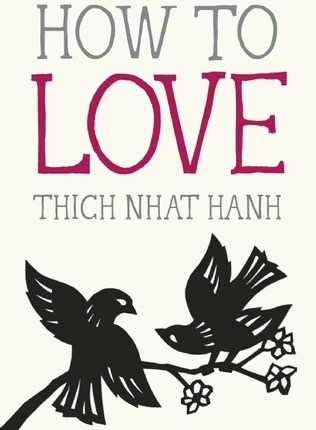
How to Love (Mindfulness Essentials, #3) by Thich Nhat Hanh

How to Love (Mindfulness Essentials, #3) by Thich Nhat Hanh

Thich Nhat Hanh, monk and spiritual leader, has written a short series of books he calls “Mindfulness Essentials.” This entry is all about love. You might ask yourself, what could a monk possibly know about love? Turns out, plenty.

Hanh applies the mindfulness techniques he’s learned over his lifetime of spiritual practice to the potentially thorny pathways of love, and the result is a gem of a read.

Photo by Asad Photo Maldives on Pexels.com

He counsels lovers to bring happiness to each other through being present in the moment and sharing your appreciation with each other. For example, if someone is distracted or worried, Hanh says you should draw their attention to the physical beauty of the world around them. In this way, you anchor the other in the present moment and ease the suffering of their busy mind.

This type of presence is a gift that you can give to anyone at anytime. And it doesn’t cost anything.

Hahn describes four defining traits of love as loving-kindness, joy, compassion, and equanimity. Then he examines these traits in detail so readers can ponder the mystery of love and see where, potentially, we may be falling short of these ideals.

Photo by Jasmine Carter on Pexels.com

He teaches all love begins with self love and walks hand-in-hand with spiritual practice. Through deep listening and the establishment of intimacy, Hahn believes love heals through empathy and “karuna,” a term that describes suffering with another and then doing what you can to end that suffering.

In addition, don’t take the other person for granted or make assumptions about what they may need. It is only through open communication that, Hahn believes, love lives.

He makes it sound so easy. I wish it was.

Photo by Pixabay on Pexels.com

Recommended for readers looking to learn about the spiritual side of love in a quick and easy read. Hanh doesn’t waste words and I am always in awe of what teachings he has to impart.

Thanks for reading!

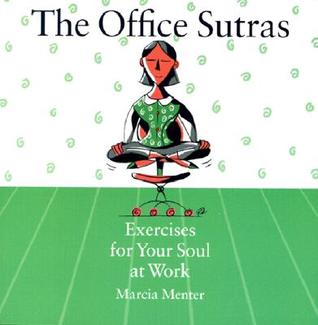
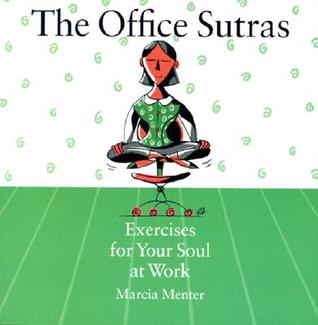
The Office Sutras: Exercises for Your Soul at Work by Marcia Menter

The Office Sutras: Exercises for Your Soul at Work by Marcia Menter
officesutras

The Office Sutras sums itself up in the first couple of pages: “The basic premise of this book is that we’re on a spiritual journey every second of our lives, not just during those times we set aside to contemplate the cosmos. The job you have right now, no matter how frustrating, no matter how screamingly imperfect, is part of your spiritual path.”pg 3

Every page there after pretty much repeats the same theme.

This book just wasn’t for me. Every chapter presents a common problem that one can encounter at work and then gives exercises that you can use to come to an understanding about it.

I realized that I was never going to do any of the exercises and I didn’t regret that in any way. Big fail.

If you’re going to read a self help book that deals with work and has a Buddhist vibe, I’d suggest Peace Is Every Breath: A Practice for Our Busy Lives.

Thich Nhat Hanh is brilliant and I find his writing to be more appealing than this offering. Thanks for reading!

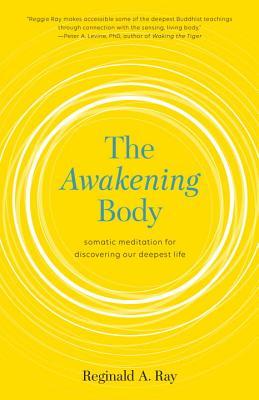
The Awakening Body: Somatic Meditation for Discovering Our Deepest Life by Reginald Ray

The Awakening Body: Somatic Meditation for Discovering Our Deepest Life by Reginald Ray
theawakeningbody

I picked up The Awakening Body because of a conversation I had with a friend last week. He said that when he sits down to meditate, that his mind won’t shut off, and it ruins the experience for him.

I gave him a technique about focusing on the space between thoughts, but decided that I needed something more concrete to give him. This book is perfect for anyone who feels like they can’t escape from his or her own mind.

The Awakening Body is a series of progressive meditations that take the practitioner out of “thinking” and into “experiencing”.

It’s as easy as focusing on your own toes: “In contrast to contrived conventional approaches that emphasize entry into the meditative state through the intentional thinking of the conscious mind… Somatic Meditation develops a meditative consciousness that is accessed through the spontaneous feelings, sensations, visceral intuitions, and felt senses of the body itself. … Put in the language of Buddhism, the human body, as such, is already and always abiding in the meditative state, the domain of awakening- and we are just trying to gain entry into that.” loc 110, ebook.

The teachings themselves are Buddhist in origin but you don’t have to be a practicing Buddhist to receive benefit from them. If you have a body, you can successfully do these meditations.

And the benefits from them could be enormous: “It is as if we are waking up, within our Soma (body consciousness), and we suddenly find ourselves in a new world. … We begin to see that what we formerly took to be our body was just a made-up version with little correspondence to anything real. We find in our body previously unimaginable vistas of spaciousness, experience arising that is ever surprising and fresh, an endless world of possibilities for ourselves and our lives.” loc 329, ebook.

Photo by Pixabay on Pexels.com

This book includes a link to access the guided meditations online so that you can completely focus on the practice as it unfolds. I am just beginning to work with these, but I am encouraged by my progress so far.

When I started, I couldn’t sense my big toes at all, which kind of freaked me out. Logically, I knew they was there, but I couldn’t feel them.

Ray says that this isn’t uncommon: “When we arrive at the first instruction, “pay attention to your big toe on each foot,” at first, practitioners may not be able to do this because, they often report, they have no feeling not only of their toes, but often of their feet, their legs, or even the lower half of their body. … “Keep trying,” I tell them. For even directing our attention to the vicinity of where we think the toes should or might be is already transforming our neurological wiring.” loc 1215, ebook.

That was a big wake up call for me. I’m so glad I picked this book up.

The last part of the book was the most challenging for me to understand because Ray begins to speak directly to those who have had experience with Somatic meditation. I read the words, but I can’t say that I grasped their meaning… yet. With time, perhaps I will.

I recommend The Awakening BodyΒ to anyone who is looking for a slightly different technique to begin or improve his or her meditation practice. Beginners to advanced practitioners will find this book useful.

Some further books to explore if you are interested in using/sensing the body in meditation: Ecstatic Body Postures: An Alternate Reality Workbook or Meditations for Breaking the Habit of Being Yourself.

Thank you to NetGalley and Shambhala Publications for a free digital copy of this book! And, thank you for reading!

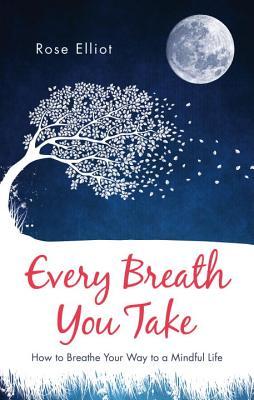
Every Breath You Take: How to Breathe Your Way to a Mindful Life by Rose Elliot

Every Breath You Take: How to Breathe Your Way to a Mindful Life by Rose Elliot
everybreath

Every Breath You Take is one of the finest mindfulness manuals that I’ve ever had the pleasure to pick up.

Practice by practice, Elliot takes the reader from the simple and concrete observation of the breath to the complex and abstract juggling of mind stuff. Along the way, she provides stories and anecdotes of those who have walked these paths before us and shows that, no matter where you are in your life, you can become more aware and grounded in the present moment and how beneficial that can be for you.

She began her journey like most of us- convinced that mindfulness was too difficult: “I struggled with the practice. I found it dreary, dull and boring- all that ‘notice-what-you’re-doing-while-you-clean-your-teeth’- I just couldn’t get to grips with it at all. … when I was on the point of giving up altogether, I met a monk… and he quietly suggested that it is helpful to link mindfulness practice to breathing. This really helped.” loc 16.

Elliot is so relatable that she made me feel like, if she could do this, I could do it too.

A reminder that mindfulness isn’t just a ‘Buddhist’ thing: “…it is to the Buddha that we owe mindfulness, but that does not mean you have to ‘be a Buddhist’ (whatever that may mean), or indeed of any religion at all to practise it. The breath is universal, as is spirit, so we can all benefit.” loc 46. If we can breathe, we can watch the breath. We just need to remember to do it.

Photo by Pixabay on Pexels.com

I loved Elliot’s gentle humor which was evident throughout: “You can use the irritations of daily life as reminders to take a mindfulness breath- and this way you’ll certainly get plenty of practice! For instance, such reminders might be: Being held up in traffic or a red light when you are driving. Waiting for the kettle to boil or for a bus or a train that’s late- waiting for almost anything. Lining up at the bank or at the grocery store checkout, or anywhere, for that matter. When someone is being really irritating, how great to know you have your own inner source of peace so they can’t bother you.” loc 237.

It is as if life is chock full of opportunities to take mindful breaths πŸ™‚

My favorite part of the book was the many teachings about attachment. “When we can accept things as they are now, but recognize that they will change, and accept that too, we will know peace.” loc 793. I feel more peaceful already!

The Epilogue where Elliot talks about grieving for her husband and using these breathing exercises to make it through is especially touching. This is not just someone who talks the talk- she’s out there walking the walk. Highly recommended for anybody at any level of ability who wants to learn more about mindfulness.

Some further reading: How to Relax, The Wisdom of the Breath: Three Guided Meditations for Calming the Mind and Cultivating Insight, or Being Peace.

Thank you to NetGalley and Watkins Publishing for a free digital copy of this book! Β And, thank you for reading.