I Thought It Was Just Me (But It Isn’t): Making the Journey from “What Will People Think?” to “I Am Enough” by Brené Brown

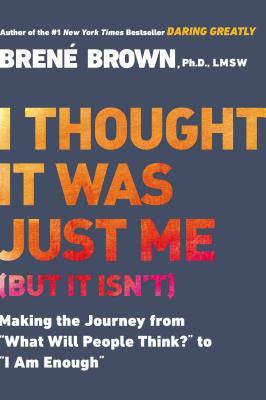
I Thought It Was Just Me (But It Isn’t): Making the Journey from “What Will People Think?” to “I Am Enough” by Brené Brown

Researcher Brené Brown gives readers another self help title on how to handle the difficult emotion called shame.

“This book offers information, insight and specific strategies for understanding shame and building “shame resilience.” We can never become completely resistant to shame; however, we can develop the resilience we need to recognize shame, move through it constructively and grow from our experiences.” pg xiv

Photo by Kei Scampa on Pexels.com

It’s not easy to handle shame. In fact, it’s not that easy to read about it.

But Brown says the way through is sharing those uncomfortable feelings with others. One of the solutions to shame is empathy and another is self awareness.

Other attributes shared by those with high shame resilience are:

“The ability to recognize and understand their shame triggers. High levels of critical awareness about their shame web. The willingness to reach out to others. The ability to speak shame.” pg 67

Photo by Pixabay on Pexels.com

Part of her work in psychology has been to define what shame is. Brown writes everyone has different triggers based on unique childhood and adult experiences. Therefore, it is impossible to name universal shame triggers which can make it difficult to study shame.

Her studies have led her to believe the opposite of shame is self esteem, which was an interesting aspect I had never considered. Other aspects of shame include: feeling like you’re not good enough or don’t belong.

Brown has discovered another hurdle in her research- it can be difficult to speak about shame as words sometimes fail us when we experience visceral feelings.

“Sharing our shame with someone is painful, and just sitting with someone who is sharing his or her shame story with us can be equally painful.” pg 147

Photo by Tima Miroshnichenko on Pexels.com

On a more positive note, Brown writes everyone has experienced this at some point or another. She uses this universality of experience to issue a clarion call for change. To foster shame resilience, we should build networks of support and be kind to each other by showing our own vulnerability. We’re all in this together.

And I couldn’t agree more.

Recommended for anyone who has ever felt shame. That’s everybody.

Thanks for reading!

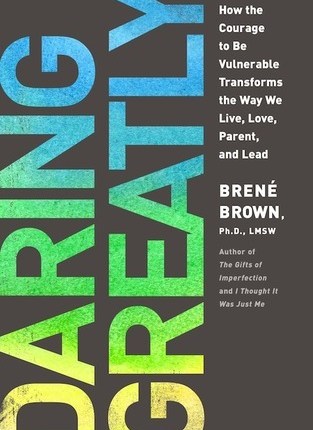
Daring Greatly: How the Courage to Be Vulnerable Transforms the Way We Live, Love, Parent, and Lead by Brené Brown

Daring Greatly: How the Courage to Be Vulnerable Transforms the Way We Live, Love, Parent, and Lead by Brené Brown

Brené Brown shares her twelve years of research into shame and gives tools on how to increase one’s vulnerability. In this way, she believes each individual can help change the culture of scarcity and pull the world back from a continual cycle of shaming.

We’ll build stronger and deeper relationships, strengthen families and have more productive work places. And, by doing this, we will each, in our own way, live in a manner that “dares greatly” every day.

“I also learned that the people who love me, the people I really depend on, were never the critics who were pointing at me while I stumbled. They weren’t in the bleachers at all. They were with me in the arena. Fighting for me and with me.” pg 56

Photo by RF._.studio on Pexels.com

I’m going to use the information in this book the most in my work life. As a writer, I attach far too much significance to my work product on the audience’s response to it rather than my own feelings about it. As Brown so clearly points out in this book, an outside response will never be good enough or big enough to fill the need that I am looking to fill with their words or their views. Or, if it is wildly praised, perhaps the next work won’t be, and then I’m right back to where I started.

“You still want folks to like, respect, and even admire what you’ve created, but your self-worth is not on the table. You know that you are far more than a painting, an innovative idea, an effective pitch, a good sermon, or a high Amazon.com ranking.” pg 64

This desire for connection and a feeling of worthiness, Brown says, comes from the need to survive by belonging to a group. Our brains have evolved to encourage us to belong and form connections. And when we don’t by not believing in our own self worth or experiencing shame, it is a physically painful emotion. People do all sorts of things to avoid feeling shame including pulling away or striking out. But, in the end, these connections are life itself.

“Buber wrote, “When two people relate to each other authentically and humanly, God is the electricity that surges between them.” pg 150

Photo by Pixabay on Pexels.com

As interesting as I found Brown’s research to be, she lost me when she began a discussion about how much vulnerability is enough or too much and walking the tightrope between extremes. So, be authentic, but don’t use it to manipulate people. A few sentences covers what Brown uses 50 pages to unpack.

“When we stop caring about what people think, we lose our capacity for connection. When we become defined by what people think, we lose our willingness to be vulnerable.” pg 169

Her message becomes a bit undefined and more general the further the book goes. That’s not to say it couldn’t be useful for readers who are looking for that type of information. I didn’t find it particularly engaging.

Like any self help book, I think sometimes authors and researchers can get lost in the weeds of the problem. I far more prefer to focus on the solution. In this case, that’s being brave enough to show up and be seen, demonstrating vulnerability and willingness to care about whatever is going on wherever we find ourselves throughout the day. As Brown reminds readers, it’s not about winning or losing, it’s about being there. And that’s a message worth spreading.

Photo by fauxels on Pexels.com

“To love ourselves and support each other in the process of becoming real is perhaps the greatest single act of daring greatly.” pg 110

I’m game. Are you?

Thanks for reading!