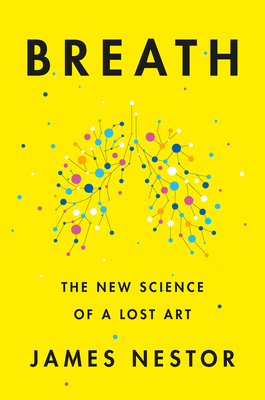
James Nestor takes a deep dive into the fascinating and surprisingly mysterious world of breathing. “How mysterious could it be, Heidi?” I hear you ask. It’s something everyone does without thinking literally a few times every minute every day of their lives.

Well, there’s a lot of mysteriousness, as Nestor discovered through his journey from terrible breathing to consciousness-shifting, bone-building, better breathing.
“I do as instructed, and listen as the rushing wind that was pouring through my lungs suddenly stops and is replaced by pure silence, the kind of jarring quietude a skydiver feels the moment a parachute opens. But this stillness is coming from inside.” pg 143, ebook
He talks to researchers and mystics from around the globe to access both cutting edge research as well as ancient teachings from such exalted texts as The Upanishads.
What he’s discussing here isn’t new, but it feels new, perhaps because of the chronic disconnect between the mind and body that seems to haunt modern humanity.

From breathing slower to exhaling more, the dangerous of mouth breathing and the astonishing connection carbon dioxide inhalation has to panic attacks, there’s a lot to explore.
And, despite all of the observed benefits and ten years of extensive research, Nestor doesn’t forget to mention that breathing isn’t a panacea. I appreciated that part as well.
“… what I’d like to make clear now, is that breathing, like any therapy or medication, can’t do everything. Breathing fast, slow, or not at all can’t make an embolism go away. … No breathing can heal stage IV cancer. These severe problems require urgent medical attention.” pg 184-185, ebook

I bookmarked all of the exercises Nestor gathers together from the text and lists at the end of the book. Each has similar yet slightly different affects according to practitioners of the methods. I may have to try every one to see for myself.
Highly recommended.
- The Ballad of a Small Player: a Metaphysical Movie Review
- Otherwhere: A Field Guide to Nonphysical Reality for the Out-Of-Body Traveler by Kurt Leland
- Psychic Dreamwalking: Explorations at the Edge of Self by Michelle Belanger
- Archetypes on the Tree of Life: The Tarot as Pathwork by Madonna Compton
- The Goddess and the Shaman: The Art & Science of Magical Healing by J.A. Kent

 The Help Desk Book Blog