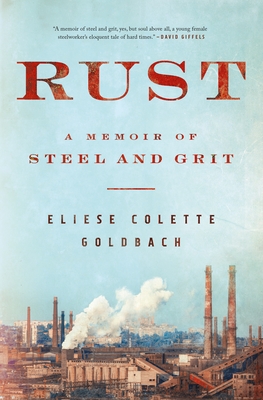
Rust: A Memoir of Steel and Grit by Eliese Colette Goldbach

Rust: A Memoir of Steel and Grit by Eliese Colette Goldbach

Eliese Goldbach pulls back the curtain to reveal the unseen struggles and contributions to society by steelworkers in Cleveland, Ohio, her hometown. Along the way, she delves into complex issues of mental health, politics, socioeconomic status, gender equality, and religion in her own life. It is, ultimately, a memoir about hope, but there was great suffering on Goldbach’s path to this realization.

When Goldbach was young, she viewed the stink of the steel mills as a type of pollution she needed to keep out of her body. But, when her plans to become a nun don’t materialize and she faces hurdles to completing the paperwork for her masters degree, Goldbach applies at the steel mill for the paycheck, accepting it as a step backwards in order to move forward into self sufficiency.

Photo by PhotoMIX Company on Pexels.com

“In a Rust Belt town, that flame isn’t just a harbinger of weird smells and pollution. It isn’t an anachronism, and it doesn’t prove a lack of innovation. … The flame is very much a part of our history and our identity. It’s a steady reminder that some things can stand the test of time, even in a world where nothing is built to last.”

A large part of Goldbach’s failure to thrive is caused by her mental health struggles. It affects her ability to hold down a full time job, maintain her relationships, and makes her dread the future. Yes, she might be doing well now, she tells herself, but in another couple of weeks that might not be true any longer.

“Doctors would tell me that mixed-state bipolar disorder is one of the most dangerous forms of the disease. Depression brings suicidal thoughts, and mania adds impulsivity. When people with mixed-state bipolar disorder have the will for death, they are more likely to have the energy to follow through.”
Photo by Artem on Pexels.com

Raised in a conservative and religious household, Goldbach is trained from an early age to see feminism as a dirty word. Through her own life experience, she discovers that some of her assumptions about feminism are untrue and begins to speak up for those who are unable or unwilling to speak for themselves.

“While there were other women who worked in the mill, we were definitely a minority. … There was a good deal of mansplaining, and there were offhanded comments that came straight out of the 1950s.”

Goldbach’s memoir shines in its examination and dissection of her personal beliefs and how those change through experience. It feeds into my own belief that only the person living a life has the true insight into its meaning and direction.

“I’m just disappointed in myself, I guess. I feel like I should have done more by now, and I’m worried that I’ll get stuck in the mill.”
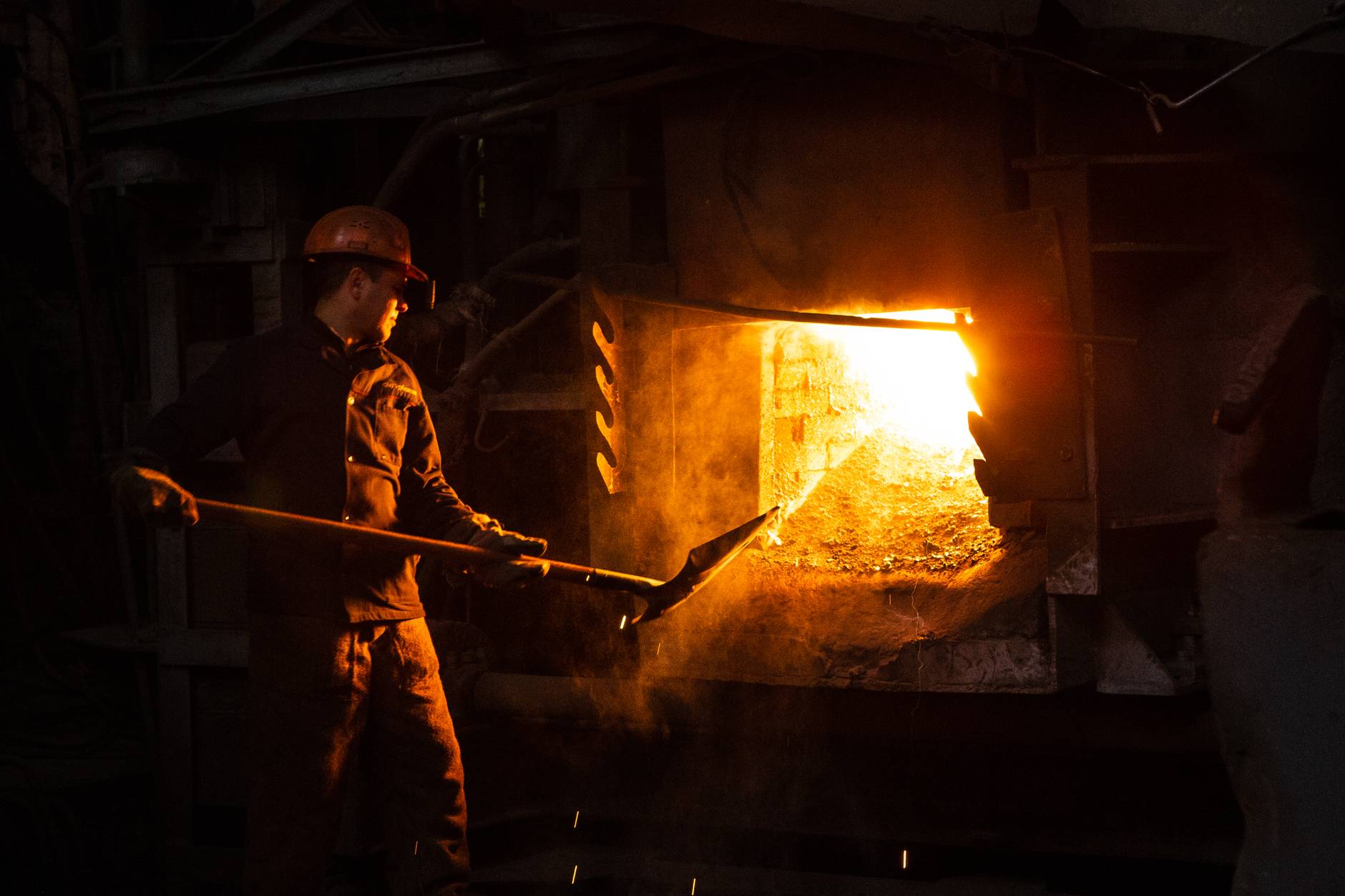
Photo by Kateryna Babaieva on Pexels.com

Some readers may find Goldbach’s politics off-putting. But I think the difficult conversations she describes at the dinner table with her parents are going on at other dinner tables all across the country. An open dialogue and willingness to look at our differences can be painful, but that doesn’t mean we should never have those conversations.

Recommended for readers who enjoy memoirs and as a possible book club pick. Trigger warnings for mental health issues, especially those with bipolar disorder, and rape.

Thank you to NetGalley and the publisher for a free digital copy of this book. The brief quotations cited in this review may change or be omitted in the final print version.

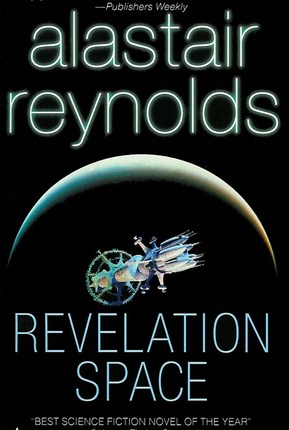
Revelation Space (Revelation Space, #1) by Alastair Reynolds

Revelation Space (Revelation Space, #1) by Alastair Reynolds

Through the interweaving stories of a scientist, soldier, and weapons expert, Alastair Reynolds explores classic science fiction themes in Revelation Space, a space opera and mystery.

“Despite being buried for nine hundred thousand years – at the very least – the chambers were almost intact, with the bones inside still assuming a rough anatomical relationship to one another. They were typical Amarantin skeletons.” pg 11, ebook

Photo by Pixabay on Pexels.com

Nearly a million years previous, an entire species called Amarantin disappeared in a mysterious celestial-based disaster called, by those who study the geological record, “The Event”. Dan Sylveste, a scientist with unique machines for eyes, is trying to unearth the truth of what happened to them.

Khouri, a former soldier turned assassin for a semi-secret agency, goes on a routine assignment, only to have the experience turn into something entirely unexpected.

“Assassins, it turned out, had to be among the sanest, most analytic people on the planet. They had to know exactly when a kill would be legal – and when it would cross the sometimes blurred line into murder and send a company’s stocks crashing into the Mulch.” pg 45, ebook

Photo by Ivan Siarbolin on Pexels.com

Meanwhile, on an enormous space ship capable of traveling across the universe at nearly the speed of light, Volyova has a serious problem. Her captain has a strange disease that is assimilating his ailing body into the ship itself and the man she hired to run the ship’s guns has gone insane. Could these two disasters be connected somehow?

“It was not something to which she was ever going to become totally accustomed, Volyova knew, but in recent weeks visiting the Captain had begun to take on definite tones of normality. As if visiting a cryogenically cooled corpse infected with a retarded but potentially all-consuming plague was merely one of life’s unpleasant but necessary elements…” pg 35, ebook

Throughout the story, Reynolds asks the reader to imagine a humanity that has split itself into factions. Some groups travel among the stars, assimilating rare machines into their bodies, losing touch with what it means to be human as they spend years in frozen animation while the rest of the universe ages as usual.

Other groups are just as isolated on far-flung planets and develop their own cultures, ways of government, and quickly-shifting alliances.

Photo by Felix Mittermeier on Pexels.com

Also, through the story of the extinct Amarantin, Reynolds examines what it would mean if humanity discovered aliens were real, but mysteriously absent from huge swathes of what is otherwise inhabitable space. Are we really as alone in the universe as we appear to be? And why is that so.

“Something had reached into his mind and spoken to him. But the message that was imparted to him was so brutally alien that Sylveste could not begin to put in human terms. He had stepped into Revelation Space.” pg 100, ebook

The broad themes of Revelation Space are fun questions to ponder, but Reynolds’ storytelling suffers in some of his more technical moments and during a truncated love story. A couple times during the beginning of the book, I had difficulty picturing scenes because I would get so bogged down in the details. But that became easier as the story progressed.

The love story though, was one of the worst I’ve read in science fiction literature. It made me feel like the woman was just a plot device for Reynolds to be able to explain some of the more complex plot twists. That’s fine if that’s what she was meant to be, but it was rather off-putting. I do enjoy a good love story and felt like, if you were going to make it so awkward, maybe it didn’t belong in there.

Photo by burak kostak on Pexels.com

Otherwise, I enjoyed this read and intend to start the next soon. Highly recommended for readers who enjoy science fiction and stories that make you want to go stand outside and stare at the stars for awhile.

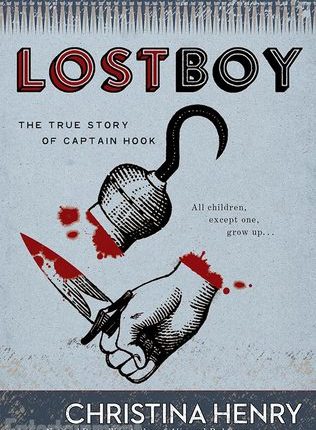
Lost Boy: The True Story of Captain Hook by Christina Henry

Lost Boy: The True Story of Captain Hook  by Christina Henry
lostboy

Christina Henry, author of the chilling Alice, which is a brilliant re-telling of Alice in Wonderland, has shifted focus to a new fairytale. In Lost Boy, readers get to experience the story of the boy-who-never-grew-up through the origin story of his arch-nemesis. And what a story it is.

“Peter will say I’m a villain, that I wronged him, that I never was his friend. But I told you already. Peter lies. This is what really happened.” loc 85, ebook. Goosebumps? Yeah.

Fans of the original tale will need to prepare themselves for having beloved characters shown in a new and sinister light. Think Longbourn, but worse, much worse. “I had been with Peter longer than I’d been in the Other Place, longer than I could count, anyway. The seasons did not pass here and the days had no meaning. I would be here forever. I would never grow up.” loc 146, ebook. The others in Peter’s group call the narrator, Jamie.

He is a fierce fighter- the best. And he protects the younger and weaker members of those lucky few that Peter brings back from the real world or in this tale, the Other Place. This protective instinct is sneered at by Peter who accuses Jamie of “babying” or “mothering” the boys. In truth, there is no worse insult in Peter’s arsenal. Grown ups either abuse you or take your stuff or both. They’re pirates.

“(Peter) had invited us there, had promised us we would be young and happy forever. So we were. Unless we got sick, or died, or were taken by the pirates.” loc 257, ebook. So, Neverland is not the paradise that it is portrayed as in the original tale. There are also monsters called Many-Eyed that eat the boys alive, if they catch them.

“Was this, I wondered, what it felt like to be a grown-up? Did you always feel the weight of things on you, your cares pressing you down like a burden you could never shake? No wonder Peter could fly. He had no worries to weight him to the earth.” loc 1971, ebook.

The stage is set. Love and hate intertwine with magic, blood and, of course, a little bit of fairy dust.

If you enjoyed this tale, you may also want to explore some other Peter Pan re-tellings like Tiger Lily by Jodi Lynn Anderson or All Darling Children by Katrina Monroe. The last, a horror-filled offering, may really appeal to those who want to delve more into the potential shadows of Neverland. There’s a price to pay for never growing up. In that tale, as in this, Peter pays it without a qualm.

Thank you to NetGalley and Berkley Publishing for a free advance reader’s copy of this book. Reminder: the short quotations I cited in this review may vary in the final published version.

Thanks for reading!