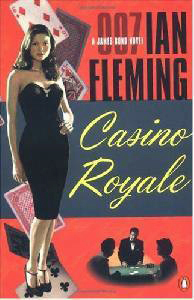
Casino Royale (James Bond #1) by Ian Fleming

Casino Royale (James Bond #1) by Ian Fleming
casino royale

The first novel about James Bond, the 00 agent, takes place at the Casino Royale. He has to outplay a French/Russian operative to take money away from the communists.

If Bond fails in his mission by losing at the card table, then British government will be directly funding communists. No pressure.

I have a thing for Bond. Cool under pressure, fast cars, looks fabulous in a tux…

I thought I would like this a lot, but I didn’t. I don’t think the story has aged well.

The best parts of the tale took place in the casino itself, the bar or the dinner table.

“Bond had always been a gambler… above all, he like that whatever happened was always one’s own fault. There was only oneself to praise or blame. Luck was a servant, not a master. Luck had to be accepted with a shrug or to be taken advantage of up to the hilt. But it had to be understood and recognized for what it was and not be confused with faulty appreciation of the odds. For, at gambling, the deadly sin is to mistake bad play for bad luck.”

Bond certainly knows how to order a drink:“A dry martini,” he said. “One, in a deep champagne goblet… three measures of Gordon’s, one of vodka, half a measure of Kina Lillet, shake it until its ice cold and then add a large thin slice of lemon peel. Got it? … I hate small portions of anything, particularly when they taste bad. This drink is my own invention. I’m going to patent it when I can think of a good name.”

His attitudes about women were particularly depressing: “As he drove, whipping the car faster and faster through the night, with the other half of his mind, he cursed Vespa and M for having sent her on the job. This was just what he had been afraid of. These blithering women who thought they could do a man’s work. Why they hell couldn’t they stay at home and mind their pots and pans and stick to their frocks and gossip and leave men’s work to the men?”

This blithering woman is going to put down the book now and back away slowly…

Recommended for… not blithering women?

I believe I’ll stick to the films from now on.

Thanks for reading!

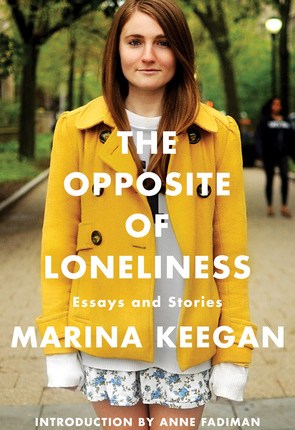
The Opposite of Loneliness: Essays and Stories by Marina Keegan

The Opposite of Loneliness: Essays and Stories by Marina Keegan

The Opposite of Loneliness is an excellent collection of fiction and non-fiction essays by Marina Keegan, a Yale student who died in a car wreck a couple days after she graduated from college.

Photo by Pixabay on Pexels.com

My favorite essay out of the bunch is “Against the Grain” pg 157 where she discusses her Celiac disease and the negative effect that that had on her mother.

She expresses frustration with how ridiculously protective her mother became when they were finally able to figure out what was wrong. She talks about being embarrassed at holidays as her mom cooked separate pies just for her or at field trips when her mother brought along special snacks.

But then, she reveals how she saw an internet article about how having Celiac disease could negatively effect the fetus when the sufferer becomes pregnant… and it’s a light bulb moment for Marina. She suddenly understands that feeling, how she would do anything to protect that other person, her baby, and suddenly her mom’s behavior doesn’t seem all that crazy after all.

Photo by Pixabay on Pexels.com

Of course, the absolutely heartbreaking moment for the reader is realizing that this particular dream will never come to fruition for Marina, but the fact that she even had that “ah-ha” moment is so powerful.

Marina’s writing highlights the sometimes indescribable feelings of daily life in such a powerful way.

For example: “My dog let out a small howl, twigs cracked in the woods, and something about the stillness or my state of mind reminded me of the world’s remarkable capacity to carry on in every place at once.”pg 34 I always had that feeling towards the end of the semester during college.

You’d work at this frantic pace, not giving a thought about your family or friends at home, then somehow in the lull between the final and actually going home, it would occur to me to wonder how my sisters had been for the last ten weeks or what my high school buddies had been up to.

I’d also forgotten that the world “carr(ies) on in every place at once.” Loved that sentiment.

Photo by Andrea Piacquadio on Pexels.com

“I worry sometimes that humans are afraid of helping humans.”pg 153 I worry about that too.

In that essay, Marina is talking about helping to save whales that were beached near her home. She talks about the time, effort, and money that is spent without consideration for the fact that only so many of the whales will actually be saved.

Then, when these whale rescuers go home, they do so without a backward glance towards the homeless on the streets, who are just as “beached” as the whales that they’ve been caring for all day.

“You feel like so many people are doing it and talking about it all the time like it’s interesting, so you start to wonder if maybe it really is.” pg 190.

Photo by Tomas Anunziata on Pexels.com

Marine was writing about how 25 percent of Yale graduates go immediately into banking or consulting positions that have absolutely nothing to do with their long term goals, but provide a quick paycheck in the short term.

Will they ever realize their dreams? If they make enough money, will they even care?

Life is about more than a paycheck. Marine Keegan knew that and her life had barely begun.

If you enjoyed The Opposite of Loneliness, I’d suggest Cool, Calm & Contentious, an excellent and serious collection of essays about life, or Zombie Spaceship Wasteland, a comedic collection of essays about life that are surprisingly insightful.

Thanks for reading!

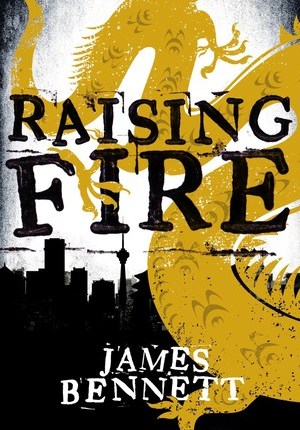
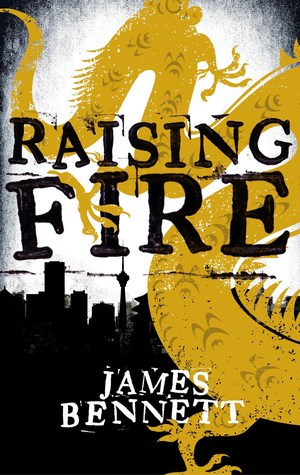
Raising Fire (Ben Garston, #2) by James Bennett

Raising Fire (Ben Garston, #2) by James Bennett
raisingfire

Red Ben, a dragon, is the last of his kind. He is a Remnant, one of the few magical creatures left to walk the earth after the sealing of magic by King John in 1215.

However, laws have been broken, the ancient guild of knights that was tasked with guarding the lore has been slaughtered and the religious branch of the pact is after Ben.

Meanwhile, the last fairy who guards the enchanted sleep of all of the magical creatures, as well as other ancient magics, has gone missing. Could things get much worse? Probably. Ben isn’t holding his breath.

I like the world James Bennett has created.

I also like Ben. He reminds me of a draconic Harry Dresden. He’s magic, cynical and sometimes makes mistakes when he’s tired.

And, like the wizard Harry Dresden, Ben protects the unsuspecting public from great evil and all manner of magical mischief makers.

“Ahead, an open space spread out before him. Tiananmen Square, the largest square in the world, at least offered a safer battleground. With a snap of his wings, he pushed himself after the dragon, flying beyond firing range. A moment of grace that he knew wouldn’t last. He was already too late.” pg 112

Raising Fire is the sequel to Chasing Embers. It delves more deeply into the legend of the fey and how they left the world, and their creatures, behind.

Photo by Eva Elijas on Pexels.com

In the great brier of fabulous beings, the Fay were like roses made of steel. The petals might look pretty enough, but if you didn’t watch your fingers, you’d quickly find out that they were sharper than razor blades.” pg 165

Readers also get to meet Jia, the Guardian of the East. A young being when her parents are put into the enchanted sleep, Jia grows and matures without her family and only the fairy that put them to sleep for a teacher. She plays an important role in this story.

Jia traipsed behind Ben through the valleys of treasure, her eyes wide, her feet crunching over jewels, kicking the occasional urn from her path. An enchanted light illuminated the cavern, shimmering from the treasure itself, gathered over centuries into a bed.” pg 202.

Photo by cottonbro on Pexels.com

Warning: Raising Fire ends on a cliffhanger. If such things bug you, you may want to wait to read it until the next book is out.

Recommended for readers who enjoy cynical heroes, urban fantasy and dragons.

Thanks for reading!

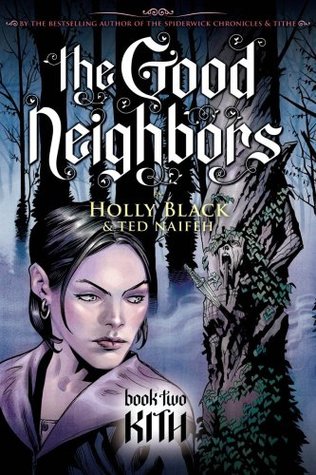
Kith (The Good Neighbors, #2) by Holly Black

Kith (The Good Neighbors, #2) by Holly Black
kith

Rue’s world is getting darker. In the last volume of The Good Neighbors, she discovered that faeries are real and not harmless, glitter-sparkled fantasies like fairy tales have described them.

In this installment, Rue learns about the perils of faerie enchantments and intricate faerie plans. Mixing magic with the every day world, human and faerie, is downright dangerous.

Rue also discovers more about her mother’s (Nia’s) family and not everything she learns is comforting.

“You can’t keep mom here against her will.” “Oh, can’t I?” “Give me a test then. A test like you gave my dad. I’ll win her from you.” “Don’t be silly. Nia, do you want to leave my hill? Does the moral world hold anymore allure for you?” pg 49. Yeah, does it?

Rue’s parents didn’t have a traditional first date. It’s awfully sad just how their two worlds came together.

Rue spends much of this volume trying to walk the line between the faerie and human worlds and feeling guilty about loving and belonging to both.

“Let me propose a toast. To love. In what we love best, our worst selves are revealed.” pg 52.

Love and jealousy play a large part in this story as does control and betrayal.

Sometimes, we ruin the relationships that mean the most to us because we’re careless or confused or bored. Other times, we may not be completely honest with ourselves about whether two people, or in this case human and faerie, even belonged together in the first place.

Rue stumbles her way through these questions in a teenage, angsty sort of way. She’s a flawed heroine, but I rather like her.

I’m looking forward to the last entry in the series.

See my review of the first book in the series: HERE.

Thanks for reading!

Passport to Magonia: On UFOs, Folklore, and Parallel Worlds by Jacques F. Vallée

Passport to Magonia: On UFOs, Folklore, and Parallel Worlds by Jacques F. Vallée

Jacques F. Vallee was one of the first scientists to closely study UFO phenomenon. He goes beyond a simple examination and compares it to the fairy religions and mythologies from the past. Passport to Magonia is one of his most well-known works.

Vallee also mentions, in the new preface that he wrote for the book in the early ’90s, of the difficulties that he had compiling the thousands of eyewitness accounts that are included in Passport to Magonia. I suppose with the easy connections to the internet that are available now, that I hadn’t considered how laborious it would be to gather all of that information together in the time before computers.

Photo by Cliford Mervil on Pexels.com

At the very least, Passport to Magonia can be admired for its thoroughness in the section: “A Century of UFO Landings.” It is approximately 150 pages of account after account of UFO encounters. The amount of information, types of witnesses and manner of UFO phenomena is truly mind-boggling.

Some of the standout examples for me are: Juan Diego’s tilma and the sky anchor that was left behind in 1211 a.d. at a church in Cloera, Ireland. And, Aleister Crowley’s run in with two gnomes or aliens.

Vallee cites the book, Magick Without Tears, for the Crowley experience. It makes me so curious- I may just have to look into it.

So many of these accounts are beyond belief, which makes for great reading, but which Vallee reminds the reader, cannot be taken at face value.

He reminds us of our inability to understand the accounts even as he seeks to understand them. Futility, thy name is Passport to Magonia?

Photo by Felix Mittermeier on Pexels.com

Readers who enjoy UFO literature will probably enjoy this classic book. Vallee doesn’t provide the answers, but he has crafted a framework for UFO exploration beyond the usual acceptance or denial of a puzzling and reoccurring phenomena.

Thanks for reading!

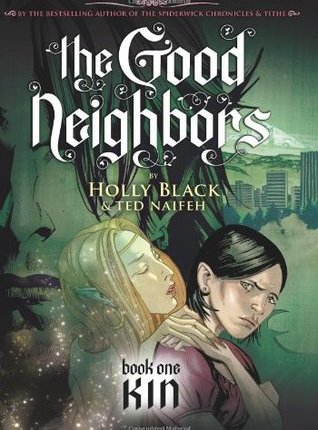
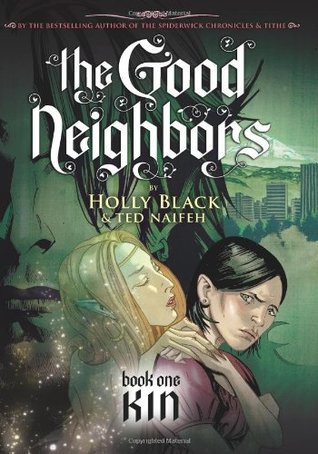
Kin (The Good Neighbors, #1) by Holly Black

Kin (The Good Neighbors, #1) by Holly Black
goodneighbors

Rue’s mother has always been a little different. She talks to plants, hangs out naked in the yard and seems ageless. Rue knows her mother is not like other parents. But then, one day when her mom disappears, Rue begins to see strange things- creatures with horns in the coffee shop, a winged girl hanging out in the high school hallway- and she realizes that she’s different too.

Where has her mother gone and is Rue going crazy?

“You know how sometimes, when you glance at something out of the corner of your eye, it looks different for a moment? Well, sometimes when I look straight at a thing, it looks weird too. And those moments are stretching wider and wider.” pg 5.

I enjoyed the faerie lore in this graphic novel: “If an older mortal is beautiful or good at riddles, we might take them, but we always leave something behind in exchange. Sometimes we glamour wood to take on their appearance or we abandon a faerie in their place.” pg 36.

This book deals with surprisingly dark themes so I wouldn’t let my tween read it. The story contains (non-explicit) drug use, rape and kidnapping. It should be ok for most mature teens.

The artwork is pretty. The people aren’t depicted like normal every day people (especially the faeries) but, for the most part, I don’t think the artist over-sexualized the women. That’s one of my pet peeves with graphic novels: when they depict females as ridiculously proportioned pin ups. But, like I said, this one isn’t over-the-top.

Photo by Anthony on Pexels.com

The faeries are quite creepy too: “Let me tell you a story. … Long ago, mortals called us the fair folk, the people of peace, the good neighbors. They called us these things not because we were fair or peaceful or good, but because they feared us. As they should. As they will again.” pg 77

Recommended for readers who like dark fairy tales and fans of Holly Black.

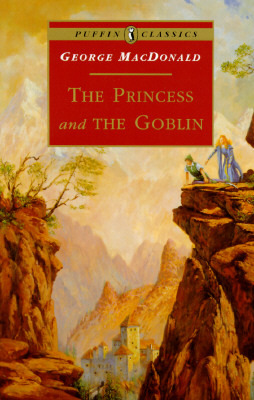
The Princess and the Goblin (Princess Irene and Curdie #1) by George MacDonald

The Princess and the Goblin (Princess Irene and Curdie #1) by George MacDonald
princessandgoblin

A charming fairy tale for children about a princess, a miner and hundreds of goblins- not just one.

The goblins hate the king because they used to be normal humans. They chose to live underground, to be away from the king and his taxes, and that choice has turned them inhumanely ugly and grotesque.

“They had enough of affection left for each other to preserve them from being absolutely cruel for cruelty’s sake to those that came in their way; but still they so heartily cherished the ancestral grudge against those who occupied their former possessions and especially against the descendants of the king who had caused their expulsion, that they sought every opportunity of tormenting them in ways that were as odd as their inventors; and although dwarfed and misshapen, they had strength equal to their cunning.” loc 54, ebook.

So, the king hides away his daughter to protect her from the goblins, while he travels across the kingdom, exerting the rule of law.

One rainy day, she is wandering bored through the house, when she discovers a secret stair with an extraordinary person in a hidden room.

The Princess tries to tell her nurse about her experience, but the nurse doesn’t believe her.

“You don’t believe me, then!” exclaimed the princess, astonished and angry, as she well might be. “Did you expect me to believe you, princess?” asked the nurse coldly. “I know princesses are in the habit of telling make-believes, but you are the first I ever heard of who expected to have them believed.” loc 181, ebook.

Meanwhile, in the mines under the mountains, the miners are accustomed to hearing strange sounds from the goblins who dwell within the walls.

Photo by Sagui Andrea on Pexels.com

“They worked only at night, for the miners’ night was the goblins’ day. Indeed, the greater number of the miners were afraid of the goblins; for there were strange stories well known amongst them of the treatment some had received whom the goblins had surprised at their work during the night.” loc 411, ebook.

One day, a miner named Curdie, hears actual goblin voices and discovers that they are closer to the goblin’s world that anyone ever realized.

He also overhears something frightening and determines to investigate the goblins’ world more to learn the truth.

To discover how the princess’ and Curdie’s worlds come together, you’re going to have to read the story.

Photo by Lisa Fotios on Pexels.com

I enjoyed The Princess and the Goblin. Recommended for tweens or the young at heart.

Readers who crave the simplicity and magic of books like The Hobbit, may also enjoy the story.

Thanks for reading!

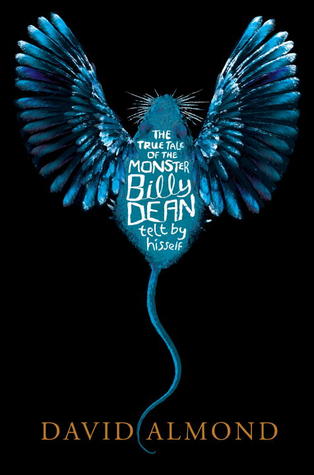
The True Tale of the Monster Billy Dean Telt by Hisself by David Almond

The True Tale of the Monster Billy Dean Telt by Hisself by David Almond
billydean

A strange story about a boy who grows up in a room by himself. Through his extreme isolation, he discovers he has powers beyond that of a normal boy. There is a mystery surrounding his parentage and also about the world outside the only room he has ever known. The boy’s name is Billy Dean and this is his tale.

This pseudo-memoir is written mostly phonetically and with intentional misspellings, which was incredibly annoying at first, but you find yourself getting used to it. “This tale is told by 1 that died at birth by 1 that came into the world in the days of endles war & at a moment of disaster. He grew in isolayshon wile the enjins of destruchshon flew & smoke rose over the sitys & wile wilderness & waste crept all acros the world.” pg 1, ebook.

David Almond was attempting to capture Billy Dean’s innocent but uneducated voice through the misshaping of the words. I get what he was going for, but felt it did a disservice to the story.

Which wasn’t that good. It could have been though and that was disappointing.

Take this intense moment when Billy Dean’s father tells him that he should have killed his son the moment he was born: “Wilfred O bliddy Wilfred shud hav killd the monster in the woom. …. He grabbd me by the throte. Shudnt he? he yelld at me. Anser me you cretin! Tel me I shud have ended it befor it had bluddy begun. Tel me yes you shud hav Daddy!” pg 32, ebook.

It just doesn’t have the impact it could have, does it.

Or this moment, when Billy Dean is comforting his mother: “Im so sory” she wispers. “It was all supposed to be so different.” … “Its lovely Mam” he grones at her. “Its byutiful.” And all this nite he wil not slepe for the aykin of his mussels & the stingin of his bones & the thumpin of his hart & the byuty & the wunder of this world. pg 87

Photo by fabio.tsu on Pexels.com

Beyond my issues with how the author chose to present his story, I felt that the magical part of the story was misshandled, especially when it comes to the child Billy Dean.

It made the timing of events feel strange. Nothing would happen, this this huge unexplained thing would roll out and the reader would be expected to accept that as the new normal and go on.

Perhaps Almond was trying to express the inexplicable nature of existence?

This book left me with a lot of unanswered questions, but not in a good way. I can’t recommend it.

Thanks for reading.

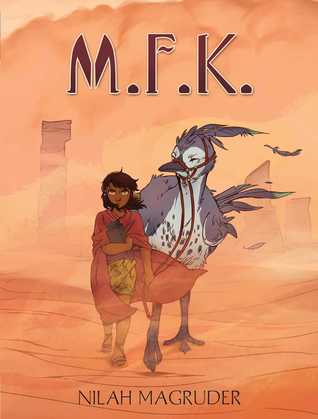
M.F.K.: Book One by Nilah Magruder

M.F.K.: Book One by Nilah Magruder
mfk

M.F.K. is an enigmatic, fantasy graphic novel about a girl from the desert, a boy from a beleaguered town and a journey to deliver an urn filled with ashes.

The Goodreads description of this book gave far more plot line than the book itself managed to deliver.

But, I feel this read was elevated by the beautiful, full-page, colorful artwork and the promise of a better storyline to come.

Jaime’s parents left him with relatives when he was only a child. But don’t pity him: “Sometimes I dream about seeing them again… and punching them in their faces.”

The desert town, where Jaime and his remaining family stay, is occasionally threatened by beings from the deeper desert. Their abilities seem to be a gift from desert gods.

“The devas gave us this strength to create and destroy to lead and conquer.”

In some ways, this book is like a fantasy western. You’ve got the obvious good guys, the obvious bad guys and the unlikely hero or heroine who saves the day.

I’m intrigued.

Recommended for readers who enjoy pretty graphic novels. Also recommended for young adults and reluctant readers.

This book has an interesting story and the women are drawn like people, not pin ups. I’m looking forward to the next installation.

Thanks for reading!