The Stolen Child by Keith Donohue

The Stolen Child by Keith Donohue

If you must give me a name, call me hobgoblin. Or better yet, I am a changeling- a word that describes within its own name what we are bound and intended to do. We kidnap a human child and replace him or her with one of our own.” pg 7, ebook.

The Stolen Child is the story of a changeling and the boy whose place he took, Henry Day.

The chapters alternate between the real Henry Day and the false Henry Day. It is a captivating story about magic, family and belonging.

Photo by Gary Barnes on Pexels.com

“This is my confession, too long delayed, which I have been afraid to make, and only now reveal because of the passing dangers to my own son. We change. I have changed.”

It also addresses the issues of the modern world and how technology and humanity has driven nature into corners.

The changelings are basically immortal children (but they can die through accidents) who live in the woods until their turn comes to rejoin the human world. Years before, they were all ripped from their families and made a part of the same group their replacement just deserted.

Their world is brutal, cold and always on the verge of collapse. One of their only rules is they don’t discuss a new changeling’s prior life during his new one.

Photo by Stijn Dijkstra on Pexels.com

The adjustment period from human to changeling is difficult enough without keeping the memories alive through the long years of their unchanging childhood.

But things aren’t much easier on the changelings who take the child’s place. If they are discovered, in the past, the changelings have been killed or their family members have gone mad from the strain.

They must carry a secret with them for the rest of their lives. It is as a lonely an existence as the changeling group separated from humanity in the forest.

Photo by ArtHouse Studio on Pexels.com

I enjoyed this story. Keith Donohue has a way with making the fantastical seem real and the miraculous into the mundane.

But that ending. It didn’t complete the excellent characters and storyline Donohue had constructed, in my mind.

Recommended for those who like to read modern fairy tales. Just don’t expect a life-changing finale.

Thanks for reading!

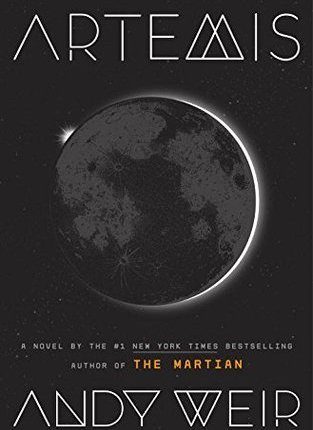
Artemis by Andy Weir

Artemis by Andy Weir

Jazz lives on Artemis, the first city on the moon. She delivers packages to eek out a living as well as other, more shady, methods of income.

“I live in Artemis, the first (and so far, only) city on the moon. It’s made of five huge spheres called “bubbles.” They’re half underground, so Artemis looks exactly like old sci-fi books said a moon city should look: a bunch of domes.” pg 5

Photo by Alex Andrews on Pexels.com

One day, one of the richest men on the moon makes her an offer far too lucrative for her to refuse… all she has to do is something very dangerous and illegal. No problem, right?

“I’m sorry, but this isn’t my thing,” I said. “You’ll have to find someone else.” “I’ll give you a million slugs.” “Deal.” pg 46.

Andy Weir’s follow-up to The Martian was disappointing to me.

Unlike his first book, the science is watered down. It’s not as educational and quirky. In my mind, the exceptional science was what separated The Martian from other science fiction offerings.

The characterizations are one dimensional, like The Martian, but it was less of a problem in the first book. In that one, you were mainly dealing with one person, alone.

In Artemis, Weir tries to build a city of characters and I didn’t buy into it.

Photo by murat esibatir on Pexels.com

The main character, a female narrator, is particularly problematic. She just didn’t sound like a woman to me.

“I landed like a sack of sh*t. But I landed on the other side of the alcove and didn’t break anything. … Whatever. A clumsy, awkward success is still a success.” pg 124.

But beyond those small problems, Artemis is still enjoyable.

Weir put a huge amount of thought into how an economy on the moon would work. It is the most realistic I’ve ever read.

He also nails the human condition, the drive for novelty and tourism.

Weir describes the trouble with travel: Even when it’s a once-in-a-lifetime vacation. You leak money like a sieve. You’re jet-lagged. You’re exhausted all the time. You’re homesick even though you’re on vacation.” pg 152.

Photo by SevenStorm JUHASZIMRUS on Pexels.com

Word.

Members of my book club voiced the opinion that Weir wrote this book as if he was prepping it for the screen. I agree.

If you’re going to read one Weir book, go with The Martian. Borrow this one from the library.

Thanks for reading!

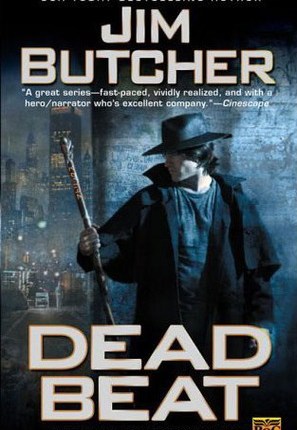
Dead Beat (The Dresden Files #7) by Jim Butcher

Dead Beat (The Dresden Files #7) by Jim Butcher

This entry in The Dresden Files has wizard Harry Dresden fighting necromancers to protect his friends and contemplating his own mortality. We also get to hang out with a few side characters and see a fascinating new side of Bob, who just happens to be one of my favorite characters in the whole series.

“Because that Kemmler was a certifiable nightmare,” Bob said. … That got my attention. Bob the skull was an air spirit, a being that existed in a world of knowledge without morality. He was fairly fuzzy on the whole good-evil conflict…” pg 39, ebook.

Photo by cottonbro on Pexels.com

There’s some ridiculousness and danger to the story, but mainly Harry-angst and the perpetual struggle against darkness.

“And despite every religious faith, the testimony of near-death eyewitnesses, and the imaginations of storytellers throughout history, death remains the ultimate mystery. No one truly, definitely knows what happens after.” pg 30, ebook.

And a few old enemies, of course: “She laughed harder, and the sound of it spooked the hell out of me. … There was no warmth in it, no humanity, no kindness, no joy. It was like Mavra herself…”pg 33, ebook.

Photo by Lachlan Ross on Pexels.com

Harry is still dealing with his disabled hand, which he burnt the heck out of in the last book. “I had a responsibility to keep that destructive strength in check; to use it to help people, to protect them. It didn’t matter that I still felt terrified. It didn’t matter that my hand was screaming with pain.” pg 65, ebook.

Also, some of Harry’s previous decisions about vampires and the Wizard Counsel have some serious consequences. But, anybody who’s been reading this series for awhile, knew that that was only a matter of time.

And there’s the small matter of a certain silver coin that Harry picked up a few books ago and buried under the concrete in his lab. But whatever is in the coin can’t get out of the circle he put it in… right?

“I just keep getting more wounded and tired. … I’m not some kind of superhero. I’m just me. And I didn’t want any of this.” pg 131, ebook.

Photo by Daria Shevtsova on Pexels.com

If you haven’t read this series, I highly recommend you start with the first book. The stories build on each other and become quite satisfying, in my opinion.

The ending of this one contains some ridiculousness that I was not prepared for, but after some thought about the series, I’ve decided that it doesn’t matter.

There is very little Jim Butcher could write in here that I wouldn’t like. Somewhere along the line, I’ve become quite a fan of The Dresden Files.

I didn’t expect it. But that’s the truth.

Check out my other reviews of the series:

Storm Front (The Dresden Files, #1) by Jim Butcher

Fool Moon (The Dresden Files #2) by Jim Butcher

Grave Peril (The Dresden Files, #3) by Jim Butcher

Summer Knight (The Dresden Files #4) by Jim Butcher

Death Masks (The Dresden Files, #5) by Jim Butcher

Blood Rites (The Dresden Files, #6) by Jim Butcher

Thanks for reading!

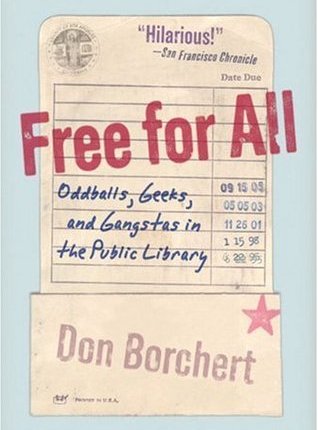
Free for All: Oddballs, Geeks, and Gangstas in the Public Library by Don Borchert

Free for All: Oddballs, Geeks, and Gangstas in the Public Library by Don Borchert

Free for All is an accurate depiction of life as a librarian in a public library.

Sometimes, the job is funny. Other times, it’s incredibly sad. If you’ve never worked in a library system, this book will reveal some of the secrets of a librarian’s day-to-day life.

Photo by Pixabay on Pexels.com

Before I worked at a public library, I thought it was a quiet, organized mecca for students and bookworms. Now, that I’ve spent some time on the librarian-side of the desk, I know better. My idea of a library was far too simple.

It is a study hall, archive, playroom, home for the homeless, kitchen, bank, movie theater, video game store, newspaper kiosk and so much more. I guess the appropriate question is: what doesn’t a library do?

And a public librarian is so much more than just a librarian. She is a counselor, a computer wizard, a curator of excellent and free entertainment.

She talks to the lonely, uplifts the lost and helps the public navigate the dangerous waters of the internet.

Librarians are my heroes.

Photo by Element5 Digital on Pexels.com

If I ever cease writing for a living, look for me at the library. Odds are, I’ll end up back there.

Perhaps some of the policies at Don Borchert’s library have changed, but at the time that he wrote this book, they charged 50 cents to put a hold in for a patron. This policy shocked me, as my library always offered that service for free.

Borchert cheerfully documents the difficulties with summer reading people vs the school year regulars. It’s a real problem.

If Borchert’s book is too edgy for you- he uses rough language and doesn’t hold back on some of his opinions- read Gina Sheridan’s I Work at a Public Library: A Collection of Crazy Stories from the Stacks.

Both are excellent and realistic non-fiction books about the trials, tribulations, and, sometimes, life-enhancing satisfaction of working at the library.

Thanks for reading!

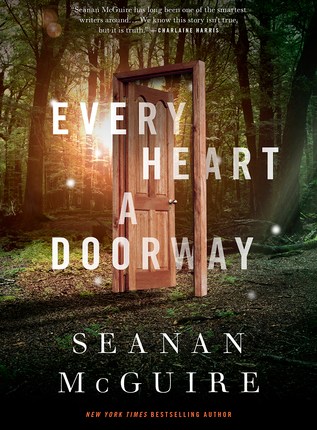
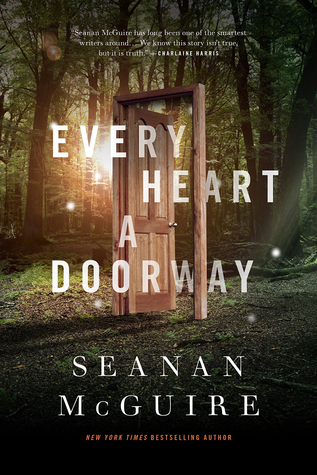
Every Heart a Doorway (Wayward Children #1) by Seanan McGuire

Every Heart a Doorway (Wayward Children #1) by Seanan McGuire

everyheartWhat if children actually fell into other worlds, like Alice in Wonderland or the Pevensies into Narnia, far more often than anyone realized? What if those worlds were superior in every way to the normal, mundane world- not in that they were in heaven, but the child felt finally at home?


And what if those worlds cast the children out, to live in the “real world” again? It might not be a pretty picture.

That is why Eleanor West started a home for children who went away, came back and didn’t belong anymore. All of those reasons, but also, because she went away once too.

“Eleanor West spent her days giving them what she had never had, and hoped that someday, it would be enough to pay her passage back to the place where she belonged.” pg 13.

I loved the basic premise of this story. All of the worlds the children went to were so different, but the fact that the worlds were “other,” tied them altogether.

“‘Real’ is a four-letter world, and I’ll thank you to use it as little as possible while you live under my roof.” pg 20

This story has the drama of a bunch of misfit children all trying to get along, but also the mystery of these other worlds. There’s also a deeper mystery that develops when one of the children seems determined to find a way home- at any cost.

“You will not all find your doors again. Some doors really do appear only once, the consequence of some strange convergence that we can’t predict or re-create. They’re drawn by need and by sympathy. Not the emotion- the resonance of one thing to another. There’s a reason you were all pulled into the worlds that suited you so well.” pg 97

I was concerned when I started this book that it would be too much like Miss Peregrine’s Home for Peculiar Children. That was a needless concern.

They are similar in that both contain orphanages for extraordinary children and fantasy has a large part in the story. But that was where I felt the similarities ended.

I also found myself wishing that Every Heart a Doorway was written for adults rather than young adults. This was a fairytale that could have used some darker twists to it.

Seanan McGuire didn’t make this story all rainbows and gumdrops, but I would have liked it to be edgier.

I loved the “longing to belong” feeling McGuire wove into the book. It seems to me to be a quintessential teenage feeling, but I suppose everyone wants to feel completely at home- whatever that might mean.

For some people, that longing is attached to a place, another person, or to the drug addict, it’s the next hit. Other people crave a moment in time, or a particular period in their life.

I would say, on second consideration, “longing to belong” is perhaps the human condition itself.

Recommended for fans of Miss Peregrine’s Home for Peculiar Children. If you’re looking for a darker, more adult fairytale, I’d recommend The Magicians by Lev Grossman.

Thanks for reading!

You Do You: How to Be Who You Are and Use What You’ve Got to Get What You Want by Sarah Knight

You Do You: How to Be Who You Are and Use What You’ve Got to Get What You Want by Sarah Knight

The self-styled “anti-guru” Sarah Knight adds another volume to her quirky, profanity-laden self-help series with You Do You.

The focus, as you can guess from the title, is the art of allowing your authentic self to shine through without feeling guilt or being so far out of the social norms that you border on “psychopath.”

You Do You is about accepting your strengths and your flaws, whether those flaws are self-identified, or just things that you’re perfectly happy about but that other people seem to have a problem with. Or, should I say, that you WOULD be happy about, if you felt a little more confident in yourself…” loc 146, ebook.

Photo by Kat Jayne on Pexels.com

And, like the previous books, Knight doesn’t stint on the bad words. She admits she kept the title clean so a certain publication *cough* New York Times *cough* would print the all the words of the title in their sought after Best Seller list.

Which Knight has made before… but had her titles censored for their content.

“The advice in this book boils down to one simple mantra: Stand up for who you are and what you want. How do you do that? Stop letting other people tell you what to do, how to do it, or why it can’t be done.” loc 188, ebook.

I enjoyed You Do You, but I felt it wasn’t as strong as Knight’s other titles because she spends so much time rehashing material she has already covered elsewhere.

That being said, I like Knight’s style, her famous diagrams and her illuminating stories. This is an author who has been there, done that and cussed about it.

Photo by Anna Nekrashevich on Pexels.com

My favorite diagram in You Do You is Knight’s “ouroboros” or symbolic, conjoined serpent of wisdom picture. The text with the cute doodle says: “Is it right or wrong? You won’t know unless you have the confidence to take a risk and find out. If you regret your decision, then accept the consequences, swallow the lesson, and start over. With confidence.” loc 1995, ebook.

Verges on mystic Eastern wisdom, doesn’t it?

She encourages all readers everywhere to let the strange sides of yourself out- within certain boundaries. Don’t hurt anybody. Don’t take advantage of people. Be reasonable within your freakishness.

“Now, with those ground rules established, I do declare that we, as a society, should celebrate weirdness in all its forms- and that the right to be weird should be inalienable- just like the right to life, liberty, and the pursuit of happiness.” loc 2130, ebook.

Photo by Gratisography on Pexels.com

“You do you” and let everybody else do them. It’s that simple. It’s that hard.

Sarah Knight may be a bit of an acquired taste. Please don’t read unless you have a high tolerance for bad words and, dare I say, mild snark.

But, if you are someone in need of encouragement to let your freak flag fly, look no further.

Thank you to NetGalley and Little Brown and Company for a free digital copy of this book. And thank you for reading!

Read my reviews of Sarah Knight’s other titles:

The Life Changing Magic of Not Giving a F*ck by Sarah Knight

Get Your Sh*t Together by Sarah Knight

See the five most popular reviews from The Help Desk book blog

See the five most popular reviews from The Help Desk book blog

First, I’d like to thank all of the readers of my book blog. I’ve been sharing my thoughts about books since May 2016. It hardly seems like any time has passed at all.

Thank you for taking the time to read the reviews and comment. I wouldn’t be here without you.

Without further ado, here’s the top five of my most read reviews on The Help Desk book blog:

5. How The Secret Changed My Life: Real People. Real Stories. by Rhonda Byrne – How the Secret Changed My Life adds nothing new to the Secret franchise, but it’s still fun to read if you enjoy hearing success stories about people who utilized the Law of Attraction.

4. Diary of an Oxygen Thief by Anonymous – Did you like the emotionally disturbing/psychological train wreck that was Gone Girl? You may really enjoy this one.

3. It Works: The Famous Little Red Book That Makes Your Dreams Come True! by RHJ – It Works by RHJ is a short book, pamphlet really, on the Law of Attraction.

2. Thank & Grow Rich by Pam Grout – There is a disclaimer written in the description of this book on Goodreads that states that is not for everyone, but it was awesome in my opinion. I am going to admit that I am incredibly biased. I absolutely adored Pam’s other books on New Age thought and had some unbelievable experiences with them.

1. Amish Confidential by “Lebanon” Levi Stoltzfus and Ellis Henican – I wasn’t expecting much from Amish Confidential, a tell-all memoir, by Amish mafia reality television star, Lebanon Levi Stoltzfus. Despite my expectations, it was quite good.

And happy reading to all of you!

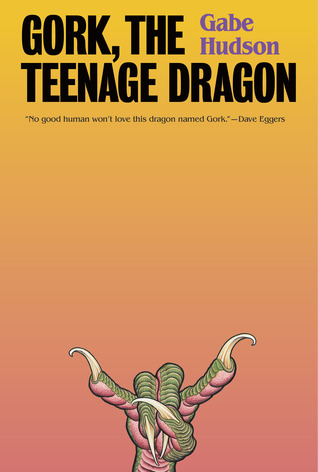
Gork, the Teenage Dragon by Gabe Hudson

Gork, the Teenage Dragon by Gabe Hudson
gork

Gork needs to crown his queen today and leave to take over a distant planet or suffer terrible consequences. He has a few major problems: he’s in love with one of the most popular females at the military academy, his heart is far too big, his horns are far too small, his class rating is too low and his grandfather, Doctor Terrible, has gone missing.

Nothing a teenage dragon can’t handle, right?

Gork, the Teenage Dragon is one of the most unique books I’ve read in a long time. It is a story about dragons, yes, but not just that. Gabe Hudson has created an entire dragon culture.

WarWings graduates continue to conquer the universe one planet at a time. We are the proud preservers of the EggHarvest tradition. Victory will always be ours! pg 30.

In some ways, WarWings reminded me of the military academy from Ender’s Game. It is dog eat dog, or dragon eat dragon.

My favorite part of the dragon culture is its use of poetry: “I don’t know why it is, but singing a poem out loud will always make you appear more repulsive and psychotic to those who you intend to enslave.” pg 56.

I also enjoyed the nudging of journalists: “The vibe in the room was definitely fiendish, and you should know that dragon journalists on Blegwethia are notoriously ruthless. Because on my home planet Blegwethia if a journalist shows up to report a story and they don’t like the situation they’re seeing, they’re not afraid to wade right in and get their claws and beak bloody. That’s dragon journalism for you.” pg 88.

If anything, Gork, the Teenage Dragon suffered from too many lovingly crafted details about dragon culture to the detriment of the story. It dragged as a result. And some of the gags didn’t quite work.

On the other hand, I was laughing out loud quite a lot at Gork’s antics: “… I study my scaly green reflection and see five nasty-looking slashes in my forehead from where that demon Torp has swiped me with his claws. ‘Not bad, Professor,’ I say, looking at the slashes. ‘This could make some nice scars.’ Now in case you don’t know, teenage dragons love scars.”

I was also not fond of the ending.

Recommended for readers with patience and the willingness to overlook some repetitious dialogue.

Gork, the Teenage Dragon won’t appeal to everyone, but I could see some die-hard dragon fans absolutely devouring this book.

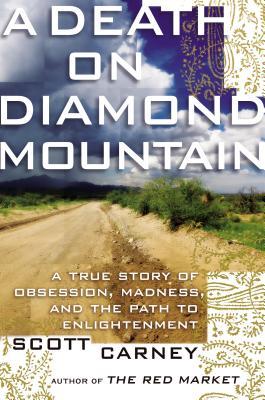
A Death on Diamond Mountain: A True Story of Obsession, Madness, and the Path to Enlightenment by Scott Carney

A Death on Diamond Mountain: A True Story of Obsession, Madness, and the Path to Enlightenment by Scott Carney
diamond mountain

In A Death on Diamond Mountain, Scott Carney has crafted an excellent examination of an untimely death, cult-like Buddhist practices, madness along the spiritual journey, and the dangers of extreme religious practices like multi-year, silent meditation retreats and fasting.

He also provides not only extensive backgrounds for all of the main actors in this tragedy, but also a dissection of the birth of Eastern philosophy in the West, including many different religions and belief systems.

This is the first non-fiction book that I’ve ever read that discusses potential negative effects of meditation.

Photo by Pixabay on Pexels.com

In this eye-opening analysis, Carney talks about potential research bias in meditation studies. He mentions researchers habitually attributing consistently positive results to meditation and reporting any negative results as pre-existing conditions in the practitioners rather than a side effect of the practice itself.

I think that this is an indication that moderation in all things, including meditation, may be the best way forward. I was unaware of the potential, catastrophic consequences of abusing traditional spiritual methods.

The sad thing is that the tragedy detailed in this book could have been prevented.

The death of Ian Thornson reads like a soap opera.

Photo by Shiva Smyth on Pexels.com

Carney has written these dysfunctional yet charismatic people with such skill that their personalities almost leap off the page.

I pitied Ian’s mother while reading about her struggles to extract her son from what she felt sure was a cult. Then, when his spiritual search eventually killed him, I can’t imagine the pain that she went through.

I’m certain that any mother would be proud for her child to exhibit the sort of spiritual drive that Ian had, however, the extremes that he took it too were obviously unhealthy. Again, it appears that moderation is the key to success.

Readers who enjoy non-fictional survival stories like Into the Wild may enjoy A Death on Diamond Mountain.

This book could also appeal to readers who enjoy learning about Buddhist philosophy or meditation methods. It is a shining example of how not to proceed on the spiritual path.

Thanks for reading! I received a free copy of this book through Goodreads First Reads.